
How often to pump a septic tank
Quick answer
Most septic tanks should be pumped about every 3-5 years, but your exact schedule depends on tank size, number of people, water use, and waste habits. The U.S. Environmental Protection Agency (EPA) says typical household tanks need inspection every 1-3 years and pumping roughly every 3-5 years; heavier use pushes you toward the shorter end of that range, lighter use toward the longer end.1 Systems with small tanks, big families, garbage disposals, or high water use often need pumping more frequently.
What really determines your pumping interval
Official guidance from EPA and state health departments all say the same thing: there is no one-size-fits-all schedule.1 2 Instead, your pumping interval is driven by how fast sludge and scum build up in the tank.
Key factors:
- Tank size - Bigger tanks can safely go longer between pump-outs; small 500-750 gallon tanks fill with solids much faster than 1,250-2,000 gallon tanks.
- Household size - More people = more flushing, showers, laundry, and kitchen use, so solids build up faster.
- Water use habits - Long showers, many laundry loads in a day, leaky fixtures, and high-flow toilets push more water through the tank and reduce settling time.
- Waste and garbage habits - In-sink garbage disposals, lots of grease, wipes, and other non-toilet-paper items add solids and can easily cut your safe interval in half.2
- System type - Standard gravity systems are usually the most forgiving; aerobic treatment units (ATUs) and pumped systems have more parts and often need more frequent checkups.3
- Past inspection results - A pro can measure sludge/scum depth and tell you how close you are to the limit, then recommend a specific interval.
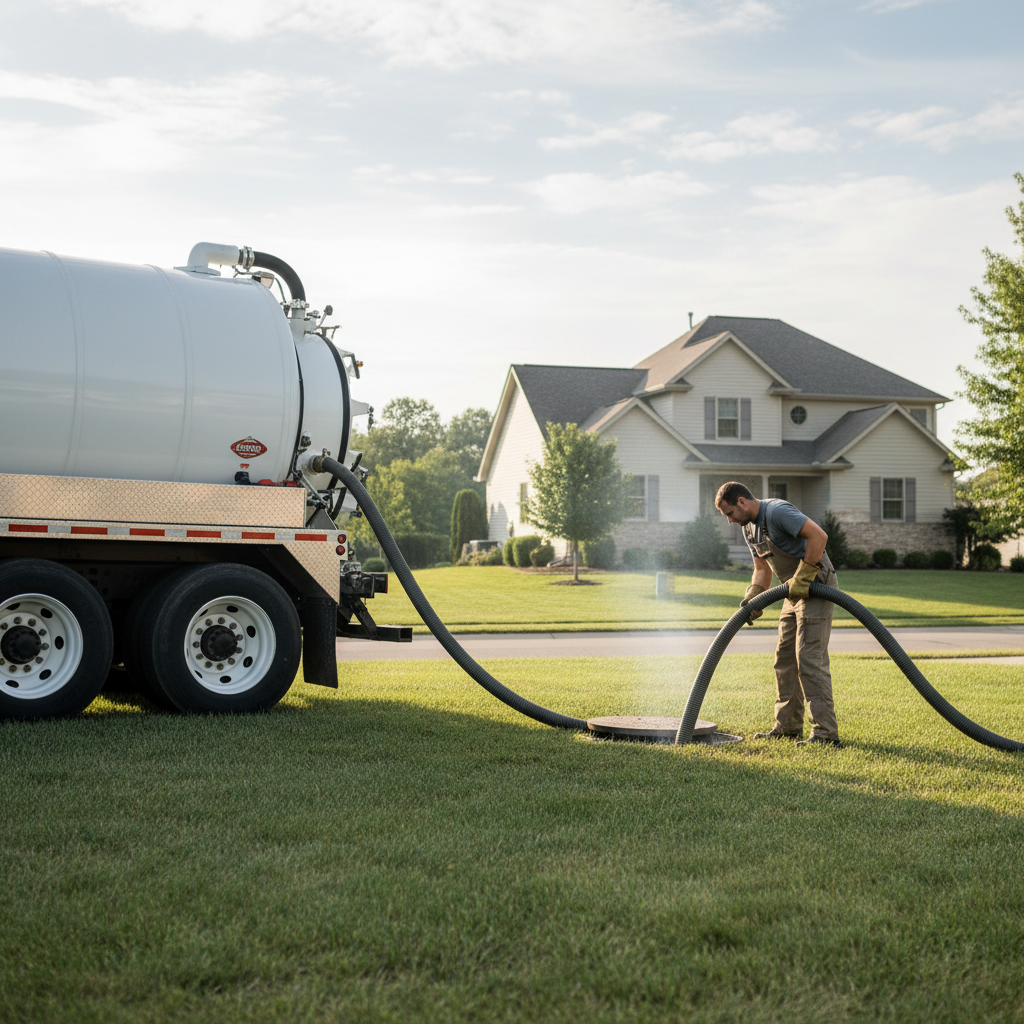
The bottom line: pumping too early wastes money; pumping too late risks pushing solids into your drain field, which can cost thousands to fix. A sensible schedule is cheap insurance.
Example pumping schedules (by tank and household size)
Use these as starting points for a typical U.S. home with average water use and no garbage disposal. Always adjust based on what your inspector finds.
Rule-of-thumb pumping intervals (standard gravity system):
| Tank size | 1-2 people | 3-4 people | 5-6 people |
|---|---|---|---|
| 750 gal | 3-4 years | 2-3 years | ~2 years |
| 1,000 gal | 5-6 years | 3-4 years | 2-3 years |
| 1,250 gal | 6-7 years | 4-5 years | 3-4 years |
| 1,500 gal | 7-8 years | 5-6 years | 3-5 years |
How to use this table:
- Find your tank size on your permit, inspection report, or from a septic pro.
- Count full-time residents (kids and adults who live there most of the year).
- Adjust earlier if:
- You use a garbage disposal regularly.
- You run a lot of laundry or have high water use.
- Your last inspection showed higher-than-average sludge levels.
- Adjust later (slightly) only if a professional confirms low sludge/scum after several years of normal use.
For homes with aerobic/ATU or pumped systems, assume more frequent inspections (often annually) and ask your maintenance provider for a pumping schedule tied to sludge measurements rather than just the calendar.3
Routine pumping vs emergency situations
Routine pumping is scheduled, planned maintenance based on your tank/household. Emergency pumping is when something has already gone wrong and you need help fast.
You're in "routine pumping" territory when:
- Drains and toilets work normally.
- No sewage smells indoors or in the yard.
- No wet, soggy spots above the tank or drain field.
- It has simply been 3-5 years (or whatever interval you and your pro chose) since the last pump.
In that case, you can call around, get a few quotes for septic tank pumping, and book a convenient time.
You might need emergency pumping and inspection if you notice:
- Sewage backing up into toilets, tubs, showers, or floor drains.
- All or most fixtures draining very slowly at once.
- Gurgling sounds in multiple drains when you flush or run water.
- Strong sewage odors inside or outside the home.
- Standing water or black, slimy patches over the tank or drain field.
- A high-water alarm sounding on a pumped or advanced system.
Those are signs your tank may be overfull, your outlet or filter is clogged, or your drain field is failing. Pumping can relieve the immediate pressure, but you should also have the system inspected to find and fix the root cause, not just "reset the clock."
How to build a smart pumping schedule for your home
Follow these steps to dial in a schedule that fits your specific system:
- Confirm your tank size and type. Check your closing documents, county records, or permit; if you can't find them, ask a local septic service to help locate and identify the system.
- Log your household size and habits. Note full-time residents and whether you use a garbage disposal, do a lot of laundry, or have high water use (e.g., large tubs, long showers).
- Get a professional inspection and pump-out if it's been a while. EPA recommends inspections every 1-3 years and pumping about every 3-5 years for a typical system.1
- Ask for sludge/scum measurements. After pumping, have the technician record starting levels and recommend a next-service window based on how full the tank was and your usage.
- Set a reminder. Put the target year in your calendar (e.g., "Pump septic again in 2029") and keep receipts in one place; this also helps when selling the home.
- Adjust if your situation changes. If you add more people, install a garbage disposal, start short-term renting, or drastically change water use, shorten the interval. If people move out and your inspector keeps finding low sludge after many years, you may be able to extend it slightly.
A little tracking goes a long way: if you know your tank size, household size, and the date of your last pump, you're already most of the way to a reliable schedule.
Conclusion
For most homes, planning to pump the septic tank every 3-5 years-then fine-tuning that interval based on tank size, household size, and inspection results-keeps the system healthy and prevents costly drain field failures.