
Septic pumping for vacation homes and rentals
Why septic care is trickier for vacation homes and rentals
Vacation cabins and short-term rentals (STRs) don't behave like a normal year-round home. Your tank might sit almost idle for weeks, then get slammed by a full house over a holiday weekend. That stop-and-go pattern is hard on a septic system and can expose weak spots fast.
The good news: with a smart pumping schedule and a little planning, you can dramatically reduce the odds of sewage backups, bad odors, and angry guests. This guide walks through how often to pump, how to plan around busy seasons, and simple house rules that protect your system.
How often to pump: vacation homes vs. rentals
Most U.S. guidance says a typical residential septic tank should be inspected every 1-3 years and pumped about every 3-5 years, depending on tank size and how many people use it.1 Vacation properties and STRs fit into that same framework, but usage patterns change where you should land inside that range.
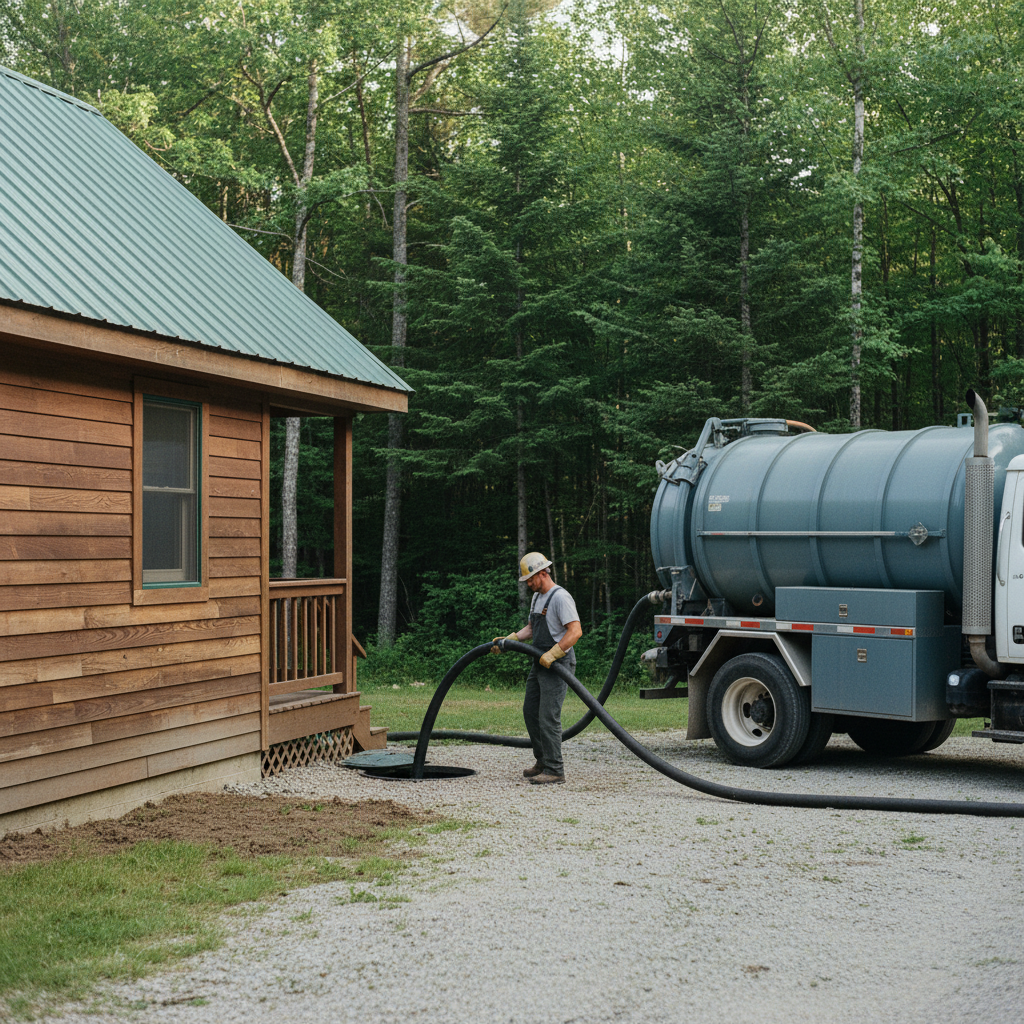
Lightly used family cabin or second home
Think of a cabin that sees a few weekends a month, mostly the same family, 2-4 people at a time:
- Inspection: Aim for a professional inspection (with sludge/scum measurement) about every 3 years.
- Pumping: Many owners in this situation can safely lean toward the long end of the 3-5-year range, especially with a larger tank and no garbage disposal. Let measurement, not guesswork, decide whether you can stretch beyond 5 years.
- Reality check: Long idle periods don't magically "reset" your tank. Solids still build up-just more slowly-so you still need periodic pump-outs to keep sludge from reaching the outlet.
Busy STRs and holiday-heavy homes
If your place is an STR that regularly hosts groups, or a large family home that fills up for holidays, treat it like a high-use system even if it sits empty midweek:
- High-occupancy STR (6-10+ guests, frequent bookings): Plan to pump roughly every 2-3 years, possibly more often if you have a small tank (1,000 gallons or less) or constant full bookings.
- Heavy water use: Hot tubs drained into the system, lots of laundry, garbage disposals, and many short stays (each with full sets of showers and linens) all push you toward shorter intervals.
- Data-driven schedule: At the first or next pump, ask the pumper to note sludge and scum thickness and recommend a custom interval based on your booking pattern.
Don't forget legal minimums
Some states and counties require septic systems to be evaluated and pumped on a set schedule (often every three years) regardless of how little you use the property.2 If local rules say you must pump or have a maintenance report by a certain date, that requirement overrides any "my tank isn't very full" logic.
Always:
- Check your county health department or environmental agency website for septic maintenance rules.
- Keep copies of pumping and inspection receipts in case your jurisdiction asks for proof.
Planning pumping around your busy season
The worst time to discover an overdue tank is a sold-out holiday weekend. Build pumping into your annual calendar so it's routine, not a crisis.
Smart timing ideas:
- Pump before peak season. For summer lake cabins, schedule service in late spring; for ski rentals, early fall works well.
- Leave a cushion. If your pro says you're good for about three years, schedule the next pump at 2.5 years so you're not bumping up against major holidays.
- Use the calendar you already live in. Tie checks or scheduling to recurring tasks like winterizing, opening the pool, or annual HVAC service.
- Avoid same-day flips. Don't schedule pumping on a day when guests are checking in and out; give the truck room and time to work.
Keep a simple log with:
- Date and details of each pump/inspection
- Sludge/scum levels (ask your pumper to note them)
- Any issues (odors, slow drains, alarm events)
Over a few years, that log becomes a custom pumping roadmap for your property.
Best practices for seasonal septic care
Before you close up for the season
If you shut the place down for winter or long off-seasons, use that last visit wisely:
- Inspect and consider pumping if you're near your normal interval or had heavy use this year.
- Clean or replace the effluent filter at the tank outlet, if your system has one.
- Check the pump and alarm (for systems with a pump tank) before you leave.
- Fix leaks (running toilets, dripping faucets) so they're not quietly overloading the system the next time guests arrive.
Before you open or start renting again
A quick start-of-season checklist:
- Walk the drainfield and tank area looking for wet spots, lush green strips, or odors.
- Make sure tank lids and risers are intact and easy for a truck to access.
- Test the pump and alarm, and verify the breaker is clearly labeled.
- Review your last service record-if you're close to due, schedule a pump before bookings ramp up.
Simple house rules for guests
Guests don't think about septic systems, so you have to do it for them. A one-page "house plumbing rules" sheet in the welcome binder (and a small sign near toilets and the kitchen sink) can save your drainfield.
Cover these basics:
- Only toilet paper in the toilet-no wipes (even "flushable" ones), feminine products, or paper towels.
- No grease, oil, or food scraps down the sink; cool and trash them instead.
- Avoid back-to-back marathon laundry loads; spread them out when possible.
- Never drain hot tubs or pool water into the septic system.
Clear, polite instructions protect your investment and make backups less likely during those intense guest weekends.
Signs you can't wait to pump
Regardless of schedule, certain warning signs mean it's time to call a septic pro now. If solids aren't pumped out, they can spill into the drainfield, clogging soil pores and eventually forcing sewage to the surface or back into the house.3
Watch for:
- Slow drains or gurgling in multiple fixtures
- Sewage odors indoors or around the tank/drainfield
- Wet, spongy spots or unusually green stripes over the drainfield
- Tank or pump alarm sounding (for pump-equipped systems)
- Actual sewage backing up into showers, tubs, or floor drains
If this happens during a guest stay:
- Stop or restrict water use immediately.
- Call a licensed pumping company for an urgent visit.
- Communicate honestly with guests and, if needed, relocate or compensate them rather than risking health problems or property damage.
Working with a septic pumping company
A good relationship with a local pumper is priceless for remote or rental properties.
When you call:
- Explain that this is a vacation/short-term rental and describe typical occupancy.
- Confirm they can measure sludge and scum and recommend an interval, not just "see you next year."
- Ask what access they need (driveway width, snow/ice concerns, distance from driveway to tank).
- Consider adding risers if your tank lids are buried-it makes future pump-outs faster and cheaper.
For reliability (and price comparison), many owners like to get 2-3 quotes and keep at least two companies' numbers handy in case one is booked when you need help fast.
In short, treat septic pumping at your vacation home or rental as planned preventative maintenance-timed around your busy season and local rules-so heavy guest weekends come and go without any messy surprises.