
Septic system maintenance checklist for homeowners
Keeping a septic system healthy isn't complicated, but it does require a little routine attention. A simple checklist-broken into everyday habits, seasonal tasks, and periodic pumping and inspections-can help your system last for decades and prevent messy, expensive failures.1
How your septic system works (and why maintenance matters)
A standard residential septic system has two main parts:
- Septic tank: Solids settle to the bottom as sludge, fats/grease float to the top as scum, and relatively clear liquid (effluent) flows out.
- Drain field (leach field): Perforated pipes in gravel or chambers disperse effluent into soil, where microbes finish treatment.
The tank must have enough space for new wastewater to come in while solids slowly break down. If sludge and scum build up too far, they can wash into the drain field, clogging soil and pipes. At that point, repairs are far more expensive than routine pumping and inspection.2
The goal of maintenance is simple:
- Keep solids from overwhelming the tank.
- Avoid overloading the system with water.
- Protect the drain field and the soil microbes that actually treat your wastewater.
Everyday septic-safe habits
Daily habits have more impact on septic life than any single service visit. Focus on water use and what goes down drains and toilets.
Smart water use
All water from your home ends up in the septic system, so reducing peaks and overall use reduces stress on the tank and drain field.1
Do this year-round:
- Fix drips and running toilets promptly. A single leaky toilet can send hundreds of extra gallons a day into the system.1
- Spread laundry over the week. Avoid doing many loads back-to-back; give the tank time to settle.
- Run full loads only in dishwashers and clothes washers.
- Install high-efficiency fixtures (toilets, showerheads, faucet aerators) when you replace old ones.
- Stagger high-water activities (showers, laundry, dishwasher) instead of stacking them in the same hour.
What not to flush or pour
Your septic system is a biological treatment system, not a trash can. EPA's rule of thumb: only human waste and toilet paper should be flushed.1 2
Never flush:
- Wipes (even if labeled flushable)
- Feminine hygiene products, condoms, cotton balls/swabs, dental floss
- Diapers, paper towels, facial tissues
- Cat litter, cigarette butts
- Medications or pharmacy waste
Never pour down sinks or tubs:
- Grease, fats, oils, butter, or meat drippings
- Paints, solvents, paint thinners, varnish
- Pesticides, strong cleaners, drain openers, or other hazardous chemicals
- Coffee grounds or large amounts of food scraps
These materials can clog pipes, overwhelm the tank with solids, or kill the helpful bacteria in the system.1
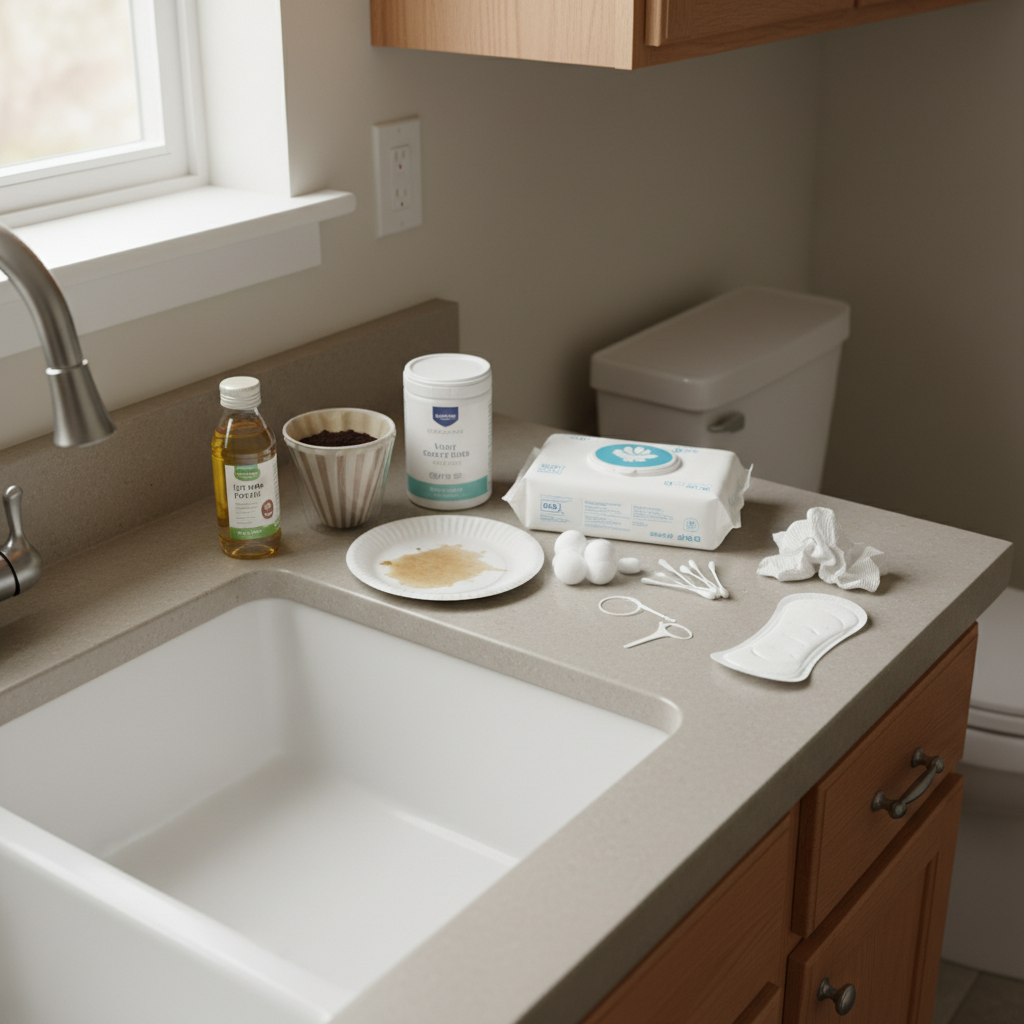
Tip: If you wouldn't feel comfortable stirring it into a bucket of water and pouring it on your lawn, don't put it into your septic system.
Seasonal septic maintenance checklist
You can adapt this to your climate, but these tasks cover most U.S. homes.
Spring checklist
- Walk the yard over the tank and drain field. Look for soggy spots, standing water, or unusually bright green, spongy grass compared with the rest of the yard.2
- Sniff for odors. Sewage or "rotten egg" smells near the tank or field can signal trouble.
- Check lids and risers. Make sure covers are sound, child-safe, and visible (not buried under soil or debris).
- Review your records. If your system hasn't been inspected in 1-3 years, schedule a septic inspection now.2
- Test alarms and pumps (if you have them) by following the manufacturer's instructions or having a pro check them.
Summer checklist
- Plan for guests. If you'll host large groups, spread out showers and laundry to avoid overloading the system.
- Check irrigation. Make sure sprinklers do not water over the drain field or saturate the area.
- Protect the drain field. Keep vehicles, trailers, and heavy equipment off it; soil compaction and ruts can damage pipes.1
- Mow, don't re-landscape. Maintain shallow-rooted grass over the field and avoid planting new trees or shrubs nearby.
Fall checklist
- Mark tank and drain field locations with subtle stakes or landscape markers before snow or leaf cover hides them.
- Clean gutters and redirect downspouts so roof runoff does not drain onto the drain field or tank area.1
- Evaluate pumping needs. If it's been around 3-5 years-or you don't know when it was last pumped-schedule pumping before the ground freezes.2
- Secure lids for winter. Confirm that access lids are tight and insulated per your installer's recommendations.
Winter checklist
- Avoid plowing or parking on the drain field. Even in snow, heavy loads can crush pipes or compact soil.
- Keep a light vegetative cover. In very cold areas, grass over the field helps insulate against deep frost.
- Watch for winter warning signs. Slow drains, sewage smells, or effluent surfacing in mild spells are reasons to call a pro.
- Know your layout. Keep a sketch or photo of where the tank, lines, and field run so you and any snow contractors know where not to drive.
Annual (and multi-year) septic maintenance checklist
Every year
Once a year, do these simple checks:
- Update your septic file. Keep a folder (paper or digital) with site plan, permits, inspection and pumping invoices, and any repairs.
- Walk-through indoors. Note any slow drains, gurgling toilets, or sewer smells.
- Walk the yard. Check again for wet spots, lush patches, or odors over the tank or drain field.
- Check mechanical parts. If you have a pump, aerator, or other electrical components, have them professionally inspected at least annually; alternative systems with mechanical parts generally need more frequent checks than simple gravity systems.1 2
- Clean effluent filters if your system has them, following manufacturer or contractor guidance.
Every 1-3 years: full system inspection
- Hire a septic system inspection company to inspect the tank, components, and drain field.
- Ask them to measure sludge and scum levels, check baffles/tees, look for leaks and signs of backup, and verify pump and alarm operation (if present).1 2
- Get a written report and keep it in your septic file.
Every 3-5 years: septic tank pumping (typical)
EPA recommends most residential septic tanks be pumped approximately every 3-5 years, with exact timing based on tank size, household size, and water use.2
When you schedule pumping:
- Use a licensed septic tank pumping contractor.
- Have them inspect the tank while it's open-baffles, walls, and any visible cracks-before refilling.
- Ask them to record sludge and scum thickness so you and future pumpers can fine-tune your schedule.
- File the invoice and notes so you always know your last pump date.
A simple summary of frequency:
| How often | Key tasks |
|---|---|
| Every day | Smart water use; only waste and toilet paper down toilets |
| Each season | Yard walk-through; protect drain field; adjust for weather |
| Every year | Indoor & outdoor check; update records; inspect mechanics |
| Every 1-3 years | Professional system inspection |
| Every 3-5 years | Pump septic tank (typical gravity systems) |
Signs your septic system needs attention now
Don't wait for scheduled service if you see warning signs. EPA lists these as common indicators of problems or failure:2
Call a septic professional promptly if you notice:
- Sewage backing up into toilets, tubs, or floor drains.
- Very slow drains throughout the house.
- Gurgling sounds in plumbing.
- Sewage smells indoors or outdoors near the tank or drain field.
- Standing water, soggy soil, or unusually lush grass over the tank or drain field when the rest of the yard is normal.2
- Septic pump alarm sounding or flashing.
Until a professional evaluates the system, reduce water use (short showers, minimal laundry, no dishwasher) to avoid making the issue worse.
Simple record-keeping tip
Create a one-page log you can tape inside a utility closet or store with home documents:
- System type, tank size, and location sketch
- Installer and service companies with phone numbers
- Dates and notes for inspections, pumping, and repairs
- Any issues you've noticed (slow drains, odors, soggy spots)
Bringing this log to each service visit helps your septic pro make better recommendations and spot trends early.
Keeping up with this simple, seasonal and annual checklist is the easiest way to extend your septic system's life and avoid costly, stressful emergencies.
Glossary
- Septic tank - Watertight underground tank where solids settle and begin breaking down.
- Effluent - Partially treated wastewater that flows from the septic tank to the drain field.
- Drain field (leach field) - Network of pipes or chambers in soil that disperse effluent for final treatment.
- Sludge - Heavy solids that sink to the bottom of the septic tank.
- Scum - Fats, oils, and grease that float to the top of the septic tank.
- Baffle or tee - Fittings at the tank inlet and outlet that keep sludge and scum from leaving the tank.