
What to expect during a septic system inspection
Quick answer
During a septic system inspection, the contractor will locate and uncover your system, open the tank, measure sludge and scum levels, check key components, test how well wastewater flows, and document the system's condition and risks. Expect questions about your system's age and history, some digging to expose lids, and water run through fixtures to see how the tank and drain field handle it. You'll usually get a written report summarizing what's working, what needs maintenance (like pumping), and any repairs or replacements they recommend.
1. Before the inspector arrives
A smoother visit starts with a little prep.
Gather basic information and records:
- Age of the house and septic system
- Any permits or "as-built" drawings you have
- Dates of past pumping and inspections
- Notes about backups, slow drains, odors, or wet spots in the yard
Professional guidance recommends keeping a maintenance file for every service visit, including inspection findings and any repairs.1
Make access easy:
- Clear clutter, vehicles, or debris from likely tank areas and the drain field
- Unlock gates; secure pets
- Make sure the electrical panel and any control boxes (for pump or aerobic systems) are accessible
Ask the inspector how long they expect to be there. A thorough septic system inspection often takes 1-3 hours, depending on system type and how hard it is to locate and uncover components.2
2. Locating and uncovering septic components
If your tank lids and inspection ports aren't already exposed with risers, the first big job is simply finding and digging to them.
Inspectors may:
- Use site plans or old records to estimate the tank and drain field location
- Follow the building sewer line out from the house
- Use probes or electronic locators; occasionally, they'll flush a small transmitter to trace the line
Once they've found the tank, they'll dig down to expose the lids and any inspection ports. Deeper tanks or hard soils can add time and labor.
Because septic tanks can contain toxic gases and may be structurally weakened, reputable guidance warns homeowners not to enter tanks or uncover them without proper training and precautions.3
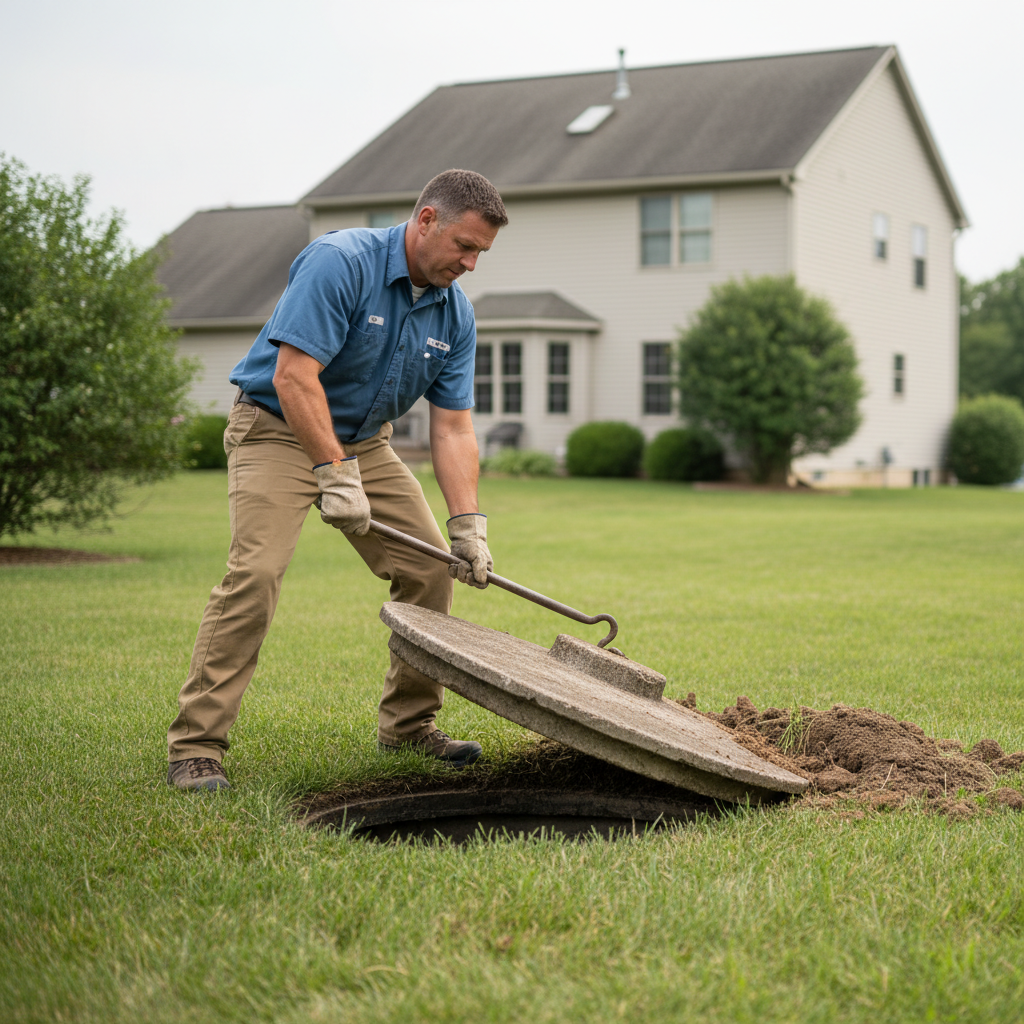
3. Opening the tank and checking what's inside
With lids exposed, the inspector will carefully open the tank and look at several key details.
1. Liquid level and signs of trouble
- Normal level is typically near the bottom of the outlet pipe
- A level that's too high can suggest a blockage or drain field issue
- A low level may indicate a leak or cracked tank
2. Sludge and scum measurements Inspectors often use a simple measuring tool to gauge:
- Scum layer (grease and floating solids) on top
- Sludge layer (heavy solids) at the bottom
National guidance suggests pumping when solids occupy around one-quarter or more of the tank's liquid depth or when sludge and scum get too close to the outlet device that protects the drain field.1 2
3. Baffles, tees, and filters They'll check the inlet and outlet baffles or tees and any effluent filter to be sure:
- They're present and not broken or missing
- Solids aren't bypassing into the outlet line
A thorough inspection also looks for cracks, corrosion, root intrusion, or exposed rebar-any sign the tank structure is deteriorating.2
If you have a pump tank or aerobic treatment unit, the inspector may also:
- Open the pump or aeration chamber
- Test pump operation, floats, and alarms
- Check air supply and diffusers (aerobic systems)
4. Testing flows and evaluating the drain field
A septic system inspection is not just about the tank; it's about how well wastewater moves through the whole system.
Running water and simple flow tests Inspectors commonly:
- Run multiple fixtures (toilets, tubs, sinks, or a washing machine) for a set time
- Watch how quickly water enters the tank and whether levels stabilize
- Listen for gurgling or observe slow drainage that could hint at blockages
Some inspectors perform a more formal hydraulic load test (adding a calculated volume of water) when they need to see how a marginal system behaves under stress, such as during a real-estate transaction.
Distribution box and drain field checks Where accessible, the distribution box ("D-box") may be opened to:
- Confirm wastewater is being split evenly among drain lines
- Look for standing water, heavy sludge, or obvious blockages
Then the inspector will usually walk the drain field area to look for:
- Soggy or spongy ground over trenches
- Sewage odors or visible effluent at the surface
- Unusually lush or bright green grass strips compared with the rest of the yard
Extension guidance notes that evaluating surface conditions and signs of surfacing wastewater is a key part of judging drain field performance.3
5. Safety, cleanup, and what stays behind
Throughout the visit, a conscientious inspector will take basic safety steps: keeping people away from open tank lids, avoiding standing on questionable tank covers, and ventilating areas when needed.3
Before they leave, they should:
- Close and secure all lids and inspection ports
- Backfill any holes they dug (unless you've agreed to leave lids exposed for new riser installation)
- Pick up tools, hoses, and markers used to locate the system
You can expect a verbal summary on site, covering:
- Immediate safety concerns or active failures
- Whether the tank needs pumping now
- Any recommended repairs or upgrades (such as replacing a broken baffle or adding risers)
6. The written report: condition, risks, and next steps
Most inspectors issue a written septic system inspection report, either the same day or within a few days, depending on your state or county requirements.
A good report typically includes:1 2
- System type and components (tank material and size, pump/aerobic units, drain field style)
- Sketch or description of locations
- Measured sludge/scum levels and whether pumping is due
- Condition of tank, baffles/tees, lids, risers, pipes, and distribution box
- Observations about the drain field (any surface water, odors, or encroachments)
- Tests performed (flow tests, dye tests, load tests)
- A clear assessment: functioning, functioning with concerns, or failing (terminology varies by jurisdiction)
- Recommended maintenance, repairs, or further evaluation
If this is a real-estate septic inspection, the report may also:
- Be submitted to a local health department or permitting agency
- Trigger required repairs or replacement before closing, depending on local rules
Keep this report with your household records so the next inspector can see how conditions change over time.1
7. How often inspections happen and how to prepare next time
National guidance suggests having a professional septic inspection every 1-3 years, with pumping generally every 3-5 years depending on tank size, household size, and water use.1
To make future inspections easier and often cheaper:
- Install risers to bring tank lids up to or near the surface
- Keep a simple site sketch showing tank, drain field, and any pump or advanced treatment units
- Avoid driving, paving, or building over the tank and drain field
- Note any changes in performance (slow drains, gurgling, odors, wet spots) as they occur
Bottom line
A thorough septic system inspection is a structured check of your tank, components, and drain field under real-world use so you can catch problems early, protect your property, and plan smart maintenance.
Glossary
- Baffle/tee - Inlet or outlet device inside the tank that directs flow and keeps solids from exiting to the drain field.
- Drain field (leach field) - Network of perforated pipes or chambers that spreads treated wastewater into the soil.
- Effluent - Partially treated liquid wastewater leaving the septic tank.
- Hydraulic load test - Controlled addition of water to see how the system handles a realistic peak flow.
- Riser - Vertical extension attached to a tank opening so lids are at or near ground level.
- Sludge and scum - Heavy solids that settle to the bottom (sludge) and lighter materials that float on top (scum) in the tank.
Sources
Footnotes
-
https://www.epa.gov/septic/how-care-your-septic-system ↩ ↩2 ↩3 ↩4 ↩5
-
https://www.ihs.gov/california/index.cfm/offices/oehe/dsfc/drinking-water-and-sanitation/maintaining-your-septic-system-guide/pumping-and-inspecting-your-system/ ↩ ↩2 ↩3 ↩4
-
https://extension.okstate.edu/fact-sheets/inspection-of-septic-systems.html ↩ ↩2 ↩3