
What to expect during septic tank pumping service
A septic pumping visit feels like a mystery if you've never watched one before. You know a big truck shows up, hoses come out, and at the end your tank is "empty"-but what actually happens in between? Understanding the basic steps makes it easier to prepare, ask good questions, and spot the difference between a quick pump-out and a thorough job.
This guide walks through a typical residential septic tank pumping visit, from the moment the truck pulls up to the final post-service checks. It also calls out what is not usually included in a basic pumping service so you're not surprised by add-ons or separate visits.
Quick answer
During a septic tank pumping service, the crew locates and uncovers your tank, sets up a large vacuum hose, stirs and pumps out the solids and liquids, does basic visual checks, then closes and cleans up the area. You can expect some noise and odor around the tank, but the work usually stays outdoors and is wrapped up in 45-90 minutes for a typical home system. Many providers also give you a brief condition report and recommend when to schedule your next routine septic pumping.
Before the truck arrives: how to prepare
Spending a few minutes preparing makes the visit smoother and faster.
- Clear access for the truck. The vacuum truck is heavy and large. Make sure driveways are open, gates are unlocked, and any low branches or obstacles are noted.
- Know roughly where the tank is. If you have a site map from installation or past service, keep it handy. If not, remember where the main sewer line exits your house; the tank is usually 10-25 feet out from that point.
- Move obstacles off the yard. Pick up toys, lawn furniture, or planters where you think they may need to work or dig.
- Secure pets and kids. The crew will be opening large holes in the ground and running equipment; keeping pets and children away is important for safety.
- Decide if someone will be home. Many companies prefer someone on-site to answer questions and approve any extras, even if they can technically pump with just yard access.
Arrival and locating the tank
When the crew arrives, they'll usually start with a quick conversation at your door or by phone:
- Confirm your name, address, and the service (pumping only vs pumping + inspection).
- Ask where you believe the tank or access lids are.
- Review any concerns you've noticed, like slow drains, odors, or backups.
If the tank location isn't obvious, they may:
- Follow the plumbing line from where it exits the house.
- Use a probing rod to gently locate the tank lid.
- Occasionally flush a toilet to help listen for flow or use basic locating tools.
Once the lids or risers (vertical access pipes) are found, they'll dig if needed to expose them. This can mean removing sod and soil if your tank doesn't already have risers to grade.
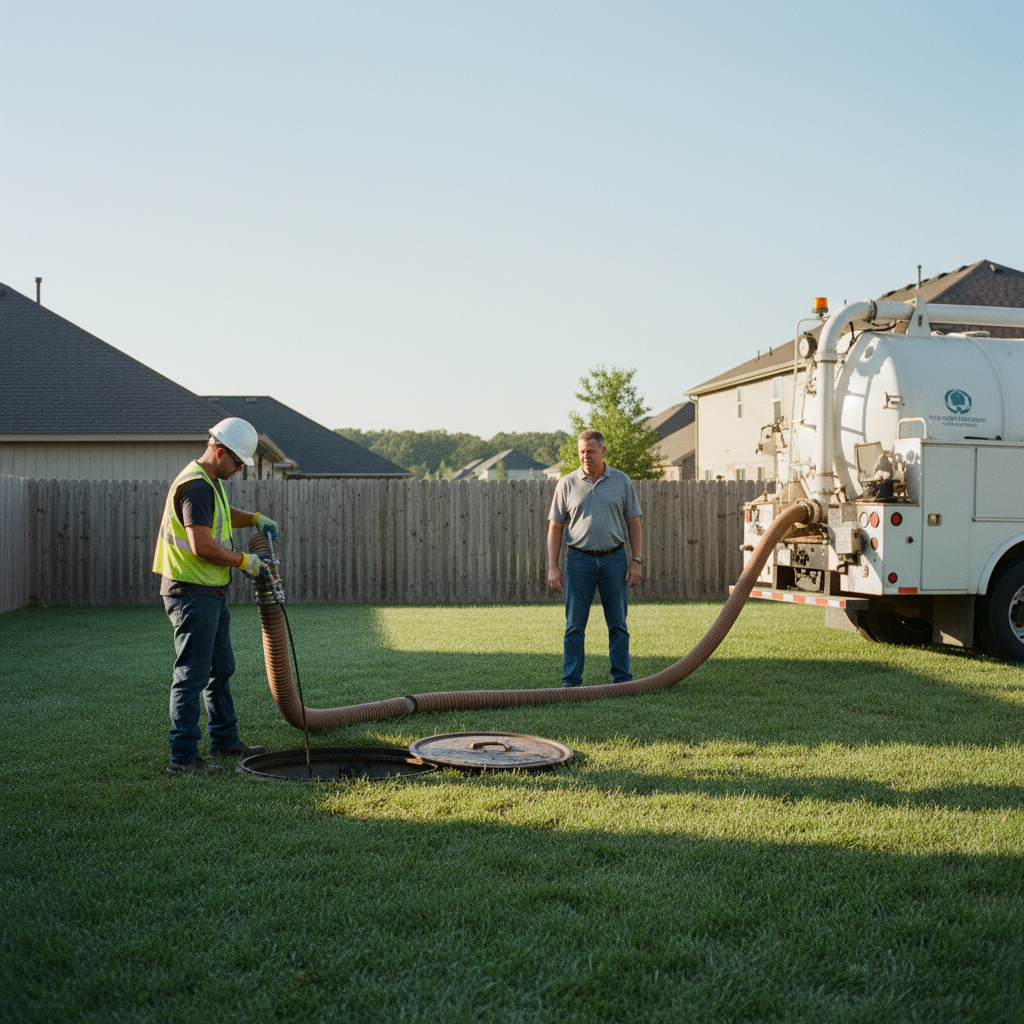
Setting up the hose and safety gear
With the lids exposed, the crew will set up their equipment:
- Vacuum hose: A large, heavy-duty hose is run from the truck to the tank, often laid on tarps or boards to protect your lawn.
- Safety equipment: Technicians typically wear gloves, boots, and sometimes respirators or eye protection when working around open tanks.
- Odor control: You'll likely notice a strong smell near the open tank, but odors usually stay local to that area and fade once the lids go back on.
They'll remove the access lids and visually inspect the liquid level. Very high or very low levels can be a clue about possible drain field or tank issues, but diagnosing those problems usually goes beyond basic pumping.
The pumping process step by step
Once everything is set up, the actual pumping starts.
1. Agitating and breaking up solids
Inside your tank are three main zones: a floating scum layer, liquid effluent, and heavy sludge on the bottom. To remove as much as possible, the technician will:
- Lower the hose into the tank to begin drawing off liquid.
- Use the hose or a special wand to stir and break up thicker sludge.
- Sometimes "backflush" a little liquid to help dislodge stubborn material.
This agitation is what separates a thorough pump-out from a quick skim of liquids.
2. Pumping out the tank
As the vacuum truck runs, you'll hear the pump motor and may see the hose occasionally flex as thicker material passes through.
The technician will:
- Gradually lower the liquid level while continuing to move the hose around the tank.
- Avoid damaging key components like baffles or tees.
- Monitor the flow to ensure nothing is clogging the hose.
For a typical residential tank, this stage often takes 20-40 minutes, depending on tank size and how full it is.
3. Basic internal checks
Once the tank is mostly empty, many providers will do quick visual checks such as:
- Looking at inlet and outlet baffles (or tees) to see if they're intact.
- Noting cracks, broken lids, or visible root intrusion.
- Checking for signs of backflow from the drain field, like water seeping back into the tank after pumping.
These are basic condition observations, not a full septic system inspection.
Cleanup, closing, and post-service talk
After pumping, the crew will:
- Rinse the inside of the tank lightly (unless local practice or tank condition suggests otherwise).
- Replace and secure the lids or riser covers.
- Backfill any holes they dug and roughly restore the sod or soil.
- Pick up tarps and hose, leaving the work area tidy.
Before they leave, you'll typically get a brief rundown that may include:
- What they saw: Condition of baffles, approximate sludge buildup, any obvious concerns.
- Recommended pumping interval: Many health departments suggest routine septic tank pumping every 3-5 years, depending on tank size and household usage.1
- Usage tips: Reminders about not flushing wipes, minimizing grease, and spreading out heavy water use.
You'll receive an invoice or service slip, sometimes with notes on tank size, condition, and next recommended date.
What's usually not included in basic pumping
A standard "pump out septic tank" service is mostly about removing waste from the tank. Homeowners are often surprised by what it doesn't cover by default:
- Full septic inspection: A comprehensive inspection (especially for real estate or compliance) is a separate service with more testing and documentation.
- Drain field diagnosis or repair: Pumping can reveal symptoms of a failing drain field, but fixing it usually requires separate assessment and often a different contractor.
- Plumbing or fixture repairs inside the house: Clogged toilets, broken pipes, or vent issues are typically handled by a plumber.
- Camera scoping of lines: Running a camera through sewer lines is usually an add-on or a different service.
- Electrical work on pumps or alarms: If you have a pump tank or lift station, electrical troubleshooting often falls under pump repair or electrician services.
If you think you need any of these, clarify when you book the appointment so the company can schedule appropriately and quote any additional costs.
How long it takes and what you should do after
For a typical residential septic tank with easy access, expect:
- On-site time: About 45-90 minutes from arrival to departure.
- Longer visits: If the tank is hard to find, buried deep, or has access issues, the visit can stretch to a couple of hours.
After the crew leaves, you can generally use your plumbing as normal. A few simple best practices:
- Avoid large, sudden surges of water (like multiple long showers plus laundry) for the rest of the day if your drain field is marginal.
- Keep records of the service date, company name, and any notes about tank condition.
- Consider adding or maintaining risers so future pumping visits don't require digging.
Bottom line: A good septic tank pumping visit is straightforward, a bit noisy, and occasionally smelly-but if you know the steps and limits of the service, it's a low-stress way to keep your system working for years.
Glossary
- Baffle: An internal wall or tee inside the tank that slows incoming wastewater and keeps solids from flowing out to the drain field.
- Effluent: The clarified liquid that leaves the septic tank and flows to the drain field.
- Riser: A vertical pipe or extension that brings the tank lid up near ground level for easier access.
- Scum layer: The floating mat of fats, oils, and lighter materials at the top of the tank contents.
- Sludge: The heavier solids that settle to the bottom of the tank over time.