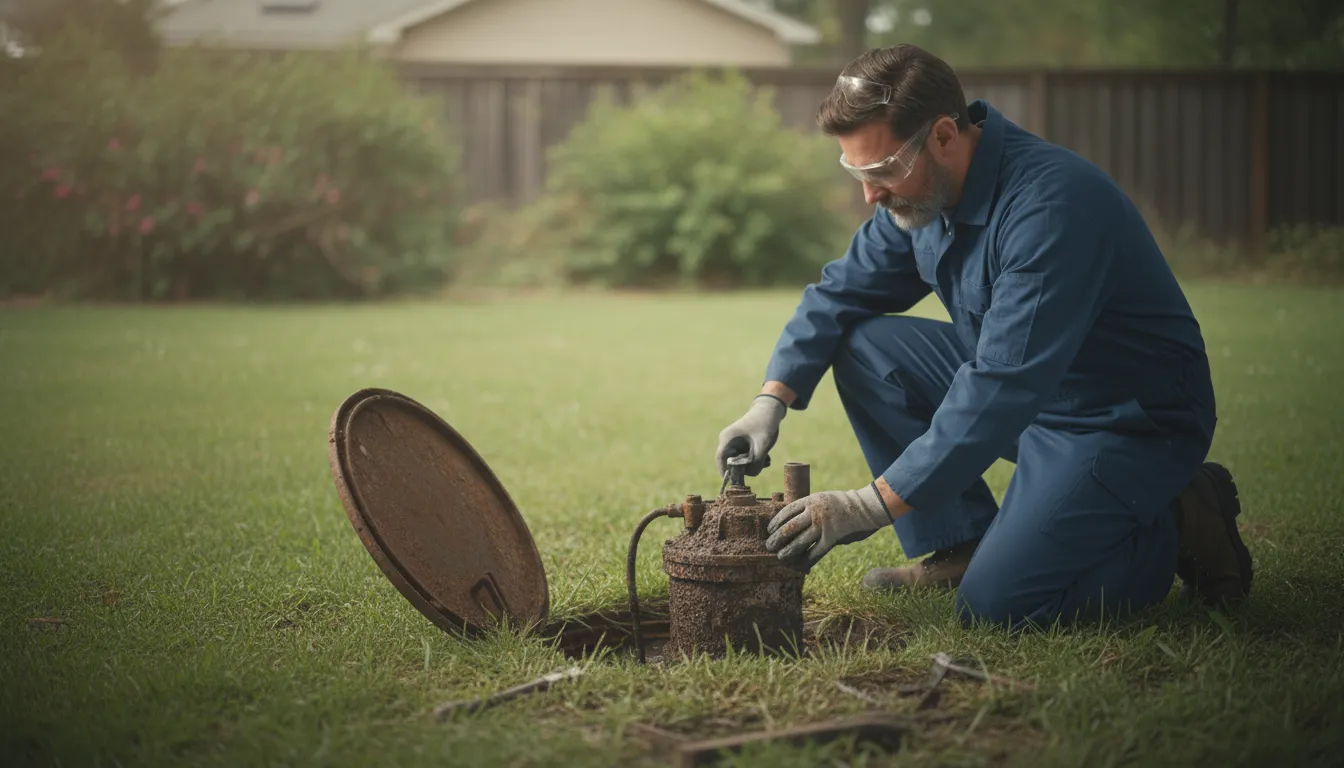
Find the Best Septic Pump Repair Companies for Your Business
No obligation • Fast responses • Nationwide coverage

Why you can trust Septic Spot
Septic Spot is a leading United States resource for understanding and comparing septic services. Our editors review providers using consistent criteria and verify key business details. Listings and scores are independent, and companies cannot pay to influence our content.
Search providers near you
Top Septic Pump Repair Companies in Wallingford, Connecticut Ranked
Maintaining a functional septic pump is critical for any home with an on-site wastewater system. When a pump fails, it can lead to sewage backups, alarm sounds, and potential environmental issues. This guide explains the process, costs, and local considerations for septic pump repair and replacement in Wallingford, helping you understand your options and connect with qualified local specialists for your system's needs.
Understanding Your Septic Pump System
A septic pump, often called an effluent pump or sewage ejector pump, is the mechanical heart of many modern septic systems, especially in areas where gravity alone cannot move wastewater. Its job is to push effluent from the pump chamber out to the leach field for final dispersal into the soil. In Wallingford, where variable terrain and soil conditions are common, these pumps are essential for systems that are lower than the drain field or that use advanced treatment technologies. A malfunctioning pump can halt the entire wastewater treatment process, making timely diagnosis and repair a priority for any homeowner.
Common Signs of Pump Failure
Recognizing early warning signs can prevent a minor issue from becoming a major system failure. Key indicators include:
- Audible Alarm: Most systems have a high-water alarm that sounds in the house or at the tank when the pump chamber is too full.
- Slow Drains or Backups: Toilets, showers, and sinks draining slowly or backing up, particularly in lower levels of the home, can signal a pump isn't evacuating the tank.
- Soggy Yard: Unusually wet, soggy, or foul-smelling areas in the yard near the pump chamber or leach field may indicate a pump failure causing an overflow.
- Silent Pump: During a routine inspection, if you don't hear the pump cycle on when water is used, it may have failed.
The Repair and Replacement Process in Wallingford
When you suspect a problem, a licensed septic service provider will follow a systematic process to diagnose and resolve the issue. This ensures the repair is done safely and effectively, complying with local health codes.
Step 1: System Inspection & Diagnosis
A technician will first inspect the electrical components. This includes checking the pump's power supply, control panel, float switches (which trigger the pump to turn on and off), and the alarm system. They will determine if the issue is a simple electrical fault, a stuck float, or a complete pump motor failure. This diagnostic step is crucial to avoid unnecessary replacements.
Step 2: Pumping the Tank
For safe access to the pump chamber, the septic tank is typically pumped out. This allows the technician to safely enter or reach the pump, check the check valve (which prevents backflow), and assess the pump's physical condition without exposure to raw sewage.
Step 3: Pump Repair or Replacement
Based on the diagnosis, the technician will proceed:
- Repair: This may involve cleaning or replacing float switches, repairing wiring, or unclogging the pump impeller. These are generally lower-cost fixes1.
- Replacement: If the pump motor is burned out or damaged, the entire unit will be replaced. This includes installing a new pump, check valve, and often updated float switches for reliability2.
Step 4: Testing & Verification
After the work is complete, the system is tested to ensure the new or repaired pump activates correctly at the right water level and effectively distributes wastewater to the leach field3. The alarm system is also reset and tested.
Find the perfect septic pump repair companies for your needs
Get personalized recommendations and expert advice
Local Factors Influencing Wallingford Septic Pump Projects
The cost and complexity of pump service in Wallingford are heavily influenced by Connecticut's specific geology and regulations. Understanding these factors helps explain why prices and project scopes can vary.
Soil Conditions and System Design
Connecticut soils often present challenges like high water tables, shallow bedrock, or dense hardpan4. These conditions frequently necessitate engineered septic systems, such as mound systems or systems with pressure distribution (which require a pump). Repairs on these specialized systems are inherently more complex and costly than on conventional gravity systems5. The pump is an integral, non-optional component of an engineered system's design.
Permitting and Health Department Oversight
Wallingford and state regulations require that significant repairs or alterations to a septic system be permitted and inspected by the local health department. For a simple pump swap-out, a permit may not always be required, but any work involving the distribution lines or alteration of the system design will. This oversight ensures repairs protect public health and the environment but can add time to the project timeline.
The Importance of Accessibility: Adding Risers
Many older septic systems have buried tank and pump chamber lids. Installing septic tank risers and pump chamber risers is a highly recommended, and often necessary, add-on during a pump service6. Risers bring secure, ground-level access to the components, making future inspections, pumping, and repairs much faster, safer, and less expensive. A service provider will often suggest this during a pump replacement to improve long-term maintenance.
Cost Guide for Septic Pump Services
Costs for septic pump work in Wallingford can vary based on the factors above, the contractor you choose, and the specifics of your system7. The following ranges are based on typical local and national data8 9.
- Pump Repair or Float Switch Replacement: $250 - $800. This covers minor electrical repairs, cleaning, or replacing the floats that control the pump cycle.
- Full Effluent Pump Replacement: $500 - $1,300. This is the typical range for removing a failed pump and installing a new unit, including labor and parts. The higher end may include additional components like a new control panel or check valve.
- Riser Installation (for access): Costs vary but are a worthwhile investment. This work is often done in conjunction with a pump replacement to facilitate the current and future service.
- Broader System Repairs (Pump-Related): $1,000 - $4,000. This range covers scenarios where a pump failure has caused or is part of a larger issue, such as repairing a clogged distribution line or replacing a damaged drain field line. It does not include a full leach field replacement.
It's important to view pump service as part of overall system health. A complete septic system replacement in Connecticut, which may be needed if the leach field has failed, can range from $10,000 to over $25,000, with soil conditions and system type being the primary cost drivers10 11.
Maintaining Your System After a Repair
Once your pump is repaired or replaced, proper maintenance is key to extending its lifespan and protecting your investment.
- Conserve Water: Reduce heavy, sudden water loads (like multiple showers or laundry loads at once) to prevent overwhelming the pump.
- Mind What You Flush: Only human waste and toilet paper should go down the drain. Avoid fats, oils, grease, and non-biodegradable items.
- Regular Inspections: Have a professional inspect your entire system, including the pump, every 1-3 years12.
- Pump the Tank Regularly: Even with a functioning pump, the septic tank itself needs to be pumped every 3-5 years to remove solids and prevent them from clogging the pump or drain field13.
- Know Your System: Keep a record of your system's design, the location of components, and your service history.
Frequently asked questions
Sources
Footnotes
-
Septic System Maintenance & Repairs - https://newmilfordseptic.com/septic-system-maintenance-essential-tips-for-homeowners-in-connecticut/ ↩
-
Septic Repair vs. Replacement: How to Decide What's Best for Your System - https://www.townesseptic.com/blog/septic-repair-vs-replacement ↩
-
Canadian Septic System Guide 2026 - Complete Resource - https://bio-sol.ca/en/blog/canadian-septic-system-owner-guide/ ↩
-
Septic System Design: What CT Homeowners Need to Know - https://andersonseptic.com/septic-system-design-guide/ ↩
-
Engineered Septic System - https://www.laundry-alternative.com/blogs/news/engineered-septic-system ↩
-
Septic Homeowners - North Central Distict Health Department - https://www.ncdhd.org/septic-homeowners ↩
-
The Best 10 Septic Services near Wallingford, CT 06492 - Yelp - https://m.yelp.com/search?cflt=septicservices&find_loc=Wallingford%2C+CT+06492 ↩
-
How much does septic tank system repair cost? - HomeGuide - https://homeguide.com/costs/septic-tank-repair-cost ↩
-
How Much Does Septic Tank Repair Cost? [2026 Data] | Angi - https://www.angi.com/articles/how-much-does-repairing-septic-tank-cost.htm ↩
-
Understanding Septic System Cost: A Complete Guide - https://ky-pd.com/blog/septic-system-cost-breakdown/ ↩
-
Septic System Cost Guide: Prices, Factors & Savings - https://landperc.com/septic-system-cost-estimate/ ↩
-
Operation and Maintenance - CT.gov - https://portal.ct.gov/dph/environmental-health/environmental-engineering/operation-and-maintenance ↩
-
Septic System Owner's Guide | NC State Extension Publications - https://content.ces.ncsu.edu/septic-system-owners-guide ↩