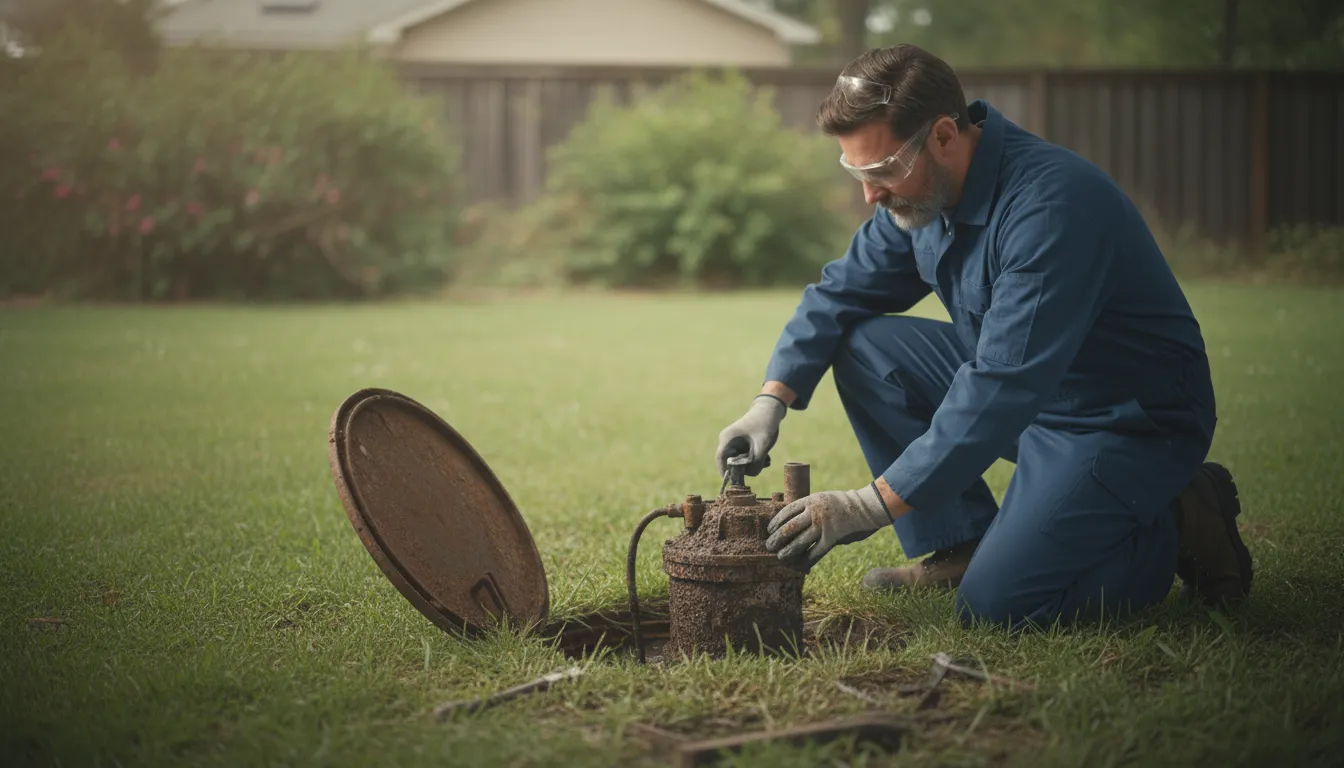
Find the Best Septic Pump Repair Companies for Your Business
No obligation • Fast responses • Nationwide coverage

Why you can trust Septic Spot
Septic Spot is a leading United States resource for understanding and comparing septic services. Our editors review providers using consistent criteria and verify key business details. Listings and scores are independent, and companies cannot pay to influence our content.
Search providers near you
Best Septic Pump Repair Companies in Delaware Ranked
When your septic system's pump fails, it's more than an inconvenience-it's a potential health hazard and a violation of state law. In Delaware, all septic system work, from minor repairs to full pump replacements, must be performed by licensed professionals under strict regulatory oversight. This guide explains the critical steps, costs, and regulations for addressing septic pump issues in Delaware, helping you navigate the process of finding qualified local specialists to restore your system's function.
Understanding Your Septic System's Pump
The pump is the heart of many modern septic systems, actively moving wastewater from the tank to the drainfield. Unlike older gravity-fed systems that rely on slope, pumped systems are essential for properties with challenging topography or specific environmental requirements. In Delaware, you'll typically encounter three main system types, each with different pump needs:
- Gravity Systems: The most traditional design. Wastewater flows from the tank to the drainfield by gravity alone, so these systems do not have a pump. Issues here usually relate to blockages or field failure 1.
- Low-Pressure Pipe (LPP) Systems: These systems use a pump (often in a separate chamber or the tank itself) to periodically "dose" or spray effluent evenly across the drainfield. This allows for a more efficient and controlled treatment process 2.
- Innovative/Alternative (I/A) Systems: Required in environmentally sensitive areas like the Inland Bays or Nanticoke River watershed, these advanced systems provide a higher level of treatment. They often involve multiple pumps, aerators, or filters and require a specialized maintenance contract with a licensed operator 3.
Knowing your system type is the first step in diagnosing a problem. A failure in an LPP or I/A system often points directly to the pump, its floats, or the associated alarm panel.
The Step-by-Step Process for Repair and Replacement
Addressing a septic pump issue in Delaware isn't a simple DIY fix. The state mandates a formal process to protect public health and water quality.
- Inspection and Diagnosis: The first action is to hire a licensed professional. A Class H septic system inspector or a Class E system contractor can diagnose the issue. They will check the pump, electrical components, float switches, and alarm system to determine if a repair or full replacement is necessary.
- Permitting: For any major repair or full pump replacement, a permit from the Delaware Department of Natural Resources and Environmental Control (DNREC) is typically required. This process often involves a Class C system designer and ensures the work complies with state code (7 DE Admin. Code 7101).
- Repair or Replacement Work: All physical work on the system must be performed by a licensed Class E system contractor. This ensures the technician has the state-required expertise for proper installation and connection 4 5.
- Final Inspection: Upon completion, the work must be inspected to ensure it meets all state standards before the system is put back into operation.
Find the perfect septic pump repair companies for your needs
Get personalized recommendations and expert advice
Delaware Regulations and Homeowner Responsibilities
Delaware takes septic system maintenance seriously. Homeowners are legally responsible for ensuring their systems are functioning properly and are required to have them pumped and inspected regularly by a licensed professional. Key regulations include:
- Licensing is Mandatory: Anyone who repairs, installs, or inspects septic system components must hold the appropriate DNREC license. Always verify a provider's license before hiring them 6.
- System Upgrades: For systems installed after March 2002, state law requires that tanks have access risers to the ground surface and an effluent filter. These filters must be cleaned during routine pumping, highlighting the importance of regular maintenance 7 8.
- Financial Assistance: The Septic Rehabilitation Grant Program (SRGP) offers crucial funding for low-income homeowners to repair or replace failing systems. This state-administered program can significantly offset the cost of major work for those who qualify 9.
What to Expect: Costs for Pump Service in Delaware
The cost to address a pump problem depends on the extent of the failure. Based on current regional data, homeowners can expect the following price ranges:
- Pump Repair: Fixing a pump motor or replacing a float switch typically costs between $250 and $400.
- Pump Replacement: Removing an old pump and installing a new one generally ranges from $500 to $1,300, depending on the pump's horsepower and specifications.
- Related Service - Tank Pumping: While not a repair, pumping the tank is often done concurrently. In Delaware, pumping a tank of 2,000 gallons or less averages around $295, with additional charges for larger tanks 10.
- Full System Replacement: If a pump failure is a symptom of a broader system collapse, replacement costs can range from $3,600 to over $12,000, heavily dependent on the soil conditions and the type of system required (e.g., standard LPP vs. complex I/A) 11 12.
Maintaining Your System to Avoid Emergencies
The best repair is the one you never need. Proactive maintenance is the most effective way to prevent sudden pump failures and costly replacements.
- Schedule Regular Pumping: Have your tank pumped every 3-5 years by a licensed professional. This prevents solids from clogging the pump or flowing into the drainfield.
- Conserve Water: Reduce strain on your system by fixing leaks, using high-efficiency fixtures, and spreading out laundry loads.
- Mind What You Flush: Never flush anything besides human waste and toilet paper. Avoid pouring grease, chemicals, or food waste down drains.
- Listen for the Alarm: Most pumped systems have an alarm that sounds when the water level is too high. If you hear it, reduce water use immediately and call a professional. It's your system's way of asking for help before a backup occurs.
By understanding your system, following state protocols, working with licensed contractors, and committing to routine care, you can ensure your septic pump operates reliably for years to come.
Frequently asked questions
Sources
Footnotes
-
Septic Systems - https://www.martins-services.com/sanitation-service/septic-systems ↩
-
Types of Septic Systems - https://www.septicconnection.com/types-of-septic-systems ↩
-
Septic System Types | Brantley Septic - https://www.brantleyseptic.com/septic-system-types/ ↩
-
Septic System Basics by Dolby & Associates - http://www.dolbyandassociates.com/septic-system-basics.html ↩
-
Kent County, DE Septic Services | Septic Pumping & Cleaning - https://septic-masters.com/location/delaware-septic-services/kent-county-delaware/ ↩
-
Septic Systems - DNREC - https://dnrec.delaware.gov/water/residential/septic-systems/ ↩
-
Simply Septics - Delaware.gov - https://documents.dnrec.delaware.gov/Water/Septics/Simply-Septics.pdf ↩
-
Delaware Septic Tank Requirements | On-Site Wastewater Treatment and Disposal System - https://www.ntotank.com/blog/delaware-septic-tank-requirements ↩
-
Septic Rehabilitation Grant Program - DNREC - Delaware.gov - https://dnrec.delaware.gov/environmental-finance/septic-rehabilitation/ ↩
-
Keep Your Septic System Running Smoothly with Regular Pumping - https://www.delvalseptics.com/keep-your-septic-system-running-smoothly-with-regular-pumping/ ↩
-
How Much Does Septic Tank System Repair Cost? (2026) - HomeGuide - https://homeguide.com/costs/septic-tank-repair-cost ↩
-
How Much Does a Septic System Cost? [2026 Data] | Angi - https://www.angi.com/articles/what-does-it-cost-install-septic-system.htm ↩