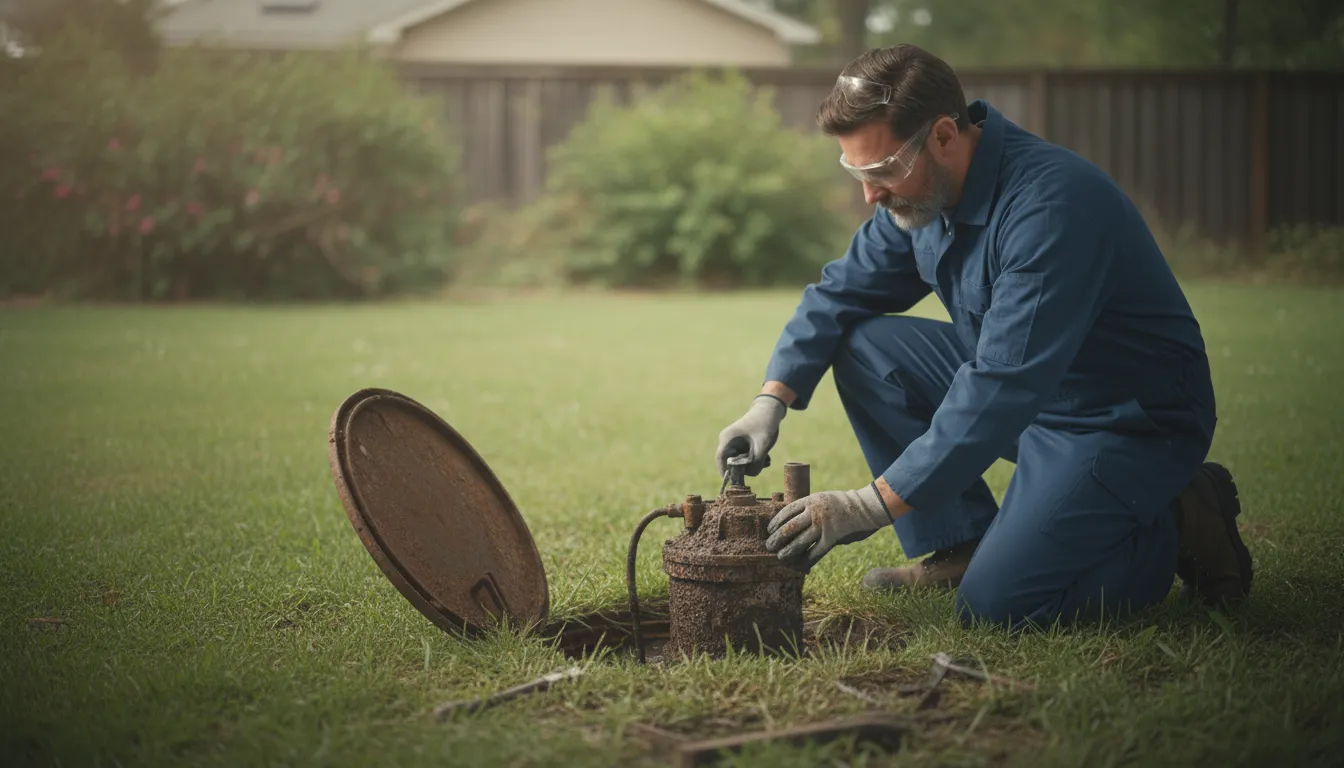
Find the Best Septic Pump Repair Companies for Your Business
No obligation • Fast responses • Nationwide coverage

Why you can trust Septic Spot
Septic Spot is a leading United States resource for understanding and comparing septic services. Our editors review providers using consistent criteria and verify key business details. Listings and scores are independent, and companies cannot pay to influence our content.
Search providers near you
Best Septic Pump Repair Companies in Maine Ranked
A failing septic pump or a malfunctioning system can disrupt your home and pose serious health and environmental risks. In Maine, where soil conditions and terrain vary widely, proper septic system function is critical. This guide explains the process, regulations, and costs for septic pump repair and full system replacement in the state, helping you understand when to call a professional and how to navigate Maine's specific requirements to restore your wastewater system safely and effectively.
Understanding Your Maine Septic System
Septic systems in Maine are not one-size-fits-all. The type of system you have significantly influences the repair or replacement process. Most systems consist of a tank, where solids settle, and a disposal area, where treated liquid wastewater is released into the soil.
- Conventional Gravity Systems: These rely on gravity to move wastewater from the tank to the leach field. They are simpler but require suitable soil and slope 1.
- Pressure Distribution (Pump) Systems: Very common in Maine's hilly or challenging terrain, these systems use an electric pump to transport wastewater from a pump chamber to the disposal area. Repair often focuses on this pump, its float switches, and associated wiring.
- Alternative/Aerobic Systems: Used when soil conditions are poor or space is limited, these systems use oxygen to treat wastewater and often require more complex components and higher-level engineering 2.
Knowing your system type is the first step in diagnosing a problem. A licensed professional can identify it during an inspection.
Signs You Need Repair or Replacement
Recognizing early warning signs can save you from a complete system failure and more expensive repairs.
Signs Pointing to a Pump or Component Repair:
- Alarm Sounds: Many pump systems have an audible or visual alarm that activates when the pump fails or water levels are too high.
- Slow Drains or Backups: Especially in lower fixtures like basement showers or toilets, which may be the first to show issues if a pump isn't moving water.
- Gurgling Sounds in plumbing.
- A consistently wet or soggy area directly over the pump tank or distribution box.
Red Flags Indicating Possible System Replacement:
- Sewage backing up into household drains.
- Persistent foul odors around the tank or drainfield.
- Bright green, spongy grass or standing water over the leach field, even in dry weather.
- Failed system inspection, often required during a property sale.
- System age: Many components exceed their 20-30 year lifespan.
If you notice any of these issues, contact a certified Maine professional immediately for an inspection.
The Repair Process: Fixing Pumps and Components
When a specific component fails, repair is often the most cost-effective solution. Common repairs in Maine include replacing a septic pump, float switches, baffles, or sections of damaged pipe.
- Inspection and Diagnosis: A certified professional will inspect the tank (which may require pumping first), the pump chamber, electrical components, and the distribution lines to pinpoint the issue.
- Obtaining Permits: For most repairs beyond simple part swaps, a permit from your town's Local Plumbing Inspector (LPI) may be required.
- The Repair Work: The professional will execute the repair, such as installing a new submersible pump, which involves electrical disconnection, removal of the old pump, installation of the new one, and re-testing the system 3.
- System Testing: After repair, the system is tested to ensure it is operating correctly and the alarm (if present) is reset.
Pump replacement is a common and relatively less expensive repair compared to a full system overhaul, but it must be done correctly to avoid repeated failures 4.
When Replacement is Necessary: A Step-by-Step Guide
If the leach field has failed or the system is too old and compromised, repair is not an option. Full system replacement in Maine is a regulated, multi-step process.
- Site Evaluation: This is the critical first step. A licensed Site Evaluator must assess your property. They perform soil tests, evaluate topography, and determine the appropriate system type and location based on Maine's Subsurface Wastewater Disposal Rules (144A CMR 241) 5. The system's design capacity is primarily determined by your home's number of bedrooms 6.
- System Design & Permitting: The Site Evaluator creates a design. This design, along with a permit application, must be submitted to and approved by your town's Local Plumbing Inspector (LPI) 7. You cannot proceed without this permit.
- Installation: Only a certified installer can install the new system according to the approved design. The process involves excavating, installing the new tank and disposal area, connecting plumbing, and often abandoning the old system in place.
- Final Inspection: The LPI performs a final inspection to ensure the installation matches the permitted design before the system is covered.
Find the perfect septic pump repair companies for your needs
Get personalized recommendations and expert advice
Maine Regulations and Licensing: What You Must Know
Maine has strict rules to protect public health and groundwater. Ignoring them can lead to fines and an unusable system.
- 144A CMR 241: These are the state's minimum standards governing the siting, design, and installation of all subsurface wastewater systems.
- Licensed Site Evaluators: Only professionals licensed by the Maine Department of Health and Human Services can legally perform site evaluations and design systems. Always verify a professional's license.
- Certified Installers: Installation work must be done by an installer certified by the state. Ask for proof of certification 8.
- Local Plumbing Inspector (LPI): Your town's LPI is the local authority who enforces state rules, issues permits, and conducts inspections. All permitting flows through this office 9.
Working with licensed and certified professionals is not just a recommendation-it's a legal requirement for system replacement and most major repairs.
Cost Considerations for Repair and Replacement
Costs in Maine vary significantly based on system type, soil conditions, accessibility, and contractor rates. The figures below are estimates to help you budget.
- Septic Pumping: Typically required before inspection or repair, costing $250-$500 10.
- Pump or Component Repair: The cost varies by pump type and labor, but is generally a few thousand dollars, making it a more manageable expense than full replacement 11.
- Conventional System Replacement: For a new gravity or pressure distribution system, expect a range of $15,000 to $25,000.
- Alternative/Aerobic System Replacement: Due to their complexity, these systems can cost $25,000 to $40,000 or more 12.
Disclaimer: These are ballpark estimates. The only way to get an accurate cost is to have a licensed Site Evaluator assess your specific property and provide a design.
Maintaining Your System Post-Repair or Replacement
Protect your investment with proper care. Pump your tank every 3-5 years, conserve water, avoid pouring grease or chemicals down drains, and never drive or build over any part of the system. Keep records of all inspections, pumping, repairs, and the as-built design of your new system.
Frequently asked questions
Sources
Footnotes
-
How Much Does a Septic System Cost? - https://www.fastexpert.com/blog/septic-system-cost/ ↩
-
Residential Septic Tank Pricing | Homeowner's Guide to Costs - https://www.ntotank.com/blog/residential-septic-tank-pricing ↩
-
A Complete Guide to Pumps for Septic Systems: How They Work, Types, and Benefits - https://www.streampumps.com/pump-knowledge/submersible-pump-septic-system-en20250422.html ↩
-
Septic Repair vs. Replacement: A Guide to Costs & Red Flags - https://prosepticri.com/septic-repair-vs-replacement-guide/ ↩
-
FAQs | Green Environmental | Septic System Design, Site Evaluations ... - https://mainesepticdesign.com/faqs/ ↩
-
Septic Systems: Considerations When Building or ... - https://mpamaine.org/wp-content/uploads/2018/03/Septic-Considerations.pdf ↩
-
Septic Systems - Maine.gov - https://www.maine.gov/dep/water/groundwater/septic_systems.pdf ↩
-
Subsurface Wastewater Licensing & Certification - Maine.gov - https://www.maine.gov/dhhs/mecdc/services/business-services/hydrology-and-wastewater/subsurface-wastewater-licensing-certification ↩
-
Permit Search, Financial, Tips for Septic Systems, FAQs - https://www.maine.gov/dhhs/mecdc/services/business-services/hydrology-and-wastewater/a-b-c-d-resources ↩
-
Septic Installation, Inspection & Repair | Central Maine Septic - https://centralmaineseptic.com/septic-tank-repair/ ↩
-
New Homebuyer's Guide to Septic Systems - EPA - https://www.epa.gov/sites/default/files/2017-08/documents/170803-homebuyerssepticguide_508c.pdf ↩
-
Septic System Replacement in Phippsburg, Maine - https://www.ccconstructionservices.com/septic-system-replacement/ ↩