Find the Best Septic Pump Repair Companies for Your Business
No obligation • Fast responses • Nationwide coverage

Why you can trust Septic Spot
Septic Spot is a leading United States resource for understanding and comparing septic services. Our editors review providers using consistent criteria and verify key business details. Listings and scores are independent, and companies cannot pay to influence our content.
Search providers near you
Best Septic Pump Repair Companies in North Dakota Ranked
Maintaining a functional septic pump is critical for any North Dakota home with a pressure or mound system. When a pump fails, it can lead to sewage backups, property damage, and serious health risks. This guide explains how septic pump systems work in North Dakota, outlines the repair and replacement process, details state-specific regulations, and provides practical information to help you navigate finding qualified local professionals for your project.
How Septic Pumps Work in North Dakota Systems
Not all septic systems in North Dakota require a pump. The type of system installed on your property depends heavily on local soil conditions, topography, and regulations. Understanding your system type is the first step in diagnosing a pump issue.
- Gravity Systems: These are the simplest and most common type for homes where the drain field is lower than the septic tank outlet. They rely entirely on natural slope to move effluent and do not contain any mechanical pumps.
- Pressure-Dosed Systems (Pump Systems): When the drain field is located uphill from the septic tank or soil conditions require controlled distribution, a pump system is used. A submersible pump inside a separate pump chamber or the tank itself pushes effluent out to the drain field through a network of small pipes 1.
- Mound Systems: Common in areas with high water tables, shallow bedrock, or poor soil, mound systems are entirely dependent on a pump. Effluent is pumped from the septic tank up into a constructed sand mound where treatment occurs 2 3. A failing pump in a mound system will cause immediate and complete system failure.
The pump itself is typically a submersible unit controlled by a float switch or electronic control panel. An alarm system is required to alert homeowners if the pump fails or water levels in the pump tank become too high.
Signs You Need Septic Pump Repair or Replacement
Recognizing early warning signs can prevent a minor repair from becoming a major replacement and avoid unsanitary conditions.
- Audible Alarm: The most direct sign. If your septic alarm (often located in the basement, garage, or utility room) is sounding or its light is on, it indicates a high water level in the pump tank, signaling pump failure or a switch problem.
- Slow Drains or Backups: Gurgling toilets, slow-draining sinks, or sewage backups in the lowest drains of your home can indicate that effluent is not being pumped out of the tank.
- Soggy Ground or Odors: Unusually wet, spongy, or foul-smelling ground around the septic tank, pump chamber, or drain field can mean effluent is surfacing due to a pump failure.
- Unusually Green Grass: A patch of grass over the drain field that is much greener and lusher than the rest of your yard may be receiving untreated effluent from a malfunctioning system.
- Pump Running Constantly or Not At All: If you hear the pump running continuously or if you've never heard it cycle on (during a heavy water use period), it could be stuck or seized.
The Repair and Replacement Process
When you suspect a pump issue, contacting a licensed professional is essential. Here is a typical step-by-step process they will follow:
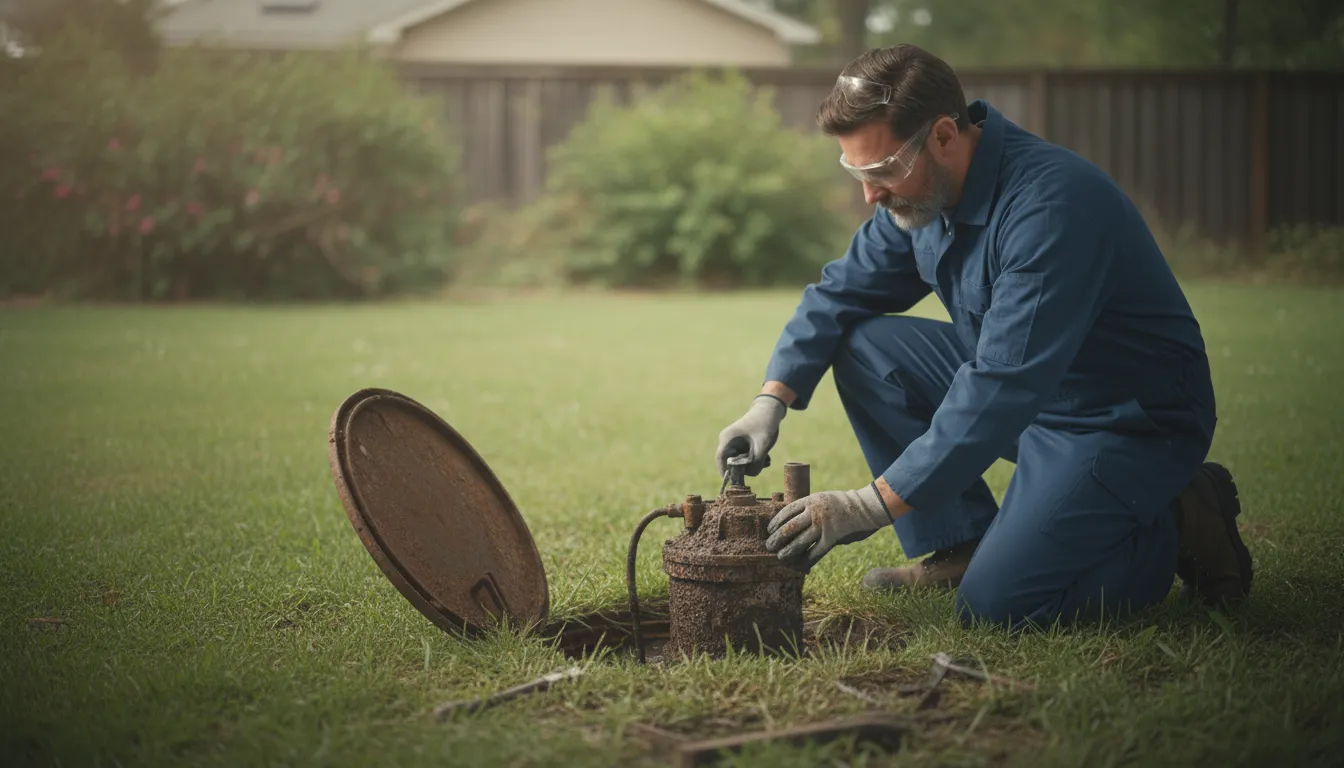
- Diagnosis & Inspection: A technician will first check the control panel and alarm. They will then often need to pump out the pump chamber to safely access the submersible pump, floats, and wiring for a visual and electrical inspection 4.
- Problem Identification: The issue could be a clogged pump intake, a failed float switch, a tripped circuit breaker, damaged wiring, or a burned-out pump motor. The technician will determine if a repair or full replacement is necessary 5.
- Pump Removal: If the pump is damaged or seized, it will be disconnected from the discharge pipe and electrical wiring and hoisted out of the tank.
- Installation: A new, correctly sized and rated submersible pump is installed. This includes attaching it to the discharge line, installing new float switches, and ensuring all seals are watertight 6.
- Wiring & Testing: The new pump is wired into the control panel. The system is then tested by filling the pump chamber with water to ensure the floats activate the pump correctly and shut it off at the proper levels. The alarm system is also verified.
Find the perfect septic pump repair companies for your needs
Get personalized recommendations and expert advice
North Dakota Regulations and Licensing
North Dakota has specific rules governing who can work on septic systems and how the work must be done to protect public health and groundwater.
- Licensing Requirement: As of 2025, individuals and companies performing septic system installation, repair, or alteration must be licensed by the North Dakota Department of Environmental Quality (NDDEQ). A key exception allows homeowners to install or repair systems on their own land without a license, though they must still follow all technical standards and permitting rules.
- Permitting: A permit from the NDDEQ or your local public health unit is required for new system installations and for significant repairs or replacements of system components like tanks and drain fields 7 8. Even for pump replacement, it's wise to check if a permit is needed, as local regulations can vary.
- System Standards: State code specifies construction details. For example, septic tanks must have a minimum liquid depth of 30 inches and cannot exceed 6.5 feet in depth. Baffles must be made of approved, durable materials 9.
- Inspection Timelines: State law mandates that local regulators perform requested septic system inspections within one business day, helping to keep projects moving.
Understanding Costs for Septic Pump Work in North Dakota
Costs can vary widely based on the system type, the extent of the problem, and your location in the state. Below are typical price ranges based on industry data 10.
- Pump or Control Component Repair/Replacement: $800 - $5,000. This covers replacing a submersible pump, float assembly, or control panel. Mound system pumps or high-capacity pumps are at the higher end of this range.
- Septic Tank Pumping & Inspection: $200 - $600. This is often the first step in diagnosing a pump problem and is crucial for routine maintenance.
- Baffle or Riser Repair: $300 - $1,200. Damaged tank inlet/outlet baffles or adding/repairing access risers.
- Lateral Pipe Repair: $1,500 - $8,000. Repairing or replacing clogged or crushed pipes in the drain field.
- Full Septic System Replacement: $10,000 - $40,000+. Necessary when the tank or drain field fails. Mound systems are among the most expensive to replace.
Proactive Tip: Installing septic tank risers (concrete or plastic sleeves that bring the tank lid to ground level) for $300-$600 can save hundreds of dollars in future digging costs for pumping, inspection, or repair 11.
Choosing a Service Provider in North Dakota
Selecting the right professional is crucial for a job done correctly and in compliance with state law.
- Verify NDDEQ License: Always ask for proof of current NDDEQ licensing for septic system work. This ensures the contractor has the required training 12.
- Check for Insurance: Ensure the company carries both liability insurance and workers' compensation coverage.
- Get Detailed Estimates: Obtain written estimates from multiple licensed contractors. The estimate should detail the scope of work, pump specifications (horsepower, head pressure), and a breakdown of labor and material costs.
- Ask About Permits: A reputable contractor will know whether your repair requires a permit and will typically handle the application process for you.
- Local Experience: Choose a provider familiar with North Dakota's common soil types and system designs, especially the nuances of maintaining mound systems in colder climates.
Frequently asked questions
Sources
Footnotes
-
Types of Septic Systems - https://www.wrenvironmental.com/blog/2020/july/types-of-septic-systems/ ↩
-
Individual Home Sewage Treatment Systems - https://deq.nd.gov/publications/WQ/3_WM/NPS/SWCBinder/SepticSys/NDSUExt_guide.pdf ↩
-
Septic Systems - https://www.martins-services.com/sanitation-service/septic-systems ↩
-
Understanding the Different Types of Septic Repairs - https://septiccleanings.com/blog/different-types-of-septic-repairs/ ↩
-
Repairing Septic Systems: A Detailed Manual - https://ky-pd.com/blog/fixing-septic-system/ ↩
-
A Complete Guide to Pumps for Septic Systems: How They Work, Types, and Benefits - https://www.streampumps.com/pump-knowledge/submersible-pump-septic-system-en20250422.html ↩
-
On-Site Sewage Treatment Systems (OSTS) | City of Grand ... - https://www.grandforksgov.com/government/city-departments/public-health/environmental-health/on-site-sewage ↩
-
Septic (Onsite Wastewater) Systems - First District Health Unit - https://fdhu.org/environmental-health-division/septic-onsite-wastewater-systems/ ↩
-
N.D. Admin Code 62-03.1-03-07 - Septic tanks | State Regulations - https://www.law.cornell.edu/regulations/north-dakota/N-D-A-C-62-3.1-03-07 ↩
-
Septic Repair vs. Replacement: A Guide to Costs & Red Flags - https://prosepticri.com/septic-repair-vs-replacement-guide/ ↩
-
Septic Pumping Cost by State: 2024 Complete Price Guide - https://wastedoor.com/article/septic-pumping-cost-by-state ↩
-
North Dakota Senate Bill 2267: What You Need to Know - NDOWRA - https://ndowra.org/north-dakota-senate-bill-2267-what-you-need-to-know/ ↩