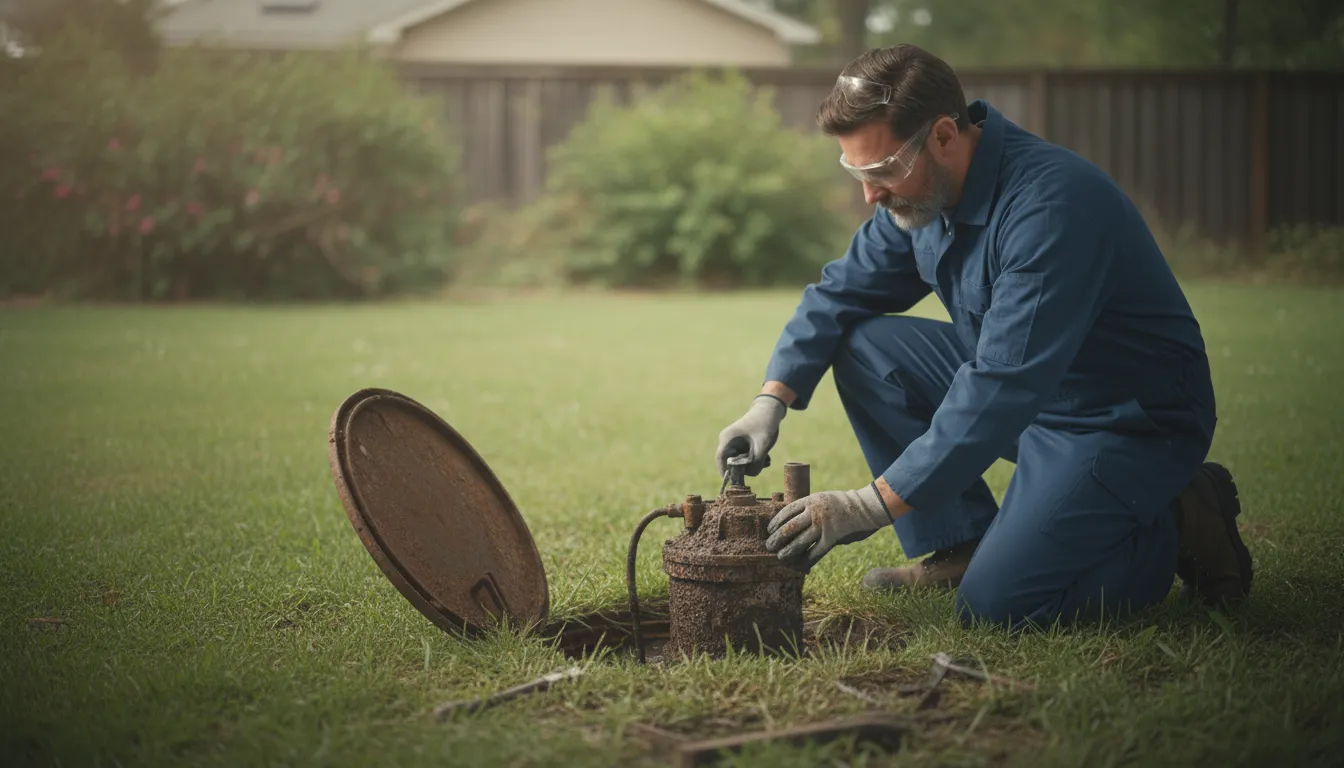
Find the Best Septic Pump Repair Companies for Your Business
No obligation • Fast responses • Nationwide coverage

Why you can trust Septic Spot
Septic Spot is a leading United States resource for understanding and comparing septic services. Our editors review providers using consistent criteria and verify key business details. Listings and scores are independent, and companies cannot pay to influence our content.
Search providers near you
Best Septic Pump Repair Companies in Nevada Ranked
Maintaining a functional septic system is critical for Nevada homeowners, especially given the state's unique environmental challenges. When a pump fails or components wear out, it can lead to sewage backups, property damage, and significant health hazards. This guide provides essential information on septic pump repair and system replacement, helping you understand the process, navigate Nevada's specific regulations, and connect with qualified local professionals to restore your system's operation.
Understanding Nevada's Septic System Types
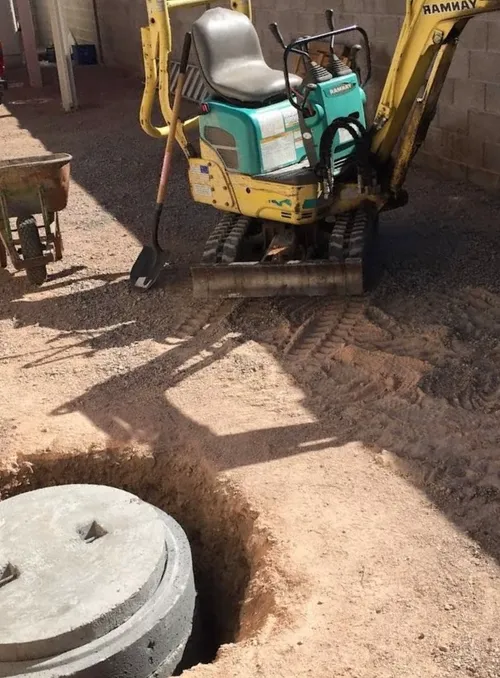
Nevada's arid climate, rocky soil, and varied terrain mean that a one-size-fits-all septic system doesn't exist. The type of system you have directly impacts the repair or replacement process and costs.
- Conventional Gravity Systems: These are the simplest type, relying on a septic tank and a gravity-fed drainfield (leach field). Repairs often focus on the tank itself (e.g., baffles, lids) or the drainfield 1.
- Alternative/Engineered Systems (Pump Systems): Very common in Nevada due to shallow soil, high groundwater, or sloped lots. These systems use an electrical effluent pump to push treated wastewater from the tank to the drainfield. Repairs frequently involve this pump, its float switches, control panels, and associated wiring.
- Advanced Treatment Technologies (ATT): In areas with stricter environmental regulations, systems like Advantex or drip irrigation (e.g., Geoflow) may be installed 2. These involve more complex mechanical and treatment components that require specialized knowledge for repair and maintenance.
The Repair & Replacement Process: Step-by-Step
Addressing a septic issue is a structured process, often mandated by local health codes.
- Diagnosis & Problem Identification: The first step is recognizing signs of failure. These include slow drains, gurgling pipes, sewage odors indoors or near the drainfield, soggy ground over the system, or an audible alarm from a pump tank indicating high water levels 3.
- Professional Assessment & Permitting: Contact a licensed septic professional. For major repairs-such as replacing a tank, repairing a drainfield, or replacing a pump-a permit from your local health authority is almost always required before work begins. The professional will often handle the permit application.
- System Pumping: Before most repairs can be performed, the septic tank must be pumped out by a licensed hauler to allow safe access and prevent contamination 4. This typically costs between $300 and $600 in Nevada.
- Component Repair or Replacement: The specific work is completed. This could involve:
- Effluent Pump Replacement: Swapping out a failed pump, which can cost between $500 and $2,000+ depending on the pump type and labor.
- Electrical Control Repair: Fixing float switches, alarms, or control panels.
- Tank Repairs: Fixing broken baffles (which can cost $500-$1,000) or cracked tank lids.
- Distribution Box Repair/Replacement: Leveling or replacing a damaged "D-box" that distributes effluent to the drainfield lines, costing $600-$2,000.
- Inspection & Final Approval: Once repairs are complete, the local health department may require a final inspection to ensure the work complies with code before the system is put back into service.
Find the perfect septic pump repair companies for your needs
Get personalized recommendations and expert advice
Nevada's Regulatory Landscape for Septic Work
Nevada's regulations are enforced at the county level, and understanding your local jurisdiction is crucial.
- Key Regulatory Bodies: In Northern Nevada, the Northern Nevada Public Health (NNPH) agency oversees systems. In the Clark County area, the Southern Nevada Health District (SNHD) is the permitting authority 5.
- Permit Requirements: Major repairs, replacements, and system abandonments require a permit. Applications are often submitted through online portals like OneNV.us in the south 6. A standard repair permit fee can be approximately $482, but this varies by county.
- Notice of Repair: Property owners are typically required to notify their local health authority within 48 hours of commencing certain types of repairs.
- Upcoming Regulatory Changes: Significant updates are proposed, particularly in Southern Nevada, which may take effect in 2025/2026. These could introduce 5-year operating permits and mandatory system inspections prior to property sales, making proper maintenance and documentation even more important for homeowners 7 8.
Cost Guide for Repairs and Replacement in Nevada
Costs can vary widely based on system type, component, and property accessibility. Below is a general guide based on Nevada-specific data.
- Septic Tank Pumping: $300 - $600 (required before most repairs).
- Minor Component Repair: $500 - $1,500. This includes fixing a broken baffle, replacing a tank lid, or repairing electrical controls for a pump.
- Effluent Pump Replacement: $500 - $2,000+. The final cost depends on the pump's horsepower, brand, and the complexity of installation.
- Distribution Box Repair/Replacement: $600 - $2,000 9.
- Major System Repair or Partial Replacement: $2,000 - $10,000. This covers significant drainfield repairs, replacing a large section of leach lines, or installing a new pump chamber.
- Complete System Replacement: $3,000 - $15,000+. The cost for a brand-new conventional or alternative system depends entirely on soil conditions, system technology, and size 10 11.
Maintaining Your System to Avoid Major Repairs
Proactive maintenance is the most cost-effective strategy to avoid emergency pump failures and catastrophic system replacements.
- Pump Your Tank Regularly: Even with a working pump, the septic tank itself must be pumped every 3 to 5 years to remove solids and prevent clogs that can overload the entire system 12.
- Annual Inspections for Alternative Systems: If you have a system with an effluent pump or other mechanical components, an annual inspection by a professional is strongly recommended to check electrical elements, alarm function, and pump performance 13.
- Mind What You Flush: Only human waste and toilet paper should go into the system. Avoid chemicals, grease, wipes (even "flushable" ones), and excessive use of garbage disposals.
- Protect Your Drainfield: Never drive or park heavy vehicles over the drainfield area, and divert rainwater runoff away from it.
Choosing a Qualified Professional in Nevada
Not all contractors are equal, especially for complex alternative systems. Look for a provider who:
- Is licensed by the Nevada State Contractors Board.
- Has specific experience with the type of system you have (e.g., gravity, mound, drip irrigation).
- Can handle the local permitting process with the health district (NNPH or SNHD).
- Provides clear, written estimates and explains the necessary repairs in detail.
- Offers maintenance plans, which are invaluable for engineered systems.
Frequently asked questions
Sources
Footnotes
-
Septics101 Chapter 3: Types of Septic Systems - https://www.youtube.com/watch?v=3ZANsnpx3tg ↩
-
Alternative Septic System Operation & Maintenance - https://www.lyttleco.com/services/septic-system-operation-maintenance/ ↩
-
INDIVIDUAL SEWAGE DISPOSAL SYSTEM GUIDE - https://www.centralnevadahd.org/wp-content/uploads/2024/04/ISDS_CNHD2024.pdf ↩
-
Maintaining Your Septic System - A Guide for Homeowners - https://www.mohave.gov/departments/development-services/environmental-qualitywaste-disposal/documents/maintaining-your-septic-system-a-guide-for-homeowners/ ↩
-
Septic Systems & Liquid Waste - Northern Nevada Public Health - https://www.nnph.org/programs-and-services/environmental-health/land-development/septic-liquid-waste.php ↩
-
Residential Septic System Permit Requirements - https://www.southernnevadahealthdistrict.org/permits-and-regulations/sewage-septic-disposal-systems-isds/residential-isds-permits/residential-septic-tank-permit-requirements/ ↩
-
Southern Nevada updates septic regulations - https://www.facebook.com/groups/100717773353825/posts/25879949978337251/ ↩
-
2025 regulations governing individual sewage disposal systems and ... - https://media.southernnevadahealthdistrict.org/download/eh/isds/proposed-regulations.pdf ↩
-
How Much Does Septic Distribution Box Replacement Cost? (2026) - https://homeguide.com/costs/septic-distribution-box-replacement-cost ↩
-
Septic System | Nevada County, CA - https://www.nevadacountyca.gov/2520/Septic-System ↩
-
New Septic Rules in 2025: What Nevada Homeowners Need ... - https://www.thebrenkusteam.com/blog/nevada-septic-rules-2025-homeowners-guide ↩
-
Septic System 101 - Homeowners Manual - Mohave County - https://www.mohave.gov/departments/development-services/environmental-qualitywaste-disposal/documents/septic-system-101-homeowners-manual/ ↩
-
OSSE and SEPTIC SYSTEMS COUNTY OF NEVADA - https://www.nevadacountyca.gov/2838/Did-you-Know ↩