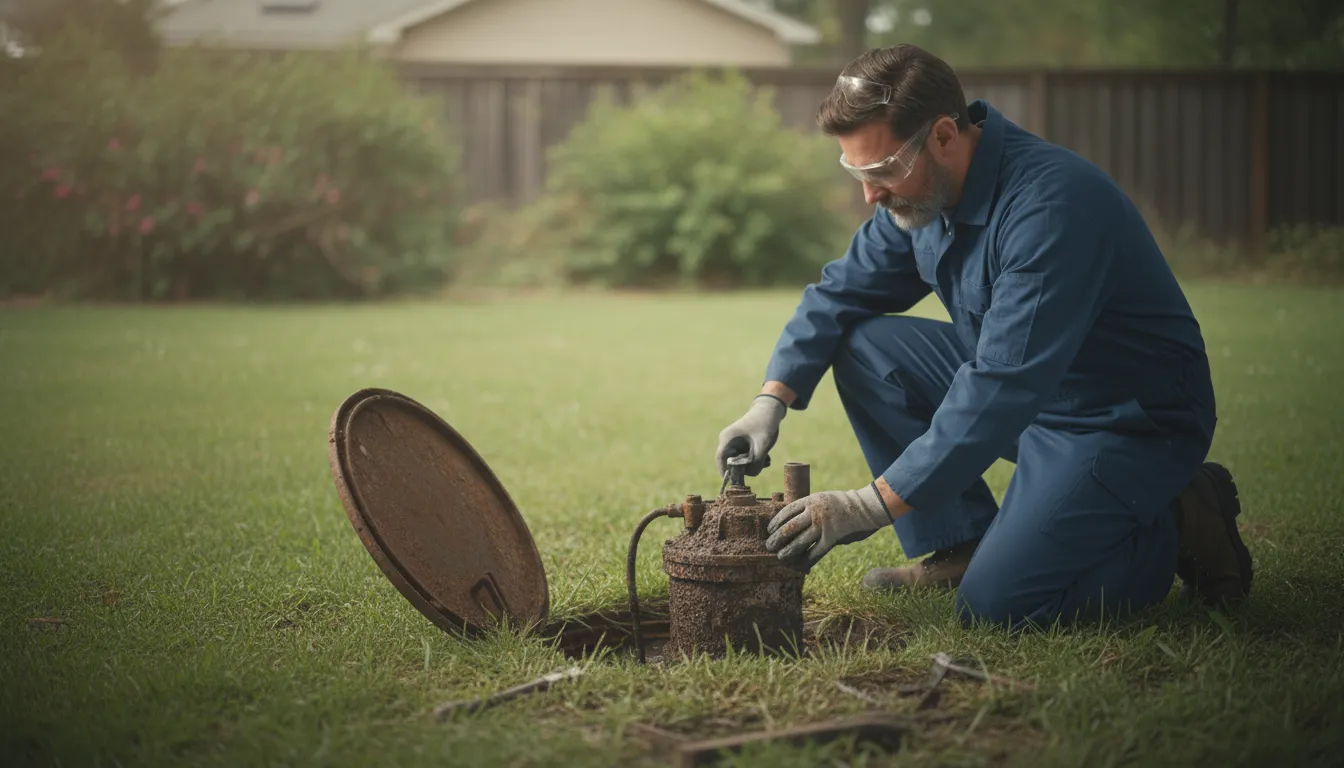
Find the Best Septic Pump Repair Companies for Your Business
No obligation • Fast responses • Nationwide coverage

Why you can trust Septic Spot
Septic Spot is a leading United States resource for understanding and comparing septic services. Our editors review providers using consistent criteria and verify key business details. Listings and scores are independent, and companies cannot pay to influence our content.
Search providers near you
Top Septic Pump Repair Companies in Hamilton, Ohio Ranked
A failing septic pump can quickly turn into a major household emergency, leading to backups, odors, and potential environmental contamination. In Ohio, where many homes rely on alternative septic systems like mounds or aeration units, a functional pump is critical for moving wastewater to the drain field. This guide explains the repair and replacement process, costs, and Ohio-specific regulations to help you understand your options and connect with qualified local professionals who can diagnose and fix your system efficiently.
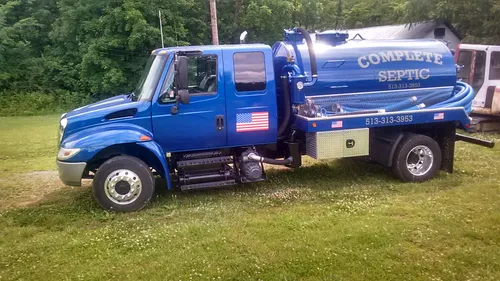
Complete Septic
6380 OH-727, Goshen, OH 45122
Complete Septic is a septic tank pumping and repair company serving Cincinnati, OH, and the surrounding areas including Goshen. With over 40 years of experience, the company offers septic pumping, system repairs, cleaning, and pump replacement services. Complete Septic uses high-end equipment and has the technical expertise to maintain and restore septic systems to proper working condition.
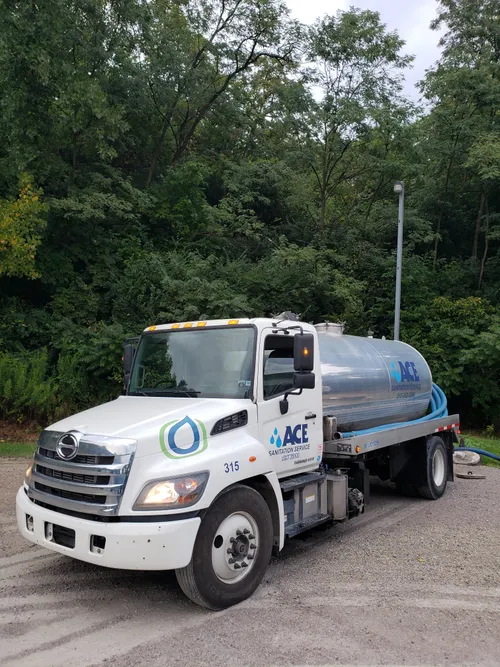
Ace Sanitation Service
4525 OH-128, Cleves, OH 45002
Ace Sanitation Service is a septic system company based in Cincinnati, OH, offering residential and commercial septic tank cleaning, inspection, and repair services. Their capabilities include septic tank motor repair, video camera line inspection, and high velocity jetting. The company also provides specialized services such as restaurant grease trap service and lift station maintenance. Ace Sanitation Service is a certified hauler and supplies chemicals and accessories for septic system care.

SOS LLC
3049 Old State Rte 32, Batavia, OH 45103
SOS LLC is a family-owned septic service company based near Cincinnati, OH, serving Eastern Hamilton, Brown, Highland, and Clermont Counties. They provide septic tank pumping, system repair, and maintenance for both residential and commercial customers. Their capabilities include septic pumping with large capacity trucks, riser installation, grease trap servicing, water jetting, and in-house motor repair and rebuilding. SOS LLC is a factory-authorized service provider for Orenco, Norweco, and Puraflo systems, ensuring specialized support for these brands.
Norris Septic Honeydipper.com
4182 OH-276, Batavia, OH 45103
Norris Septic Honeydipper.com is a septic system repair and inspection company based in Cincinnati, OH. They provide services for both residential and commercial properties, including septic system repair, cleaning, and inspections. Their team is skilled in handling specific repairs such as aerator motor and dosing pump replacements. The company emphasizes environmentally friendly methods and uses the latest technology to maintain septic systems with minimal impact. Norris Septic Honeydipper.com is fully licensed and insured, focusing on clear communication and tailored services to meet customer needs.
Common Septic System Types in Ohio
Understanding your specific septic system type is the first step, as the pump's role and repair complexity vary significantly. Ohio's diverse geography and soil conditions lead to several common system designs 1 2.
- Conventional Tank & Leach Field: This is the most common type for properties with suitable, well-draining soil. It relies on gravity to move effluent from the tank to the underground drain field and typically does not include a pump. If you have this system, "pump" issues usually refer to the sump pump in a basement or the pump used to periodically empty the tank, not a treatment component 3.
- Mound Systems: Used in areas with high water tables, shallow bedrock, or poor soil percolation. These systems require a pump (often called a dosing or effluent pump) to push treated wastewater from a pump chamber up into an elevated sand mound for final filtration.
- Aeration Systems (ATUs): These are pre-treatment systems that use an electric air pump to inject oxygen into a treatment tank. This oxygen supports bacteria that break down waste more thoroughly before the effluent is discharged to a leach field or, in some cases, directly to a ditch or stream. The air pump is a vital component of the treatment process itself 4.
Signs You Need Pump Repair or Replacement
Ignoring early warning signs can lead to complete system failure and much costlier repairs. Be alert for these indicators:
- Alarms Sounding: Most pumped systems have a high-water alarm (audible beep or flashing light) on the control panel. This is the most direct signal that the pump is not activating or cannot keep up with the water flow.
- Drains Backing Up: Slow-draining sinks, toilets, or gurgling plumbing fixtures, especially in conjunction with an alarm, point to a system not processing wastewater.
- Wet Spots or Odors: Soggy ground, surfacing sewage, or foul odors around the septic tank, pump chamber, or drain field area indicate a failure to properly distribute effluent.
- Control Panel Issues: A blank control panel, tripped circuit breaker, or burning smell from the panel suggests electrical problems.
- Pump Running Constantly or Never Running: A pump that runs non-stop will burn out quickly, while one that never activates will cause the tank to overfill.
The Repair and Replacement Process
When you contact a professional, they will typically follow a diagnostic and repair sequence to restore your system's function 5 6.
- Diagnosis & Inspection: A registered service provider will first check the control panel for power and error codes. They will inspect electrical connections, test the pump's operation, and assess the float or switch assembly that triggers the pump to turn on and off. They may also check for clogs in the pump intake or discharge line.
- Float/Switch Repair: Often, the issue is not the pump itself but the float switches that act as sensors. Replacing a stuck or waterlogged float is a common and relatively inexpensive repair 7.
- Pump Replacement: If the pump motor has failed, the technician will pull the old pump from its wet well or dosing tank. They will install a new pump with matching specifications for flow rate, head pressure (lift height), and intended use (effluent, sewage, or air). Proper installation is crucial to prevent future issues 8.
- Control Panel Repair/Replacement: Faulty wiring, corroded terminals, or a damaged timer can require panel repair or full replacement to ensure safe and reliable operation.
- System Testing & Verification: After repairs, the provider will test the system by simulating a cycle, ensuring the high-water alarm resets, and verifying that the pump is moving water to the drain field properly.
Find the perfect septic pump repair companies for your needs
Get personalized recommendations and expert advice
Understanding Costs in Ohio
Repair costs in Ohio depend heavily on the system type, the component that failed, and the accessibility of the equipment. Simple fixes are more affordable, but major failures can be significant investments 9 10 11.
- Routine Maintenance/Inspection: $100-$500. An annual or bi-annual inspection can catch small problems before they become expensive emergencies.
- Float/Switch or Minor Electrical Repair: $250-$500. This is a common repair point when the pump itself is still functional.
- Septic Pump Repair: $300-$1,000. This covers labor and parts for fixing a pump motor or replacing seals and impellers, depending on the pump type and depth.
- Septic Pump Replacement: $1,000-$1,500+. The total cost for a new pump and installation. Complex systems or deep installations can increase the price.
- Complete System Replacement: $10,000-$30,000+. If the pump failure is a symptom of a broader system collapse (like a failed drain field), local health authorities will mandate a full replacement. Soil conditions and system type cause wide price variations.
Ohio Regulations and Permits
The Ohio Department of Health (ODH) establishes statewide rules for Sewage Treatment Systems (STS) under Ohio Administrative Code 3701-29. However, permitting and enforcement are handled by your local county or city health district12. Knowing the rules is essential.
- Permit Requirements: Routine maintenance and "like-for-like" pump replacements often do not require a permit. However, any major repair, alteration to the system, or complete replacement requires a permit from your local health district before work begins.
- Operating Permits: Many Ohio health districts require homeowners to obtain a 5-year Operating Permit for their septic system, which costs roughly $100-$160. This permit often involves an initial inspection and may require periodic inspections to ensure the system is functioning properly 13 14.
- Failed System Action: If a system inspection or repair attempt reveals it cannot be fixed, the local health district will issue a notice requiring a complete system replacement designed by a licensed installer and approved through a permit 15.
- Financial Assistance: The Ohio Environmental Protection Agency's Water Pollution Control Loan Fund (WPCLF) offers low-interest loans and grants to eligible homeowners for necessary septic system repair or replacement. These funds are administered through local health departments 16.
Maintaining Your System to Avoid Emergencies
Proactive care is the most cost-effective strategy for septic pump systems.
- Schedule Regular Inspections: Have a professional inspect your pump, floats, alarm, and electrical components every 1-3 years.
- Conserve Water: Reduce sudden, heavy flows to the system (like multiple laundry loads in a day) to prevent overwhelming the pump chamber.
- Mind What You Flush: Never flush wipes, feminine hygiene products, grease, or chemicals. These can clog pumps and destroy the biological treatment process.
- Protect the Components: Keep the area around the tank, pump chamber, and control panel clear of debris, vehicles, and landscaping that could damage components or hinder access for repairs.
Frequently asked questions
Sources
Footnotes
-
Comparing Septic System Types: Which One Fits Best for Rural ... - https://gullettsanitation.com/2025/09/comparing-septic-system-types-which-one-fits-best-for-rural-homes-in-brown-county-and-beyond/ ↩
-
Understanding the Different Types of Septic Systems in Ohio - https://suburbansepticservice.net/blog-septic-systems-ohio.html ↩
-
Septic Systems - Cincinnati Ohio Home Inspections - https://www.thehome-inspection.com/home-information-center/septic-systems/ ↩
-
Septic System Types - https://smartsepticpros.com/blog/what-are-the-3-types-of-septic-systems/ ↩
-
STS Components, Systems and Maintenance - https://odh.ohio.gov/know-our-programs/sewage-treatment-systems/information-for-homeowners/sts-components-systems-and-maintenance ↩
-
Sump Pump Repair & Replacement Costs (2026 Guide) - https://modernize.com/foundations/basement-waterproofing/sump-pump-repair-replacement-cost ↩
-
Troubleshooting & Repairs - New Jersey Septic Management Group - https://nj-septic.com/repairs/ ↩
-
A Complete Guide to Pumps for Septic Systems: How They Work, Types, and Benefits - https://www.streampumps.com/pump-knowledge/submersible-pump-septic-system-en20250422.html ↩
-
Septic Repair vs Replacement in Ohio | SepTek Guide - https://www.septekservices.com/2025/05/22/the-difference-between-septic-repair-and-replacement-which-is-right-for-your-ohio-home/ ↩
-
Chapter 3701-29 - Ohio Administrative Code - https://codes.ohio.gov/ohio-administrative-code/chapter-3701-29 ↩
-
Well & Septic Escrow in Council, ID: Credits or Holds? - https://tworiversrealestateco.com/blog/repair-credits-and-escrow-holds-for-wellseptic-fixes ↩
-
Information for Homeowners - https://odh.ohio.gov/know-our-programs/sewage-treatment-systems/INFORMATION-FOR-HOMEOWNERS ↩
-
Septic Systems | Clermont County Public Health - https://ccphohio.org/septic-system-operation-permits/ ↩
-
New Homebuyer's Guide to Septic Systems - https://gphohio.org/wp-content/uploads/sites/17/2023/09/New-Homebuyers-Guide-to-Septic-Systems.pdf ↩
-
Sewage Treatment Systems - Ohio Department of Health - https://odh.ohio.gov/know-our-programs/sewage-treatment-systems ↩
-
Home Sewage Treatment Systems (HSTS) - Ohio EPA - https://epa.ohio.gov/wps/portal/gov/epa/divisions-and-offices/environmental-financial-assistance/financial-assistance/home-sewage-treatment-systems-hsts ↩