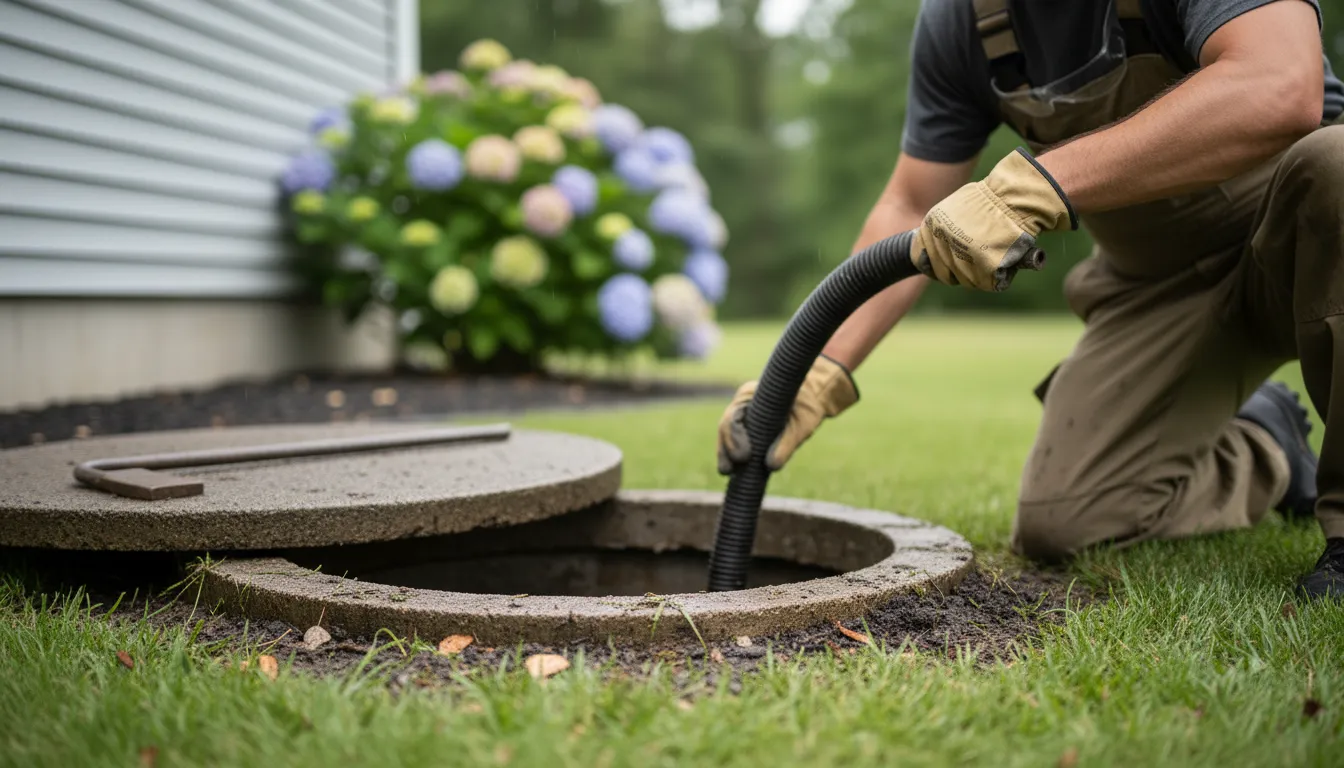
Find the Best Septic Tank Pumping Contractors for Your Business
No obligation • Fast responses • Nationwide coverage

Why you can trust Septic Spot
Septic Spot is a leading United States resource for understanding and comparing septic services. Our editors review providers using consistent criteria and verify key business details. Listings and scores are independent, and companies cannot pay to influence our content.
Search providers near you
Best Septic Tank Pumping Contractors in Delaware Ranked
Maintaining your septic system is a critical responsibility for Delaware homeowners, essential for protecting your property, public health, and the state's sensitive groundwater. Septic tank pumping is the core preventative maintenance task that removes accumulated solids, preventing system failure and environmental contamination. This guide explains Delaware's specific regulations, recommended schedules, and practical steps to help you connect with qualified, licensed professionals for this vital service.
Understanding Delaware's Septic System Regulations
Delaware takes septic system management seriously due to its reliance on groundwater. The primary regulatory authority is the Department of Natural Resources and Environmental Control (DNREC), with enforcement often handled by local county health districts. The fundamental rule is that homeowners are legally responsible for the proper operation, maintenance, and pumping of their on-site wastewater systems to prevent public health hazards or water pollution.
A key regulation for homeowners to know is that only state-licensed Class F liquid waste haulers are permitted to pump septic tanks in Delaware. Hiring an unlicensed provider is illegal and risky. Furthermore, for systems permitted after March 2002, risers and effluent filters are required; homeowners must clean the effluent filter regularly as part of routine maintenance.
How Often Should You Pump Your Septic Tank in Delaware?
While a national rule-of-thumb suggests pumping every 3 to 5 years, your specific schedule depends on several factors. Delaware guidelines and service providers offer more precise recommendations 1.
- General State Recommendation: Pumping every 3 years is widely recommended for optimal system health and longevity in Delaware 2.
- Household Size & Water Usage: A typical family of four may extend the interval to 3-5 years, but a household with four or more occupants might require annual pumping due to increased load 3 4.
- System Type: If you have an Innovative/Alternative (I/A) system or a low-pressure pipe system, more frequent maintenance-potentially annual-is often required 5 6.
- The Sludge Test: The most reliable method is to have the sludge and scum layers measured during an inspection. Pumping is necessary when the combined sludge depth equals one-third of the tank's liquid depth.
Find the perfect septic tank pumping contractors for your needs
Get personalized recommendations and expert advice
The Cost of Septic Services in Delaware
Understanding potential costs helps in budgeting for this essential home maintenance. Prices can vary based on tank size, accessibility, and your location within the state.
- Septic Tank Pumping: While Delaware-specific averages are not always published, standard pumping costs typically range from several hundred dollars. The final price depends on tank capacity (e.g., 1,000 vs. 1,500 gallons) and whether risers are installed for easy access 7.
- Professional Inspection: A thorough inspection by a qualified professional, which is recommended every 2-3 years, generally costs between $300 and $7008. This is a wise investment, especially before purchasing a home or if you suspect system issues.
Choosing and Working with a Licensed Professional
Selecting the right service provider ensures the job is done correctly and in compliance with state law.
- Verify the License: Always confirm the company holds a valid Delaware Class F Liquid Waste Hauler license. You can ask for their license number.
- Ask About Inspections: A reputable provider will often recommend or include a basic inspection during pumping to assess tank integrity, baffles, and the effluent filter.
- Ensure Accessibility: Before the service date, clear the path to your tank lids. If you don't have risers (which bring the lid to the surface), discuss installing them with the hauler to save time and money on future visits 9.
- Keep Detailed Records: Maintain a file with all service reports, pumping receipts, and inspection notes. This is crucial for your own maintenance history and is often required during a property sale.
Best Practices for Septic System Care
Pumping is the most important task, but daily habits protect your investment.
- Conserve Water: Spread out laundry loads and fix leaks to avoid overwhelming the drainfield.
- Mind What You Flush: Only human waste and toilet paper should go in. Never flush wipes (even "flushable" ones), feminine hygiene products, grease, or chemicals.
- Protect the Drainfield: Never drive or park vehicles on it. Keep roof drains, sump pumps, and other surface water away from the area.
- Avoid Additives: Commercial septic additives are not a substitute for pumping and are not recommended by regulatory agencies. Regular pumping is the only proven maintenance method 10 11.
Special Considerations for Home Buyers and Sellers
A septic system inspection is a critical part of real estate transactions in Delaware.
- For Sellers: Proactively pumping and inspecting your system before listing can prevent delays or renegotiations. A clean inspection report is a strong selling point 12.
- For Buyers: Always make your offer contingent on a satisfactory Class H septic system inspection performed by a licensed evaluator. This inspection is more comprehensive than a routine check and assesses the system's overall condition and compliance 13.
- Record Transfer: Sellers should provide buyers with all available maintenance records for the system.
Frequently asked questions
Sources
Footnotes
-
Smart Solutions for Optimizing Septic Tank Pumping Frequency - https://smartsepticpros.com/blog/septic-tank-pumping-frequency/ ↩
-
Sewage Treatment Systems - Delaware Public Health District - https://www.delawarehealth.org/wp-content/uploads/2017/08/New-Sewage-System-Owner-Packet.pdf ↩
-
Septic Maintenance | Montgomery, Chester & Delaware Counties - https://www.delvalseptics.com/septic/septic-maintenance/ ↩
-
Mandatory Sewage Pumping - Dickinson Township - https://dickinsontownship.org/sewage-enforcement/mandatory-sewage-pumping/ ↩
-
Delaware Septic Tank Requirements | On-Site Wastewater ... - https://www.ntotank.com/blog/delaware-septic-tank-requirements?srsltid=AfmBOoo-VzH8jIYfLKX1PLmWTa22_dsKsSpoXkrZmp5VKTp0NWmD2WSf ↩
-
department of natural resources and environmental control - https://regulations.delaware.gov/api/register/april2005/aa9b2d58-3bee-40c9-bbab-92460ab70fa0 ↩
-
How Much Does It Cost to Pump a Septic Tank? - https://goodmanseptic.com/pumping/cost-to-pump-septic-tank/ ↩
-
Understanding Septic Tank Inspections: A Complete Homeowner's ... - https://septic-masters.com/septic-tank-inspection-homeowner-guide/ ↩
-
Simply Septic (PDF) - Clean Delaware Inc. - https://cleandelaware.com/wp-content/uploads/Simply-Septics.pdf ↩
-
Why Maintain Your Septic System | US EPA - https://www.epa.gov/septic/why-maintain-your-septic-system ↩
-
On-Site Wastewater Treatment and Disposal Systems - Delaware.gov - https://documents.dnrec.delaware.gov/fab/Documents/Non-Pont%20Source%20Program%20Funding/Regulatory%20requirements%20link.pdf ↩
-
How To Pass Inspection for Septic and Sewer When Selling a Home - Barb Schlinker | Your Real Estate Voice - https://www.buzzsprout.com/345377/episodes/2591641-how-to-pass-inspection-for-septic-and-sewer-when-selling-a-home ↩
-
Class H septic inspections for home buyers and home sellers in Delaware's post - https://www.facebook.com/thebusyBeeCleaningServices/posts/1077954939851493/ ↩