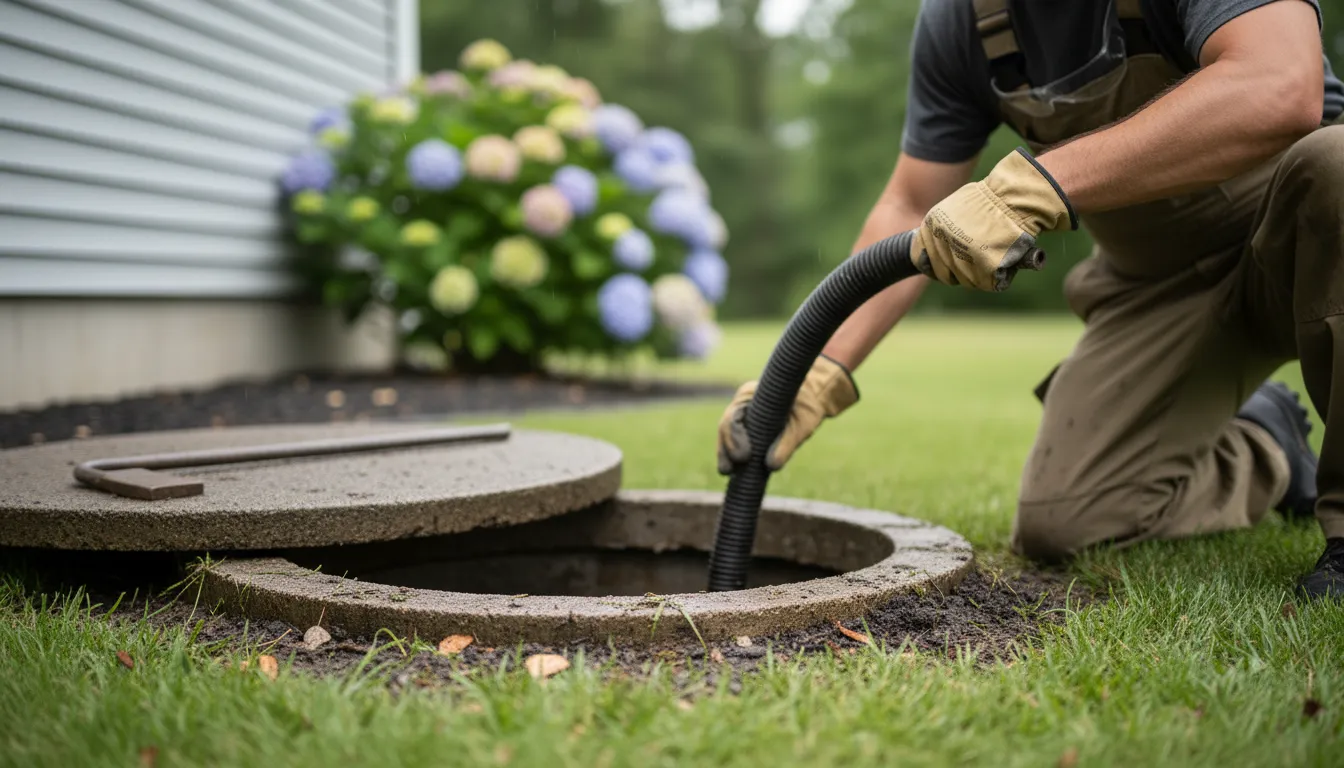
Find the Best Septic Tank Pumping Contractors for Your Business
No obligation • Fast responses • Nationwide coverage

Why you can trust Septic Spot
Septic Spot is a leading United States resource for understanding and comparing septic services. Our editors review providers using consistent criteria and verify key business details. Listings and scores are independent, and companies cannot pay to influence our content.
Search providers near you
Best Septic Tank Pumping Contractors in Maine Ranked
Maintaining your septic system is a crucial responsibility of homeownership in Maine. Regular septic tank pumping and inspection prevent system failures, protect your property value, and safeguard the local environment and groundwater. This guide provides clear, practical information on Maine's recommended pumping schedules, essential maintenance tips, and how to find qualified local professionals to service your system.
Understanding Your Septic System
A septic system is an on-site wastewater treatment system common in areas without municipal sewer service. It consists of a septic tank and a soil absorption field, often called a drain field. Solids settle in the tank, where bacteria begin to break them down, while liquid effluent flows out to the drain field for further treatment in the soil. Over time, solids (sludge) accumulate and must be removed via pumping to prevent them from flowing into and clogging the drain field, which can lead to costly system failure 1.
Maine's Recommended Pumping Schedule
The general rule for septic tank maintenance in Maine is to have your tank pumped every 3 to 5 years. However, this is a guideline, and the optimal frequency for your home depends on several factors, including tank size, the number of people in your household, and overall water usage.
- Standard Households: For a typical family of four with a 1,000-gallon tank, pumping every 3-5 years is standard.
- Smaller Households: Some local regulations, like those in York, specify that tanks for homes with two or fewer occupants may only need pumping every 10 years.
- Seasonal or High-Use Properties: A house rented weekly during the summer season should be pumped annually due to the high, concentrated use 2.
- Alternative Systems: Systems with pumps, aerators, or other electrical components (often called ATUs) require more frequent attention, including an annual inspection by a licensed professional.
It is crucial to check with your local town office for specific municipal ordinances, as regulations can vary across the state 3.
Key Maintenance Responsibilities for Homeowners
Pumping is just one part of a complete septic system care routine. Proactive maintenance can extend the life of your system and prevent emergencies.
Regular Inspection
Have your system inspected by a professional at least every 3 years, or annually for alternative systems. An inspector will check tank sludge and scum levels, look for leaks, and assess the condition of the drain field.
Protect the Drain Field
The drain field is the most vulnerable and expensive part of your system to replace.
- Keep it clear: Never park cars, build structures, or store heavy items on the drain field.
- Mind the landscaping: Avoid planting trees or deep-rooted shrubs near the drain field, as roots can clog and damage pipes.
- Divert water: Ensure roof drains, sump pumps, and other surface water are directed away from the drain field area.
Be Mindful of What Goes Down the Drain
Your septic system relies on a balance of bacteria. What you put into it matters.
- Limit solids: Avoid using a garbage disposal, as it can increase the solid waste load in your tank by up to 50% 4 5.
- No chemicals: Do not pour paints, solvents, pesticides, or excessive household cleaners down the drain.
- Avoid additives: Chemical septic tank additives, including products like Rid-X or yeast, are prohibited in Maine. They can actually harm the bacterial balance and contribute to clogging the disposal field 6.
- Fats, oils, and grease: Never pour cooking grease or oil down the drain, as it can solidify and cause blockages.
Practice Water Conservation
Reducing the volume of water entering your system reduces strain and improves treatment.
- Fix leaking faucets and toilets promptly.
- Install low-flow showerheads (2.5 gallons per minute or less) and toilets (1.6 gallons per flush).
- Spread out laundry loads throughout the week instead of doing many loads in one day.
Find the perfect septic tank pumping contractors for your needs
Get personalized recommendations and expert advice
Recognizing Signs of System Trouble
Catching problems early can save you thousands of dollars. Contact a professional immediately if you notice:
- Sewage backups in household drains or toilets.
- Slow-draining sinks, tubs, or toilets.
- Bad odors around the septic tank or drain field area.
- Bright green, spongy grass or standing water over the drain field, especially during dry weather.
- Gurgling sounds in your plumbing.
If effluent surfaces on the ground, it is a clear sign of system failure requiring immediate professional attention 7 8.
What to Expect During a Pumping Service
When you hire a licensed septic service provider in Maine, a standard pumping visit typically includes:
- Locating and uncovering the tank access manholes.
- Inspecting the inlet and outlet baffles for integrity.
- Pumping out all solids and liquids from the tank using a vacuum truck.
- Disposing of the waste at a licensed treatment facility.
- A brief visual inspection of the tank's condition and water-tightness.
Some companies offer more comprehensive inspections, including measuring sludge and scum layers with specialized tools, which can help you determine the ideal pumping schedule for your specific usage 9.
Cost Considerations for Pumping in Maine
The cost to pump a septic tank in Maine varies based on several factors:
- Tank Size: Larger tanks cost more to pump.
- Accessibility: Easy-to-reach tanks with uncovered lids are less expensive than those buried deep or under landscaping.
- Location: Travel distance for the service provider can affect the price.
- Additional Services: A full inspection, cleaning filters (on alternative systems), or minor repairs will add to the total cost.
While prices can fluctuate, getting multiple estimates from licensed local providers is the best way to understand the market rate for your specific situation 10. Remember, the cost of regular pumping is minor compared to the expense of repairing or replacing a failed drain field.
Finding a Qualified Service Provider
When searching for septic services in Maine, look for:
- Proper Licensing: Ensure the company is licensed by the Maine Department of Health and Human Services (DHHS) for subsurface wastewater disposal activities.
- Experience & Reputation: Check online reviews and ask neighbors for recommendations.
- Insurance: Verify the company carries adequate liability insurance.
- Detailed Estimates: A reputable provider will offer a clear, written estimate outlining the services to be performed.
- Local Knowledge: A provider familiar with your town's specific regulations and soil conditions is invaluable.
Regular maintenance is an investment in your property and your peace of mind. By following Maine's guidelines and partnering with a trusted professional, you can ensure your septic system functions properly for decades.
Frequently asked questions
Sources
Footnotes
-
Your Septic System is Your Responsibility! - https://northeasthealthdistrict.org/wp-content/uploads/2023/05/homeowner_guide_long.pdf ↩
-
Regulations | North Pond - https://www.northpondmaine.org/regulations ↩
-
SUPPLEMENTAL SUBSURFACE WASTE WATER DISPOSAL RULES - https://www.yorkmaine.org/DocumentCenter/View/702/Supplemental-Plumbing-Ordinance-PDF ↩
-
Permit Search, Financial, Tips for Septic Systems, FAQs - https://www.maine.gov/dhhs/mecdc/services/business-services/hydrology-and-wastewater/a-b-c-d-resources ↩
-
Septic Systems - Maine.gov - https://www.maine.gov/dep/water/groundwater/septic_systems.pdf ↩
-
Why Maintain Your Septic System | US EPA - https://www.epa.gov/septic/why-maintain-your-septic-system ↩
-
Maine Septic and Pumping - Lewiston Maine - https://maineseptic.com/services/pumping/ ↩
-
Frequently Asked Questions | Central Maine Septic - https://centralmaineseptic.com/faq/ ↩
-
Maine Septic System Inspection Guidelines 02/26/2002 - https://www.bbhsd.org/1235/Maine-Septic-System-Inspection-Guideline ↩
-
Septic Tank Pumping Cost & Maintenance Guide - https://www.benjaminfranklinplumbing.com/league-city/blog/2025/march/how-much-does-it-cost-to-pump-septic-tank-a-detailed-pricing-guide/ ↩