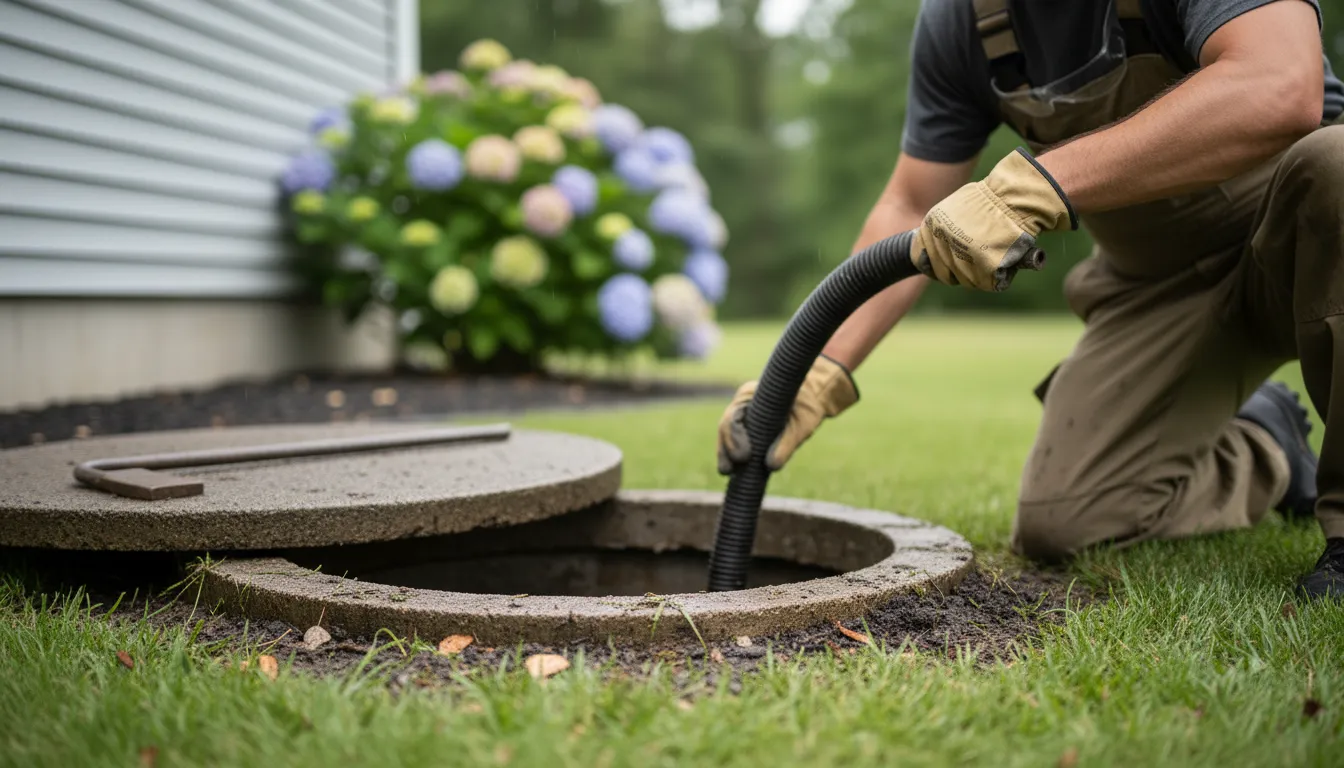
Find the Best Septic Tank Pumping Contractors for Your Business
No obligation • Fast responses • Nationwide coverage

Why you can trust Septic Spot
Septic Spot is a leading United States resource for understanding and comparing septic services. Our editors review providers using consistent criteria and verify key business details. Listings and scores are independent, and companies cannot pay to influence our content.
Search providers near you
Top Septic Tank Pumping Contractors in Camden, New Jersey Ranked
Maintaining a healthy septic system is a crucial responsibility for homeowners not connected to a municipal sewer line. Regular septic tank pumping is the most important preventative maintenance task you can perform to avoid system failures, environmental contamination, and costly repairs. This guide provides essential information on septic system maintenance, local regulations, and service expectations to help Camden residents find qualified professionals for this vital service.
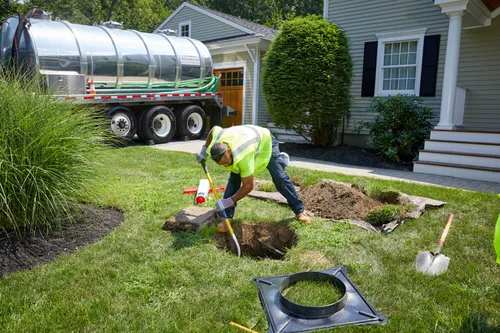
Wind River Environmental of Swedesboro, NJ
701 2nd St, Swedesboro, NJ 08085
Wind River Environmental of Swedesboro, NJ provides septic tank pumping, grease trap cleaning, and drain services to residential, commercial, and municipal clients in Philadelphia, PA. The company offers comprehensive septic system maintenance, including sewer jetting and repairs, with a focus on compliance with local regulations. Established in 1946, Wind River Environmental combines decades of industry experience with modern technology to deliver effective solutions. They also provide 24/7 emergency services to address urgent septic system needs.
EcoFlow Septic
Philadelphia, PA
EcoFlow Septic is a veteran-owned company providing residential septic and sewer services in Philadelphia, PA. They offer septic tank pumping, inspections, and repairs with a focus on detailed, code-compliant work. The company emphasizes clear communication and practical solutions to help homeowners and realtors manage septic system maintenance and real estate inspections with confidence. EcoFlow Septic aims to protect homes, investments, and the environment through honest and professional service.

Decker Septic
29 Constitution Dr, Vincentown, NJ 08088
Decker Septic is a septic system service provider based near Philadelphia, PA. They offer a range of services including septic tank pumping, inspections, repairs, installations, and drain field replacement. The company is experienced in handling septic pump repairs and replacements, as well as managing system components like collars and manhole covers to prevent flooding issues. Customers have noted their thorough approach to septic system replacement and maintenance, including assistance with engineering and county approvals. Decker Septic is known for working within tight timelines and maintaining property condition during their work.
Professional Plus Services Inc
55 N Schuylkill Ave, Norristown, PA 19403
Professional Plus Services Inc is a family-owned and operated company based near Philadelphia, PA, specializing in septic tank pumping and portable toilet rentals. They provide septic pumping services for yearly system maintenance and quarterly holding tank pumping. The company also offers a variety of portable toilet options, including standard units and a 4-stall toilet trailer, available for short or long-term rental. With years of experience, they focus on cleanliness and reliable sanitation solutions.
Drain Visions
510 Deptford Ave, Westville, NJ 08093
Drain Visions provides septic tank pumping, septic system repair, grease trap, and drain cleaning services in Philadelphia, PA. As part of Wind River Environmental's family of brands, they serve residential, commercial, and municipal clients with a focus on compliance with local regulations. The company offers 24/7 emergency services and uses advanced technology to deliver efficient septic solutions. With a history dating back to 1946 through its parent company, Drain Visions combines decades of experience with local expertise to support the community's septic and environmental needs.
Why Regular Pumping is Non-Negotiable
A septic system is an on-site wastewater treatment plant for your home. All the water from your toilets, showers, sinks, and laundry flows into the septic tank. Here, solids settle to the bottom as sludge, fats and oils float to the top as scum, and the relatively clear liquid in the middle (effluent) flows out to the drainfield for further treatment in the soil. Over time, the sludge and scum layers accumulate. If not removed via pumping, these solids can wash out into the drainfield, clogging the soil pores and causing a complete system failure. This can lead to sewage backing up into your home or surfacing in your yard-a serious health hazard and an expensive problem to fix. Regular septic tank cleaning is your primary defense against this scenario.
Camden County & New Jersey Pumping Guidelines
Local and state authorities provide clear guidance on septic system maintenance frequency. The New Jersey Department of Environmental Protection (NJDEP) recommends inspecting your system every 1 to 3 years and pumping the tank every 3 to 5 years. Camden County provides more specific local guidance, recommending that septic tanks be pumped and inspected at least once every three years. This three-year interval is particularly important for systems with smaller tanks (under 1,000 gallons) or those experiencing heavy usage.
The exact frequency for your septic tank service depends on several key factors:
- Household Size: More people generate more wastewater and solids.
- Tank Size: A smaller tank fills up faster than a larger one.
- Total Wastewater Volume: High water usage from laundry, long showers, or garbage disposals accelerates accumulation.
- Volume of Solids: Using a garbage disposal significantly increases the solid load entering the tank.
A professional inspector can measure the sludge and scum layers during an inspection. A key indicator that pumping is urgently needed is if the sludge layer is within 12 inches of the outlet baffle or the scum layer is within 6 inches of the outlet tee.
What to Expect from Professional Septic Services
When you hire a professional for septic system maintenance, the service should involve more than just a quick pump-out. In New Jersey, all septic tank pumping and inspections must be performed by a professional registered with the NJDEP. A comprehensive service typically includes:
- Locating & Uncovering the tank access lids.
- Inspecting the tank interior (before pumping) for cracks, leaks, rust, and the condition of baffles or tees.
- Measuring the thickness of the scum and sludge layers to determine pump-out necessity and record accumulation rates.
- Pumping all solid and liquid waste from the tank using a vacuum truck.
- Proper Disposal of the septage at an approved treatment facility.
- A Final Inspection of the empty tank to check for structural damage.
- Providing a Detailed Report that includes the levels measured, any issues found, and the date of service. Keep these records, as they are often required for property transfers and can be valuable for warranty or legal purposes.
For systems with pumps, siphons, or other mechanical components (known as "dosing systems"), more frequent inspection-often annually-is required to ensure these parts are functioning correctly 1.
Find the perfect septic tank pumping contractors for your needs
Get personalized recommendations and expert advice
Understanding Costs for Septic Tank Pumping in New Jersey
The cost for septic tank pumping in New Jersey can vary, but homeowners can generally expect a range from $250 to over $1,000. The final price depends on several variables:
- Tank Size: This is the primary cost driver.
- Small Tanks (<1,000 gallons): $250 - $350
- Medium Tanks (1,000 - 1,500 gallons): $300 - $400
- Large Tanks (1,500 - 2,000 gallons): $400 - $500 2
- Tank Accessibility: Difficult access (e.g., overgrown area, long hose run, locked gate) may increase the price.
- Condition of the Tank: If the lids are buried deep or the tank requires extra time to locate, labor costs may rise.
- Additional Services: A full inspection, cleaning of effluent filters, or minor repairs will add to the base pumping cost.
While this is an essential maintenance expense, it pales in comparison to the cost of repairing or replacing a failed drainfield, which can run into the tens of thousands of dollars. Furthermore, failure to maintain your system can lead to enforcement actions from local health departments, with potential penalties ranging from $500 to $50,000 3 4 5. Investing in regular pumping is the most cost-effective strategy for long-term septic system health.
Best Practices for Septic System Care
Pumping is essential, but daily habits greatly impact your system's longevity. Follow these tips to keep your system functioning properly between service visits:
- Conserve Water: Fix leaks and spread out laundry loads to avoid overwhelming the system.
- Mind What You Flush: Only human waste and toilet paper should go down the toilet. Avoid flushing wipes (even "flushable" ones), feminine hygiene products, dental floss, diapers, and chemicals.
- Use Garbage Disposals Sparingly: Avoid using a garbage disposal if possible, as it significantly increases the solid load entering the tank. Compost food scraps instead.
- Protect the Drainfield: Never drive or park vehicles on any part of the septic system, as this can compact the soil and crush pipes 6 7. Plant only grass over and near the drainfield; tree and shrub roots can cause severe damage 6 8.
- Divert Rainwater: Ensure roof drains, sump pumps, and surface runoff are directed away from the drainfield to prevent saturation.
Signs Your Septic System Needs Immediate Attention
Don't wait for your scheduled pumping interval if you notice these warning signs. Contact a registered septic professional immediately if you experience:
- Slow Drains throughout the house, especially if plunging or drain cleaners don't help.
- Sewage Odors inside your home or around the yard near the tank or drainfield.
- Gurgling Sounds coming from your plumbing.
- Wet, Spongy, or Lush Green Grass over the drainfield, especially when it hasn't rained.
- Sewage Backing Up into household drains or toilets.
Addressing these issues quickly can mean the difference between a simple pumping and a major repair project.
Frequently asked questions
Sources
Footnotes
-
Septic Form Homeowners.pdf - Camden County - https://www.camdencounty.com/wp-content/uploads/files/Septic%20Form%20Homeowners.pdf ↩
-
Septic Tank Pumping Cost: Guide & Pricing in 2025 - Splash Plumbing - https://www.splashplumbing.com/how-much-does-it-cost-to-pump-septic-tank-understanding-pricing-and-factors-involved/ ↩
-
SEPTIC - Camden County - https://www.camdencounty.com/wp-content/uploads/2023/07/a_homeowners_guide_to_septic_systems_njdep.pdf ↩
-
Navigating Septic System Regulations: Expert Guidance for New Jersey Property Owners - https://www.mapengineering.net/navigating-septic-system-regulations/ ↩
-
Cost to Pump Septic Tank: Tips to Save on Cleaning Fees - https://ivanssiteservices.com/blog/cost-to-pump-septic-tank-what-to-expect-and-how-to-save/ ↩
-
SEPTIC - NJ.gov - https://dep.nj.gov/wp-content/uploads/dwq/pdf/septicmn.pdf ↩ ↩2
-
New Jersey Septic System Rules - 2026 Guide - https://thesewerkings.com/blog/new-jersey-septic-system-rules/ ↩
-
a homeowner's manual for septic systems - RUcore - https://rucore.libraries.rutgers.edu/rutgers-lib/29112/PDF/1/play/ ↩