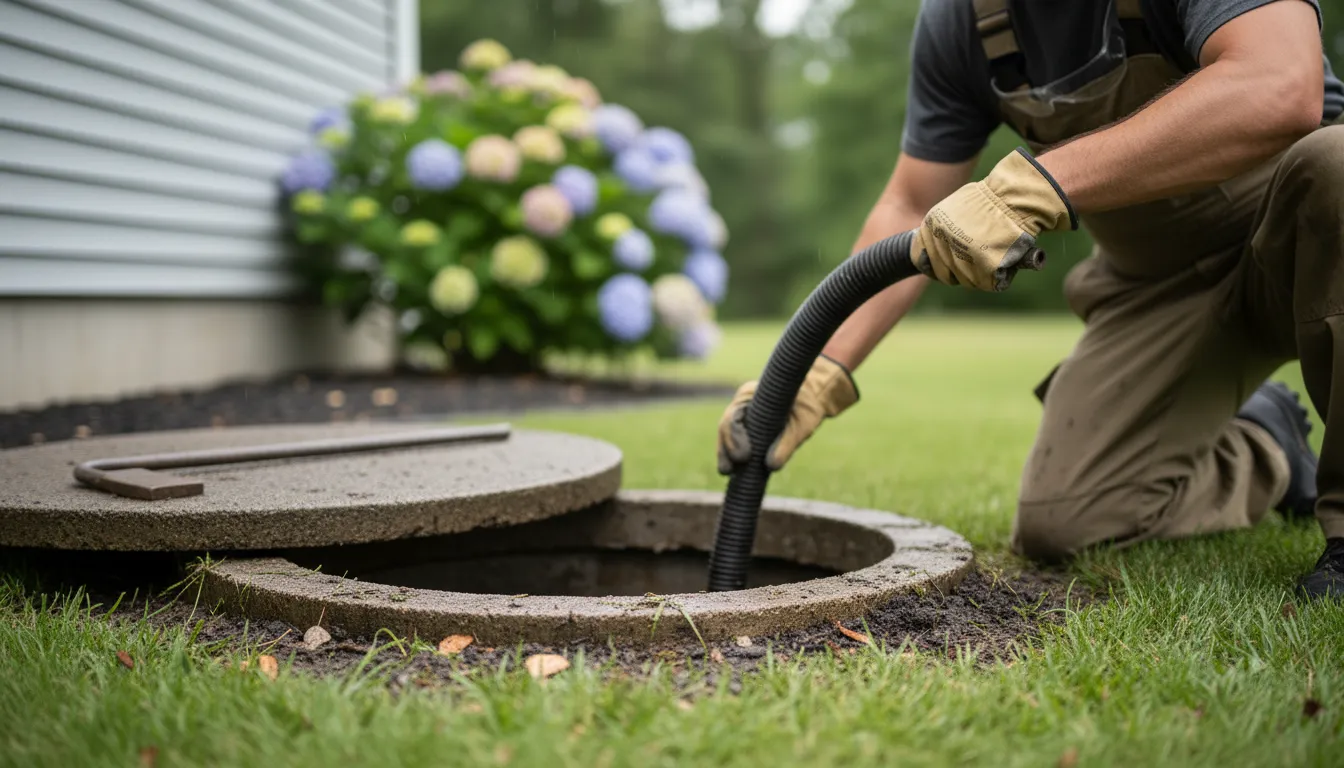
Find the Best Septic Tank Pumping Contractors for Your Business
No obligation • Fast responses • Nationwide coverage

Why you can trust Septic Spot
Septic Spot is a leading United States resource for understanding and comparing septic services. Our editors review providers using consistent criteria and verify key business details. Listings and scores are independent, and companies cannot pay to influence our content.
Search providers near you
Top Septic Tank Pumping Contractors in Hackensack, New Jersey Ranked
Maintaining your septic system is a critical responsibility for any Hackensack homeowner. Regular septic tank pumping and inspection are essential services that protect your property value, prevent costly environmental damage, and ensure the health and safety of your household. This guide explains the importance of septic system maintenance, outlines local New Jersey regulations, and helps you understand what to look for when finding a qualified professional to service your system.
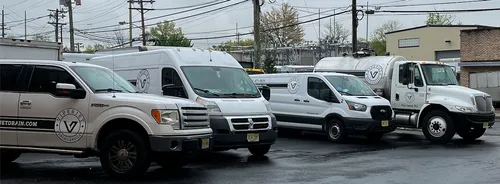
Viper Jet Drain Services
5-02 Banta Pl, Fair Lawn, NJ 07410
Viper Jet Drain Services is a septic tank pumping company based in Paterson, NJ, offering a full range of drain, septic, and grease trap services. They serve residential, commercial, and municipal clients throughout New Jersey and New York City. Their licensed and insured technicians use advanced equipment to provide services such as septic tank cleaning and pumping, hydro jetting, grease trap maintenance, and stormwater drain management. Viper Jet is a family-owned business that emphasizes expertise and commitment in all their work. They also provide responsive emergency service when needed.
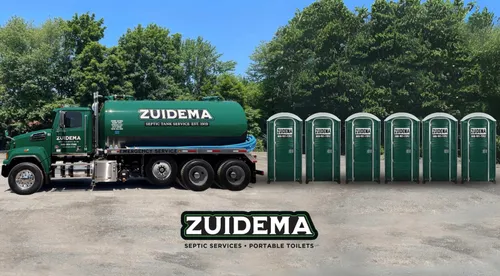
Zuidema Septic Services & Portable Toilets
90 Midland Ave, Midland Park, NJ 07432
Zuidema Septic Services & Portable Toilets provides residential and commercial septic services along with portable toilet and restroom trailer rentals in New York, NY. With over 100 years of experience since 1919, they offer septic tank pumping, inspections, repairs, and grease trap services. Their use of advanced sewer camera technology helps identify and address sewer line issues effectively. Zuidema also offers 24/7 emergency service for septic and portable toilet needs, ensuring support is available at any time.
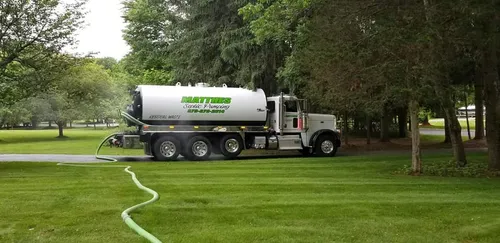
EarthCare, a Wind River Company
New York, NY
EarthCare, a Wind River Company, provides septic tank pumping, inspection, and grease services in New York, NY, and surrounding areas including North Jersey and Hudson Valley. Serving residential, commercial, and municipal clients, they offer comprehensive waste management solutions such as pumping, cleaning, hauling, disposal, and environmental compliance support. Established in 1946, EarthCare operates one of the industry's largest fleets and provides 24/7 emergency services to ensure continuous system operation and regulatory compliance.
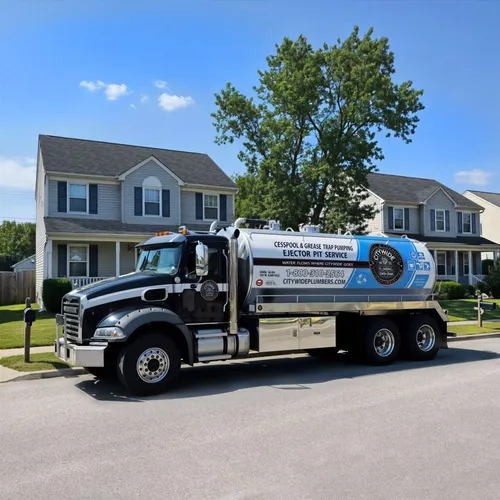
Citywide Grease Trap Maintenance | Cesspool Pumping Service Long Island
110 Voice Rd, Carle Place, NY 11514
Citywide Grease Trap Maintenance | Cesspool Pumping Service Long Island provides septic and cesspool pumping, inspection, repair, and installation services in New York, NY. Serving both residential and commercial clients, they offer comprehensive maintenance and cleaning to prevent system failures. Their skilled technicians use advanced equipment for installations and repairs, including grease trap pumping and sewage ejector pit services. With over 65 years of experience, Citywide operates 24/7 to address emergency needs promptly.
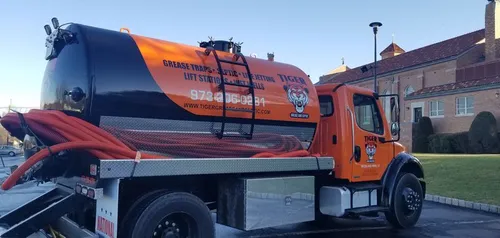
Tiger Grease and Septic
New York, NY
Tiger Grease and Septic is a septic tank pumping company based in New York, NY. They provide grease trap pumping and septic system maintenance services, including the use of specialized equipment like low profile vacuum trucks and portable units for hard-to-reach indoor grease traps. Their fleet includes large volume tankers capable of thorough grease and food solid removal to help prevent backups and odors. The company offers service seven days a week and can arrange same-day emergency pumping when needed.
Understanding Your Septic System
A septic system is an on-site wastewater treatment structure, commonly used in areas without centralized sewer lines. It consists of a large underground tank and a soil absorption field, often called a drainfield or leach field. All the wastewater from your home-from toilets, showers, sinks, and appliances-flows into the septic tank. Here, solids settle to the bottom as sludge, oils and grease float to the top as scum, and the relatively clear liquid in the middle (effluent) exits into the drainfield for further treatment by the soil 1.
The system relies on bacterial action to break down waste. However, the sludge and scum layers accumulate over time. If not removed periodically through pumping, these layers can become too thick, allowing solids to escape into the drainfield. This can clog the soil, leading to system failure, sewage backups into your home, and contamination of groundwater-a serious public health and environmental concern.
Why Regular Pumping is Non-Negotiable in Hackensack
For Hackensack residents, adhering to a regular septic tank maintenance schedule isn't just a good idea; it's guided by state environmental standards. The New Jersey Department of Environmental Protection (NJDEP) sets the framework for system care to protect our local waterways and the broader ecosystem.
A failing septic system can have severe consequences:
- Property Damage: Sewage backups can flood basements and damage landscaping.
- Health Hazards: Exposure to untreated wastewater poses risks of bacterial and viral infections.
- Environmental Contamination: Nitrates and pathogens can leach into groundwater, polluting wells and affecting nearby streams that feed into the Hackensack River watershed.
- Costly Repairs: Replacing a failed drainfield can cost tens of thousands of dollars, far exceeding the few hundred dollars required for routine pumping.
The most effective and cost-efficient way to prevent these problems is through proactive, scheduled septic tank cleaning.
How Often Should You Pump Your Septic Tank?
The standard recommendation for most residential systems is to pump your septic tank every three to five years 2. However, this is a general guideline. The exact frequency for your Hackensack home depends on several key factors:
- Household Size: More people generate more wastewater and solid waste, filling the tank faster.
- Tank Size: Older homes may have smaller tanks (e.g., 500-gallon) that require more frequent service than modern 1,000-gallon tanks.
- Total Wastewater Generated: The use of garbage disposals, frequent laundry loads, and high-efficiency appliances that use more water in shorter cycles can increase the load on your system 3.
- Volume of Solids: Homes with garbage disposals may need to pump every 2-3 years, as these devices significantly increase the amount of solids entering the tank 4.
The only reliable way to know if your tank needs pumping is to have it inspected. A professional will measure the depth of the sludge and scum layers. A common rule is that if the sludge layer is within 12 inches of the tank's outlet baffle or tee, it's time to schedule a pump-out 5.
The Importance of Professional Septic System Inspection
While pumping removes accumulated waste, a thorough inspection assesses the overall health of your entire system. The NJDEP recommends inspecting your system every 1 to 3 years, which is most conveniently done at the same time as pumping 6.
A comprehensive inspection by a licensed professional will check for:
- Tank Integrity: Looking for leaks, cracks, or corrosion in the tank itself.
- Baffles and Tees: Ensuring inlet and outlet baffles are intact to prevent solids from escaping.
- Drainfield Function: Checking for signs of failure, such as soggy ground or foul odors near the field.
- Distribution Box: Verifying that wastewater is being evenly distributed across the drainfield lines.
Inspections are particularly crucial during a property transaction. While New Jersey does not have a statewide law mandating septic inspections for home sales, many municipalities in Bergen County require them. Even if not required, a pre-purchase inspection is highly recommended for both buyers and sellers to avoid unexpected liabilities 7.
Find the perfect septic tank pumping contractors for your needs
Get personalized recommendations and expert advice
What to Expect: The Pumping and Inspection Process
When you hire a professional for septic service in Hackensack, here's a general overview of the process:
- Locating and Uncovering the Tank: The technician will locate the tank lids (access ports). If the lids are buried, they will need to excavate the soil above them. Some companies may charge an additional "false trip" or excavation fee if the lids are not readily accessible, which can be around $150.
- Initial Inspection: Before pumping, they may inspect the sludge/scum layers and look for obvious signs of damage.
- Pumping: Using a large tank truck, all contents of the septic tank (sludge, scum, and liquid) are vacuumed out and transported to an approved treatment facility.
- Detailed Inspection: With the tank empty, the technician can thoroughly inspect the interior walls, baffles, and outlet structure for damage.
- System Flush & Final Check: They may flush water through the system to check for proper flow to the drainfield and ensure everything is functioning correctly before closing the lids.
Always request a detailed report and keep all receipts and inspection records for at least five years. This documentation is valuable for troubleshooting future issues and is often required for real estate transactions 8.
Understanding Costs for Septic Services in Hackensack
The cost for septic maintenance can vary based on tank size, accessibility, and the scope of service. Based on available data for New Jersey:
- Standard Septic Tank Pumping: Typically ranges from $200 to $4009 10.
- Professional Inspection: Usually costs between $300 and $600 when performed separately 11.
- Combined Pumping & Inspection: Often offers better value, generally falling within the $300 to $600 range.
- Comprehensive Pre-Purchase Inspection: This more detailed evaluation, which often includes pumping, can range from $400 to $80012.
It's important to get itemized estimates from licensed professionals. The lowest price may not include a full inspection or may have hidden fees for lid excavation.
New Jersey Regulations and Choosing a Licensed Professional
In New Jersey, it is illegal for anyone other than an NJDEP-registered solid waste hauler to pump and transport septic waste 13 14. Hiring a licensed professional ensures:
- Compliance with Law: Your waste is disposed of at a licensed treatment facility.
- Proper Insurance: The company carries liability insurance.
- Technical Expertise: The technician is trained to identify potential problems.
When contacting providers, ask for their NJDEP registration number. For specific local regulations in Hackensack, the Bergen County Health Department is the primary authority for environmental health services related to septic systems 15.
Daily Care for Your Septic System
Professional maintenance must be paired with responsible daily use. Protect your investment by following these guidelines:
- Conserve Water: Fix leaks, install water-efficient fixtures, and spread out laundry loads to avoid overwhelming the system.
- Mind What You Flush: Only human waste and toilet paper should go down the toilet. Never flush wipes (even "flushable" ones), feminine hygiene products, dental floss, grease, or chemicals 16.
- Care for Your Drainfield: Never park or drive over the drainfield. Plant only grass over it; tree and shrub roots can damage pipes. Keep roof drains and sump pumps directed away from the area.
Frequently asked questions
Sources
Footnotes
-
Frequent Questions on Septic Systems | US EPA - https://www.epa.gov/septic/frequent-questions-septic-systems ↩
-
SEPTIC - NJ.gov - https://dep.nj.gov/wp-content/uploads/dwq/pdf/septicmn.pdf ↩
-
How Often to Pump Your Septic Tank? Splash Plumbing's Guide - https://www.splashplumbing.com/how-often-should-septic-tank-be-pumped-for-optimal-maintenance-and-longevity/ ↩
-
Septic Tank Maintenance Guide: Essential Tips for San Antonio Homes in 2026 - https://www.vdwws.com/blog/septic-tank-maintenance ↩
-
The Real Truth About Septic Systems - https://kimberlybrechka.com/blog/the-real-truth-about-septic-systems ↩
-
New Jersey Septic System Rules - 2026 Guide - https://thesewerkings.com/blog/new-jersey-septic-system-rules/ ↩
-
Importance of Permits and Inspections in Septic Installation NJ - https://earthmoversnj.com/the-importance-of-permits-and-inspections-in-septic-installation-in-new-jersey/ ↩
-
Compliance Advisory - NJ.gov - https://www.nj.gov/dep/enforcement/advisories/2022-05.pdf ↩
-
Licensed Septic Service NJ - Requirements - The Sewer Kings - https://thesewerkings.com/blog/licensed-septic-service-professionals/ ↩
-
Pumping Services - New Jersey Septic Management Group - https://nj-septic.com/pumping-services/ ↩
-
New Jersey Septic System Rules - 2026 Guide - https://thesewerkings.com/blog/new-jersey-septic-system-rules/ ↩
-
NJ Septic Regulations for 2026: Inspections, Permits & Rules - https://www.atsenvironmental.com/blog/nj-septic-regulations-for-2026/ ↩
-
The Complete Guide to Septic System Installation and ... - https://excavatingnj.com/blog/the-complete-guide-to-septic-system-installation-and-permitting-in-new-jersey/ ↩
-
a homeowner's manual for septic systems - RUcore - https://rucore.libraries.rutgers.edu/rutgers-lib/29112/PDF/1/play/ ↩
-
YOUR SEPTIC SYSTEM AND YOUR HEALTH. - http://www.townofpoundridge.gov/sites/default/files/fileattachments/conservation_board/page/16421/prcb_septic_newsletter-r_0.pdf ↩
-
How to Care for Your Septic System | US EPA - https://www.epa.gov/septic/how-care-your-septic-system ↩