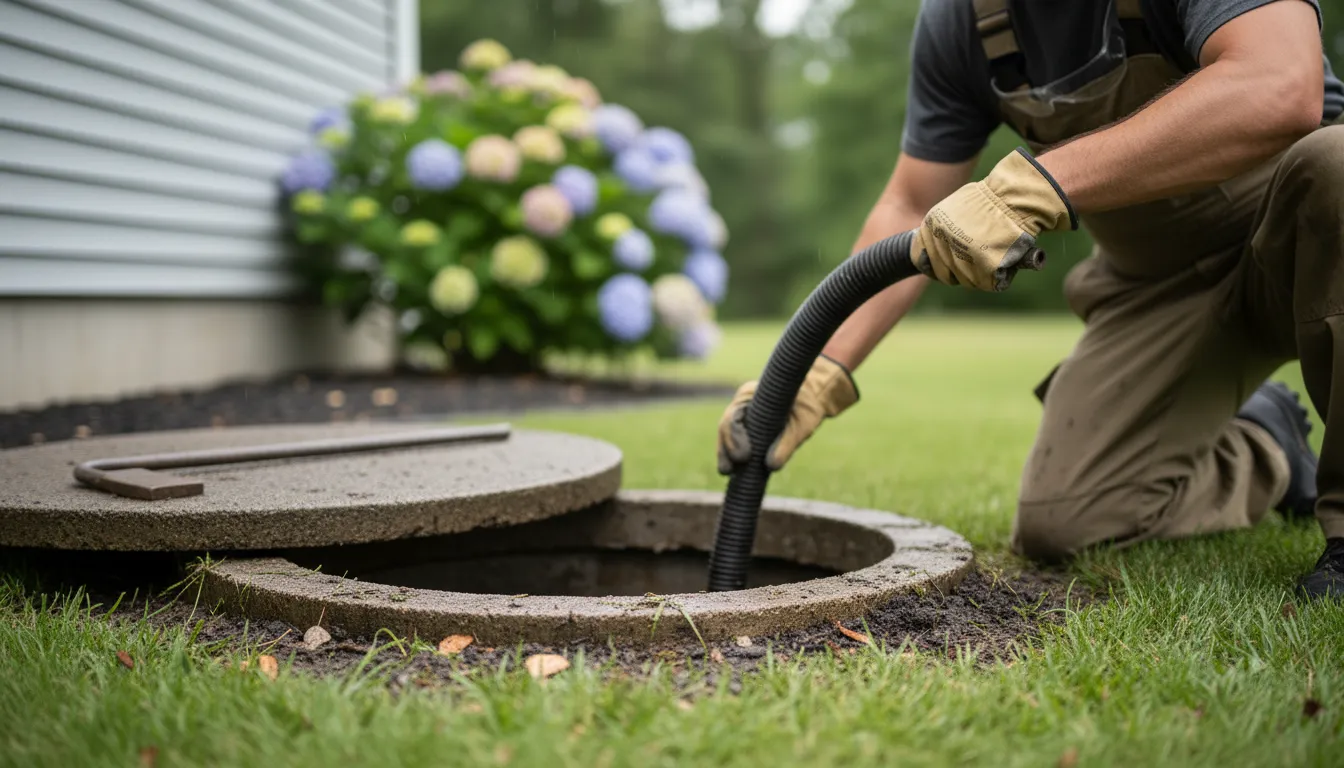
Find the Best Septic Tank Pumping Contractors for Your Business
No obligation • Fast responses • Nationwide coverage

Why you can trust Septic Spot
Septic Spot is a leading United States resource for understanding and comparing septic services. Our editors review providers using consistent criteria and verify key business details. Listings and scores are independent, and companies cannot pay to influence our content.
Search providers near you
Top Septic Tank Pumping Contractors in North Bergen, New Jersey Ranked
Maintaining your septic system is a crucial responsibility for any homeowner in North Bergen. Regular septic tank pumping is the most important preventative maintenance task you can perform to avoid messy, expensive, and environmentally hazardous system failures. This service removes the accumulated sludge and scum that naturally build up in your tank, ensuring wastewater can flow and be treated properly. Finding a reliable local professional for this essential job helps protect your property, your health, and your wallet.
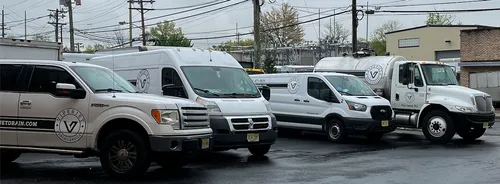
Viper Jet Drain Services
5-02 Banta Pl, Fair Lawn, NJ 07410
Viper Jet Drain Services is a septic tank pumping company based in Paterson, NJ, offering a full range of drain, septic, and grease trap services. They serve residential, commercial, and municipal clients throughout New Jersey and New York City. Their licensed and insured technicians use advanced equipment to provide services such as septic tank cleaning and pumping, hydro jetting, grease trap maintenance, and stormwater drain management. Viper Jet is a family-owned business that emphasizes expertise and commitment in all their work. They also provide responsive emergency service when needed.
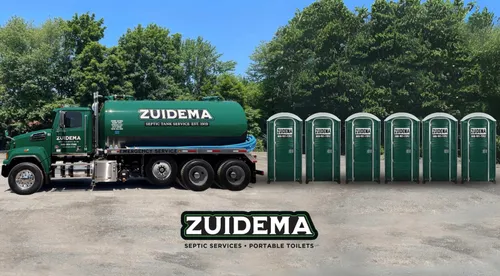
Zuidema Septic Services & Portable Toilets
90 Midland Ave, Midland Park, NJ 07432
Zuidema Septic Services & Portable Toilets provides residential and commercial septic services along with portable toilet and restroom trailer rentals in New York, NY. With over 100 years of experience since 1919, they offer septic tank pumping, inspections, repairs, and grease trap services. Their use of advanced sewer camera technology helps identify and address sewer line issues effectively. Zuidema also offers 24/7 emergency service for septic and portable toilet needs, ensuring support is available at any time.
EarthCare, a Wind River Company
New York, NY
EarthCare, a Wind River Company, provides septic tank pumping, inspection, and grease services in New York, NY, and surrounding areas including North Jersey and Hudson Valley. Serving residential, commercial, and municipal clients, they offer comprehensive waste management solutions such as pumping, cleaning, hauling, disposal, and environmental compliance support. Established in 1946, EarthCare operates one of the industry's largest fleets and provides 24/7 emergency services to ensure continuous system operation and regulatory compliance.
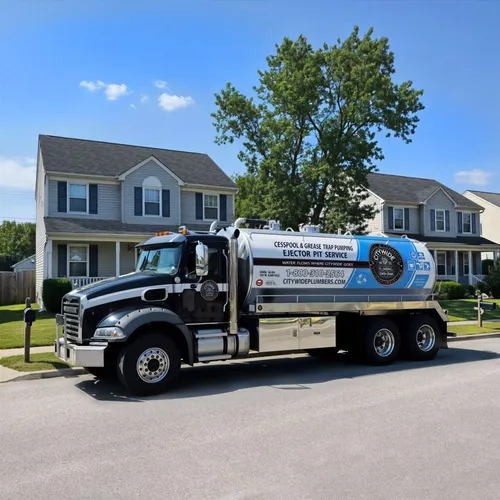
Citywide Grease Trap Maintenance | Cesspool Pumping Service Long Island
110 Voice Rd, Carle Place, NY 11514
Citywide Grease Trap Maintenance | Cesspool Pumping Service Long Island provides septic and cesspool pumping, inspection, repair, and installation services in New York, NY. Serving both residential and commercial clients, they offer comprehensive maintenance and cleaning to prevent system failures. Their skilled technicians use advanced equipment for installations and repairs, including grease trap pumping and sewage ejector pit services. With over 65 years of experience, Citywide operates 24/7 to address emergency needs promptly.
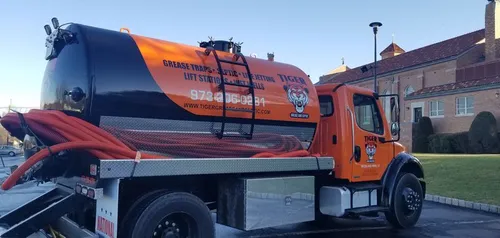
Tiger Grease and Septic
New York, NY
Tiger Grease and Septic is a septic tank pumping company based in New York, NY. They provide grease trap pumping and septic system maintenance services, including the use of specialized equipment like low profile vacuum trucks and portable units for hard-to-reach indoor grease traps. Their fleet includes large volume tankers capable of thorough grease and food solid removal to help prevent backups and odors. The company offers service seven days a week and can arrange same-day emergency pumping when needed.
Why Septic System Maintenance is Non-Negotiable
A septic system is a self-contained wastewater treatment plant on your property. When it functions correctly, you likely don't give it a second thought. However, neglecting routine septic tank cleaning can lead to catastrophic problems. A full or failing system can cause sewage to back up into your home, create foul odors in your yard, and contaminate local groundwater with harmful bacteria and nutrients. In North Bergen, with its proximity to vital waterways, proper septic care is also an environmental imperative. Proactive maintenance is always far less costly than emergency repairs or a full system replacement.
Recommended Pumping and Inspection Schedule
How often should you schedule septic tank pumping? While a common rule of thumb is every 3 to 5 years, the specific schedule for your North Bergen home depends on several factors. The New Jersey Department of Environmental Protection (NJDEP) recommends inspections every 1-3 years and pumping every 3-5 years based on usage 1. A professional inspection is the best way to determine the exact need.
- Household Size and Water Use: Larger families and homes with high water usage (e.g., frequent laundry, multiple showers) fill the tank faster and require more frequent pumping.
- Tank Capacity: Smaller tanks fill with solids more quickly than larger ones.
- Garbage Disposal Use: Using a garbage disposal significantly increases the solid waste entering the tank, shortening the time between necessary pump-outs.
Some local experts, like the New Jersey Septic Management Group, suggest that systems under heavy use may require service as often as every 18 months to 2 years 2. The key is not to rely on a generic calendar date but on the actual condition of your tank, which is why regular inspections are vital.
What Does a Professional Inspection Involve?
A thorough septic system inspection goes beyond just checking if the tank is full. A qualified technician will:
- Locate and Access the Tank: They will find the tank lids and safely open them.
- Measure Scum and Sludge Levels: Using specialized tools, they will measure the layer of floating scum and the accumulated sludge at the bottom. These measurements determine if pumping is immediately necessary 3.
- Check Tank Integrity: They will inspect for cracks, leaks, or signs of deterioration in the tank itself.
- Inspect Inlet and Outlet Baffles: These crucial components ensure solids are retained in the tank. They must be intact and functioning 4.
- Assess the Drain Field: The inspector will look for signs of failure, such as soggy ground, foul odors, or unusually lush grass over the field.
Keeping detailed records of every inspection and pumping is a best practice for home maintenance and is often required for property transfers 5.
Find the perfect septic tank pumping contractors for your needs
Get personalized recommendations and expert advice
Understanding the Cost of Septic Tank Pumping
The cost to pump a septic tank in North Bergen typically ranges from $250 to $500, with a national average often cited around $423 6 7. Several factors influence the final price:
- Tank Size: Larger tanks (e.g., 1,500 gallons) cost more to pump than standard 1,000-gallon tanks.
- Tank Accessibility: If the tank is buried deep, requires special equipment to reach, or is located under a deck or landscaping, the labor effort increases.
- Condition of the Tank: Excessively full tanks or those with hardened sludge may require more time and effort.
- Additional Services: The price may be higher if the inspection reveals needed minor repairs or if the technician must clear a blocked inlet/outlet pipe.
Always get a detailed, written estimate before work begins. The lowest price isn't always the best value; choose a provider known for thorough, compliant service.
Local Regulations and Best Practices for North Bergen Homeowners
Septic system owners in New Jersey must adhere to state and local regulations designed to protect public health.
- Permits Are Required: Any new septic system installation, major repair, or alteration requires a permit from the local health department 8. Always verify your service provider is familiar with North Bergen and Hudson County permitting processes.
- Protect Your Drain Field: Never park vehicles, build structures (like sheds or patios), or plant trees and shrubs over your septic tank or drain field. The weight can crush pipes, and roots can cause severe damage 9.
- Mind What You Flush: Your septic system is designed for human waste and toilet paper only. Avoid flushing wipes (even "flushable" ones), feminine hygiene products, cooking grease, chemicals, and medications.
- Conserve Water: Spread out water-intensive activities (laundry, showers) throughout the week to avoid overwhelming the system's treatment capacity.
Proper care extends the life of your system for decades and prevents the headache of a failing system during a rainy North Bergen spring.
Signs Your Septic Tank Needs Immediate Attention
Don't wait for a disaster. Contact a septic pumping professional if you notice any of these warning signs:
- Slow Drains: Sinks, tubs, and toilets that drain slowly throughout the house.
- Gurgling Sounds: Unusual gurgling noises coming from your plumbing.
- Sewage Odors: Foul smells inside your home or in the yard near the tank or drain field.
- Wet, Spongy Yard: Soggy ground or standing water over the drain field, especially when it hasn't rained.
- Unusually Lush Grass: Patches of grass over the drain field that are much greener and faster-growing than the rest of the lawn.
- Sewage Backup: The most severe sign-wastewater backing up into household drains.
If you experience any of these, schedule a service call immediately to assess the situation and prevent further damage.
Frequently asked questions
Sources
Footnotes
-
New Jersey Septic System Rules - 2026 Guide - The Sewer Kings - https://thesewerkings.com/blog/new-jersey-septic-system-rules/ ↩
-
Pumping Services - New Jersey Septic Management Group - https://nj-septic.com/pumping-services/ ↩
-
Technical Guidance for Inspections of Onsite Wastewater Treatment ... - https://dep.nj.gov/wp-content/uploads/dwq/inspection_guidance.pdf ↩
-
New Jersey Septic Tank Rules And Regulations - https://www.arrowsewernj.com/blog/septic-tanks-in-new-jersey-what-you-need-to-know/ ↩
-
How Often Should You Pump Your Septic Tank? - https://action-septic.ca/septic-kelowna/how-often-should-you-pump-your-septic-tank-and-why-it-matters/ ↩
-
Septic Tank Pumping Cost: Guide & Pricing in 2025 - Splash Plumbing - https://www.splashplumbing.com/how-much-does-it-cost-to-pump-septic-tank-understanding-pricing-and-factors-involved/ ↩
-
How Much Does It Cost to Pump Septic Tank: A Detailed Pricing Guide - https://www.benjaminfranklinplumbing.com/league-city/blog/2025/march/how-much-does-it-cost-to-pump-septic-tank-a-detailed-pricing-guide/ ↩
-
NJDEP| Division of Water Quality | Permitting Information - https://dep.nj.gov/dwq/wastewater/septic-systems/permitting-information/ ↩
-
SEPTIC - NJ.gov - https://dep.nj.gov/wp-content/uploads/dwq/pdf/septicmn.pdf ↩