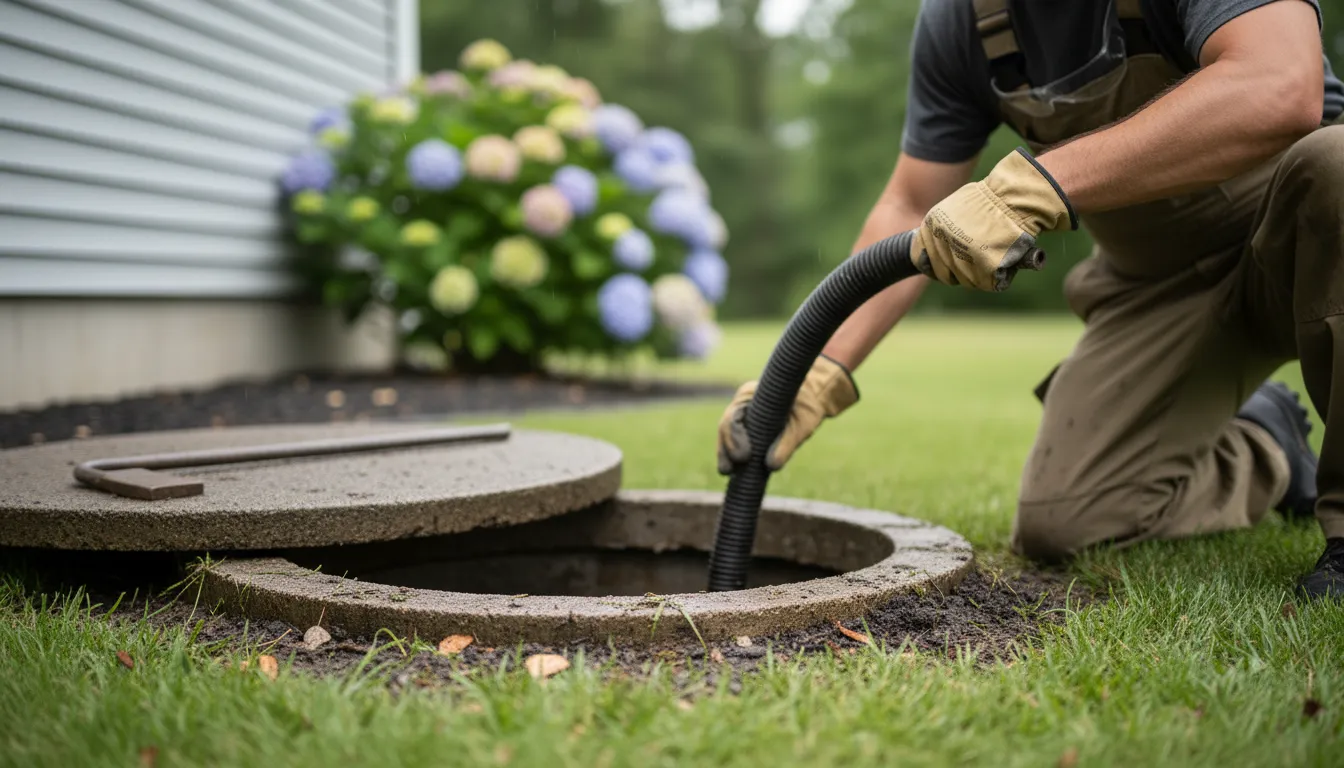
Find the Best Septic Tank Pumping Contractors for Your Business
No obligation • Fast responses • Nationwide coverage

Why you can trust Septic Spot
Septic Spot is a leading United States resource for understanding and comparing septic services. Our editors review providers using consistent criteria and verify key business details. Listings and scores are independent, and companies cannot pay to influence our content.
Search providers near you
Best Septic Tank Pumping Contractors in West Virginia Ranked
Maintaining your septic system is a crucial responsibility for West Virginia homeowners. Regular septic tank pumping and inspection prevents system failure, protects your property value, and safeguards local groundwater from contamination. This guide provides clear, actionable information on West Virginia's regulations, recommended maintenance schedules, and how to find qualified local professionals to service your system.
Understanding Your Septic System Responsibilities
In West Virginia, the property owner is legally responsible for the proper operation, maintenance, and repair of their onsite sewage system. This isn't just a recommendation-it's a requirement to protect public health and the environment. A well-maintained system treats household wastewater effectively, while a failing system can contaminate wells, streams, and create unsanitary conditions on your property.
The core components you are responsible for include:
- The Septic Tank: Where solids settle and begin to decompose.
- The Drainfield (or Leach Field): Where treated liquid wastewater is dispersed into the soil.
- All Piping: Connecting your home to the tank and the tank to the drainfield.
Proactive maintenance, primarily through regular pumping, is far less expensive than dealing with a failed drainfield, which can cost between $3,000 and $10,000 or more to replace.
How Often Should You Pump Your Septic Tank in WV?
While a common rule of thumb is every 3 to 5 years, the ideal pumping frequency for your West Virginia home depends on several factors 1.
- Tank Size: A 1,000-gallon tank will fill with solids much faster than a 1,500-gallon tank serving the same household.
- Household Size and Water Usage: More people generate more wastewater and solid waste, accelerating sludge buildup.
- Garbage Disposal Use: Using a garbage disposal significantly increases the amount of solids entering the tank, requiring more frequent pumping.
- System Age and Condition: Older systems may be less efficient.
The most reliable method is to have the sludge and scum levels checked annually. West Virginia regulations state that a tank should be pumped when the sludge accumulates to one-third of the total liquid depth of the tank. A licensed inspector or pumper can measure this during a routine inspection.
The Importance of Regular Inspections
Pumping is only one part of maintenance. The U.S. Environmental Protection Agency recommends inspecting conventional septic systems at least every 1 to 3 years. Alternative systems with electrical components, pumps, or advanced treatment should be inspected annually, if not more frequently.
A thorough inspection by a qualified professional will:
- Measure sludge and scum levels to determine if pumping is needed.
- Check for leaks in the tank and at inspection ports.
- Examine the drainfield for signs of failure, such as surfacing sewage or overly lush grass.
- Assess the condition of baffles and tees.
- Ensure mechanical components are working properly.
Combining an inspection with pumping, when needed, is a cost-effective approach. The combined service often averages between $100 and $300 for routine maintenance, a small price compared to major repairs 2 3.
Find the perfect septic tank pumping contractors for your needs
Get personalized recommendations and expert advice
West Virginia Regulations and Licensing Requirements
West Virginia has specific rules governing septic system maintenance to ensure it is done safely and effectively.
- Licensing: Septic tank pumping and cleaning must be performed by a cleaner who is licensed by the local health department 4. Always verify a provider's license before hiring them.
- Registration: The West Virginia Department of Environmental Protection (WVDEP) requires a one-time $30 registration fee for new septic tanks 5. This registration helps the state track systems.
- Local Health Departments: Regulations can vary by county. It is essential to contact your local county health department for specific permitting, inspection, and maintenance rules that apply to your property 6 7. They are your primary resource for local code information.
What Not to Flush: Protecting Your System
A major cause of septic system clogs and failures is putting the wrong materials down the drain. To keep your system functioning properly, avoid flushing or draining the following 8 9:
- Fats, Oils, and Grease (FOG): These solidify and clog pipes and the drainfield.
- Non-Flushable Items: This includes dental floss, paper towels, disposable wipes (even "flushable" ones), feminine hygiene products, and cigarette butts.
- Harsh Chemicals: Excessive use of bleach, drain cleaners, or antibacterial soaps can kill the beneficial bacteria in your tank that break down waste.
- Food Waste: Minimize use of a garbage disposal. Never pour coffee grounds, eggshells, or fibrous vegetables down the drain.
- Other Hazardous Items: Paint, pesticides, motor oil, and medications should never enter your septic system.
Signs Your Septic Tank Needs Attention
Don't wait for a complete failure. Be alert for these warning signs that your system may need pumping or repair:
- Slow Drains: Sinks, showers, and toilets that drain slowly throughout the house.
- Gurgling Sounds: Plumbing fixtures that gurgle when water is draining.
- Unpleasant Odors: Sewage smells inside your home or around the drainfield area outdoors.
- Wet, Spongy Yard: Soggy ground or standing water over the drainfield, especially when it hasn't rained.
- Lush Grass: Patches of grass over the drainfield that are much greener and faster-growing than the rest of the lawn.
- Sewage Backup: The most severe sign-wastewater backing up into household drains.
If you notice any of these signs, contact a licensed septic professional immediately to assess the situation.
Finding a Qualified Septic Service Provider in West Virginia
When your system needs service, choosing the right professional is key. Look for providers who:
- Hold a current license from the local health department for septic tank cleaning.
- Have strong local references and a good reputation in your community.
- Offer clear, upfront estimates for inspection and pumping services.
- Can provide documentation of the pumping (how many gallons were removed, where the waste was taken for disposal).
- Are insured and bonded for your protection.
A reliable professional will not only pump your tank but can also perform an inspection and offer advice on your system's overall health and any potential issues.
Frequently asked questions
Sources
Footnotes
-
How Often Should You Pump Your Septic Tank: 3 Factors Solved - https://www.frasiers.com/blog/sewage-tank-pump-frequency/ ↩
-
Homeowner's Guide to Septic Systems - https://marionhealth.org/wp-content/uploads/2024/02/EPA_Homeowner_Guide_Septic_Systems.pdf ↩
-
Maintaining Your Septic System-A Guide For - https://actat.wvu.edu/files/d/ba490d01-5c26-4d6b-bd60-5414f5530c1b/pipeline-fall-2004.pdf ↩
-
Design Standards for Small Septic Tank Systems - https://apps.sos.wv.gov/adlaw/csr/readfile.aspx?DocId=8133&Format=PDF ↩
-
Septic Tank Seal Registration - https://dep.wv.gov/WWE/permit/septictankseal/Pages/default.aspx ↩
-
Onsite Sewage System Owner Responsibilities - https://www.vdh.virginia.gov/environmental-health/onsite-sewage-system-owner-responsibilities/ ↩
-
small sewage and excreta disposal systems regulations - https://apps.sos.wv.gov/adlaw/csr/readfile.aspx?DocId=7922&Format=PDF ↩
-
Frequent Questions on Septic Systems | US EPA - https://www.epa.gov/septic/frequent-questions-septic-systems ↩
-
Septic Systems | Appalachian Community Technical Assistance and ... - https://actat.wvu.edu/wastewater/onsite-wastewater-systems/septic-systems ↩