Find the Best Drain Field Repair Companies for Your Business
No obligation • Fast responses • Nationwide coverage

Why you can trust Septic Spot
Septic Spot is a leading United States resource for understanding and comparing septic services. Our editors review providers using consistent criteria and verify key business details. Listings and scores are independent, and companies cannot pay to influence our content.
Search providers near you
Best Drain Field Repair Companies in Connecticut Ranked
A failing drain field, also known as a leach field, is a serious issue for any Connecticut homeowner with a septic system. When this critical component stops absorbing and filtering wastewater, it can lead to sewage backups, soggy yards, and environmental contamination. Addressing drain field problems promptly is not only essential for your home's sanitation and property value but is also required by Connecticut law. This guide provides clear, practical information to help you understand the repair and replacement process, navigate state and local regulations, and connect with licensed professionals who can assess your system and perform the necessary work.
Understanding Your Drain Field and Signs of Failure
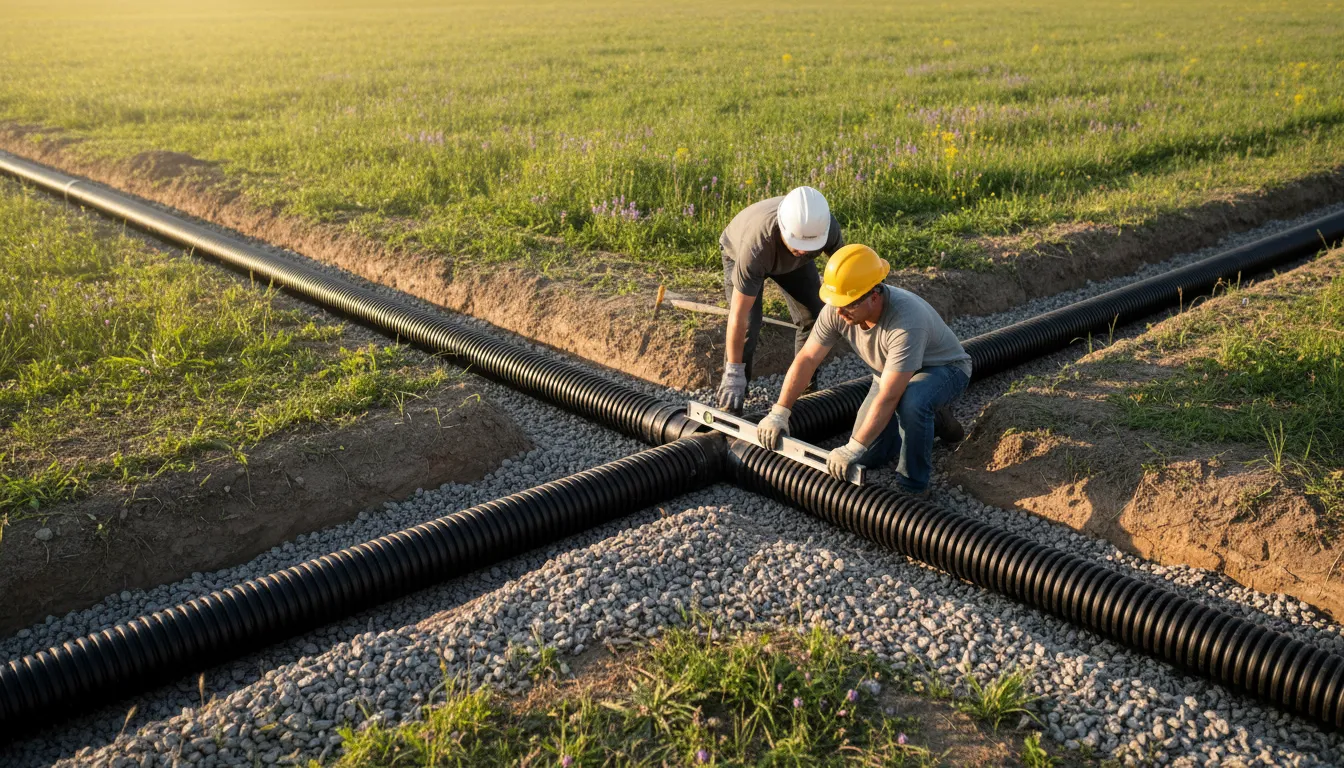
The drain field is the final stage of your onsite wastewater treatment system. After solids settle in the septic tank, liquid effluent flows into a network of perforated pipes buried in trenches filled with gravel. This effluent slowly percolates into the soil, where natural processes provide final treatment. A system fails when the soil can no longer absorb the water, often due to:
- Biological Mat Buildup: Over time, a layer of sludge and bacteria (a biomat) forms on the trench walls and can become too thick, preventing drainage.
- Soil Compaction: Driving or building over the field compacts the soil.
- Root Intrusion: Tree and shrub roots can clog and crush distribution pipes.
- System Age and Wear: Most conventional systems have a lifespan of 20-30 years.
- Hydraulic Overload: Consistently exceeding the system's design capacity with excess water use.
Signs you may need drain field repair or replacement include:
- Sewage odors or soggy, spongy areas over the leach field.
- Slow-draining household fixtures or sewage backups.
- Unusually green, lush grass over the field.
- Standing water or surfacing sewage, which constitutes a legal system failure that must be repaired.
Connecticut Regulations and the Permitting Process
All septic system work in Connecticut is governed by the Public Health Code Section 19-13-B103 and its associated Technical Standards. The law mandates that only state-licensed septic installers or pumpers can perform repairs or replacements. The process is overseen by your local health department (for systems under 7,500 gallons per day) or the CT Department of Energy and Environmental Protection (CT DEEP) for larger systems 1.
Before any shovel hits the ground, you must obtain an "Approval to Construct" permit from your local health department. This is not a simple formality. The permit application typically requires:
- A site plan prepared by a licensed professional.
- The results of a percolation (perc) test and deep observation hole analysis to evaluate soil conditions.
- For complex sites or replacements, an engineered design by a professional engineer may be necessary.
- A clear designation of the proposed repair area and often a "reserve area" for potential future expansion.
Failing to secure a permit can result in fines and an order to cease work. Crucially, Connecticut law requires homeowners to repair any system that is failing, such as one causing a nuisance through surfacing sewage 2.
Repair vs. Replacement: Assessing Your Options
A licensed professional will first perform a thorough inspection to diagnose the problem. Not all drain field issues require a full replacement. Possible repair solutions include:
- Jet Cleaning: High-pressure water jetting can clear minor blockages in distribution pipes.
- Terra-Lift® or Aeration: This process fractures compacted soil around the trenches to restore permeability.
- Adding Additional Lines: Expanding the existing field if space allows.
- Replacing a Section: Excavating and replacing only the clogged portion of the field.
However, if the soil is permanently saturated, the entire field is old and failing, or site conditions have changed, a full drain field replacement is necessary. This often involves constructing a new field in the designated reserve area. In cases where the entire system is outdated or undersized, a full septic system replacement may be the only viable, long-term solution.
Find the perfect drain field repair companies for your needs
Get personalized recommendations and expert advice
Costs and Financial Considerations for Connecticut Homeowners
The cost for drain field work in Connecticut varies widely based on soil conditions, system size, and whether engineered solutions are needed. However, data indicates that a full septic system replacement typically ranges from $10,000 to $25,0003. Drain field-specific repairs or replacements will generally fall within a portion of that range.
It's important to budget for more than just construction. Additional costs include:
- Permit fees from the local health department.
- Soil testing and site evaluation fees.
- Engineering design fees for complex sites.
- Landscaping restoration after construction.
Financial assistance is available. The State of Connecticut offers low-interest or deferred loans to eligible homeowners for the repair or replacement of failed subsurface sewage disposal systems4. You should inquire with your local health department or the Connecticut Department of Public Health about current programs.
The Role of Maintenance and Homeowner Responsibilities
Proper maintenance is the best way to extend the life of your drain field and avoid costly repairs. As a homeowner, you are legally responsible for maintaining your septic system5 6. Key responsibilities include:
- Regular Pumping: Have your septic tank pumped by a licensed pumper every 3-5 years to prevent solids from washing out into the drain field.
- Water Conservation: Spread out laundry loads, fix leaks, and use water-efficient fixtures to avoid hydraulic overload.
- Protect the Field: Never drive, park, or build structures (like sheds or patios) over the drain field. Avoid planting trees or deep-rooted shrubs nearby 7.
- Mind What You Flush: Only human waste and toilet paper should go down the drain. Avoid chemicals, grease, wipes, and medications.
- Keep Records: Maintain a file with your system's as-built drawing, all permits, inspection reports, and pumping receipts. This is invaluable for repairs and is often required during a property transfer.
Planning for the Future: Property Transfers and System Upgrades
If you are selling your home, a septic system inspection is often a key part of the transaction. While not universally mandated by state law, many local health districts require it, and it is a standard contingency in purchase contracts. A failing inspection can delay or cancel a sale, making pre-listing system checks a wise investment8.
Furthermore, if you plan to expand your home (adding bedrooms, bathrooms, or an accessory dwelling unit) or change its use in a way that increases daily wastewater flow by more than 50%, you are required to have your system evaluated for compliance with current codes. It may need to be upgraded or replaced to handle the new capacity9 10. Proactive planning, including identifying and legally designating a reserve area on your property plan, can save significant time and expense down the road.