Find the Best Drain Field Repair Companies for Your Business
No obligation • Fast responses • Nationwide coverage

Why you can trust Septic Spot
Septic Spot is a leading United States resource for understanding and comparing septic services. Our editors review providers using consistent criteria and verify key business details. Listings and scores are independent, and companies cannot pay to influence our content.
Search providers near you
Find Drain Field Repair Companies near you
A failing drain field, also known as a leach field or absorption field, is a serious issue for any home with a septic system. It's the final, critical stage where treated wastewater is dispersed into the soil. When it fails, it can lead to sewage backups, soggy yards, and environmental contamination. Understanding the signs of trouble, the repair and replacement process, and how to find qualified local professionals is essential for protecting your property, health, and investment.
Search providers near you
Recognizing the Signs of a Failing Drain Field
Catching problems early can mean the difference between a relatively minor repair and a costly full replacement. Homeowners should be vigilant for these common warning signs of a failing leach field 1 2:
- Soggy Ground or Standing Water: Puddles or persistently wet, spongy soil over the drain field area, especially when it hasn't rained, is a primary indicator.
- Sewage Odors: Unpleasant smells of sewage in the yard or even inside the home near drains.
- Slow Drains and Backups: Gurgling toilets, slow-draining sinks, and bathtubs, or sewage backing up into the lowest drains in the house.
- Unusually Green Grass: While some growth is normal, patches of grass over the field that are much lusher and greener than the rest of the lawn can signal a nutrient overload from surfacing effluent.
- Algae Blooms in Nearby Ponds or Ditches: This can indicate that nutrient-rich wastewater is surfacing and running off.
If you notice any of these signs, it's crucial to stop using water in the home as much as possible and contact a professional immediately for a diagnosis.
Diagnosis: Is It the Tank or the Field?
The first step a qualified septic professional will take is to determine the source of the problem. Issues like a full septic tank or a clogged outlet baffle can mimic drain field failure symptoms. A thorough inspection typically involves:
- Tank Inspection & Pumping: The septic tank is pumped and inspected for sludge/scum levels, structural integrity, and blockages in the outlet pipe.
- Dye Test: A non-toxic dye may be flushed into the system to see if it surfaces in the drain field area.
- Soil Probe: A long metal probe is inserted into the soil over the leach field to check for saturation and the presence of a biomat (a clogged layer that forms when a field fails).
- Camera Inspection: In some cases, a camera may be sent through the distribution lines to look for breaks, collapses, or root intrusion.
Only after a proper diagnosis can an appropriate solution-whether it's a simple repair or a major replacement-be recommended.
The Repair and Replacement Process
Addressing a drain field issue is a regulated, multi-step process that almost always requires professional expertise and permits.
1. Permitting and Site Evaluation
Before any shovel hits the ground, you must obtain the necessary permits from your local county health department or environmental agency. Regulations vary by state and locality but are strictly enforced. The permitting process often requires:
- A Site Plan: A detailed drawing of your property showing the location of the home, well, existing system, property lines, and proposed repair/replacement area.
- Soil Testing: Many jurisdictions require a new percolation (perc) test or deep hole soil analysis to determine the soil's absorption rate and suitability. This is critical for designing a new system.
- Setback Verification: Health codes mandate minimum distances (setbacks) from wells, property lines, streams, and buildings. Your new or repaired field must comply 3.
2. Repair vs. Replacement: Understanding Your Options
- Minor Repairs: If the problem is isolated-such as a crushed pipe, a clog in a distribution line, or a damaged distribution box-a targeted repair may be possible. Techniques like jetting to clear blockages or replacing a small section of pipe can sometimes restore function 4.
- Drain Field Expansion or "Add-A-Field": If the original field is undersized or partially failed, it may be possible to install a new set of trenches alongside the old one, provided there is sufficient space and soil conditions allow.
- Complete Leach Field Replacement: This is necessary when the soil is permanently clogged (a failed biomat), the entire field is saturated, or the system is too old and undersized. This involves excavating the old field and installing a brand new one according to the permitted design 5. In some cases, an entirely different type of system, like a mound or aerobic treatment unit (ATU), may be required if soil conditions are poor 6.
3. Installation and Final Inspection
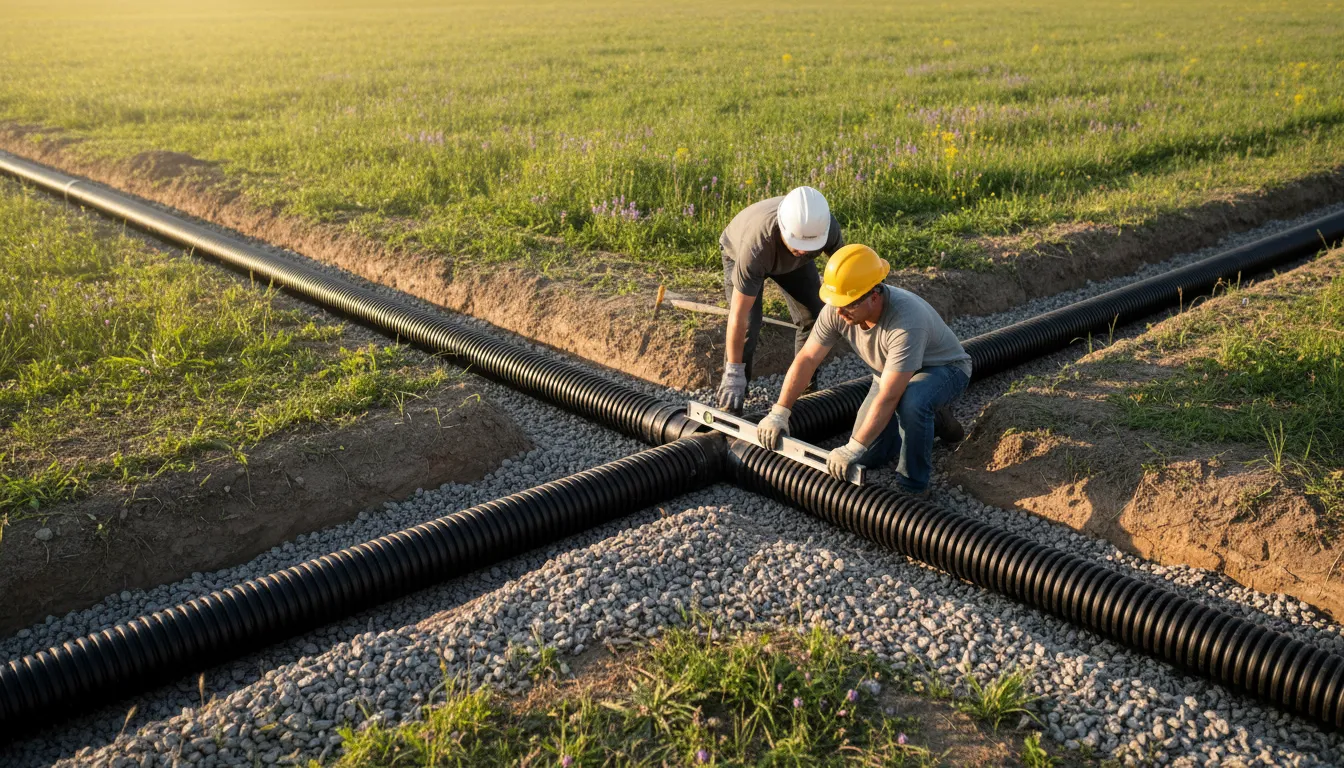
Once permits are secured and a plan is in place, licensed contractors will execute the work. For a full replacement, this involves excavating the area, removing old gravel and pipe, preparing the soil, laying new perforated pipes in gravel-filled trenches, covering with geotextile fabric and soil, and grading the area. A final inspection by the health department is mandatory to ensure the installation meets all codes before the system is put into use 7 8.
Find the perfect drain field repair companies for your needs
Get personalized recommendations and expert advice
Costs of Drain Field Repair and Replacement
Costs can vary dramatically based on the size of the system, soil conditions, local labor rates, and the type of system required. The figures below are national averages; always get multiple local quotes 9 10 11 12.
- Minor Repairs (Pipe repair, jetting): $1,000 - $5,000
- Complete Drain Field Replacement (Conventional System): $5,000 - $20,000+. The average often falls in the $7,000 - $10,000 range, but complex sites can drive costs higher.
- Engineered System Replacement (Mound, Sand Filter, ATU): Often exceeds $20,000 due to the need for additional materials like sand, pumps, and more complex construction.
- Routine Maintenance (Pumping & Inspection): $250 - $500. This is your best defense against premature failure.
Protecting Your New or Repaired Drain Field
Proper maintenance is non-negotiable. A new drain field is a major investment, and protecting it ensures it lasts for decades.
- Pump Regularly: Have your septic tank pumped every 3 to 5 years by a professional. This prevents solids from washing out into the drain field and clogging it.
- Conserve Water: Spread out laundry loads, fix leaky faucets and toilets promptly, and install water-efficient fixtures. Overloading the system with too much water at once is a common cause of failure.
- Mind What You Flush: Only human waste and toilet paper should go down the toilet. Never flush chemicals, solvents, paints, medications, feminine hygiene products, or "flushable" wipes 13 14.
- Divert Water: Ensure roof gutters, sump pumps, and surface runoff are directed away from the drain field area to prevent saturation.
- Protect the Area: Never drive or park vehicles, build structures (sheds, patios), or plant trees and deep-rooted shrubs over the drain field. The weight can compact soil and crush pipes, and roots can infiltrate and block lines 15 16.
Frequently asked questions
Sources
Footnotes
-
Septic Systems and Their Maintenance | NC State Extension Publications - https://content.ces.ncsu.edu/septic-systems-and-their-maintenance ↩
-
Septic Drain Field Repair | Benjamin Franklin Plumbing® of League City - https://www.benjaminfranklinplumbing.com/league-city/blog/2025/april/can-a-septic-drain-field-be-repaired-key-considerations-and-solutions/ ↩
-
Septic Tank Plans: A Complete Homeowner's Guide - https://landperc.com/septic-tank-plans-guide/ ↩
-
Drain Field Cleaning & Repair | Judd Septic Northeast Ohio - https://juddseptic.net/drain-field-cleaning-repair/ ↩
-
Drain Field Replacement near Honolulu County, Hawaii | Know When It Is Time - https://acsihawaii.com/drain-field-replacement-near-honolulu-county-hawaii ↩
-
Septic Design Elora: Permits, Costs, Rules, and Expert Tips - https://www.elmid.ca/septic-design-elora-guide/ ↩
-
Nevada Septic Solutions Guide | Advanced Septic Systems in Nevada - https://www.nexgenseptics.com/nevada-septic-solutions-guide/ ↩
-
Septic Tank Installation in Rochester, IL - https://www.hriplumbing.com/sewage/septic-tank-installation-rochester-il ↩
-
Septic Drain Field Replacement Cost - https://dillonseptic.com/septic-drain-field-replacement-cost/ ↩
-
Drainfield Replacement Cost: What to Expect | Pricing Guide - https://miamisepticpros.com/costs/drainfield-replacement/ ↩
-
How Much Does a Leach or Drain Field Replacement Cost? (2026) - https://homeguide.com/costs/drain-leach-field-replacement-cost ↩
-
Cost to Replace Septic Tank and Drain Field [2026 Data] | Angi - https://www.angi.com/articles/how-much-new-drain-fields-foot.htm ↩
-
New Homebuyer's Guide to Septic Systems - EPA - https://www.epa.gov/sites/default/files/2017-08/documents/170803-homebuyerssepticguide_508c.pdf ↩
-
The Importance of Your Septic System Drainfield Leach Field ... - https://biomicrobics.com/articles/importance-septic-system-drainfield-leach-field-repair/ ↩
-
Septic Tank Drain Field Layout 101: A Complete Guide - Land Perc - https://landperc.com/septic-tank-drain-field-layout/ ↩
-
Leach Fields 101 | Drain Field Basics | Septic System Components - https://drain-proinc.com/leach-fields-101-what-every-homeowner-should-know/ ↩