Find the Best Drain Field Repair Companies for Your Business
No obligation • Fast responses • Nationwide coverage

Why you can trust Septic Spot
Septic Spot is a leading United States resource for understanding and comparing septic services. Our editors review providers using consistent criteria and verify key business details. Listings and scores are independent, and companies cannot pay to influence our content.
Search providers near you
Best Drain Field Repair Companies in Iowa Ranked
A failing drain field is a serious issue for any Iowa homeowner with a septic system. This critical component, also known as a leach field or soil absorption system, is responsible for safely dispersing and filtering treated wastewater. When it malfunctions, it can lead to sewage backups, soggy yards, and environmental contamination. Understanding Iowa's specific regulations, permit processes, and repair options is essential for addressing problems effectively and legally. This guide provides the practical information you need to navigate drain field issues, from initial evaluation to final inspection.
Understanding Your Drain Field's Role
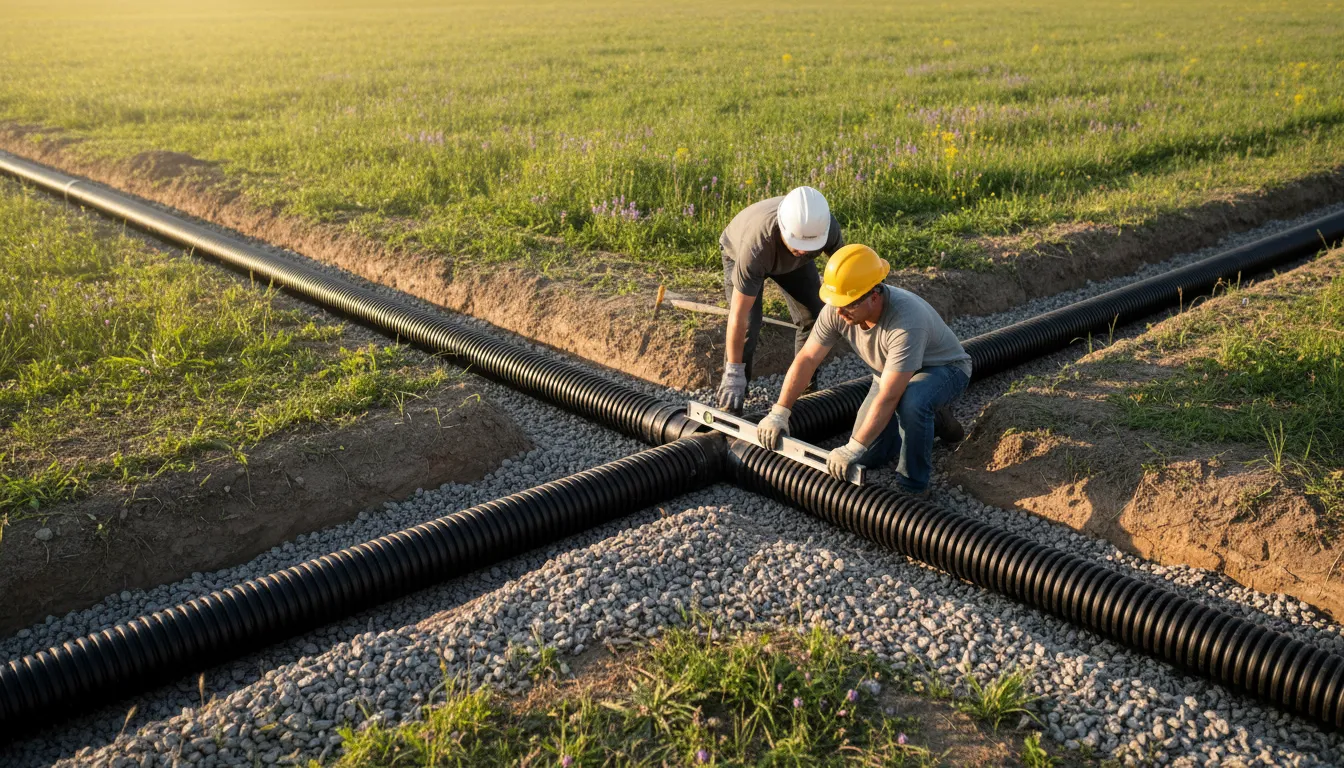
The drain field is the final stage of your onsite wastewater treatment system. After solids settle in the septic tank, the liquid effluent flows into a network of perforated pipes buried in trenches filled with gravel. This effluent slowly percolates through the soil, where natural biological processes remove harmful pathogens and nutrients before the water rejoins the groundwater. A properly functioning drain field is invisible and odorless. Problems arise when the soil becomes clogged or saturated, preventing proper absorption.
Signs Your Iowa Drain Field Needs Attention
Catching issues early can mean the difference between a repair and a full, costly replacement. Be alert for these warning signs:
- Soggy Ground or Surfacing Effluent: Wet, spongy areas or standing water over the drain field, especially with a foul odor, are primary indicators of failure.
- Slow Drains and Backups: Gurgling pipes, slow-draining sinks and toilets, or sewage backups in the home suggest the system is not draining properly.
- Unusually Lush Grass: Patches of grass over the drain field that are greener and grow faster than the rest of the lawn can signal a nutrient-rich leak.
- Persistent Odors: Foul smells near the drain field or septic tank area are a clear sign of problems.
If you notice any of these, it's crucial to act quickly to prevent further damage and potential health hazards.
Iowa's Regulatory Framework: Permits and Standards
In Iowa, all work on septic systems, including drain field repair and replacement, is regulated. The Iowa Department of Natural Resources (DNR) sets the statewide minimum standards, but enforcement and permitting are handled by your local county environmental health department. You cannot begin any work without their approval.
- Permit Requirement: A permit is mandatory for any new installation, replacement, or major repair of a septic system component. This ensures the work meets health and environmental codes.
- Site Evaluation: The first step in the permit process is often a site evaluation conducted by a county sanitarian or a licensed professional. This evaluates soil type, depth to groundwater, and percolation rate to determine the appropriate system design.
- Key Design Standard: Iowa law requires a minimum 3-foot vertical separation between the bottom of the drain field trench and the seasonal high water table or any confining layer of soil. This critical buffer protects groundwater quality.
The Repair vs. Replacement Decision
Not all drain field problems require a complete rebuild. A qualified professional can diagnose the issue to determine the best path forward.
- Potential Repairs: Some issues, like a crushed or clogged distribution pipe, can sometimes be repaired with targeted excavation and replacement of the damaged section. However, this is only a solution if the surrounding soil is still functioning properly.
- When Replacement is Necessary: If the soil absorption area has become permanently clogged (a condition called "biomat" buildup) or the system has exceeded its lifespan, repair is not viable. Complete replacement of the absorption field is required1. The county will require the new system to comply with all current standards, which may differ from the original installation.
Types of Drain Field Systems Used in Iowa
Depending on your soil and site conditions, different system types may be approved:
- Conventional Trenches: The most common type, featuring gravel-filled trenches with perforated pipes.
- Mound Systems: Used when soil depth, permeability, or groundwater levels are insufficient for a conventional system. An elevated mound of sand is constructed to provide the necessary treatment and separation2.
- Alternative/Advanced Treatment Systems: These systems include additional mechanical or technological components to treat wastewater to a higher standard, allowing installation in challenging sites. They require specific maintenance agreements.
Your county sanitarian will recommend the appropriate system type based on the site evaluation.
The Step-by-Step Process for Iowa Homeowners
- Contact Your County Health Department: Before calling contractors, reach out to your local county environmental health department. Report the suspected failure and initiate the permit process.
- Hire a Certified Professional: For repairs and replacements, you must use a bonded and licensed septic installer certified in Iowa3 4. They will work with the county to design a compliant system.
- Obtain the Permit: Your installer will typically submit the design and application, but the homeowner is ultimately responsible for ensuring a permit is secured 5. Permit fees in Iowa typically range from $150 to $400 or more, depending on the county and project complexity6 7.
- Installation & Inspection: The certified installer performs the work. Critical inspections by the county are required before the new drain field is covered with soil. Do not backfill trenches until an inspector has approved the installation.
- Final Approval: Once the system passes inspection and is covered, the county will provide final approval for use.
Find the perfect drain field repair companies for your needs
Get personalized recommendations and expert advice
Homeowner Responsibilities and Financial Considerations
As a homeowner, you are legally responsible for maintaining your septic system and repairing any failures. This includes obtaining the necessary permits before work begins.
- Costs: A full drain field replacement is a significant investment. Costs depend heavily on system type and size, ranging from several thousand dollars to over $10,0008.
- Financial Assistance: Iowa offers the On-site Wastewater Assistance Program (OSWAP), which provides low-interest loans to eligible homeowners for replacing failing septic systems9. Check with your county office for availability and application details.
- The Time-of-Transfer Law: Iowa law requires that a septic system be inspected by a certified inspector whenever a property is sold10. A failing drain field discovered during this inspection must be addressed before the sale can proceed, making proactive maintenance a wise financial decision.
Maintaining Your New or Repaired Drain Field
Protect your investment with proper care:
- Pump the Septic Tank Regularly: This is the single most important maintenance task. Pumping every 3-5 years (as recommended by a professional) prevents solids from washing out into and clogging the drain field 11.
- Conserve Water and Spread Out Usage: Reduce strain on the system by fixing leaks and avoiding large volumes of water in short periods.
- Divert Surface Water: Ensure roof drains, sump pumps, and landscaping slope water away from the drain field area.
- Never Drive or Park on the Drain Field: This compacts the soil and can crush pipes.
- Avoid Planting Trees Nearby: Root intrusion can damage pipes.
Frequently asked questions
Sources
Footnotes
-
Septic Drain Field Repair | Benjamin Franklin Plumbing® of League City - https://www.benjaminfranklinplumbing.com/league-city/blog/2025/april/can-a-septic-drain-field-be-repaired-key-considerations-and-solutions/ ↩
-
567-Chapter 69 - Iowa Administrative Code - https://www.legis.iowa.gov/docs/ACO/chapter/567.69.pdf ↩
-
Private Sewage Disposal and Septage - Iowa DNR - https://www.iowadnr.gov/environmental-protection/water-quality/private-sewage-disposal-and-septage ↩
-
Rules relating to private sewage disposal sys - ADLM Counties - https://adlmenv.com/files/septic/chapter_69_89097.pdf ↩
-
Septic System - Environmental Health - Iowa County, Iowa - https://iowacounty.iowa.gov/environmental_health/septic_systems/ ↩
-
Septic Systems - Pottawattamie County Public Health - https://www.pottcounty-ia.gov/public_health/septic_systems/ ↩
-
Wastewater Treatment - Health - Clinton County, Iowa - https://www.clintoncounty-ia.gov/health/wastewater_treatment/ ↩
-
Iowa Septic Tank Requirements | Private Sewage Disposal ... - https://www.ntotank.com/blog/iowa-septic-tank-requirements ↩
-
Onsite Wastewater Treatment & Private Sewage Disposal ... - https://www.dubuquecountyiowa.gov/DocumentCenter/View/6510/Updated-2022-Septic-app-and-permit ↩
-
Frequently Asked Questions about Septic System Inspections - https://mononacountyiowa.gov/files/environmental_health_zoning/septic_system_inspections_faqs_idnr_17810.pdf ↩
-
Who is Responsible for Maintaining My Drain Field? - https://qualitysepticincorporated.com/who-is-responsible-for-maintaining-my-drain-field/ ↩