Find the Best Drain Field Repair Companies for Your Business
No obligation • Fast responses • Nationwide coverage

Why you can trust Septic Spot
Septic Spot is a leading United States resource for understanding and comparing septic services. Our editors review providers using consistent criteria and verify key business details. Listings and scores are independent, and companies cannot pay to influence our content.
Search providers near you
Best Drain Field Repair Companies in Maryland Ranked
A failing drain field, also known as a leach field or absorption area, is a serious issue for any Maryland homeowner with a septic system. This critical component is responsible for safely dispersing treated wastewater into the soil. When it fails, it can lead to sewage backups, soggy yards, and environmental contamination. Understanding the repair and replacement process, including Maryland's specific regulations and costs, is essential for protecting your property, health, and local waterways like the Chesapeake Bay. This guide provides the practical information you need to navigate this complex process and connect with qualified local professionals.

American Septic & Backhoe Service
Baltimore, MD
American Septic & Backhoe Service is a family-owned business providing comprehensive septic system care in Baltimore, MD, and nearby Harford County since 1992. They offer a full range of services including septic tank pumping, inspections, repairs, new system installations, and drain field maintenance. The company is certified in Best Available Technology (BAT) septic systems and provides 24-hour emergency services to address urgent septic needs.

Daniel's Septic Systems
8555 Brad Ct, Pasadena, MD 21122
Daniel's Septic Systems is a septic service company based near Baltimore, MD, specializing in residential and commercial septic system installation, pumping, and repair. They provide services including drain field repair, septic pump repair, and sewer hookups. The company offers 24-hour emergency services and serves Anne Arundel County and nearby Beltway areas such as Pasadena, Glen Burnie, Severna Park, Annapolis, Severn, and Millersville. All work is licensed, insured, and performed with safety in mind.
Understanding Drain Field Failure
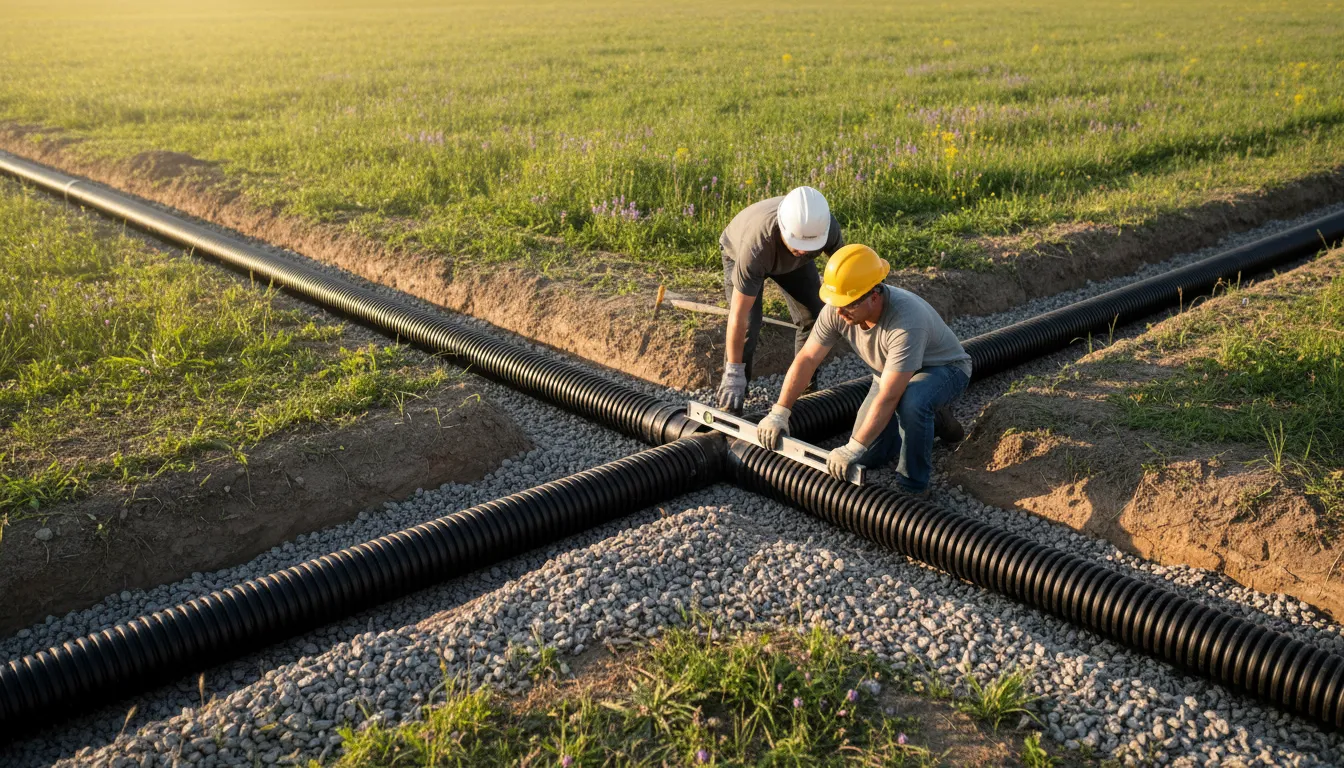
The drain field is the final stage of your onsite sewage disposal system. After solids settle in the septic tank, liquid effluent flows into a network of perforated pipes buried in trenches filled with gravel. This effluent slowly percolates into the soil, where natural processes provide final treatment.
A system fails when the soil can no longer absorb the liquid. Common signs in Maryland include:
- Sewage odors in the yard or home.
- Soggy, spongy, or bright green grass over the drain field area, even in dry weather.
- Slow-draining or backing-up toilets, sinks, and showers.
- Standing water or surfacing sewage in the yard.
Failure is often caused by a combination of factors: lack of regular tank pumping, soil compaction from driving or building over the field, hydraulic overloading from excessive water use, or the natural aging of the system components.
Maryland's Regulatory Framework
All septic system work in Maryland is regulated at the county level by local health departments. State law mandates that you cannot construct, repair, or replace any part of a system without first obtaining a Sanitary Construction Permit from your local Health Department. This ensures the work protects public health and meets environmental standards.
Key Regulatory Points:
- Permits are Mandatory: Any repair or replacement starts with a permit application to your county's Environmental Health division.
- Licensed Professionals Required: All design, installation, and major repair work must be performed by a state-licensed septic system contractor or installer.
- Site Evaluation is Critical: Replacing a system almost always requires a new site and soil evaluation, including a percolation (perc) test, to confirm the soil's ability to absorb effluent.
- Final Inspection for Approval: After installation, the county health inspector must perform a final inspection before the system can be covered and put into use.
Repair vs. Complete Replacement
The course of action depends on the nature and extent of the failure.
- Minor Repairs: Issues confined to the septic tank itself, such as a damaged inlet or outlet baffle, broken pipe at the tank, or a faulty tank lid, can often be repaired. These are relatively inexpensive, often costing a few hundred dollars.
- Drain Field Replacement: According to Maryland guidelines, if the problem originates in the drain field trenches-typically indicated by saturated soil and surfacing effluent-the field usually cannot be repaired and must be completely replaced. The existing trenches are considered clogged or "failed," and a new absorption area must be constructed.
Find the perfect drain field repair companies for your needs
Get personalized recommendations and expert advice
The Replacement Process: A Step-by-Step Guide
Navigating a full drain field replacement involves several key steps. It's a collaborative process between the homeowner, a licensed contractor, and the county health department.
- Hire a Licensed Contractor: Your first step is to select a licensed septic system installer. They will assess the failure and guide you through the subsequent steps.
- Apply for a Repair/Replacement Permit: Your contractor will typically help you submit the permit application, site plan, and design to the local health department. The application must specify the proposed repair or new system design 1 2 3.
- Site and Soil Evaluation: For a replacement, a new site evaluation is required. A health department sanitarian or a licensed evaluator will perform soil tests (like a perc test) to determine the appropriate size and type of new system for your property 4.
- System Design & Approval: Based on the soil evaluation, a system is designed. In areas with poor soils or critical environmental concerns (like near the Chesapeake Bay or Patuxent River watershed), a Best Available Technology (BAT) unit may be required. BAT units provide advanced nitrogen removal but require a mandatory maintenance contract 5.
- Installation: Once the permit is issued, your licensed contractor will excavate and install the new septic tank and drain field according to the approved design.
- Final Inspection: Before the new system is backfilled, the county health inspector conducts a final inspection to ensure it was built to code 6 7.
- Use Your Reserve Area Wisely: Your original permit likely designated a "repair" or "reserve area." This is the space where a new drain field must be built. It is crucial to keep this area clear-no structures, driveways, or pools-so it is available when needed 8.
Cost Considerations in Maryland
The cost for drain field work varies significantly based on system size, soil conditions, local labor rates, and the type of technology required.
- Tank Pumping: Regular maintenance pumping costs $250-$400 and is the best way to prevent premature failure 9.
- Minor Tank Repairs: Fixing baffles or tank lids may cost a few hundred dollars10.
- Full Drain Field/System Replacement: This is a major excavation and construction project. In Maryland, costs typically range from $10,000 to over $30,00011 12. Factors that increase cost include poor soil requiring a larger or engineered system, the need for a BAT unit, rocky terrain, and limited site access.
Financial Assistance: Maryland's Bay Restoration Fund offers grants and loans to help cover the cost of upgrading or replacing failing septic systems with BAT technology, particularly for homeowners meeting certain income eligibility requirements 13 14. Check with your county health department for availability.
Proactive Maintenance to Avoid Failure
The most cost-effective strategy is to prevent failure before it starts.
- Pump Regularly: Have your septic tank inspected and pumped every 3 to 5 years by a licensed pumper 15.
- Conserve Water: Spread out laundry loads, fix leaky fixtures, and use water-efficient appliances to avoid overwhelming the drain field.
- Mind What You Flush: Only human waste and toilet paper should go down the drain. Avoid chemicals, grease, wipes, and feminine hygiene products.
- Protect the Area: Never drive, park, or build over your drain field or its designated reserve area. Keep roof drains and sump pumps directed away from it 16.
Frequently asked questions
Sources
Footnotes
-
Septic Systems & Sewage - Caroline County Health Department - https://www.carolinehd.org/environmental-health/septic-systems-sewage/ ↩
-
Septic Systems & Sewage - Talbot County Health Department - https://talbothealth.org/environmental-health/septic-systems-sewage/ ↩
-
Step-By-Step Instructions For Septic System Upgrades and Repairs - https://www.aahealth.org/environmental-health/wells-and-septic-systems/septic-systems/step-step-instructions-septic-system ↩
-
Guidelines for the Installation and Inspection of On-site Sewage ... - https://www.calverthealth.org/community/environmentalhealthservices/PDF/glinosds.pdf ↩
-
Guidelines For Maintaining Your Septic System - https://www.aahealth.org/environmental-health/wells-and-septic-systems/septic-systems/guidelines-maintaining-your-septic ↩
-
Septic System Repair Permit & Inspection Process - https://www.montgomerycountymd.gov/DPS/Process/ld/septic-repair-permit.html ↩
-
Buying a Home in Maryland? Don't Skip These Well & Septic ... - https://www.tricountypumps.com/blog/buying-a-home-in-maryland-dont-skip-these-well-septic-inspection-steps/ ↩
-
Septic System Repair Guidelines - Montgomery County - https://www.montgomerycountymd.gov/DPS/Resources/Files/Land_Development/Guideline_Septic%20System%20Repair.pdf ↩
-
FAQs on Septic Systems - University of Maryland Extension - https://extension.umd.edu/programs/environment-natural-resources/program-areas/wells-septics-and-water-quality/septicsunderstandingmaintaining/faqs-septic-systems ↩
-
Septic System Compliance for Home Buyers & Sellers - https://teamcermak.com/blog/septic-system-compliance-what-every-buyer-and-seller-needs-to-know ↩
-
Septic System Replacement Maryland: Signs, Costs & What to ... - https://www.coxenterprisesllc.com/septic-system-replacement/ ↩
-
Septic Tank Regulations Homeowners Compliance Guide | Blog - https://www.blueribbonseptic.com/blog/septic-tank-regulations-homeowners-compliance ↩
-
A Guide to Septic Systems and Maintenance - https://mde.maryland.gov/programs/water/BayRestorationFund/OnsiteDisposalSystems/Documents/Onsite%20Systems/Uof%20MD%20Septic%20Records%20and%20Maintenance%20Guidelines.pdf ↩
-
Safer Septic Systems for Maryland | Clean Water Action - https://cleanwater.org/safer-septic-systems-maryland ↩
-
Onsite Sewage Disposal Systems: A Guide to Maintenance - https://www.baltimorecountymd.gov/files/departments/environmental-protection-and-sustainability/documents/osdsmaintenanceguide20240621.pdf ↩
-
Septic Systems, DEP, Montgomery County, MD - https://www.montgomerycountymd.gov/DEP/water/water-supply-wastewater/septic-systems.html ↩