Find the Best Drain Field Repair Companies for Your Business
No obligation • Fast responses • Nationwide coverage

Why you can trust Septic Spot
Septic Spot is a leading United States resource for understanding and comparing septic services. Our editors review providers using consistent criteria and verify key business details. Listings and scores are independent, and companies cannot pay to influence our content.
Search providers near you
Best Drain Field Repair Companies in Minnesota Ranked
A failing drain field is a serious issue for any Minnesota homeowner with a septic system. Also known as a leach field or soil treatment area, this component is responsible for the final treatment and dispersal of wastewater into the soil. When it fails, it can lead to sewage backups, soggy yards, and environmental contamination. This guide explains the critical process of drain field repair and replacement in Minnesota, where state and local regulations strictly govern all work. You can use this information to understand the steps, costs, and legal requirements, helping you find and vet qualified local professionals for your project.

Understanding Your Drain Field and Signs of Failure
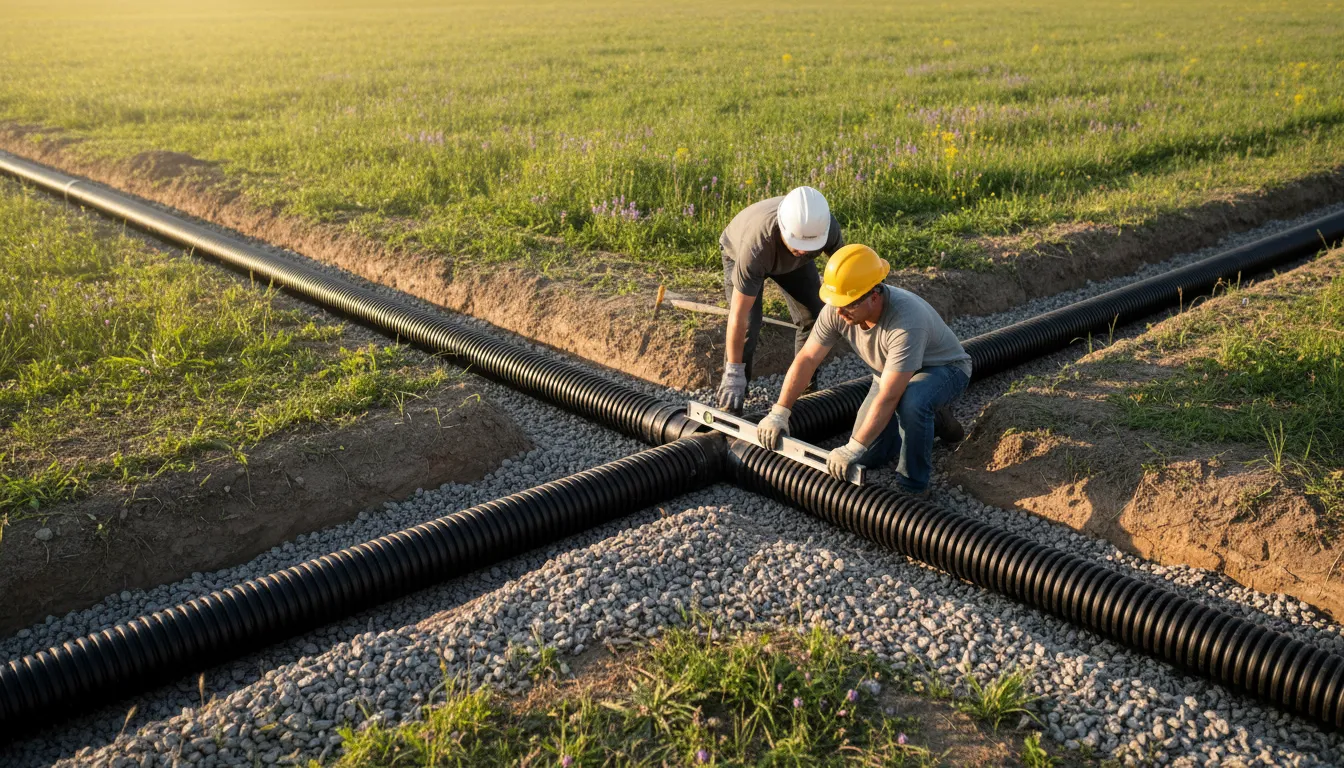
The drain field is a network of perforated pipes buried in trenches filled with gravel. After solids settle in the septic tank, the liquid effluent flows into these pipes and slowly percolates into the surrounding soil, which provides natural filtration. In Minnesota, common system types include conventional trench systems, mound systems (used where soil depth or permeability is insufficient), and at-grade systems.
A system fails when the soil can no longer absorb the liquid. Key warning signs include:
- Sewage odors in the yard or home.
- Slow drains and gurgling plumbing fixtures.
- Wet, spongy, or soggy ground over the drain field area, even during dry weather.
- Bright green, lush grass over the field compared to the rest of the lawn.
- Sewage backing up into the home or surfacing in the yard.
If you observe any of these signs, it constitutes a potential public health threat and requires immediate attention from a licensed professional 1.
Minnesota's Regulatory Framework: MPCA and Local Ordinances
All subsurface sewage treatment systems (SSTS) in Minnesota are regulated by the Minnesota Pollution Control Agency (MPCA). The MPCA sets statewide rules, but enforcement and permitting are almost always handled by your local county or city government, which may have stricter standards 2.
The Golden Rule: All design, installation, inspection, and repair work on a septic system must be performed by an MPCA-licensed professional. This is not a DIY project. Hiring a certified installer or maintainer is a legal requirement to ensure the work meets environmental and health codes.
The Permit Process
Before any repair or replacement begins, a permit is mandatory 3 4. The process typically involves:
- Site Evaluation: A licensed professional assesses the failure, conducts soil tests, and evaluates the property layout.
- System Design: A new or repaired system is designed to meet current codes, which are often more stringent than when the original system was installed.
- Permit Application: Your licensed professional submits the design and application to the local permitting authority (your county environmental services department).
- Permit Issuance: Permit validity varies. A permit for a new system typically lasts two years, while a permit specifically for replacing a failing system may be valid for only 10 months to encourage timely action 5.
Repair vs. Replacement: Understanding Your Options
Not all drain field problems require a full replacement. A licensed professional can diagnose the issue and recommend the appropriate solution.
Potential Repairs:
- Cleaning or Replacing Effluent Filters: A clogged filter can cause backups.
- Baffle Repair: Damaged tank baffles can allow solids to flow into and clog the drain field lines.
- Jet Cleaning Lines: Minor clogs in the distribution pipes can sometimes be cleared with high-pressure water jetting.
- Adding a New Trench ("Spot Repair"): If only a portion of the field has failed, it may be possible to add a new expansion area, provided the property has adequate space and the existing tank is still functional.
Full Drain Field Replacement is necessary when:
- The soil is permanently clogged (a condition called biomat saturation).
- The system is undersized for the home's current water usage.
- The original installation was substandard or has reached the end of its lifespan (typically 20-40 years).
- There is insufficient space for a spot repair.
Replacement often involves a completely new soil treatment area, which may be a different type (e.g., switching from a trench to a mound system) to comply with modern standards.
Find the perfect drain field repair companies for your needs
Get personalized recommendations and expert advice
Costs of Drain Field Work in Minnesota
Costs are highly variable and depend on system type, soil conditions, property size, and local regulations. Below are general estimates based on industry data:
- Compliance Inspection: Required for property transfers and often for permit applications, typically ranging from $300 to $700+.
- Septic Tank Pumping: Essential maintenance, usually $250 to $500 depending on tank size 6 7.
- Minor Repairs: Tasks like baffle replacement or filter service can cost $200 to $500.
- Full Drain Field Replacement: This is a major excavation and construction project. Costs can range from $5,000 to over $20,000+. Mound systems, which require importing sand and more complex construction, are often at the higher end of this spectrum 8 9.
Always get detailed, written estimates from multiple licensed professionals before proceeding.
The Property Sale and Compliance Inspection
Minnesota law places specific responsibilities on homeowners during a property transfer. The seller is responsible for obtaining a Certificate of Compliance from the local authority before the sale is finalized. This inspection verifies the septic system is functioning properly and poses no imminent health threat. If the system fails this inspection, the seller is typically obligated to repair or replace it to complete the sale. This regulation makes proper system maintenance not just an environmental duty, but a critical financial consideration for homeowners.
Maintenance: The Best Way to Avoid Costly Replacement
Proactive care is the most effective strategy to extend the life of your drain field.
- Pump Your Tank Regularly: The MPCA and University of Minnesota Extension recommend inspecting and pumping your septic tank every three years, on average. This prevents solids from escaping into and clogging the drain field.
- Conserve Water: Reduce strain on the system by fixing leaks, using high-efficiency fixtures, and spreading out laundry loads.
- Mind What You Flush: Only human waste and toilet paper should go down the drain. Avoid chemicals, grease, wipes, and medications.
- Protect the Drain Field Area: Never drive or park vehicles over it, and avoid planting trees with deep roots nearby.
- Keep Detailed Records: Maintain a file of all permits, inspection reports, and pumping receipts. This is invaluable for troubleshooting, selling your home, and proving compliance 10 11.
Frequently asked questions
Sources
Footnotes
-
SEPTIC SYSTEM BASICS - https://empiremn.gov/vertical/sites/%7BC2524253-F75F-408D-8923-A2A3D0993A19%7D/uploads/Maintain_your_septic_system.pdf ↩
-
Local septic system programs - https://www.pca.state.mn.us/business-with-us/local-septic-system-programs ↩
-
Septic Systems | Dakota County - http://www.co.dakota.mn.us/Environment/WaterResources/SepticSystem/Pages/default.aspx ↩
-
Cass County SUBSURFACE SEWAGE TREATMENT SYSTEM ... - https://www.casscountymn.gov/DocumentCenter/View/603/Subsurface-Sewage-Treatment-System-Ordinance-2018-03-PDF ↩
-
Septic Systems (SSTS) | Maplewood, MN - https://maplewoodmn.gov/947/Septic-Systems-SSTS ↩
-
All about septics | Onsite Sewage Treatment Program - https://septic.umn.edu/all-about-septics ↩
-
Cost of Septic Maintenance | Annual Expenses Explained | Blog - https://www.blueribbonseptic.com/blog/cost-of-septic-maintenance ↩
-
Understanding the Costs: Septic Inspection and Repair in ... - https://mikesseptic.com/2025/07/understanding-the-costs-septic-inspection-and-repair-in-bloomington-mn/ ↩
-
Septic Drain Field Replacement Cost - https://dillonseptic.com/septic-drain-field-replacement-cost/ ↩
-
SSTS service and maintenance - Minnesota Pollution Control Agency - https://www.pca.state.mn.us/business-with-us/ssts-service-and-maintenance ↩
-
On-site Septic Systems | Clay County, MN - Official Website - https://claycountymn.gov/316/On-site-Septic-Systems ↩