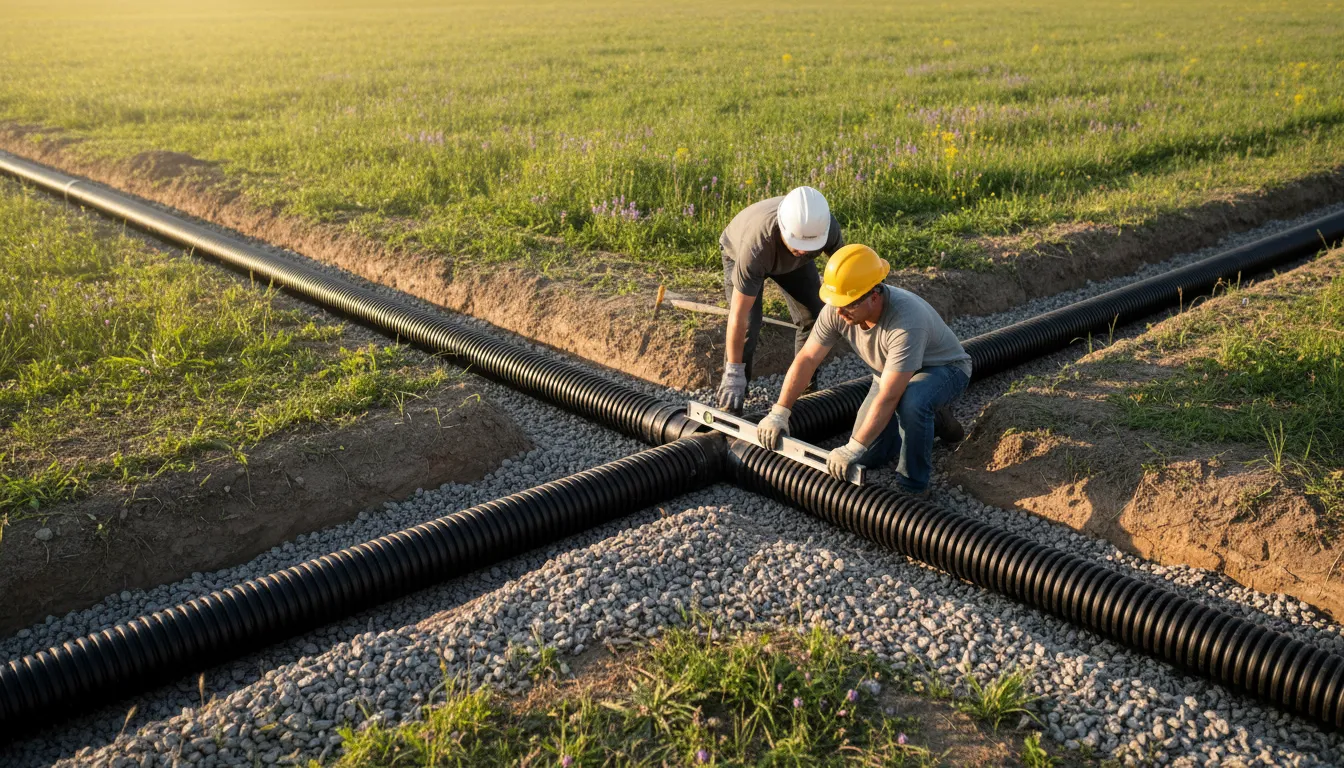
Find the Best Drain Field Repair Companies for Your Business
No obligation • Fast responses • Nationwide coverage

Why you can trust Septic Spot
Septic Spot is a leading United States resource for understanding and comparing septic services. Our editors review providers using consistent criteria and verify key business details. Listings and scores are independent, and companies cannot pay to influence our content.
Search providers near you
Top Drain Field Repair Companies in Bayonne, New Jersey Ranked
A failing drain field is a serious issue for any home with a septic system, leading to soggy yards, foul odors, and potential environmental contamination. In Bayonne, with its unique coastal and dense urban environment, addressing leach field problems requires navigating specific state and local regulations. This guide explains the critical steps, costs, and professional requirements for septic absorption field work in Bayonne, helping you understand the process and connect with qualified local experts.
Understanding Your Drain Field in Bayonne
The drain field, also known as a leach field or soil absorption area, is the final and most crucial stage of your onsite wastewater treatment system. After solids settle in the septic tank, liquid effluent flows into a network of perforated pipes buried in trenches. This effluent slowly percolates through the soil, where natural processes filter and purify it before it rejoins the groundwater.
In Bayonne, the performance of your absorption field is heavily influenced by local conditions. The coastal environment means the seasonal high-water table can be a significant concern, as state law requires a minimum of two feet of unsaturated soil beneath the drain field. Furthermore, Bayonne's dense development means space is often at a premium, making proper site evaluation and creative engineering solutions essential for a successful repair or replacement.
Signs You Need Drain Field Service
Recognizing early warning signs can prevent a complete system failure and more costly repairs. Look for these indicators:
- Soggy Ground or Surfacing Effluent: Puddles, spongy grass, or sewage odors in your yard, especially near the drain field area, are the most direct signs of failure.
- Slow Drains and Backups: If toilets gurgle and drains empty slowly throughout the house, it could indicate that the drain field is saturated and not accepting water from the tank.
- Unusually Green Grass: While a small patch of green grass over the field can be normal, a large, lush area significantly greener than the rest of the lawn may signal a leak.
- Failed Inspection: A routine septic inspection or one required for a real estate transaction may reveal high liquid levels in the tank or other evidence of drain field malfunction 1.
The Bayonne Regulatory Landscape: Permits and Professionals
Any major septic system work in New Jersey, including drain field replacement, is governed by strict NJ Department of Environmental Protection (NJDEP) standards (N.J.A.C. 7:9A) and enforced by local health departments 2 3. Navigating this process correctly is non-negotiable.
Key Regulatory Steps:
- Hire a Licensed Professional: You must work with a New Jersey licensed septic installer, engineer, or certified soil scientist. They are authorized to perform the necessary testing, design, and construction.
- Secure Permits: Major repairs or replacements require a permit from your local health department (often at the county level in Hudson County). The permit application will include the engineered design plans. Never begin excavation without this approval.
- Adhere to Setbacks: Your system must maintain minimum distances from property lines, wells, and water bodies. In coastal areas like Bayonne, being within 100 feet of a water body may trigger additional permits under CAFRA (Coastal Area Facility Review Act) or Coastal Wetlands rules 4 5.
- Pass Inspections: The project will involve multiple mandatory inspections: a pre-construction site check, a critical inspection during excavation and pipe placement before backfilling, and a final inspection upon completion.
The Site Evaluation: Soil is Everything
You cannot design or size a new leach field without understanding the soil on your property. This is where a certified soil scientist becomes essential.
- Soil Log (Percolation Test): A professional will dig deep observation pits to create a soil log. They examine soil texture (sand, silt, clay), structure, and look for mottling-rust-colored spots that indicate the seasonal high-water table (SHWT) 6.
- Determining the SHWT: New Jersey law mandates at least 24 inches of unsaturated soil beneath the gravel in your drain field trenches. If the water table is too high, a standard system won't work. In such cases, a mounded system-an engineered drain field built above the natural grade-may be the required solution 7 8.
- Soil Drainage Capacity: Sandy soils drain quickly but may not filter effluent adequately. Clay soils drain very slowly, requiring a much larger drain field area to handle the daily wastewater flow. The percolation rate measured during the test directly determines the size and type of system needed.
The Drain Field Replacement Process
Replacing a failed leach field is a major construction project. Here's what to expect from start to finish:
- Comprehensive Evaluation: A licensed inspector or engineer assesses the entire system to confirm the drain field is the source of failure and that the tank and plumbing are sound.
- Soil Testing & Engineering Design: A soil scientist performs the percolation test and soil log. A licensed engineer then uses this data to design the new absorption field, specifying layout, pipe configuration, and capacity. This plan is submitted to the health department for review, a process that can take 4 to 8 weeks 9.
- Permitting: Your contractor submits the engineered plans and application to the local health department to obtain the necessary construction permit.
- Excavation & Installation: Heavy equipment excavates the old, failed field (if necessary) and digs new trenches according to the engineered plan. Perforated pipes are laid in gravel beds, and the area is covered with geotextile fabric and soil.
- Inspections & Final Grading: The open trenches are inspected before being covered. After final grading and seeding, a last inspection ensures everything meets code before the system is put into use 10.
Find the perfect drain field repair companies for your needs
Get personalized recommendations and expert advice
Cost Breakdown for Bayonne Projects
Costs for septic field work vary widely based on system size, soil conditions, and the complexity of the installation. Below are general price ranges for the Bayonne area 11 12 13 14:
- Inspections & Reports: $500 - $2,000
- Engineering & Soil Testing: $3,000 - $6,000+
- Local Permits: $500 - $1,500
- Drain Field/Leach Field Replacement: $5,000 - $10,000 (highly dependent on size and type)
- Full Septic System Replacement: $15,000 - $35,000+
- Emergency Repairs: $500 - $5,000
Important Note: For properties in Bayonne with severe space constraints or difficult soil, an Alternative Treatment System (ATS) may be required. These advanced systems provide additional treatment and can be installed in smaller areas but come with a higher price tag, typically ranging from $20,000 to $40,000 15.
Maintaining Your New Drain Field
Protect your investment and ensure the longevity of your new absorption field with proper care:
- Practice Water Conservation: Spread out laundry loads and fix dripping faucets. Overloading the system with water is a primary cause of failure.
- Mind What You Flush: Only human waste and toilet paper should go down the drain. Avoid chemicals, grease, wipes, and feminine hygiene products.
- Protect the Area: Never drive or park vehicles over the drain field. Only plant grass over it; tree and shrub roots can clog and damage the pipes 16.
- Pump the Tank Regularly: Even with a new field, you must pump the septic tank every 3-5 years to prevent solids from washing out and clogging the new pipes 17.
Planning a Project? Start Here
- Check Your Records: Gather any existing septic system plans, maintenance history, and previous inspection reports.
- Locate Your System: Identify the tank manholes and the general area of your drain field for the professional.
- Hire the Right Team: Contact licensed New Jersey septic installers or engineers who are familiar with Hudson County and Bayonne's specific regulations and conditions 18.
- Plan for Permits: Ensure your chosen professional handles the permit application process with the local health department. Factor the review time (4-8 weeks) into your project timeline.
Frequently asked questions
Sources
Footnotes
-
Real Estate Septic System Inspections: A Comprehensive Guide - http://www.helmerseptic.com/real-estate-septic-system-inspections-a-comprehensive-guide ↩
-
New Jersey Septic System Rules - 2026 Guide - The Sewer Kings - https://thesewerkings.com/blog/new-jersey-septic-system-rules/ ↩
-
NJ Septic Regulations for 2026: Inspections, Permits & Rules - https://www.atsenvironmental.com/blog/nj-septic-regulations-for-2026/ ↩
-
New Jersey Septic Tank Rules And Regulations - https://www.arrowsewernj.com/blog/septic-tanks-in-new-jersey-what-you-need-to-know/ ↩
-
Watershed & Land Management | Septic System - NJDEP - https://dep.nj.gov/wlm/lrp/common-projects/septic-system/ ↩
-
Why Site Assessment Is Key for a Successful Septic Installation - https://smartsepticpros.com/blog/septic-site-assessment/ ↩
-
The Complete Guide to Septic System Installation and ... - https://excavatingnj.com/blog/the-complete-guide-to-septic-system-installation-and-permitting-in-new-jersey/ ↩
-
New Jersey Septic System Replacement & Installation | ATS - https://www.atsenvironmental.com/residential/septic-system-installation-replacement/ ↩
-
Septic System Engineering & Design in New Jersey - Excavating - https://excavatingnj.com/services/engineering-and-design/ ↩
-
Importance of Permits and Inspections in Septic Installation NJ - https://earthmoversnj.com/the-importance-of-permits-and-inspections-in-septic-installation-in-new-jersey/ ↩
-
NJ Septic Regulations for 2026: Inspections, Permits & Rules - https://www.atsenvironmental.com/blog/nj-septic-regulations-for-2026/ ↩
-
NJ Septic Regulations for 2026: Inspections, Permits & Rules - https://www.atsenvironmental.com/blog/nj-septic-regulations-for-2026/ ↩
-
The Real Cost of Septic Installation in New Jersey (2025) - https://www.atsenvironmental.com/blog/the-real-cost-of-septic-installation-in-new-jersey-2025/ ↩
-
Septic Repair vs Replacement in NJ: Costs & Signs - https://www.atsenvironmental.com/blog/septic-repair-vs-replacement/ ↩
-
NJ Septic Regulations for 2026: Inspections, Permits & Rules - https://www.atsenvironmental.com/blog/nj-septic-regulations-for-2026/ ↩
-
SEPTIC - NJ.gov - https://dep.nj.gov/wp-content/uploads/dwq/pdf/septicmn.pdf ↩
-
New Jersey Septic System Rules - 2026 Guide - https://thesewerkings.com/blog/new-jersey-septic-system-rules/ ↩
-
Licensed Septic Service NJ - Requirements - The Sewer Kings - https://thesewerkings.com/blog/licensed-septic-service-professionals/ ↩