Find the Best Drain Field Repair Companies for Your Business
No obligation • Fast responses • Nationwide coverage

Why you can trust Septic Spot
Septic Spot is a leading United States resource for understanding and comparing septic services. Our editors review providers using consistent criteria and verify key business details. Listings and scores are independent, and companies cannot pay to influence our content.
Search providers near you
Top Drain Field Repair Companies in Berkeley, New Jersey Ranked
A failing drain field is a serious issue for any New Jersey homeowner with a septic system. This critical component, also known as a leach field or absorption area, is responsible for safely filtering and dispersing treated wastewater into the soil. When it malfunctions, it can lead to sewage backups, environmental contamination, and costly property damage. Navigating the repair or replacement process involves strict state regulations, permits, and professional expertise. This guide provides the essential information you need to understand your options, comply with New Jersey law, and connect with qualified local specialists to restore your system's function.
Understanding Your Septic Drain Field
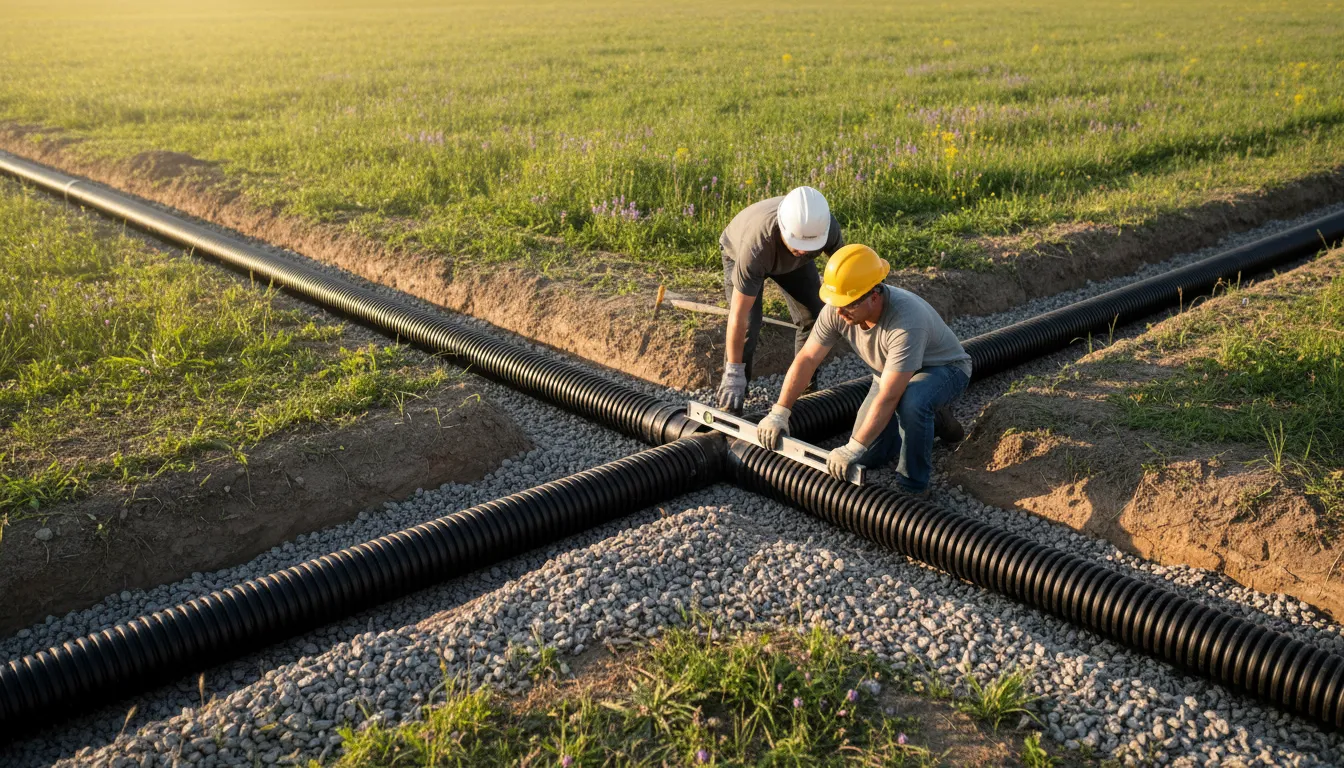
The drain field is the final stage of your onsite wastewater treatment system. After solids settle in the septic tank, the liquid effluent flows into a network of perforated pipes buried in trenches filled with gravel. This effluent slowly percolates into the soil, where natural processes provide final treatment. A healthy drain field relies on unsaturated, permeable soil. When the soil becomes permanently saturated or clogged with biomat (a layer of bacteria and organic matter), the system fails, and wastewater can surface or back up into your home.
Signs Your New Jersey Drain Field Needs Attention
Recognizing early warning signs can prevent a complete failure and more expensive repairs. Key indicators include:
- Saturated Ground: Spongy, wet, or marshy areas over the drain field, especially when it hasn't rained.
- Sewage Odors: Persistent foul smells near the tank, drain field, or inside the home.
- Slow Drains: Gurgling pipes, toilets that drain slowly, or backups in household drains.
- Unusual Vegetation: Lush, green grass or faster plant growth over the field compared to the rest of the yard.
- Surfacing Effluent: Visible pooling of grey or black water on the ground surface above the system.
If you notice any of these signs, it's crucial to contact a licensed professional for an inspection immediately.
New Jersey Regulations and Permit Requirements
All septic system work in New Jersey is governed by the New Jersey Department of Environmental Protection (NJDEP) under the Standards for Individual Subsurface Sewage Disposal Systems (N.J.A.C. 7:9A). Enforcement and permitting are handled at the local level by your municipal or county health department.
Key regulatory points for drain field work:
- Permit Required: A local health department permit is mandatory for any major repair, including drain field modifications, replacement, or any change to the system's design capacity.
- "Grandfathered" Systems: Older systems that function but don't meet current code are often allowed to remain until they fail or until you make significant renovations to your home (like adding a bedroom).
- Engineering Plans: For a new system or a major modification like a full drain field replacement, you will need engineered design plans stamped by a licensed professional engineer (PE) 1. These plans must demonstrate the proposed system meets all state standards for your specific soil and site conditions.
- Inspections: Regular inspections every 3-5 years are recommended to catch problems early. An inspection is also frequently required during real estate transactions to verify system compliance.
Find the perfect drain field repair companies for your needs
Get personalized recommendations and expert advice
The Drain Field Repair and Replacement Process
Addressing a drain field issue is a multi-step process that requires professional guidance.
- Professional Inspection & Diagnosis: A licensed inspector or installer will perform tests, often including a soil evaluation and a "deep hole" inspection, to determine the exact cause and extent of the failure 2.
- Site Evaluation & Design: If repair or replacement is needed, a licensed engineer will evaluate your property's soil percolation rate, groundwater depth, and topography to design a compliant system.
- Permitting: Your contractor or engineer will submit the design plans, application, and fees to your local health department for review and approval. Never begin excavation without an approved permit.
- Construction: The old field may be abandoned in place, and a new field will be constructed according to the engineered plans. This involves heavy equipment for excavation, placement of gravel and piping, and careful backfilling.
- Final Inspection: The local health inspector will visit the site to verify the installation matches the permitted plans before the system is covered.
Cost of Drain Field Work in New Jersey
Costs vary widely based on the extent of the problem, soil conditions, system size, and your location in the state. The following estimates are based on recent industry data 3 4 5 6:
- Minor Repairs: Fixing a distribution box or a single clogged line typically ranges from $1,200 to $3,000.
- Drain Field Remediation/Partial Repair: Techniques like cleaning pipes or replacing a portion of the field can cost between $2,000 and $12,000.
- Full Drain Field Replacement: This is often necessary for complete failures. Costs typically range from $15,000 to $35,000 or more, depending on complexity.
- Full Septic System Replacement: If both the tank and field must be replaced, expect the higher end of the replacement scale, often exceeding $25,000.
- Engineering & Permitting: Design and permit acquisition fees add approximately $2,500 to $3,500 to the total project cost.
Maintenance to Prevent Drain Field Failure
Proactive maintenance is the most cost-effective strategy.
- Pump Regularly: Have your septic tank pumped every 3-5 years by a licensed pumper to prevent solids from washing out into the drain field 7 8.
- Conserve Water: Spread out laundry loads and fix leaks to avoid hydraulically overloading the field.
- Protect the Area: Never drive or park vehicles, build structures, or plant trees and shrubs over the drain field. Keep roof drains and surface water away from the area.
- Mind What You Flush: Only human waste and toilet paper should go down the drain. Avoid chemicals, grease, wipes, and other non-biodegradables.
Frequently asked questions
Sources
Footnotes
-
New Jersey Septic System Rules - 2026 Guide - https://thesewerkings.com/blog/new-jersey-septic-system-rules/ ↩
-
How Septic System Inspections Are Performed in New Jersey - https://thesewerkings.com/blog/septic-system-inspections/ ↩
-
NJ Septic Regulations for 2026: Inspections, Permits & Rules - https://www.atsenvironmental.com/blog/nj-septic-regulations-for-2026/ ↩
-
The Real Cost of Septic Installation in New Jersey (2025) - https://www.atsenvironmental.com/blog/the-real-cost-of-septic-installation-in-new-jersey-2025/ ↩
-
Septic Repair vs Replacement in NJ: Costs & Signs - https://www.atsenvironmental.com/blog/septic-repair-vs-replacement/ ↩
-
How Much Does It Cost To Replace A Septic System In Northern NJ? - https://dsepticservice.com/b/septic-system-replacement-cost-new-jersey/ ↩
-
SEPTIC - NJ.gov - https://dep.nj.gov/wp-content/uploads/dwq/pdf/septicmn.pdf ↩
-
The Complete Guide to Septic System Installation and ... - https://excavatingnj.com/blog/the-complete-guide-to-septic-system-installation-and-permitting-in-new-jersey/ ↩