Find the Best Drain Field Repair Companies for Your Business
No obligation • Fast responses • Nationwide coverage

Why you can trust Septic Spot
Septic Spot is a leading United States resource for understanding and comparing septic services. Our editors review providers using consistent criteria and verify key business details. Listings and scores are independent, and companies cannot pay to influence our content.
Search providers near you
Top Drain Field Repair Companies in Brick, New Jersey Ranked
A properly functioning drain field is the unsung hero of your septic system, silently treating and dispersing wastewater from your home. When this critical component fails, it can lead to sewage backups, soggy lawns, and serious environmental health concerns. In Brick, New Jersey, addressing drain field issues involves navigating specific state and local regulations to ensure a safe, compliant, and lasting solution. This guide provides essential information on the process, costs, and key considerations for drain field repair and replacement, helping you connect with qualified local professionals for your project.
Understanding Your Septic System's Drain Field
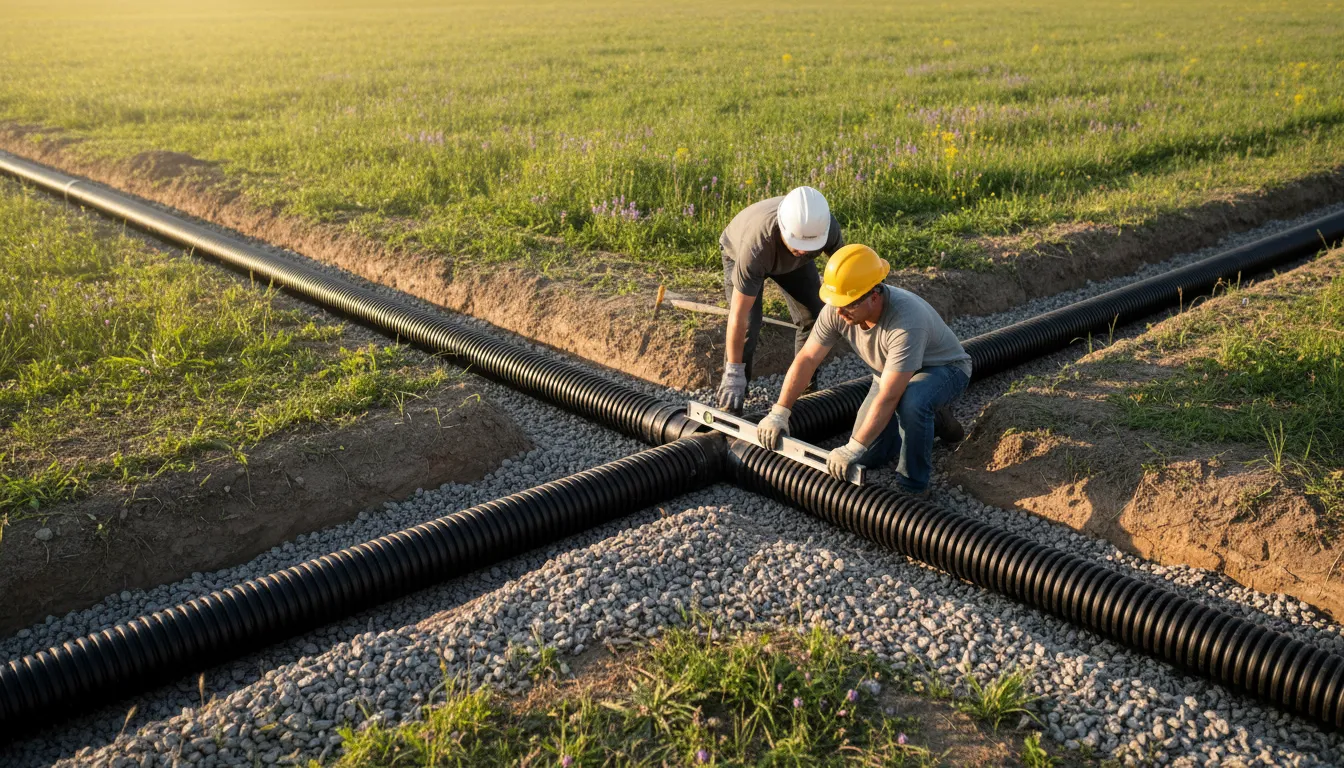
Often called a leach field or absorption area, the drain field is the final stage of onsite wastewater treatment. After solids settle in the septic tank, liquid effluent flows into a network of perforated pipes buried in trenches filled with gravel. This effluent slowly percolates through the soil, where natural processes remove harmful bacteria, viruses, and nutrients before the water rejoins the groundwater table. The entire system's longevity and effectiveness hinge on the drain field's ability to absorb this effluent. In Brick, local soil conditions and high water tables can present unique challenges for these systems.
Signs You Need Drain Field Attention
Recognizing early warning signs can prevent a complete system failure and more costly repairs. Common indicators that your Brick home's drain field or leach field may be failing include:
- Soggy Ground or Standing Water: Persistent wet spots, lush green grass, or pooling water over the drain field area, especially when it hasn't rained.
- Sewage Odors: Unpleasant smells emanating from the yard near the drain field or septic tank.
- Slow Drains and Backups: Gurgling pipes, slow-draining sinks and toilets, or sewage backups inside the home.
- Nitrate Contamination: Test results from your well water showing elevated nitrate levels, which can indicate a failing system is contaminating groundwater.
A professional inspection is crucial to confirm a drain field issue, as some symptoms can overlap with other plumbing problems. Inspectors will perform a visual survey, locate system components, and often conduct tests to evaluate the soil and system operation 1.
The Brick and New Jersey Regulatory Landscape
Any significant repair or full replacement of a septic system component in Brick requires adherence to New Jersey Department of Environmental Protection (NJDEP) regulations. This isn't a DIY project. Key regulatory steps include:
- Permits and Engineering: For failures, alterations, or replacements, you must obtain an NJDEP-approved engineered plan and a permit from the local health department. This ensures the new design meets current standards (NJAC 7:9A).
- Property Transfer Inspections: Real estate transactions frequently trigger mandatory septic inspections. If the system fails this inspection, replacement is typically required before the sale can proceed.
- Licensed Professionals: All septic work must be performed by licensed installers and repair contractors. Hiring unlicensed individuals can result in fines and improper installations that fail inspection 2.
- Setback Compliance: New designs must comply with minimum setback distances from wells, property lines, water bodies, and structures.
Critical Site and Soil Evaluation
The feasibility and design of your drain field repair are dictated almost entirely by your property's soil conditions. New Jersey regulations mandate a thorough site evaluation, which often includes:
- Percolation Tests & Test Pits: These measure the soil's absorption rate (percolation) and identify the soil profile, depth to seasonal high water table, and presence of bedrock or impermeable layers.
- Soil Depth Requirement: There must be a minimum of two feet of suitable soil between the bottom of the drain field trenches and the limiting layer (e.g., high water table or rock).
- System Sizing: The drain field size is legally determined by the home's number of bedrooms, which estimates daily wastewater flow. A standard home with 2-3 bedrooms typically requires a 1,000-gallon tank and a correspondingly sized absorption area 3.
Find the perfect drain field repair companies for your needs
Get personalized recommendations and expert advice
Repair vs. Replacement: Understanding Your Options
The solution for your failing drain field depends on the extent of the problem. A professional assessment will determine the best path forward.
- Drain Field Repair: Sometimes, only a section of the leach field is clogged or damaged. Techniques like cleaning pipes or replacing a portion of the lines may be possible, but this is less common if the entire field is saturated or old. Repair costs can range significantly based on the work required.
- Drain Field Replacement: This involves constructing a new absorption area on your property. It may be located in a new area (a "repair area" identified in the original design) or, if space allows, in the same location after removing the old material.
- Full System Replacement: If the septic tank is also compromised or doesn't meet current standards, a complete septic system installation may be necessary. This is often required when upgrading an old system to modern code during a property transfer 4.
Cost Considerations for Drain Field Projects in Brick
Costs for septic work in Brick vary widely based on system size, soil conditions, and the chosen technology. The figures below are estimates to help you budget; always get detailed quotes from licensed contractors.
- Permit & Engineering Fees: $1,000-$4,000 for the required site evaluation, engineered plan, and permit processing 5.
- Drain Field Repair/Replacement: $5,000-$20,000. The wide range accounts for the size of the field and accessibility of the site.
- Full Septic System Replacement: $15,000-$35,000 or more. This higher cost includes a new tank and all associated components. Advanced systems (like mound systems) for difficult sites will be at the top end of this range or higher 6 7.
- Inspection Fees: $500-$2,000 for a comprehensive inspection, which is a critical first step 8.
Disclaimer: These are approximate cost ranges. Your final project cost can vary significantly depending on your specific site conditions, contractor pricing, and materials.
Advanced System Alternatives
For properties in Brick with high water tables, poor soil permeability, or limited space, a traditional gravity-fed drain field may not be viable. In these cases, NJDEP-approved alternative technologies may be the solution:
- Mound Systems: Effluent is pumped to a raised, constructed sand mound where treatment occurs. This is a common solution for shallow soil or high groundwater.
- Aerobic Treatment Units (ATUs): These systems use oxygen to break down waste more efficiently, producing a higher-quality effluent that can be dispersed in challenging soils.
- Drip Irrigation Systems: Treated effluent is slowly dispersed through a network of small-diameter tubing, often allowing for more flexible placement.
Your licensed contractor and site evaluator will determine if an alternative system is necessary for your property 9 10.
Frequently asked questions
Sources
Footnotes
-
How Septic System Inspections Are Performed in New Jersey - https://thesewerkings.com/blog/septic-system-inspections/ ↩
-
Licensed Septic Service NJ - Requirements - The Sewer Kings - https://thesewerkings.com/blog/licensed-septic-service-professionals/ ↩
-
Septic System Requirements Based on Home Size & Layout - https://speidelseptic.com/septic-system-requirements-home-size-layout-nj/ ↩
-
New Jersey Septic System Rules - 2026 Guide - https://thesewerkings.com/blog/new-jersey-septic-system-rules/ ↩
-
NJ Septic Regulations for 2026: Inspections, Permits & Rules - https://www.atsenvironmental.com/blog/nj-septic-regulations-for-2026/ ↩
-
Septic Repair vs Replacement in NJ: Costs & Signs - https://www.atsenvironmental.com/blog/septic-repair-vs-replacement/ ↩
-
Septic Drain Field Replacement Cost - https://dillonseptic.com/septic-drain-field-replacement-cost/ ↩
-
The Real Cost of Septic Installation in New Jersey (2025) - https://www.atsenvironmental.com/blog/the-real-cost-of-septic-installation-in-new-jersey-2025/ ↩
-
The Complete Guide to Septic System Installation and ... - https://excavatingnj.com/blog/the-complete-guide-to-septic-system-installation-and-permitting-in-new-jersey/ ↩
-
New Jersey Septic System Replacement & Installation | ATS - https://www.atsenvironmental.com/residential/septic-system-installation-replacement/ ↩