Find the Best Drain Field Repair Companies for Your Business
No obligation • Fast responses • Nationwide coverage

Why you can trust Septic Spot
Septic Spot is a leading United States resource for understanding and comparing septic services. Our editors review providers using consistent criteria and verify key business details. Listings and scores are independent, and companies cannot pay to influence our content.
Search providers near you
Top Drain Field Repair Companies in Bridgewater, New Jersey Ranked
A failing drain field, also known as a leach field or absorption area, is a serious issue for any home with a septic system. When this critical component stops properly filtering and dispersing wastewater, it can lead to soggy yards, foul odors, and even environmental contamination. In Bridgewater, navigating the repair or replacement of a septic drain field involves strict state and local health regulations. This guide explains the process, costs, and key considerations for Bridgewater homeowners, helping you understand your options and connect with qualified local professionals for your system's needs.
Understanding Your Septic Drain Field
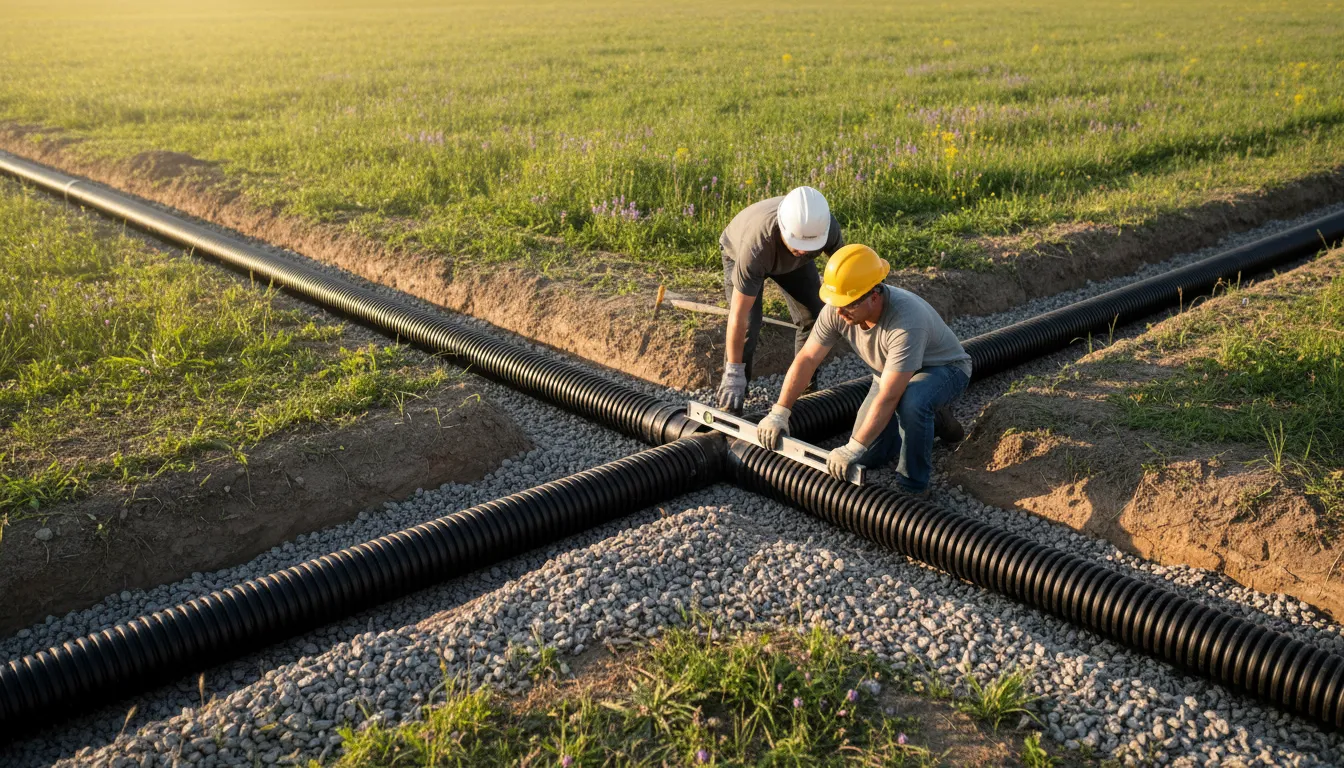
The drain field is the final stage of your onsite wastewater treatment system. After solids settle in the septic tank, liquid effluent flows into a network of perforated pipes buried in trenches filled with gravel. This effluent slowly percolates into the soil, where natural processes provide final treatment. A failure occurs when the soil can no longer absorb the water, often due to:
- Biological Mat Buildup: A layer of sludge that clogs the soil pores.
- Compacted Soil: Often from driving or construction over the field.
- Root Intrusion: From trees and shrubs planted too close.
- System Age: Most conventional fields last 20-30 years.
- Hydraulic Overload: Using more water than the system was designed to handle.
Signs of a failing leach field include sewage odors, unusually lush or soggy grass over the field, and slow-draining or backing-up household drains.
Bridgewater and New Jersey Regulatory Overview
Any significant work on a septic system in Bridgewater requires compliance with New Jersey Department of Environmental Protection (NJDEP) standards, specifically NJAC 7:9A, and local oversight from the Bridgewater Township Health Department. You cannot simply hire an excavator to dig a new field. The process is engineered and permit-driven.
Key Regulatory Requirements:
- Permits: A local permit is required for any repair or alteration. For minor repairs, fees may start around $5, but major drain field replacements require formal engineering permits from the health department 1 2.
- Site Suitability: New Jersey mandates a minimum of 2 feet of suitable soil beneath the proposed drain field, and the system must be above the seasonal high water table and bedrock 3.
- Setbacks: Drain fields must be set back specific distances from property lines, wells, streams, and buildings. In New Jersey, these setbacks typically range from 10 to 25 feet for property lines and water sources.
- Professional Design: If your existing absorption area needs replacement, a licensed professional engineer or a certified subsurface sewage disposal system contractor must design the new system 4.
The Step-by-Step Process for Repair or Replacement
1. Initial Site Assessment and Inspection
The first step is a thorough inspection by a licensed professional. This isn't just a tank check; it involves assessing the entire system, including the distribution box and probing the drain field area to diagnose the exact problem 5. They will determine if a simple repair (like cleaning a clogged distribution line) is possible or if a full or partial replacement is necessary.
2. Soil Testing and Evaluation
If replacement is likely, comprehensive soil testing is the next critical phase. This is required for permit approval and includes:
- Percolation Test ("Perc Test"): Measures how quickly water drains through the soil at the proposed site 6.
- Soil Pit Analysis: Deep pits are excavated to visually identify soil types, depth to bedrock, and the seasonal high water table level.
These tests determine the soil's absorption capacity and dictate the size and type of system you can install.
3. Engineered System Design
Using the soil test data, a licensed engineer creates a custom design for the new leaching system. This plan specifies the layout, dimensions, materials, and construction details. It must comply with all NJDEP standards for daily flow capacity based on your home's bedroom count. This engineered plan is then submitted to the Bridgewater Health Department for permit review and approval.
4. Permit Acquisition
You or your contractor will submit the engineered design, application, and fees to the local health department. Permit fees for a major project like this can range from $250 to $1,500, depending on the scope. The department reviews the plans for compliance with all regulations before issuing a construction permit.
5. Construction and Installation
Once permitted, licensed excavation and septic contractors can begin work. This involves:
- Properly abandoning the old drain field (which may require a separate permit).
- Excavating the new trenches or bed according to the engineered plan.
- Installing new perforated pipes, gravel, and protective geotextile fabric.
- Connecting the new field to the existing distribution box or tank.
- Final grading and seeding of the site.
6. Final Inspection and System Start-Up
After construction, the health department performs a final inspection to ensure the installation matches the approved plans. Once passed, the system can be put into service. Proper care and maintenance, including regular tank pumping and water conservation, are crucial to extending the life of your new investment.
Find the perfect drain field repair companies for your needs
Get personalized recommendations and expert advice
Cost Breakdown for Drain Field Projects in Bridgewater
Costs for septic absorption area work are highly variable, depending on soil conditions, system size, and the type of system required. Below is a general cost framework based on regional data.
- Engineering & Soil Testing: The mandatory preliminary work typically costs between $1,000 and $2,000 for percolation tests and soil pits, plus $2,000 to $4,000 for the engineered design plans.
- Drain Field Repair vs. Replacement:
- Targeted Repairs: Fixing a clogged line or a damaged distribution box may cost $5,000 to $10,0007.
- Complete Replacement: Installing a new conventional leach field generally ranges from $5,000 to $20,000 or more 8. The wide range accounts for size, accessibility, and soil conditions.
- Alternative Systems: If your soil fails a standard perc test, you may need an advanced, engineered system like a sand filter, aerobic treatment unit (ATU), or mound system. These are significantly more expensive, often starting at $20,000 and exceeding $35,000.
- Additional Costs: Don't forget to budget for permit fees ($250-$1,500), costs to abandon the old field ($100-$250 for the permit, plus excavation costs), and final landscaping or yard remediation 9 10 11.
Types of Systems Used in Bridgewater
The soil conditions on your property will determine the appropriate system type.
- Conventional Trenches: The most common type, used in soils with good percolation. They consist of gravel-filled trenches with perforated pipes.
- Chamber Systems: Use plastic leaching chambers instead of gravel and pipe. They can require less excavation and are often used in areas with high groundwater.
- Mound Systems: An above-ground, engineered sand mound used when soil depth to bedrock or the water table is too shallow. They are a common alternative in New Jersey for challenging sites.
- Aerobic Treatment Units (ATUs): Mechanical systems that inject oxygen to treat effluent to a higher standard before dispersal, often used with spray irrigation in very restrictive soils.
Maintaining Your New Drain Field
Protecting your investment is key. Follow these guidelines:
- Pump the Septic Tank regularly (every 2-5 years) to prevent solids from washing out into the new field.
- Conserve Water to avoid hydraulically overloading the system.
- Never drive, park, or build structures over the drain field.
- Landscape with grass only. Keep trees and shrubs with deep roots far away.
- Avoid pouring grease, chemicals, or non-biodegradable items down drains.
Frequently asked questions
Sources
Footnotes
-
The Complete Guide to Septic System Installation and ... - https://excavatingnj.com/blog/the-complete-guide-to-septic-system-installation-and-permitting-in-new-jersey/ ↩
-
Township of Bridgewater, NJ Sewage Disposal System ... - https://ecode360.com/9054139 ↩
-
New Jersey Septic System Rules - 2026 Guide - https://thesewerkings.com/blog/new-jersey-septic-system-rules/ ↩
-
NJ Septic Regulations for 2026: Inspections, Permits & Rules - https://www.atsenvironmental.com/blog/nj-septic-regulations-for-2026/ ↩
-
How Septic System Inspections Are Performed in New Jersey - https://thesewerkings.com/blog/septic-system-inspections/ ↩
-
New Jersey Septic Tank Rules and Regulations - Arrow Sewer & Drain - https://www.arrowsewernj.com/blog/septic-tanks-in-new-jersey-what-you-need-to-know/ ↩
-
Septic Repair vs Replacement in NJ: Costs & Signs - https://www.atsenvironmental.com/blog/septic-repair-vs-replacement/ ↩
-
Septic Drain Field Replacement Cost - https://dillonseptic.com/septic-drain-field-replacement-cost/ ↩
-
The Real Cost of Septic Installation in New Jersey (2025) - https://www.atsenvironmental.com/blog/the-real-cost-of-septic-installation-in-new-jersey-2025/ ↩
-
Navigating Septic System Regulations: Expert Guidance for New Jersey Property Owners - https://www.mapengineering.net/navigating-septic-system-regulations/ ↩
-
Cost to Replace Septic Tank and Drain Field [2026 Data] | Angi - https://www.angi.com/articles/how-much-new-drain-fields-foot.htm ↩