Find the Best Drain Field Repair Companies for Your Business
No obligation • Fast responses • Nationwide coverage

Why you can trust Septic Spot
Septic Spot is a leading United States resource for understanding and comparing septic services. Our editors review providers using consistent criteria and verify key business details. Listings and scores are independent, and companies cannot pay to influence our content.
Search providers near you
Top Drain Field Repair Companies in Camden, New Jersey Ranked
A failing drain field, also known as a leach field or absorption area, is a serious issue for any property with a septic system. When this critical component malfunctions, it can lead to sewage backups, soggy yards, and environmental contamination. In Camden, New Jersey, addressing drain field problems requires navigating specific local and state regulations to ensure repairs are done correctly and legally. This guide provides essential information to help you understand the process, costs, and regulatory steps for septic leach field repair or full system replacement in Camden County.

Understanding Your Septic System's Drain Field
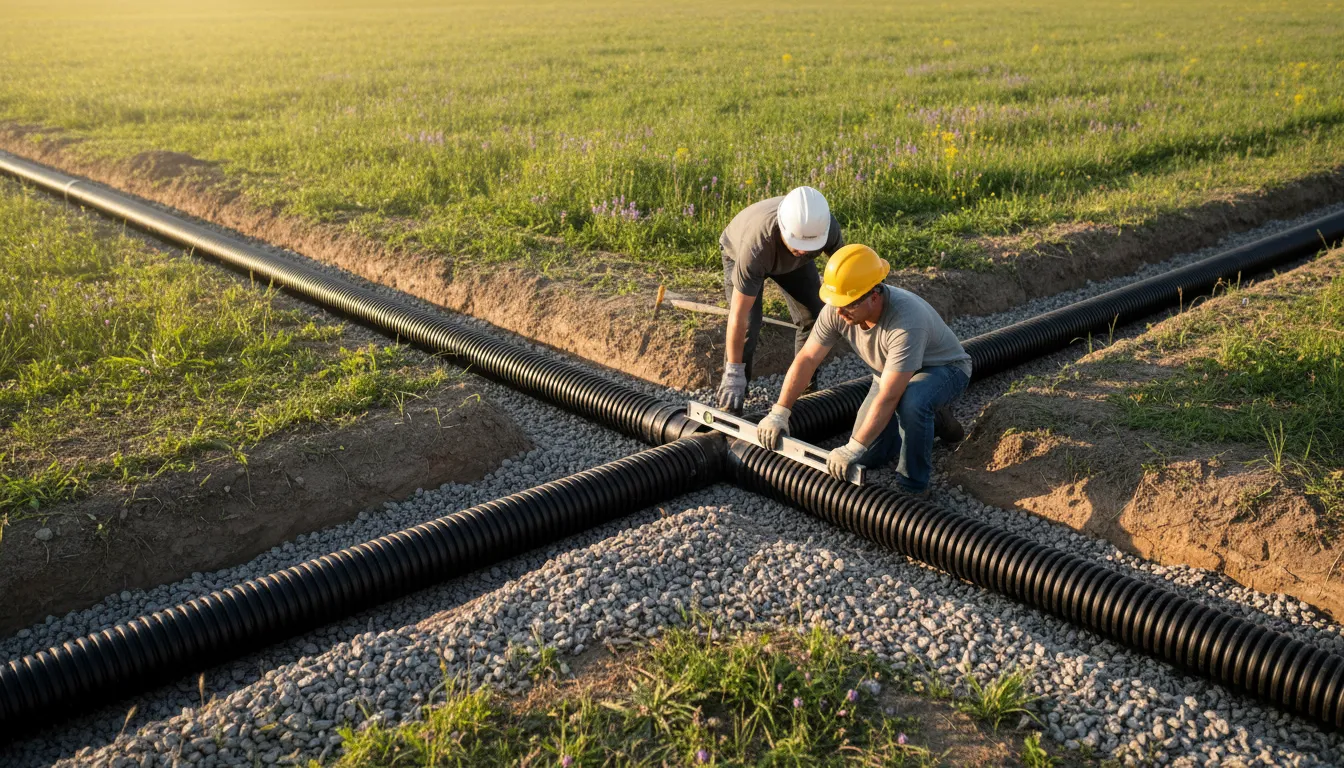
The drain field is the final stage of your onsite wastewater treatment system. After solids settle in the septic tank, liquid effluent flows into a network of perforated pipes buried in trenches filled with gravel. This effluent slowly percolates into the soil, where natural processes provide final treatment. A properly functioning leach field is vital for protecting groundwater and public health. When it fails, you may notice soggy ground or standing water over the field, foul odors, or sewage backing up into your home 1.
In Camden County, all septic system work, including repairs to the absorption area, falls under the jurisdiction of the local Health Department and must comply with New Jersey Department of Environmental Protection (NJDEP) regulations, specifically N.J.A.C. 7:9A 2. Operating a malfunctioning system can result in significant penalties, including fines of up to $2,500 per day 2. Therefore, prompt and proper repair is not just a matter of convenience-it's a legal requirement.
The Inspection and Diagnosis Process
Before any repair or replacement can be planned, a thorough professional inspection is required to diagnose the exact problem. This is especially critical for real estate transactions, but it's also the first step for any homeowner troubleshooting issues.
A comprehensive inspection typically involves several key steps 3 4:
- Locate & Evaluate: The inspector will first attempt to locate the system's "as-built" drawing, often filed with the local health department. This blueprint shows the layout of the tank, distribution box, and drain field.
- Pump and Inspect: The septic tank is pumped out to allow for inspection of its interior for cracks, baffle condition, and structural integrity. The distribution box (D-box), which directs flow to different sections of the leach field, is also checked.
- Video Inspection: A specialized camera may be sent through the underground pipes leading from the tank to the drain field to check for blockages, breaks, or root intrusion.
- Soil Assessment: The inspector will examine the drain field area for visual signs of failure, such as saturated soil, lush grass growth (indicating excess nutrients), or surfacing effluent.
- Final Report: The inspection concludes with a report that will classify the system as "pass," "conditional," or "fail." A failing grade means the absorption area is not properly treating wastewater and requires immediate repair or replacement.
Key Regulations for Camden County Properties
New Jersey has strict rules governing septic systems to protect its water resources. Understanding these regulations is crucial before starting any project.
- Permitting: You must obtain permits from the Camden County Health Department before beginning any repair or replacement work on your leach field. If your property is near wetlands, streams, or other protected waterways, you may also need additional permits from the NJDEP Division of Land Use Regulation 5.
- Soil Suitability: NJ regulations mandate that a drain field must have at least two feet of suitable soil beneath it to properly filter wastewater. The soil's ability to absorb water is paramount.
- Soil Testing: A percolation ("perc") test is almost always required. This test measures how quickly water drains through the soil at the proposed site, determining the size and design of the new absorption area.
- Setbacks: Drain fields must maintain minimum distances from wells, property lines, buildings, and surface water. These setbacks, often ranging from 10 to 25 feet or more, are strictly enforced to prevent contamination 6.
- Limiting Conditions: Soil pit tests are dug to identify the seasonal high water table, depth to bedrock, or impermeable clay layers. These "limiting factors" directly impact system design.
Repair vs. Full Replacement: Understanding Your Options
The solution to a failing leach field depends on the extent of the damage and the condition of the entire system.
Drain Field Repair: Sometimes, only a portion of the leach field has failed. If the soil is still suitable and the rest of the system is sound, a repair might be possible. This could involve replacing a clogged section of pipe, rehabilitating the distribution box, or adding a new expansion area to the existing field. Repairing a drain field generally costs between $7,000 and $10,000 or more.
Full System Replacement: If the entire absorption area is saturated, the soil is unsuitable, or the septic tank is also failing, a complete system replacement is necessary. This involves designing a new system based on current soil conditions and household size, removing the old components, and installing a new tank and leach field. Full system replacement is a major project with costs typically ranging from $20,000 to $45,000 for a standard three-bedroom home, though complex sites with poor soil can reach $60,000 or more 7 8 9.
Find the perfect drain field repair companies for your needs
Get personalized recommendations and expert advice
The Role of Soil and Alternative Systems
Not all properties in Camden County have ideal, well-draining soil for a conventional gravity-fed leach field. High groundwater tables, shallow bedrock, or dense clay are common challenges.
When a standard system isn't feasible, an alternative engineered system may be the solution. These are designed by a licensed professional engineer to overcome site limitations. Common types include:
- Mound Systems: A raised bed of sand is constructed above the natural soil, with the drain field pipes placed within it. Effluent is pumped to the mound and treated as it filters down.
- Aerobic Treatment Units (ATUs): These systems introduce oxygen into the treatment process, breaking down waste more efficiently and producing a higher-quality effluent that can be discharged into more challenging soils.
- Sand Filter Systems: Effluent is pumped through a sand filter before dispersal, providing an extra treatment step.
Designing and engineering these alternative systems adds to the overall project cost, often between $3,000 and $7,000 for the engineering plans alone 10.
The Project Timeline and Cost Breakdown
Undertaking a leach field repair or replacement is a multi-step process that requires patience. It's not an overnight fix.
- Inspection & Diagnosis: 1-2 days.
- Soil Testing & System Design: A licensed engineer or designer performs perc tests and designs the system. This can take several weeks.
- Permitting: Submitting plans and applications to the Camden County Health Department and potentially the NJDEP. Approval can take 4 to 12 weeks or longer, depending on the complexity and agency workload 11.
- Construction: Once permits are in hand, the physical installation by a licensed septic contractor typically takes 3 to 7 days, weather permitting.
Here's a more detailed look at potential costs involved in a Camden County drain field project 12:
- Professional Inspection: Often required for diagnosis and permitting.
- Permit Fees: $250 - $1,500, payable to the local health department and possibly the state.
- System Design/Engineering: $3,000 - $7,000 for site evaluation, perc tests, and creating stamped construction plans.
- Drain Field Repair/Replacement: $7,000 - $10,000+ for fixing or installing a new absorption area.
- Full System Replacement: $20,000 - $45,000+ for a complete new septic tank and leach field installation.
Choosing the Right Professionals
This is not a DIY project. New Jersey law requires that septic system installation, repair, and inspection be performed by licensed professionals. Ensure you hire a licensed septic installer and a professional engineer approved by the Camden County Health Department 13. A qualified team will handle the complex permitting process, ensure the design meets all NJDEP codes, and perform the construction to exacting standards, giving you peace of mind that your new system will function properly for years to come.
Frequently asked questions
Sources
Footnotes
-
SEPTIC - Camden County - https://www.camdencounty.com/wp-content/uploads/2023/07/a_homeowners_guide_to_septic_systems_njdep.pdf ↩
-
Homeowner's Manual for Septic Systems - Camden County - https://www.camdencounty.com/wp-content/uploads/files/Septic%20Form%20Homeowners%20Brochure.pdf ↩ ↩2
-
Copy of Inspections - New Jersey Septic Management Group - https://nj-septic.com/inspections-copy/ ↩
-
How Septic Inspections Are Performed in NJ | Sewer Kings - https://thesewerkings.com/blog/septic-system-inspections/ ↩
-
Watershed & Land Management | Septic System - NJDEP - https://dep.nj.gov/wlm/lrp/common-projects/septic-system/ ↩
-
New Jersey Septic Tank Rules And Regulations - https://www.arrowsewernj.com/blog/septic-tanks-in-new-jersey-what-you-need-to-know/ ↩
-
The Real Cost of Septic Installation in New Jersey (2025) - https://www.atsenvironmental.com/blog/the-real-cost-of-septic-installation-in-new-jersey-2025/ ↩
-
Cost to Replace Septic Tank and Drain Field [2026 Data] | Angi - https://www.angi.com/articles/how-much-new-drain-fields-foot.htm ↩
-
How Much Does It Cost To Replace A Septic System In Northern NJ? - https://dsepticservice.com/b/septic-system-replacement-cost-new-jersey/ ↩
-
Navigating Septic System Regulations: Expert Guidance for New Jersey Property Owners - https://www.mapengineering.net/navigating-septic-system-regulations/ ↩
-
The Complete Guide to Septic System Installation and ... - https://excavatingnj.com/blog/the-complete-guide-to-septic-system-installation-and-permitting-in-new-jersey/ ↩
-
How Septic System Inspections Are Performed in New Jersey - https://thesewerkings.com/blog/septic-system-inspections/ ↩
-
NJ Septic Regulations for 2026: Inspections, Permits & Rules - https://www.atsenvironmental.com/blog/nj-septic-regulations-for-2026/ ↩