Find the Best Drain Field Repair Companies for Your Business
No obligation • Fast responses • Nationwide coverage

Why you can trust Septic Spot
Septic Spot is a leading United States resource for understanding and comparing septic services. Our editors review providers using consistent criteria and verify key business details. Listings and scores are independent, and companies cannot pay to influence our content.
Search providers near you
Top Drain Field Repair Companies in Cherry Hill, New Jersey Ranked
A failing drain field, also known as a leach field or absorption area, is a serious issue for any home with a septic system. When this critical component stops properly dispersing and filtering wastewater, it can lead to soggy yards, foul odors, and even environmental contamination. In Cherry Hill, addressing drain field problems requires navigating specific local and state regulations. This guide explains the process, costs, and key considerations for drain field repair and replacement, helping you connect with qualified local professionals to restore your property's wastewater system.

Understanding Your Septic System's Drain Field
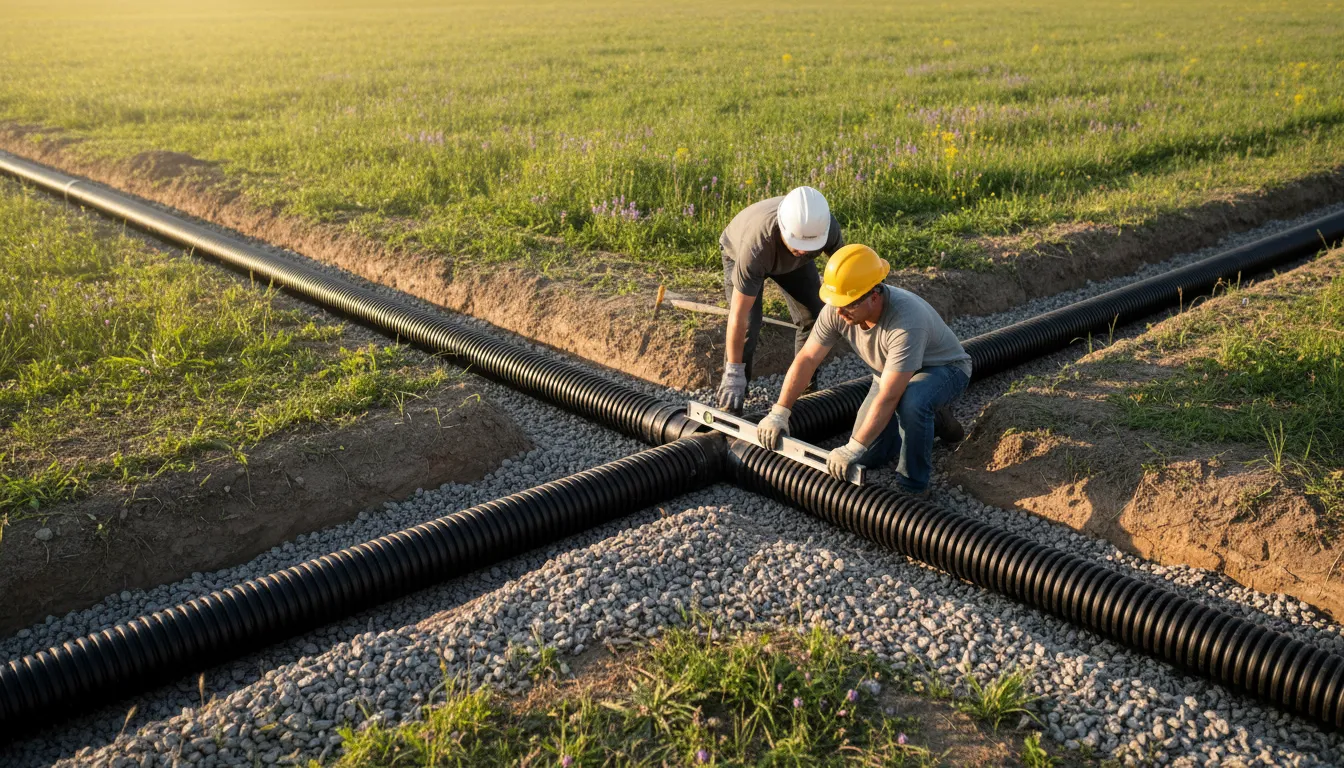
The drain field is the final and most crucial stage of your onsite wastewater treatment system. After solids settle in the septic tank, the liquid effluent flows into a network of perforated pipes buried in trenches filled with gravel or other aggregate. This effluent slowly percolates through the soil, where natural biological processes filter and purify it before it rejoins the groundwater. A properly functioning drain field is invisible and odorless. When it fails, the signs are often unmistakable and require immediate attention to protect your health, property value, and the local environment.
Signs You Need Drain Field Repair or Replacement
Recognizing the symptoms of a failing leach field early can save you money and prevent more extensive damage. Common warning signs include:
- Sewage Odors and Surfacing Effluent: The most direct sign is the smell of sewage outdoors or the appearance of soggy, bright green grass or standing wastewater over the drain field area, especially after heavy use.
- Slow Drains and Backups: Gurgling pipes, slow-draining sinks and toilets, or sewage backups inside your home can indicate that the drain field is saturated and not accepting new effluent.
- Nitrate Contamination: While not visible, a failed system can leach nitrates and bacteria into groundwater, posing a risk to drinking water wells. Regular testing is advised for homes near wells.
- Failed Inspection: During a real estate transaction or routine maintenance inspection, a professional may identify hydraulic failure, soil clogging (biomat formation), or physical damage to the pipes.
The Regulatory Landscape in Cherry Hill and Camden County
All major septic system work in Cherry Hill is governed by the New Jersey Department of Environmental Protection (NJDEP) and enforced by the Camden County Health Department. You cannot simply hire an excavator to dig up a bad leach field. The process is strictly regulated to protect public health and water resources.
Key regulations include:
- Permits Are Mandatory: Any repair or replacement of a drain field requires a permit from the local health department. Even routine maintenance involving excavation needs approval.
- Setback Requirements: New or replacement drain fields must be located a minimum distance from property features. In New Jersey, this is typically 10 to 25 feet from property lines, wells, streams, and buildings 1.
- Soil and Site Evaluation: A licensed professional engineer or certified soil scientist must perform a percolation ("perc") test and deep hole test to determine the soil's absorption rate and the depth to seasonal high groundwater or bedrock. The system requires at least 2 feet of suitable soil below the drain field.
- System Design by a Professional: The replacement absorption area must be designed by a licensed professional engineer based on the soil tests, household size, and water usage. This design is submitted for permit approval.
The Step-by-Step Process for Drain Field Projects
Successfully completing a drain field project involves a multi-stage process that typically spans several weeks.
- Professional Site Inspection and Assessment: A licensed septic contractor or engineer will perform a thorough inspection to confirm the drain field has failed and identify the cause-whether it's soil clogging, crushed pipes, or an undersized system.
- Soil Testing and Site Evaluation: If replacement is needed, a certified specialist will conduct the required perc tests and site evaluation to determine the best location and design for the new leach field 2.
- System Design and Permit Application: A professional engineer uses the soil data to design a system that complies with NJAC 7:9A standards. The design, along with the permit application, is submitted to the Camden County Health Department. Approval can take 4 to 8 weeks 3 4.
- Installation: Once permitted, the contractor will excavate the old field (if necessary) and install the new one. This involves laying a gravel bed, perforated distribution pipes, and covering it with more gravel and soil. For challenging sites with high groundwater or poor soil, a raised sand mound or other alternative system may be installed. The physical installation usually takes 3 to 7 days.
- Final Inspection and Certificate of Compliance: After installation, the health department inspector must visit the site to approve the work before it is covered. Upon passing inspection, you receive a Certificate of Compliance, which is essential for property records 5.
Find the perfect drain field repair companies for your needs
Get personalized recommendations and expert advice
Cost Breakdown for Drain Field Work in Cherry Hill
The cost of addressing a failed leach field in Cherry Hill varies widely based on the extent of the failure, soil conditions, system size, and the technology required. Below is a general cost framework based on regional data.
- Drain Field Repair or Replacement: For a standard in-ground drain field replacement, homeowners can expect costs ranging from $10,000 to $25,000 or more. This covers the new absorption area but may not include a new septic tank.
- Full Septic System Replacement: If both the tank and drain field need to be replaced, the cost for a typical 3-bedroom home system generally falls between $20,000 and $45,000.
- Alternative System Installation: For properties that cannot support a conventional leach field due to soil or space constraints, a sand mound or other advanced treatment system may be required. These are more complex and expensive, typically costing $35,000 to $60,000+ 6 7.
- Permit and Inspection Fees: Budget for $250 to $1,500 for permit fees and $500 to $2,000 for the required professional site evaluation and engineering design 8.
It's critical to note that operating a failing septic system is a violation. The NJDEP can levy fines ranging from $500 to $50,000 for significant violations, making timely repair not just a practical necessity but a financial imperative 9 10.
Choosing the Right Professional for the Job
Given the technical and regulatory complexity, selecting the right contractor is paramount. Look for a company that is:
- Licensed by the State of New Jersey for septic system installation and repair.
- Familiar with Camden County Health Department inspectors and procedures.
- Experienced with the local soil conditions in the Cherry Hill area.
- Capable of providing references for similar drain field projects.
- Willing to pull all necessary permits and coordinate with the health department and engineers on your behalf 11.
A reputable professional will guide you through the entire process, from the initial diagnostic inspection to the final certification, ensuring your new leach field is built to last and in full compliance with all state and county regulations.
Frequently asked questions
Sources
Footnotes
-
New Jersey Septic Tank Rules and Regulations - Arrow Sewer & Drain - https://www.arrowsewernj.com/blog/septic-tanks-in-new-jersey-what-you-need-to-know/ ↩
-
The Complete Guide to Septic System Installation and ... - https://excavatingnj.com/blog/the-complete-guide-to-septic-system-installation-and-permitting-in-new-jersey/ ↩
-
New Jersey Septic System Rules - 2026 Guide - https://thesewerkings.com/blog/new-jersey-septic-system-rules/ ↩
-
Watershed & Land Management | Septic System - NJDEP - https://dep.nj.gov/wlm/lrp/common-projects/septic-system/ ↩
-
How Septic System Inspections Are Performed in New Jersey - https://thesewerkings.com/blog/septic-system-inspections/ ↩
-
The Real Cost of Septic Installation in New Jersey (2025) - https://www.atsenvironmental.com/blog/the-real-cost-of-septic-installation-in-new-jersey-2025/ ↩
-
How Much Does It Cost To Replace A Septic System In Northern NJ? - https://dsepticservice.com/b/septic-system-replacement-cost-new-jersey/ ↩
-
Septic Repair vs Replacement in NJ: Costs & Signs - https://www.atsenvironmental.com/blog/septic-repair-vs-replacement/ ↩
-
NJ Septic Regulations for 2026: Inspections, Permits & Rules - https://www.atsenvironmental.com/blog/nj-septic-regulations-for-2026/ ↩
-
Navigating Septic System Regulations: Expert Guidance for New Jersey Property Owners - https://www.mapengineering.net/navigating-septic-system-regulations/ ↩
-
Licensed Septic Service NJ - Requirements - The Sewer Kings - https://thesewerkings.com/blog/licensed-septic-service-professionals/ ↩