Find the Best Drain Field Repair Companies for Your Business
No obligation • Fast responses • Nationwide coverage

Why you can trust Septic Spot
Septic Spot is a leading United States resource for understanding and comparing septic services. Our editors review providers using consistent criteria and verify key business details. Listings and scores are independent, and companies cannot pay to influence our content.
Search providers near you
Top Drain Field Repair Companies in East Brunswick, New Jersey Ranked
A failing drain field is a serious issue for any home with a septic system, leading to unpleasant odors, soggy yards, and potential environmental contamination. In East Brunswick, addressing problems with your leach field or soil absorption system is a regulated process that requires professional expertise and county approval. This guide explains the local requirements, repair options, and costs to help you understand the steps involved in restoring your property's wastewater treatment system.
Understanding Your Drain Field in East Brunswick
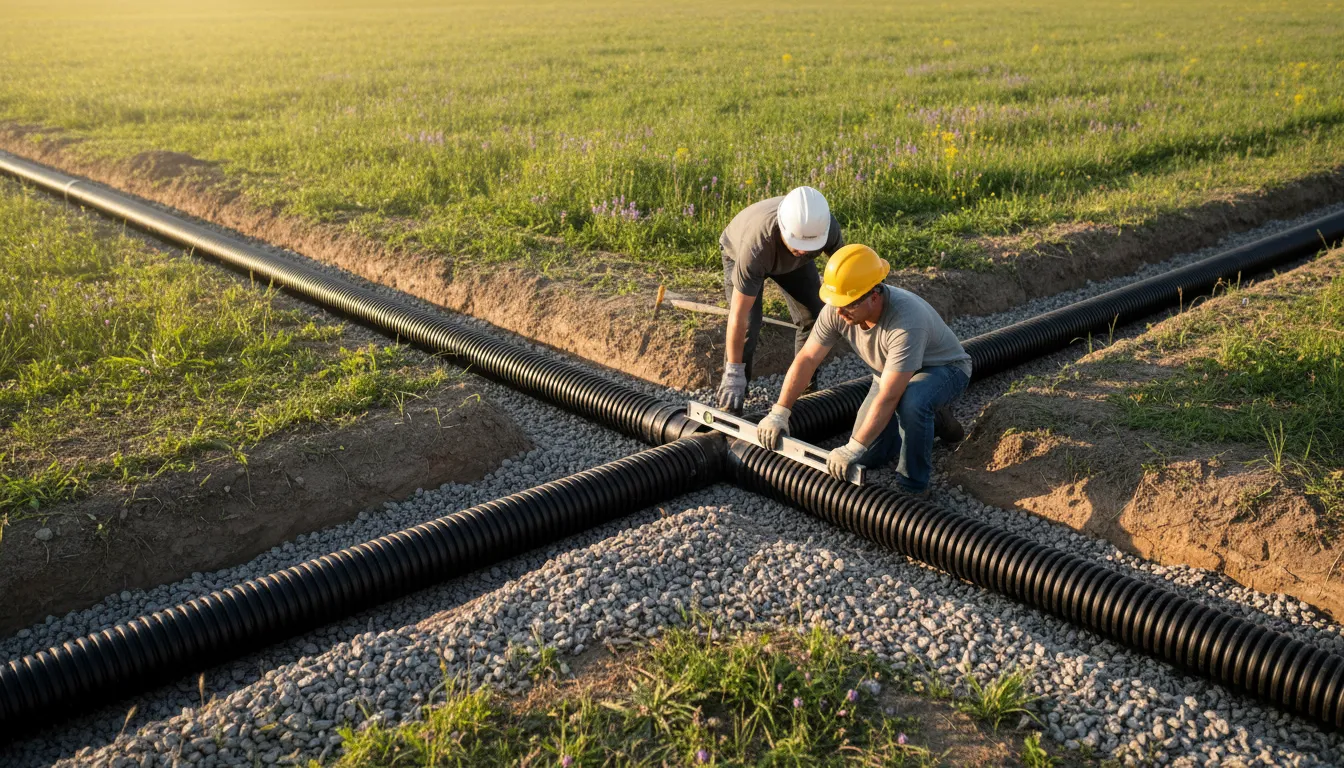
The drain field, also known as a leach field or absorption area, is the final and most critical stage of a septic system. After solids settle in the tank, liquid effluent flows into a network of perforated pipes buried in trenches filled with gravel. This effluent slowly percolates into the soil, where natural biological processes purify it before it rejoins the groundwater. When this area fails, wastewater can no longer be properly treated, creating health hazards and property damage.
In East Brunswick, all septic system components, including the drain field, fall under the jurisdiction of the Middlesex County Environmental Health Division (MCEHD). The county enforces New Jersey state regulations (N.J.A.C. 7:9A), which set strict standards for design, installation, and repair to protect local water quality.
Signs You May Need Drain Field Repairs
Recognizing early warning signs can prevent a complete system failure and more expensive replacement. Contact a licensed professional if you notice:
- Soggy Ground or Standing Water: Puddles or consistently wet, spongy soil over the drain field area, especially when it hasn't rained.
- Sewage Odors: Unpleasant smells emanating from your yard or near the septic tank.
- Slow Drains & Backups: Gurgling pipes, slow-draining sinks and toilets, or sewage backups inside your home.
- Unusually Green Grass: Patches of grass over the leach field that are much lusher and grow faster than the rest of the lawn.
- Failed Inspection: A mandated inspection, often triggered by a property sale, may reveal a failing absorption system 1.
The Regulatory Process for Repairs and Replacement
Any major repair or replacement of a septic system component in Middlesex County requires a permit. You cannot simply hire a contractor to dig up and replace a drain field; the project must be approved by the MCEHD.
1. Professional Inspection and Diagnosis The first step is a thorough inspection by a licensed septic professional. This typically involves pumping the tank to inspect for cracks, checking the distribution box (D-box) for even flow, and often using a video camera to scout the underground pipes leading to the field 2 3. The inspector will also evaluate the soil over the absorption area for signs of failure, such as biomat clogging or saturation 4.
2. Soil Evaluation and Engineering Design If repair or replacement is needed, a licensed engineer or certified soil scientist must conduct a new soil evaluation. This includes percolation (perc) tests to determine how quickly water drains through your soil and to identify "limiting factors" like a seasonally high water table or bedrock 5 6. New Jersey law requires at least two feet of suitable soil beneath a conventional drain field 7. The engineer uses this data to design a system that meets code, which may be a conventional trench system or an alternative like a mound system if soil conditions are poor 6.
3. Permit Application Your contractor or engineer will submit an application with the engineered plans, typically in four copies, to the MCEHD for review and approval 8. The design must comply with all state setback requirements (e.g., 50 feet from wells, 100 feet from water bodies) 9. Even a "direct replacement" in the same location is considered a repair and requires a permit 8.
Find the perfect drain field repair companies for your needs
Get personalized recommendations and expert advice
Repair vs. Full Replacement: Options and Costs
The solution depends on the extent of the failure. A professional diagnosis is essential to determine the most cost-effective and compliant path forward.
Drain Field Repairs ($5,000 - $10,000) Some issues can be resolved without a full replacement. Repairs might include:
- Jet Cleaning: Using high-pressure water to clear clogged perforations in the distribution pipes.
- Trench Rejuvenation: Excavating access points to add new gravel or replace a section of clogged pipe.
- Adding a New Field Section: If space allows, constructing an additional set of trenches to share the load with the existing, partially failed field (known as a "expansion" or "extension").
These repairs still require county permits and must be performed by a licensed contractor 10.
Complete Drain Field Replacement ($15,000 - $35,000+) A total failure requires a new soil absorption system. This is a major excavation project. Costs vary widely based on:
- System Size: Determined by the home's bedroom count and water usage.
- Soil Conditions: Poor drainage or limiting factors may require a more expensive alternative system.
- Engineering & Permits: The design and approval process itself typically costs $3,700 - $8,300, covering soil testing, engineering plans, and county health permits 11.
- Landscaping: Restoring your yard after excavation.
The total cost for a full septic system replacement, including a new tank and drain field, often exceeds $35,000 in New Jersey 12.
Choosing a Contractor in East Brunswick
Given the regulatory complexity, selecting the right professional is critical. Look for a contractor who is:
- Licensed in New Jersey: They must hold appropriate state and county licenses for septic system installation and repair.
- Familiar with Middlesex County Regulations: They should have direct experience submitting plans and pulling permits from the MCEHD.
- Insured and Bonded: This protects you from liability.
- Willing to Handle the Entire Process: A full-service provider can manage the inspection, soil testing, engineering, permitting, installation, and final county inspection.
Always get multiple detailed quotes that break down costs for engineering, permits, materials, and labor.
Maintaining Your New or Repaired System
Protect your investment with proper care:
- Pump Regularly: Have the septic tank pumped every 3-5 years by a licensed pumper.
- Conserve Water: Spread out laundry loads and fix leaks to avoid hydraulically overloading the field.
- Mind What You Flush: Only human waste and toilet paper. Never flush chemicals, wipes, or grease.
- Protect the Area: Never drive or park over the drain field, and avoid planting trees with deep roots nearby.
Frequently asked questions
Sources
Footnotes
-
New Jersey Septic System Rules - 2026 Guide - https://thesewerkings.com/blog/new-jersey-septic-system-rules/ ↩
-
SEPTIC - NJ.gov - https://dep.nj.gov/wp-content/uploads/dwq/pdf/septicmn.pdf ↩
-
Septic System Repair in New Jersey - ATS Environmental - https://www.atsenvironmental.com/residential/septic-system-repair/ ↩
-
Copy of Inspections - New Jersey Septic Management Group - https://nj-septic.com/inspections-copy/ ↩
-
The Complete Guide to Septic System Installation and ... - https://excavatingnj.com/blog/the-complete-guide-to-septic-system-installation-and-permitting-in-new-jersey/ ↩
-
New Jersey Septic System Replacement & Installation | ATS - https://www.atsenvironmental.com/residential/septic-system-installation-replacement/ ↩ ↩2
-
New Jersey Septic System Rules - 2026 Guide - https://thesewerkings.com/blog/new-jersey-septic-system-rules/ ↩
-
Septic System Program | Middlesex County NJ - https://www.middlesexcountynj.gov/government/departments/department-of-public-safety-and-health/office-of-health-services/environmental-health/septic-system-program ↩ ↩2
-
New Jersey Septic Tank Rules And Regulations - https://www.arrowsewernj.com/blog/septic-tanks-in-new-jersey-what-you-need-to-know/ ↩
-
Septic Repair vs Replacement in NJ: Costs & Signs - https://www.atsenvironmental.com/blog/septic-repair-vs-replacement/ ↩
-
NJ Septic Regulations for 2026: Inspections, Permits & Rules - https://www.atsenvironmental.com/blog/nj-septic-regulations-for-2026/ ↩
-
The Real Cost of Septic Installation in New Jersey (2025) - https://www.atsenvironmental.com/blog/the-real-cost-of-septic-installation-in-new-jersey-2025/ ↩