Find the Best Drain Field Repair Companies for Your Business
No obligation • Fast responses • Nationwide coverage

Why you can trust Septic Spot
Septic Spot is a leading United States resource for understanding and comparing septic services. Our editors review providers using consistent criteria and verify key business details. Listings and scores are independent, and companies cannot pay to influence our content.
Search providers near you
Top Drain Field Repair Companies in Edison, New Jersey Ranked
A failing drain field is a serious issue for any home with a septic system. This component, also known as a leach field or absorption area, is responsible for safely dispersing treated wastewater into the soil. When it malfunctions, it can lead to soggy yards, foul odors, and environmental contamination. In Edison, addressing these problems requires navigating specific local and county regulations. This guide explains the process, costs, and key considerations for drain field restoration and septic system work in Middlesex County, helping you understand your options and connect with qualified local professionals.
Understanding Your Drain Field System
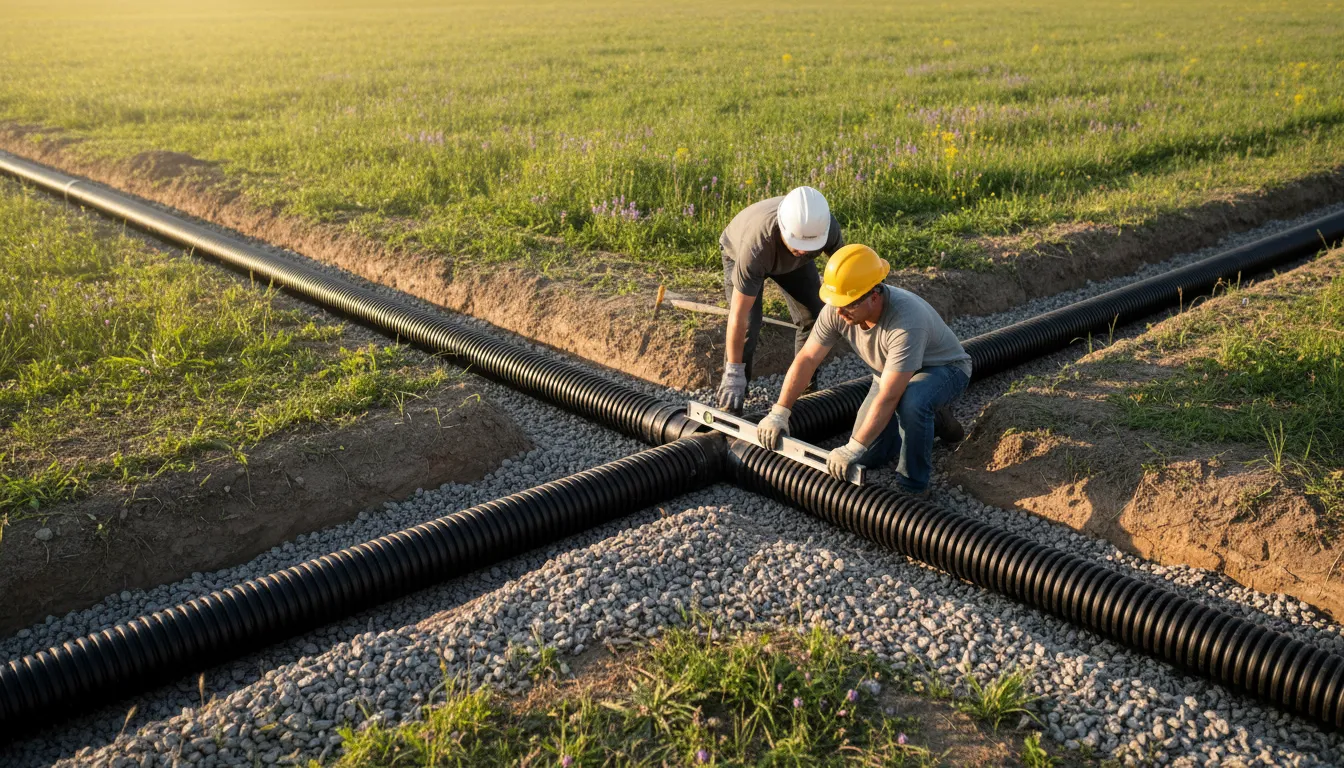
The drain field is the final stage of your on-site wastewater treatment system. After solids settle in the septic tank, the liquid effluent flows through pipes into a network of perforated lines buried in trenches filled with gravel. This effluent slowly percolates into the soil, where natural processes provide final treatment. A properly functioning leach field is essential for protecting groundwater and public health.
Common signs of a failing absorption area include:
- Sewage odors in the yard or home.
- Soggy, spongy, or persistently wet soil over the field, even in dry weather.
- Lush, green grass growing over the field compared to the rest of the lawn.
- Slow-draining household fixtures or sewage backups.
If you notice any of these issues, it's crucial to act quickly to prevent further damage and potential regulatory action.
The Regulatory Landscape in Edison and Middlesex County
All septic system work in Edison, including drain field repair or replacement, is strictly regulated. The primary authority is the Middlesex County Environmental Health Division (MCEHD). Their regulations are based on New Jersey Administrative Code (N.J.A.C.) 7:9A, known as the Standards for Individual Subsurface Sewage Disposal Systems 1.
Key regulatory steps include:
- Permits: No work can begin without approval from the MCEHD. This involves submitting detailed plans and engineering reports.
- Local Approvals: In addition to county health permits, you will likely need building, electrical, and plumbing permits from Edison Township.
- Inspections: The MCEHD requires at least 24 hours' notice for mandatory inspections at key stages: after excavation, during plumbing installation, and at final completion.
- Setbacks: New or replacement drainfields must be located specific distances from property lines, wells, water bodies, and structures. For example, they are typically required to be 10-25 feet from property lines and water sources 2.
Professional Assessment: Inspection and Testing
Before any repair plan is developed, a licensed septic professional must conduct a thorough evaluation. This isn't a simple visual check; it's a diagnostic process to determine the exact cause and extent of failure.
A comprehensive assessment includes:
- Tank Pumping & Inspection: The septic tank is pumped, and its structural integrity, baffles, and outlet pipes are inspected for damage or blockages 3 4.
- Hydraulic Load Test: This critical test involves adding a measured amount of water to the system to simulate use and check for effluent backup or slow drainage from the drain field, indicating a failure 5.
- Soil and Site Evaluation: A licensed professional must perform a percolation (perc) test to determine the soil's absorption rate 6 7. They will also assess the drain field area for visible signs of failure like wet spots or odors 8.
- Reporting: A formal inspection report is generated. This document is often required for real estate transactions and is essential for submitting a repair or replacement application to the county 9.
Find the perfect drain field repair companies for your needs
Get personalized recommendations and expert advice
Repair vs. Full Replacement: Making the Decision
The outcome of the professional assessment will determine whether a targeted repair or a complete system replacement is necessary.
Drain Field Repair ($500-$10,000+): Some issues can be resolved without a full rebuild. This might involve cleaning clogged pipes, repairing a damaged distribution box, or addressing a small saturated area. Repairs still require a permit from the MCEHD but may involve a simpler process than a full replacement. Costs vary widely based on the repair's complexity.
Drain Field/System Replacement ($15,000-$35,000+): A complete failure requires a new, engineered system. This is a major project triggered by irreversible issues like hydraulic failure, soil clogging (biomat failure), or a system that doesn't meet current code 10. The high cost reflects several mandatory steps:
- Site Evaluation & Engineering: A new perc test and detailed design plans by a licensed engineer are required, costing between $1,000-$4,000+.
- Permit Fees: Health department permit fees can range from $500-$1,500, with additional local township fees 11 12.
- Excavation & Installation: This is the largest cost component, involving heavy equipment, new septic tanks, hundreds of feet of perforated pipe, and tons of gravel.
- Alternative Systems: If native soil has poor permeability (high clay content) or the water table is high, a standard trench system may not be allowed. In these cases, the county may require an advanced, elevated system like a mound System or other alternative technology, which can significantly increase the project cost 13.
The Installation and Approval Process
Once you have a plan and a licensed contractor, the process follows a defined path:
- Submit Plans: Your engineer and contractor submit the design plans and permit application to the MCEHD and Edison Township.
- Receive Permits: Work cannot start until all permits are in hand.
- Initial Inspection: The MCEHD inspects the open excavation before any components are installed.
- Construction: The contractor installs the new tank, pipes, and drain field according to the approved plans.
- Final Inspections: The MCEHD inspects the plumbing and final installation. Edison Township may also conduct separate building/plumbing inspections 14 15.
- Approval & Backfill: Only after passing all inspections can the system be covered with soil.
Navigating this process successfully hinges on working with experienced, licensed professionals who are familiar with Middlesex County's specific requirements.
Maintaining Your New or Repaired System
Protecting your investment is key. After a repair or replacement, proper maintenance is non-negotiable:
- Regular Pumping: Have your septic tank pumped every 3-5 years by a licensed service.
- Water Conservation: Spread out water use and fix leaks to avoid hydraulically overloading the drain field.
- Mind What You Flush: Only human waste and toilet paper should go down the drain. Avoid chemicals, grease, wipes, and other solids.
- Protect the Area: Never drive or park heavy vehicles over the drain field, and avoid planting trees nearby.
A well-maintained system can last for decades, providing reliable wastewater treatment for your home.
Frequently asked questions
Sources
Footnotes
-
NJ Septic Regulations for 2026: Inspections, Permits & Rules - https://www.atsenvironmental.com/blog/nj-septic-regulations-for-2026/ ↩
-
New Jersey Septic Tank Rules and Regulations - Arrow Sewer & Drain - https://www.arrowsewernj.com/blog/septic-tanks-in-new-jersey-what-you-need-to-know/ ↩
-
New Jersey Septic System Rules - 2026 Guide - https://thesewerkings.com/blog/new-jersey-septic-system-rules/ ↩
-
New Jersey Septic System Replacement & Installation | ATS - https://www.atsenvironmental.com/residential/septic-system-installation-replacement/ ↩
-
How Septic System Inspections Are Performed in New Jersey - https://thesewerkings.com/blog/septic-system-inspections/ ↩
-
The Complete Guide to Septic System Installation and ... - https://excavatingnj.com/blog/the-complete-guide-to-septic-system-installation-and-permitting-in-new-jersey/ ↩
-
New Jersey Septic System Rules - 2026 Guide - https://thesewerkings.com/blog/new-jersey-septic-system-rules/ ↩
-
Licensed Septic Service NJ - Requirements - The Sewer Kings - https://thesewerkings.com/blog/licensed-septic-service-professionals/ ↩
-
Residential On-Site Sewage Disposal System INSPECTION REPORT - https://assets.marincounty.gov/marincounty-prod/public/2024-08/residential-on-site-inspection-report-checklist.pdf ↩
-
Septic Repair vs Replacement in NJ: Costs & Signs - https://www.atsenvironmental.com/blog/septic-repair-vs-replacement/ ↩
-
The Real Cost of Septic Installation in New Jersey (2025) - https://www.atsenvironmental.com/blog/the-real-cost-of-septic-installation-in-new-jersey-2025/ ↩
-
How Much Does It Cost To Replace A Septic System In Northern NJ? - https://dsepticservice.com/b/septic-system-replacement-cost-new-jersey/ ↩
-
Navigating Septic System Regulations: Expert Guidance for New Jersey Property Owners - https://www.mapengineering.net/navigating-septic-system-regulations/ ↩
-
Septic System Program | Middlesex County NJ - https://www.middlesexcountynj.gov/government/departments/department-of-public-safety-and-health/office-of-health-services/environmental-health/septic-system-program ↩
-
Code Enforcement - Edison Township - https://www.edisonnj.org/departments/engineering_department/code_enforcement.php ↩