Find the Best Drain Field Repair Companies for Your Business
No obligation • Fast responses • Nationwide coverage

Why you can trust Septic Spot
Septic Spot is a leading United States resource for understanding and comparing septic services. Our editors review providers using consistent criteria and verify key business details. Listings and scores are independent, and companies cannot pay to influence our content.
Search providers near you
Top Drain Field Repair Companies in Elizabeth, New Jersey Ranked
A failing drain field is a serious issue for any home with a septic system, leading to soggy yards, foul odors, and potential environmental contamination. Drain field repair or replacement is a complex, regulated process that requires professional expertise and adherence to strict local and state codes. This guide provides essential information for Elizabeth homeowners to understand the process, costs, and key considerations for restoring their septic system's most critical component.
Understanding Your Septic Drain Field
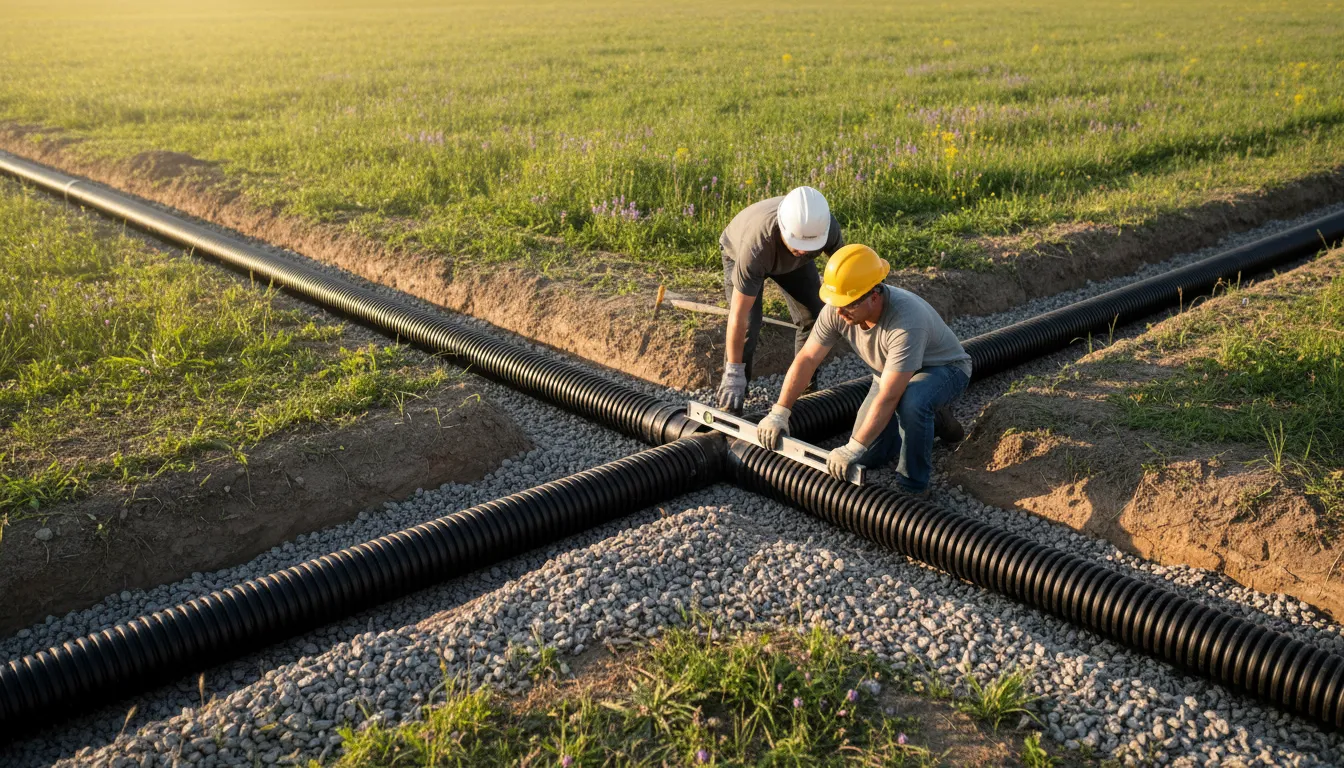
Often called a leach field or absorption field, the drain field is the final stage of wastewater treatment in a septic system. After solids settle in the tank, the liquid effluent flows into a network of perforated pipes buried in trenches filled with gravel or other aggregate. This effluent slowly percolates into the soil, where natural processes provide final treatment. When this area becomes saturated or clogged-a condition known as "failure"-it can no longer absorb liquid, causing backups and surfacing wastewater.
Common signs of drain field failure in Elizabeth include:
- Persistently soggy or spongy ground over the field area, even in dry weather.
- Sewage odors emanating from the yard, especially near the drain field.
- Slow-draining household fixtures like toilets, sinks, and showers.
- Unusually lush, green grass growing over the drain field.
- Sewage backing up into the home.
The Regulatory Landscape in Elizabeth and New Jersey
All septic system work in New Jersey is governed by the New Jersey Department of Environmental Protection (NJDEP) regulations 1. For standard residential systems in Elizabeth, the local health department is the primary approval authority for permits, provided the system discharges less than 2,000 gallons per day. Compliance with these regulations is mandatory and often verified during official inspections, which are commonly required during real estate transactions 2.
Key regulatory requirements that directly impact drain field projects include:
- System Sizing: The size of the drain field is legally determined by the number of bedrooms in the home, not bathrooms, to estimate daily wastewater flow 3.
- Mandatory Setbacks: The drain field must be positioned a minimum distance from various features. Critical setbacks include at least 100 feet from any well and 10 feet from property lines.
- Soil Evaluation: A percolation test (perc test) is required to measure the soil's absorption rate, which dictates the size and design of the leach field.
- Topography & Water Table: The design must account for slope, depth to seasonal high water table, and proximity to structures or water bodies 4.
Find the perfect drain field repair companies for your needs
Get personalized recommendations and expert advice
The Step-by-Step Process for Drain Field Work
Addressing a drain field issue is not a simple excavation job. It's a multi-stage process involving diagnosis, design, permitting, and construction.
1. Professional Inspection and Diagnosis
Before any repair or replacement, a certified inspector should evaluate the entire septic system. A thorough inspection typically involves reviewing health department records for the existing system, pumping the septic tank, and conducting a detailed assessment 5. The inspector will check for tank structural issues, baffle integrity, and will specifically test the drain field for saturation and hydraulic failure. The result is a formal report that classifies the system as pass, conditional, or fail, which guides the next steps 5.
2. Soil Testing and System Design
If the drain field has failed, the next phase involves soil science and engineering. A licensed site evaluator or engineer will perform the required perc test and deep hole tests to analyze soil composition and permeability 6. This data is used to create an engineered design for a repair or a completely new drain field that complies with NJDEP standards for the property's specific conditions.
3. The Permitting Process
You cannot begin construction without the proper permits. Your contractor or engineer will submit the system design, soil reports, and application to the Elizabeth/Union County health department for review. This review process can take 4 to 8 weeks 7. It's crucial to factor this timeline into your project plans. Local ordinances can sometimes be more stringent than state minimums, so direct consultation with the local health department is always recommended for the most current requirements 8.
4. Construction and Installation
Once permits are secured, construction can begin. For a full replacement, this often involves removing the old leach field (if necessary) and excavating new trenches according to the engineered plan. The trenches are filled with specified aggregate, perforated pipes are laid, and the system is connected to the existing or new septic tank. The entire area is then covered with soil and seeded. All work must be scheduled with the health department for required inspections at critical stages, such as before the trenches are backfilled 9.
Cost Breakdown for Drain Field Projects in Elizabeth
The cost for drain field work varies significantly based on the scope, soil conditions, and system size. It's one of the most substantial investments a homeowner can make in their property's infrastructure.
- Engineering, Soil Testing, and Permits: Before a shovel hits the ground, you'll incur costs for the essential planning phase. This includes the perc test, engineering design, and permit fees, which typically range from $3,700 to $8,300.
- Drain Field Repair: If the problem is localized and a portion of the field can be salvaged or repaired, costs are lower. Repairing a section of a drain field generally falls between $5,000 and $10,000 10 11.
- Complete Septic System Replacement: When the entire system, including tank and drain field, must be replaced, homeowners should budget for a major project. Total costs for a full septic system replacement in Northern New Jersey, including all engineering, permits, and installation, commonly range from $35,000 to $60,000 12 13.
Repair vs. Replacement: Making the Decision
A professional inspection is critical to determining the best path forward. Sometimes, issues like a clogged pipe or a malfunctioning distribution box can be fixed. However, if the soil in the entire drain field area has become biomatted (clogged with a black, tar-like layer) or the water table has risen permanently, a full replacement is usually the only permanent solution. Technologies like aerobic treatment units (ATUs) or advanced mound systems may be options for properties with poor soil, but these also come with higher costs and permitting complexity.
Maintaining Your New or Repaired Drain Field
Protecting your investment is key. Proper maintenance includes:
- Regular Pumping: Pump the septic tank every 3-5 years to prevent solids from washing out into the new drain field.
- Water Conservation: Spread out laundry loads and fix leaks to avoid hydraulically overloading the system.
- Mind What You Flush: Only human waste and toilet paper should go down the drain. Avoid chemicals, grease, wipes, and feminine hygiene products.
- Protect the Area: Never drive or park vehicles over the drain field, and avoid planting trees or deep-rooted shrubs nearby.
Frequently asked questions
Sources
Footnotes
-
NJ Septic Regulations for 2026: Inspections, Permits & Rules - https://www.atsenvironmental.com/blog/nj-septic-regulations-for-2026/ ↩
-
New Jersey Septic System Rules - 2026 Guide - https://thesewerkings.com/blog/new-jersey-septic-system-rules/ ↩
-
Septic System Requirements Based on Home Size & Layout - https://speidelseptic.com/septic-system-requirements-home-size-layout-nj/ ↩
-
New Jersey Septic Tank Rules And Regulations - https://www.arrowsewernj.com/blog/septic-tanks-in-new-jersey-what-you-need-to-know/ ↩
-
Copy of Inspections - New Jersey Septic Management Group - https://nj-septic.com/inspections-copy/ ↩ ↩2
-
The Complete Guide to Septic System Installation and ... - https://excavatingnj.com/blog/the-complete-guide-to-septic-system-installation-and-permitting-in-new-jersey/ ↩
-
NJDEP| Division of Water Quality | Permitting Information - https://dep.nj.gov/dwq/wastewater/septic-systems/permitting-information/ ↩
-
Residential Onsite Wastewater Treatment: Gravelless Drainfields for Effluent Treatment - https://extensionpublications.unl.edu/assets/html/g1480/build/g1480.htm ↩
-
Importance of Permits and Inspections in Septic Installation NJ - https://earthmoversnj.com/the-importance-of-permits-and-inspections-in-septic-installation-in-new-jersey/ ↩
-
How Septic System Inspections Are Performed in New Jersey - https://thesewerkings.com/blog/septic-system-inspections/ ↩
-
Cost to Replace Septic Tank and Drain Field [2026 Data] | Angi - https://www.angi.com/articles/how-much-new-drain-fields-foot.htm ↩
-
The Real Cost of Septic Installation in New Jersey (2025) - https://www.atsenvironmental.com/blog/the-real-cost-of-septic-installation-in-new-jersey-2025/ ↩
-
How Much Does It Cost To Replace A Septic System In Northern NJ? - https://dsepticservice.com/b/septic-system-replacement-cost-new-jersey/ ↩