Find the Best Drain Field Repair Companies for Your Business
No obligation • Fast responses • Nationwide coverage

Why you can trust Septic Spot
Septic Spot is a leading United States resource for understanding and comparing septic services. Our editors review providers using consistent criteria and verify key business details. Listings and scores are independent, and companies cannot pay to influence our content.
Search providers near you
Top Drain Field Repair Companies in Gloucester, New Jersey Ranked
A failing drain field is a serious concern for any homeowner with a septic system. This critical component, also known as a leach field or absorption area, is responsible for safely dispersing treated wastewater into the soil. When it malfunctions, it can lead to soggy yards, foul odors, and even environmental contamination. In Gloucester County, New Jersey, addressing drain field issues requires navigating specific local and state regulations. This guide explains the process, costs, and key considerations for leach field repair and replacement, helping you understand your options and connect with qualified local professionals.

Understanding Your Septic System's Drain Field
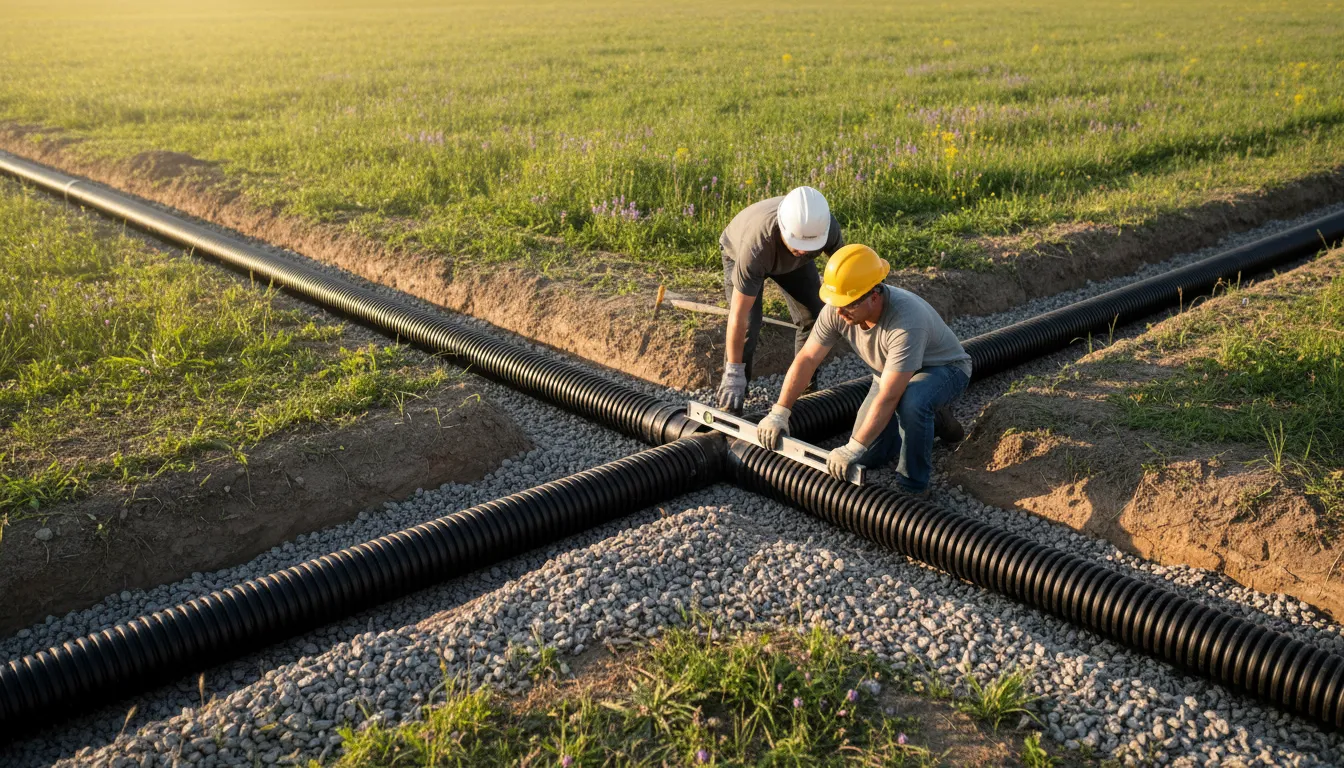
The drain field is the final stage of your onsite wastewater treatment system. After solids settle in the septic tank, the liquid effluent flows into a network of perforated pipes buried in trenches filled with gravel. This effluent slowly percolates through the soil, where natural processes provide final treatment. A failure here means the soil can no longer absorb the water, causing backups. Common signs include:
- Standing water or soggy, spongy ground over the field area.
- Sewage odors near the tank or drain field.
- Unusually green, lush grass over the field.
- Slow drains or gurgling plumbing fixtures in the house.
Gloucester County Regulations and Permitting
Any repair or replacement of a septic system component in Gloucester County is strictly regulated. For systems with a design flow of less than 2,000 gallons per day, the Gloucester County Health Department (GCHD) is the primary permitting authority, enforcing New Jersey Administrative Code (NJAC) 7:9A standards. Systems over that threshold require approval from the New Jersey Department of Environmental Protection (NJDEP) 1.
You cannot simply hire a contractor to dig up and replace a leach field. The process is engineered and must be approved. First, a site evaluation and soil testing are mandatory. This includes a percolation ("perc") test and the excavation of test pits to determine the soil's absorption rate and to locate the seasonal high water table. Regulations require a minimum of two feet of suitable soil between the bottom of the drain field and the high water table or bedrock.
Once testing is complete, a licensed Professional Engineer (PE) must design the repair or replacement system and submit the engineered plans to the health department for review and permit approval. The application must demonstrate compliance with strict setbacks from property lines, wells, streams, and structures.
The Step-by-Step Process for Repair or Replacement
Navigating a drain field project involves a series of defined steps.
-
Professional Evaluation: A qualified septic professional will inspect the entire system. For a detailed inspection, this typically involves excavating four inspection holes: two within the suspected drain field area and one at each end of the septic tank to evaluate tank integrity and baffles 2 3. The inspector will categorize the system as a pass, fail, or conditionally approved.
-
Site Testing & Design: If the drain field has failed, the next step is a formal site evaluation. A soil scientist or engineer performs the required perc tests and test pits. Using this data, a Professional Engineer designs a solution that complies with all current codes. This design is submitted as part of the permit application to the GCHD 4.
-
Permitting: Submit the completed repair application, engineered plans, and the required fee to the Gloucester County Health Department. Permit fees for septic work in the area generally range from $250 to $1,500, with specific application fees payable to the county.
-
Construction: Once the permit is issued, the approved contractor can begin work. All construction must adhere to the engineered plans. Heavy machinery or vehicle traffic over the new or existing drain field area is strictly prohibited, as compaction can ruin the soil's absorption ability 5.
-
Final Inspection: The health department or its authorized agent will conduct a final inspection to ensure the installation matches the approved plans before the system is covered and put into use.
Find the perfect drain field repair companies for your needs
Get personalized recommendations and expert advice
Cost Breakdown for Drain Field Projects
The cost for addressing drain field issues in Gloucester County varies widely based on the scope of work, soil conditions, and system size. It's one of the most significant investments a homeowner with a septic system can face.
- Permit & Design Fees: The upfront soft costs include county permit fees (typically $125-$1,500) and the engineering/design work by a Professional Engineer, which often ranges from $2,500 to $3,500 6 7 8.
- Minor Repairs: Addressing a single clogged line or a small section of the field may cost between $1,000 and $5,000.
- Complete Drain Field Replacement: If the entire absorption area must be rebuilt at its existing location or a new "repair area" must be utilized, costs typically range from $10,000 to $35,000 or more. This involves excavating, installing new gravel and distribution piping, and connecting to the existing tank.
- Full System Replacement: In cases where both the tank and drain field have failed or do not meet code, replacing the entire septic system is necessary. In New Jersey, this major undertaking can cost between $35,000 and $60,000+9 10.
These figures are estimates; obtaining multiple detailed quotes from licensed and insured contractors is essential.
Key Considerations for Gloucester County Homeowners
- Property Transfers: Septic systems in New Jersey are often inspected during real estate transactions. A failing inspection can delay or cancel a sale, making pre-listing inspections a wise investment 11.
- System Maintenance: The best way to avoid a costly drain field failure is through regular septic tank pumping (every 2-5 years) and mindful water usage. Avoid pouring grease, chemicals, or non-biodegradable items down drains.
- Finding a Professional: Always work with contractors licensed in New Jersey and familiar with Gloucester County's specific requirements. They should handle the permit process and work directly with licensed PEs for design.
Alternatives and Advanced Systems
In some cases, especially on properties with poor soil or high water tables, a conventional gravel trench system may not be feasible. Alternative or advanced treatment systems (ATS) may be approved. These systems provide additional treatment before effluent reaches the drain field, sometimes allowing for a smaller leach field footprint. Your engineer will determine if such a system is necessary or beneficial for your property.
Frequently asked questions
Sources
Footnotes
-
NJDEP| Division of Water Quality | Permitting Information - https://dep.nj.gov/dwq/wastewater/septic-systems/permitting-information/ ↩
-
How Septic System Inspections Are Performed in New Jersey - https://thesewerkings.com/blog/septic-system-inspections/ ↩
-
Septic System Inspections in Gloucester County, NJ | SewerMan - https://sewerman.com/gloucester-county-nj/services/oil-to-gas-conversions/ ↩
-
The Complete Guide to Septic System Installation and ... - https://excavatingnj.com/blog/the-complete-guide-to-septic-system-installation-and-permitting-in-new-jersey/ ↩
-
New Jersey Septic Tank Rules And Regulations - https://www.arrowsewernj.com/blog/septic-tanks-in-new-jersey-what-you-need-to-know/ ↩
-
Submission Requirements for Sewage Disposal System Repairs - https://www.gloucestercountynj.gov/DocumentCenter/View/12559/Septic-Repair-Application ↩
-
NJ Septic Regulations for 2026: Inspections, Permits & Rules - https://www.atsenvironmental.com/blog/nj-septic-regulations-for-2026/ ↩
-
Navigating Septic System Regulations: Expert Guidance for New Jersey Property Owners - https://www.mapengineering.net/navigating-septic-system-regulations/ ↩
-
The Real Cost of Septic Installation in New Jersey (2025) - https://www.atsenvironmental.com/blog/the-real-cost-of-septic-installation-in-new-jersey-2025/ ↩
-
How Much Does It Cost To Replace A Septic System In Northern NJ? - https://dsepticservice.com/b/septic-system-replacement-cost-new-jersey/ ↩
-
Septic Systems | Gloucester County, NJ - https://www.gloucestercountynj.gov/697/Septic-Systems ↩