Find the Best Drain Field Repair Companies for Your Business
No obligation • Fast responses • Nationwide coverage

Why you can trust Septic Spot
Septic Spot is a leading United States resource for understanding and comparing septic services. Our editors review providers using consistent criteria and verify key business details. Listings and scores are independent, and companies cannot pay to influence our content.
Search providers near you
Top Drain Field Repair Companies in Hamilton, New Jersey Ranked
A failing septic drain field is a serious issue that can lead to sewage backups, soggy lawns, and environmental contamination. Drain field repair or replacement is a complex, regulated process that requires professional engineering and local health department approval. This guide explains the critical steps, regulations, and costs involved in restoring your leach field in Hamilton, helping you understand what to expect and how to connect with qualified local specialists.

Decker Septic
29 Constitution Dr, Vincentown, NJ 08088
Decker Septic is a septic system service provider based near Philadelphia, PA. They offer a range of services including septic tank pumping, inspections, repairs, installations, and drain field replacement. The company is experienced in handling septic pump repairs and replacements, as well as managing system components like collars and manhole covers to prevent flooding issues. Customers have noted their thorough approach to septic system replacement and maintenance, including assistance with engineering and county approvals. Decker Septic is known for working within tight timelines and maintaining property condition during their work.
Michael Smith Excavating & Septic Systems LLC
205 Bordentown Turnpike, Monroe Township, NJ 08831
Michael Smith Excavating & Septic Systems LLC is a locally owned company based in Monroe Township, NJ, serving New York, NY, and surrounding areas. Established in 1970, the company specializes in septic system installation, repair, inspection, and excavation services for both residential and commercial properties. Their expertise includes comprehensive septic system repairs, drain field replacement, and land excavation tailored to client needs. With over 55 years of experience, they hold certification as septic professionals and are members of the New Jersey Septic Management Association.
Understanding Your Septic Drain Field
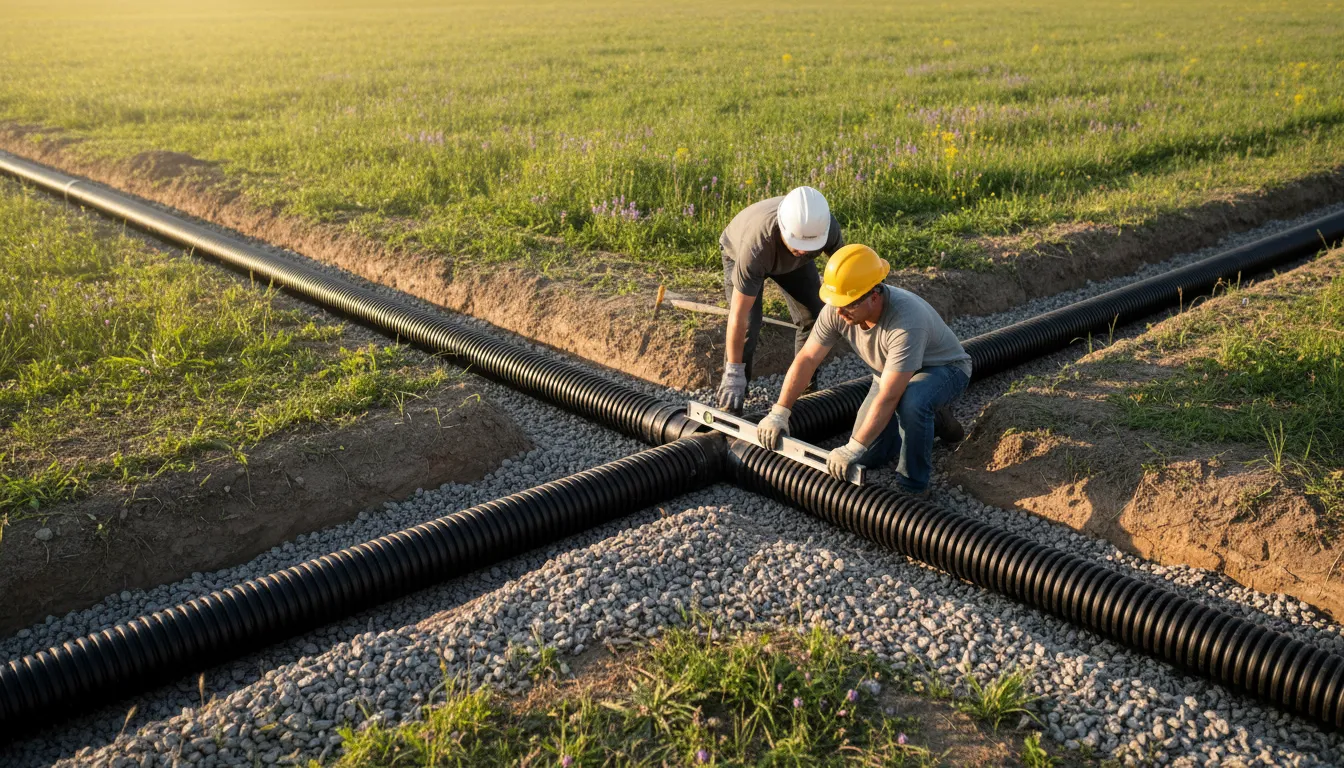
The drain field, also known as a leach field or absorption field, is the final and most crucial stage of your onsite wastewater treatment system. After solids settle in the septic tank, liquid effluent flows into a network of perforated pipes buried in trenches filled with gravel. This effluent slowly percolates into the soil, where natural processes provide final treatment. When this area fails, wastewater cannot be properly disposed of, creating health hazards and property damage.
Common signs of drain field failure include:
- Sewage odors in the yard or home.
- Soggy, spongy, or persistently wet soil over the field, even in dry weather.
- Surfacing sewage or effluent ponding on the ground.
- Unusually green, lush grass over the field area.
- Slow drains and backups in the home.
If you notice any of these signs, it's essential to act quickly. Continuing to use a failed system can lead to more extensive and costly damage, as well as violations of New Jersey health codes 1.
The Regulatory Landscape in Hamilton, NJ
All septic system work in Hamilton Township is governed by the New Jersey Department of Environmental Protection (NJDEP) and the local health department. The rules are detailed in the NJAC 7:9A standards, often referred to as the "Standards for Individual Subsurface Sewage Disposal Systems" 2.
Key regulations you must follow include:
- Permits: Any major repair, modification, or replacement of a septic tank or drain field requires a permit from the Hamilton Township Health Department. You cannot begin excavation or construction without this approval.
- Professional Engineering: All new system designs and most replacement designs must be created by a licensed professional engineer (PE). This is not optional-the health department will not approve plans without an engineer's seal.
- Setbacks: Your drain field must be located specific distances from property features. Generally, systems must be 10-25 feet from property lines, 50 feet from wells, and 25-100 feet from streams or wetlands. These setbacks ensure safety and prevent contamination.
- Inspections: Mandatory inspections are required at various stages, typically before the distribution box and pipes are covered with soil. Failing an inspection can mean costly rework 3.
The Step-by-Step Process for Drain Field Work
1. Professional Inspection and Diagnosis
Before any repair plan is made, a thorough inspection is needed to confirm the problem's source and extent. A qualified professional will 4 5:
- Review any existing Health Department records for your property's system layout.
- Locate and open the septic tank and distribution boxes.
- Assess the tank's sludge and scum levels (pumping may be part of this process).
- Evaluate the drain field for saturation, surfacing effluent, and proper drainage.
- Perform functional tests, like running water, to check for blockages in the lines.
This diagnosis determines if a repair is possible or if a full replacement is necessary.
2. Soil Testing and Site Evaluation
If a new or expanded drain field is required, the next critical step is soil testing. A licensed engineer or certified soil scientist must perform percolation tests ("perc tests") to measure how quickly water drains through your soil 6. The results determine:
- Site Suitability: Whether your property can support a conventional drain field.
- System Size: The square footage of drain field required based on soil absorption rates and home size 7.
- System Type: If soil conditions are poor (e.g., slow percolation, high water table), the engineer may design an advanced, alternative system like a sand mound or aerobic treatment unit (ATU).
The site evaluation also considers slope (typically 2-3% is ideal), lot size, and proximity to environmental constraints like wetlands or flood plains, which may trigger additional NJDEP permits.
3. Engineering Design and Permit Submission
Your hired engineer will use the soil test data to create detailed design plans for the new or repaired system. These plans include the layout, dimensions, construction specifications, and materials. The engineer then submits these plans, along with the permit application, to the Hamilton Township Health Department for review and approval 8. This stage can take several weeks.
4. Installation, Repair, or Replacement
Once permits are secured, licensed septic installers can begin work. For a full leach field replacement, this involves:
- Excavating the old, failed field (if necessary).
- Digging new trenches according to the engineered plan.
- Placing gravel beds and perforated distribution pipes.
- Installing the distribution box that evenly splits flow from the septic tank to each trench.
- Covering the system with soil and restoring the landscape.
Repairs might involve a smaller scope, such as replacing a clogged or crushed section of pipe, repairing a broken distribution box, or installing a new effluent filter.
5. Final Inspection and System Start-Up
After construction but before backfilling is complete, the health department inspector will visit to ensure the installation matches the approved plans. Once the system passes inspection, it can be covered and put into service. The installer should provide you with "as-built" diagrams for your records.
Find the perfect drain field repair companies for your needs
Get personalized recommendations and expert advice
Cost Breakdown for Drain Field Projects in Hamilton
Costs vary widely based on the project's scope, soil conditions, and system type. Below is a general cost framework based on local data 9 10 11.
- Engineering & Design Fees: $2,500 - $3,500. This covers soil testing, percolation tests, and the creation of stamped design plans.
- Permit Fees: $250 - $1,500, paid to the local health department.
- Minor Drain Field Repairs: $500 - $5,000. Examples include repairing a distribution box, replacing a section of pipe, or clearing a clog.
- Complete Septic System Replacement: $15,000 - $35,000+. This includes a new tank and a completely new absorption field. Prices soar for advanced alternative systems or properties with difficult access or poor soil.
- Environmental Assessments: $3,000 - $7,000, if required for properties near protected wetlands or water bodies 12.
Important Note: These are estimates. Always get detailed, written quotes from licensed contractors for your specific situation.
How to Prevent Future Drain Field Failure
Protecting your investment is key. Follow these best practices to extend the life of your new or repaired system 13:
- Regular Pumping: Pump your septic tank every 3-5 years (or as recommended based on usage). This prevents solids from washing out into and clogging the drain field.
- Conserve Water: Spread out laundry loads and fix leaks. Hydraulic overload is a common cause of field failure.
- Mind What You Flush: Only human waste and toilet paper. Never flush chemicals, grease, wipes, or feminine hygiene products.
- Protect the Area: Never drive, park, or build structures (like sheds or patios) over your drain field. The weight can crush pipes and compact soil. Keep deep-rooted plants and trees away from the area.
Choosing the Right Professional in Hamilton
This is not a DIY project. New Jersey law requires that septic system installation and major repairs be performed by licensed septic contractors working under the guidance of a licensed professional engineer 14. When evaluating companies:
- Verify their NJDEP license and check for insurance.
- Choose a provider that offers a full service scope: inspection, engineering coordination, installation, and maintenance.
- Ask for references and examples of similar projects in Hamilton.
- Ensure they handle the entire permit process with the local health department.
Frequently asked questions
Sources
Footnotes
-
SEPTIC - NJ.gov - https://dep.nj.gov/wp-content/uploads/dwq/pdf/septicmn.pdf ↩
-
NJ Septic Regulations for 2026: Inspections, Permits & Rules - https://www.atsenvironmental.com/blog/nj-septic-regulations-for-2026/ ↩
-
Importance of Permits and Inspections in Septic Installation NJ - https://earthmoversnj.com/the-importance-of-permits-and-inspections-in-septic-installation-in-new-jersey/ ↩
-
Copy of Inspections - New Jersey Septic Management Group - https://nj-septic.com/inspections-copy/ ↩
-
How Septic Inspections Are Performed in NJ | Sewer Kings - https://thesewerkings.com/blog/septic-system-inspections/ ↩
-
New Jersey Septic System Rules - 2026 Guide - https://thesewerkings.com/blog/new-jersey-septic-system-rules/ ↩
-
Septic System Requirements Based on Home Size & Layout - https://speidelseptic.com/septic-system-requirements-home-size-layout-nj/ ↩
-
New Jersey Septic System Replacement & Installation | ATS - https://www.atsenvironmental.com/residential/septic-system-installation-replacement/ ↩
-
The Real Cost of Septic Installation in New Jersey (2025) - https://www.atsenvironmental.com/blog/the-real-cost-of-septic-installation-in-new-jersey-2025/ ↩
-
Septic Repair vs Replacement in NJ: Costs & Signs - https://www.atsenvironmental.com/blog/septic-repair-vs-replacement/ ↩
-
Navigating Septic System Regulations: Expert Guidance for New Jersey Property Owners - https://www.mapengineering.net/navigating-septic-system-regulations/ ↩
-
Watershed & Land Management | Septic System - NJDEP - https://dep.nj.gov/wlm/lrp/common-projects/septic-system/ ↩
-
New Jersey Septic Tank Rules and Regulations - Arrow Sewer & Drain - https://www.arrowsewernj.com/blog/septic-tanks-in-new-jersey-what-you-need-to-know/ ↩
-
Licensed Septic Service NJ - Requirements - The Sewer Kings - https://thesewerkings.com/blog/licensed-septic-service-professionals/ ↩