Find the Best Drain Field Repair Companies for Your Business
No obligation • Fast responses • Nationwide coverage

Why you can trust Septic Spot
Septic Spot is a leading United States resource for understanding and comparing septic services. Our editors review providers using consistent criteria and verify key business details. Listings and scores are independent, and companies cannot pay to influence our content.
Search providers near you
Top Drain Field Repair Companies in Linden, New Jersey Ranked
A failing septic drain field is a serious issue that requires prompt, professional attention. This critical component of your onsite wastewater system is responsible for safely filtering and dispersing treated effluent into the soil. When it malfunctions, it can lead to sewage backups, soggy yards, and environmental contamination. For homeowners in Linden, navigating the repair or replacement process involves understanding local regulations, securing permits, and choosing a qualified contractor. This guide provides essential information to help you understand your options, the required steps, and what to expect when addressing leach field problems in Union County.
Understanding Your Drain Field System
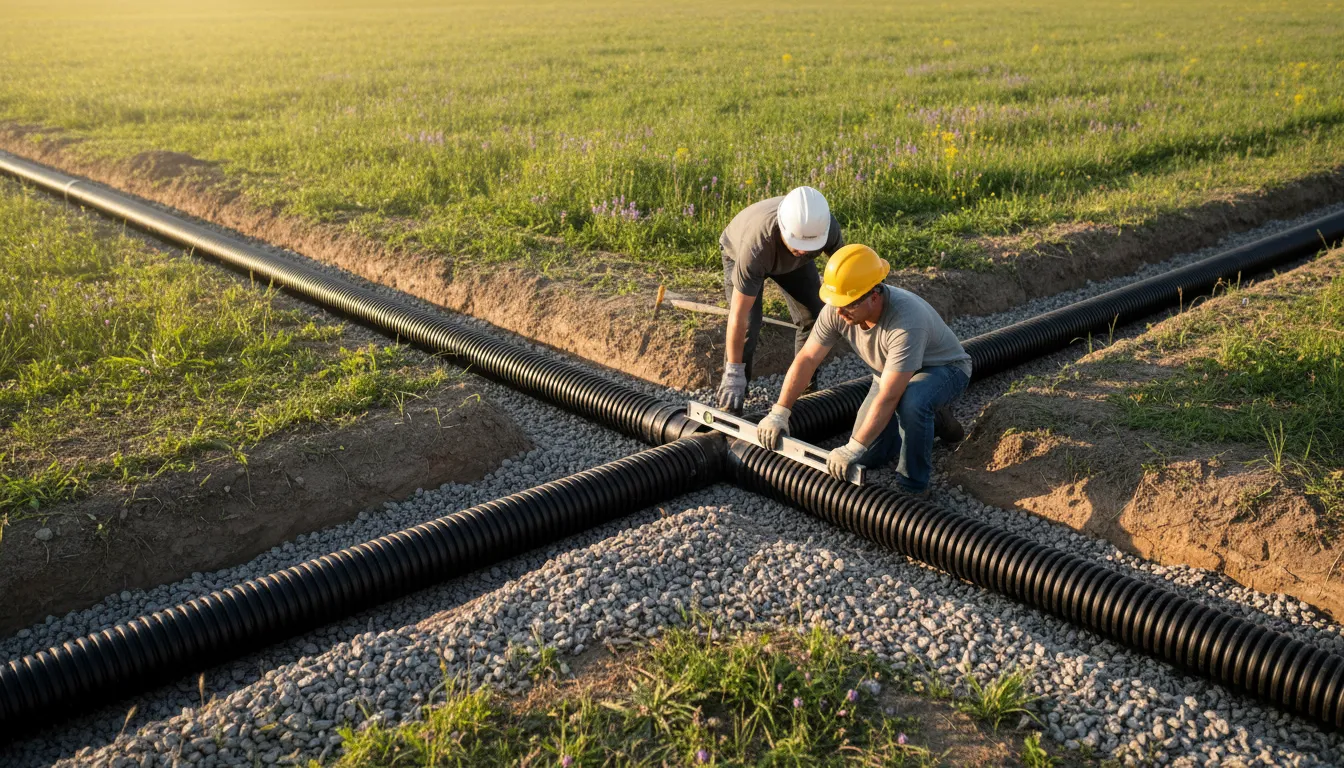
Often called a leach field or absorption field, the drain field is the final stage of a septic system. After solids settle in the tank, liquid effluent flows into a network of perforated pipes buried in trenches filled with gravel. This effluent slowly seeps into the surrounding soil, where natural processes provide final treatment. A healthy drain field is essential for protecting both your property and public health. In Linden, all systems must comply with New Jersey's strict NJAC 7:9A standards for subsurface sewage disposal.
Signs You Need Drain Field Service
Recognizing early warning signs can prevent a minor issue from becoming a costly full replacement. Be alert for these common indicators of a failing absorption field:
- Sewage Odors or Surfacing Wastewater: Foul smells in your yard or visible, soggy patches of effluent are clear signs of failure and require immediate action.
- Slow Drains and Gurgling Plumbing: While this can indicate a tank issue, persistent slow drainage throughout the house often points to a saturated drain field that can no longer absorb water.
- Unusually Green or Soggy Grass: Lush, fast-growing grass or consistently wet, spongy soil directly over the drain field area, even during dry weather, signals that untreated effluent is rising to the surface.
- Failed System Inspection: A mandatory inspection during a property transfer may officially document a system failure, legally requiring remediation.
The Regulatory Landscape in Linden, NJ
All repair and replacement work in Linden is strictly regulated. The local Health Department or a regional environmental health division is the permitting authority 1. Unpermitted work can result in significant fines, ranging from $500 to $50,000. The core regulations you must follow include:
- NJAC 7:9A Compliance: Every system must be designed or approved by a licensed professional engineer to meet New Jersey's administrative codes.
- Mandatory Setbacks: A new or repaired leach field must be situated at specific minimum distances from features like property lines (10-25 feet), wells (100 feet), and water bodies (50-100 feet).
- Soil Evaluation Requirement: A certified soil scientist must perform a detailed soil log and percolation test ("perc test") to determine the soil's absorption rate. This test is legally required for new designs and dictates the size and type of system needed.
Repair vs. Replacement: Making the Right Choice
The best course of action depends on the extent of the damage and the condition of the entire septic system.
Drain Field Repair Repairs are suitable for localized problems, such as a clogged pipe or a small section of saturated soil. Techniques may include jetting to clear blockages, adding additional drain lines to expand the field, or replacing a portion of the distribution box.
- Typical Cost: Repairs in Linden typically range from $500 to $5,000.
- Process: This often involves a site inspection, a simpler permit application for the specific repair, and the work itself, which may be completed in a few days.
Full Drain Field Replacement A complete replacement is necessary when the entire absorption area has failed due to age, catastrophic failure, or irreversible soil compaction and biomat buildup.
- Typical Cost: Replacing just the drain field components can cost between $5,000 and $10,000. A full system replacement, including a new tank and all components, ranges from $15,000 to $35,000 or more, depending on system complexity and site conditions 2.
- Process: This is a major project requiring new soil testing, engineered design, and a full permit approval, which can take 4-8 weeks.
Find the perfect drain field repair companies for your needs
Get personalized recommendations and expert advice
The Step-by-Step Process for Replacement
If a full leach field replacement is necessary, understanding the multi-stage process can help you plan effectively.
- Site Inspection & Soil Evaluation: A licensed inspector or engineer will assess your property. A certified soil scientist will then conduct the mandatory perc test and soil analysis, which typically costs around $1,300 3.
- Engineering Design: A professional engineer uses the soil data to create a custom system design that meets all NJAC 7:9A standards and local setbacks. This design service generally costs between $2,000 and $4,000.
- Permit Application & Approval: Your contractor or engineer submits the design plans, the soil report, and the application to the local health department. Plan for this approval process to take 4 to 8 weeks4 5. Permit fees alone can range from $250 to $1,5006 7.
- Installation: Once the permit is issued, excavation and installation of the new tank and drain field can begin. The timeline depends on weather and site complexity.
- Final Inspection: Before the new system is backfilled, a representative from the health department must perform a final inspection to ensure it matches the approved plans.
Key Factors Influencing Cost and Design
Several variables specific to your Linden property will impact the final project scope and price:
- Soil Type and Results: Poorly draining soil may require a larger, more complex, and more expensive engineered system, such as a mound or sand filter system.
- Site Topography and Water Table: Sloped lots or properties with a high seasonal water table present design challenges that affect cost 8 9.
- System Size and Technology: The size of your household dictates the required capacity. Advanced treatment technologies add to the upfront cost but may be necessary for challenging sites.
- Access and Existing Landscaping: Easy access for heavy machinery helps control costs. The need to remove decks, patios, or mature trees will add to the project's expense and timeline.
Choosing a Qualified Contractor in Linden
Selecting the right professional is critical for a compliant and long-lasting installation. Look for a contractor with:
- New Jersey Licenses: Ensure they hold all required state and local licenses for septic system installation and repair.
- Proven Experience: Ask for references specifically for drain field projects in Union County and verify their familiarity with local health department officials and processes.
- Engineering Partnerships: A reputable contractor will work directly with or recommend licensed professional engineers for the required design work.
- Detailed Proposals and Permitting: They should provide a clear, written estimate and manage the entire permitting process on your behalf.
Frequently asked questions
Sources
Footnotes
-
Septic System Program | Middlesex County NJ - https://www.middlesexcountynj.gov/government/departments/department-of-public-safety-and-health/office-of-health-services/environmental-health/septic-system-program ↩
-
Septic Repair vs Replacement in NJ: Costs & Signs - https://www.atsenvironmental.com/blog/septic-repair-vs-replacement/ ↩
-
Cost to Replace Septic Tank and Drain Field [2026 Data] | Angi - https://www.angi.com/articles/how-much-new-drain-fields-foot.htm ↩
-
New Jersey Septic System Rules - 2026 Guide - https://thesewerkings.com/blog/new-jersey-septic-system-rules/ ↩
-
How Septic System Inspections Are Performed in New Jersey - https://thesewerkings.com/blog/septic-system-inspections/ ↩
-
The Real Cost of Septic Installation in New Jersey (2025) - https://www.atsenvironmental.com/blog/the-real-cost-of-septic-installation-in-new-jersey-2025/ ↩
-
Navigating Septic System Regulations: Expert Guidance for New Jersey Property Owners - https://www.mapengineering.net/navigating-septic-system-regulations/ ↩
-
New Jersey Septic Tank Rules and Regulations - Arrow Sewer & Drain - https://www.arrowsewernj.com/blog/septic-tanks-in-new-jersey-what-you-need-to-know/ ↩
-
The Complete Guide to Septic System Installation and ... - https://excavatingnj.com/blog/the-complete-guide-to-septic-system-installation-and-permitting-in-new-jersey/ ↩