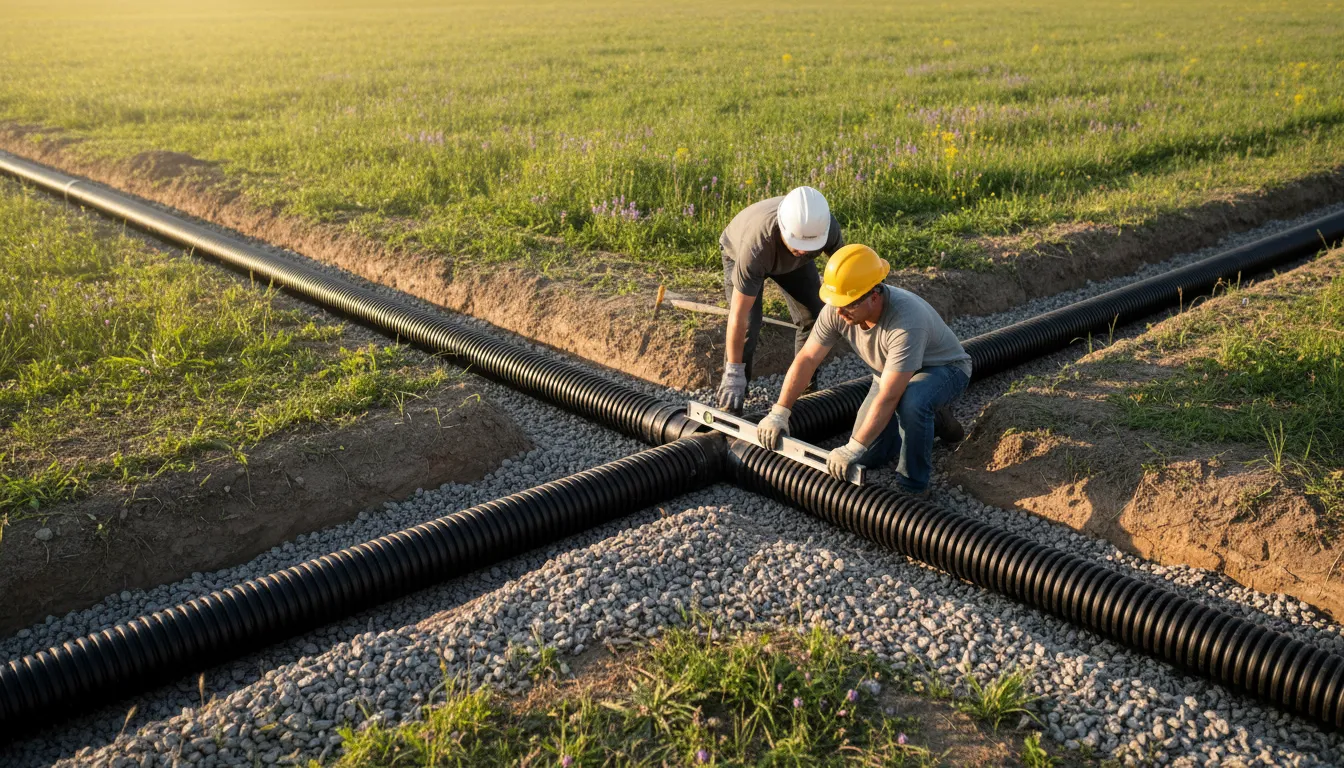
Find the Best Drain Field Repair Companies for Your Business
No obligation • Fast responses • Nationwide coverage

Why you can trust Septic Spot
Septic Spot is a leading United States resource for understanding and comparing septic services. Our editors review providers using consistent criteria and verify key business details. Listings and scores are independent, and companies cannot pay to influence our content.
Search providers near you
Top Drain Field Repair Companies in Middletown, New Jersey Ranked
A properly functioning drain field, also known as a leach field or absorption area, is critical for the safe disposal of wastewater from your home. When this component of your septic system fails, it can lead to soggy yards, foul odors, and serious public health risks. Understanding the local requirements and process for drain field repair or replacement in Middletown is essential for any homeowner with a septic system. This guide provides the key information you need to navigate local regulations, understand the steps involved, and connect with qualified professionals for your leach field project.

Understanding Drain Field Failure in Connecticut
A septic system's drain field is where the final treatment and dispersal of effluent occurs. Over time, this area can fail due to age, soil compaction, hydraulic overloading, or biological mat buildup. In Middletown, a failing system that creates a public health nuisance must be repaired or replaced to meet current code. Common signs of a failing absorption area include:
- Sewage odors or surfacing wastewater in your yard.
- Persistent soggy or spongy ground over the leach field.
- Slow-draining household fixtures or plumbing backups.
- Unusually lush, green grass over the drain field area.
Middletown Regulations and Permit Requirements
All work on septic systems in Middletown is strictly regulated. No septic system shall be repaired or installed without a permit from the Middletown Director of Health. Any new construction or repair must comply with the Connecticut Public Health Code (19-13-B103) and the latest 2024 Technical Standards.
If you are planning an addition to your home that is not served by public sewers, you are required to have a certified "code-complying area" on your property for a potential future system expansion. This proactive step ensures there is suitable space for a new or enlarged leaching system if needed.
The Site Evaluation and Design Process
Before any repair or replacement can be planned, a thorough site investigation is mandatory. This process determines the feasibility and design of a new system.
Soil and Groundwater Testing: A licensed professional must conduct deep test holes (a minimum of 7 feet deep) and percolation tests to assess soil composition and seasonal high groundwater levels. Connecticut standards require a minimum of 18 inches of clearance between the bottom of the leaching system and the high water table. This separation is crucial for preventing groundwater contamination.
Setback Requirements: Strict separation distances from wells, wetlands, property lines, buildings, and other features are enforced to protect water sources and property 1. Your design professional will ensure the proposed system meets all these local and state setbacks.
System Design: Based on the site evaluation, a licensed engineer or sanitarian will design a new system tailored to your property's conditions and your household's needs. For complex sites with difficult conditions like shallow bedrock or a high water table, the design may require advanced treatment technologies or alternative systems.
Steps for Drain Field Replacement in Middletown
Replacing a failed leaching system is a multi-step process that involves several professionals and inspections.
- Site Investigation & Design: Hire a licensed soil scientist, professional engineer, or sanitarian to perform the required testing and create a system design that complies with all codes 2.
- Permitting: Submit the engineered plans and a permit application to the Middletown Health Department for review and approval.
- Installation: Once the permit is issued, a licensed septic installer must perform the excavation and construction of the new septic tank and drain field 3.
- Final Inspection: Before the system is covered, the health district inspector must visit the site to verify the installation matches the approved plans and meets all technical standards 4 5 6. Upon passing inspection, a permit to discharge is issued.
Find the perfect drain field repair companies for your needs
Get personalized recommendations and expert advice
Cost Considerations for Leach Field Projects
The cost to replace a septic tank and drain field in the Middletown area can vary widely. On average, homeowners can expect to invest between $5,000 and $12,000 or more for a complete system replacement 7. Several key factors influence the final price:
- System Size: Larger systems designed for bigger homes cost more.
- Site Conditions: Difficult sites with poor soil, high groundwater, or limited space often require more complex (and expensive) engineered solutions.
- System Technology: A standard gravity-fed trench system is typically the most affordable option, while mound systems or those with advanced treatment components cost significantly more.
Financial Assistance for Septic System Repairs
Recognizing the significant financial burden, the State of Connecticut offers potential loan or deferred loan programs to help homeowners finance the repair or replacement of failing systems that are deemed a public health nuisance 8. These programs can provide crucial assistance to make necessary repairs affordable and protect community health.
Protecting Your New Drain Field
Proper operation and maintenance are key to extending the life of your new leaching system. Homeowners should:
- Practice water conservation to avoid overloading the system.
- Avoid planting deep-rooted trees or shrubs near the drain field.
- Never park vehicles or place heavy structures (like sheds or patios) on the absorption area, as this compacts the soil and can crush pipes 9.
- Have the septic tank pumped regularly by a licensed professional, typically every 3-5 years, to prevent solids from escaping into the drain field 10.
Frequently asked questions
Sources
Footnotes
-
Septic Systems Reports, Regulations, Guidance, and Manuals - https://www.epa.gov/septic/septic-systems-reports-regulations-guidance-and-manuals ↩
-
Building & Construction - Northeast District Department of Health - https://nddh.org/services/environment-building/building-construction/ ↩
-
CONNECTICUT PUBLIC HEALTH CODE On-site Sewage Disposal ... - https://portal.ct.gov/dss/-/media/departments-and-agencies/dph/dph/environmental_health/environmental_engineering/2023-uploads/ts-master-2023-1242023a.pdf?rev=ff2a02fba994441d8db4a5690867a002&hash=2D14379B100C20B1BBAC8FC9835A1FE6 ↩
-
Septic System Design: What CT Homeowners Need to Know - https://andersonseptic.com/septic-system-design-guide/ ↩
-
Septic Developers - North Central Distict Health Department - https://www.ncdhd.org/septic-developers ↩
-
Chapter 245: Sewage Disposal Systems - City of Middletown, CT - https://ecode360.com/8365417 ↩
-
Cost to Replace Septic Tank and Drain Field [2026 Data] | Angi - https://www.angi.com/articles/how-much-new-drain-fields-foot.htm ↩
-
Septic System Repair - Connecticut eRegulations System - https://eregulations.ct.gov/eRegsPortal/Browse/RCSA/Title_8Subtitle_8-416_HTML/ ↩
-
SEPTIC SYSTEMS - CT.gov - https://portal.ct.gov/-/media/Departments-and-Agencies/DPH/dph/environmental_health/environmental_engineering/pdf/SepticSystems101pdf.pdf ↩
-
Operation and Maintenance - CT.gov - https://portal.ct.gov/dph/environmental-health/environmental-engineering/operation-and-maintenance ↩