Find the Best Drain Field Repair Companies for Your Business
No obligation • Fast responses • Nationwide coverage

Why you can trust Septic Spot
Septic Spot is a leading United States resource for understanding and comparing septic services. Our editors review providers using consistent criteria and verify key business details. Listings and scores are independent, and companies cannot pay to influence our content.
Search providers near you
Top Drain Field Repair Companies in Mount Laurel, New Jersey Ranked
A failing septic system drain field is a serious issue for any Mount Laurel homeowner, requiring immediate and expert attention. This critical component, also known as a leach field or absorption area, is responsible for safely filtering and dispersing treated wastewater into the soil. When it malfunctions, it can lead to sewage backups, environmental contamination, and significant property damage. Understanding the local regulations, process, and costs for drain field repair or replacement is essential for making informed decisions and protecting your home's value and your family's health.

Understanding Your Septic System's Drain Field
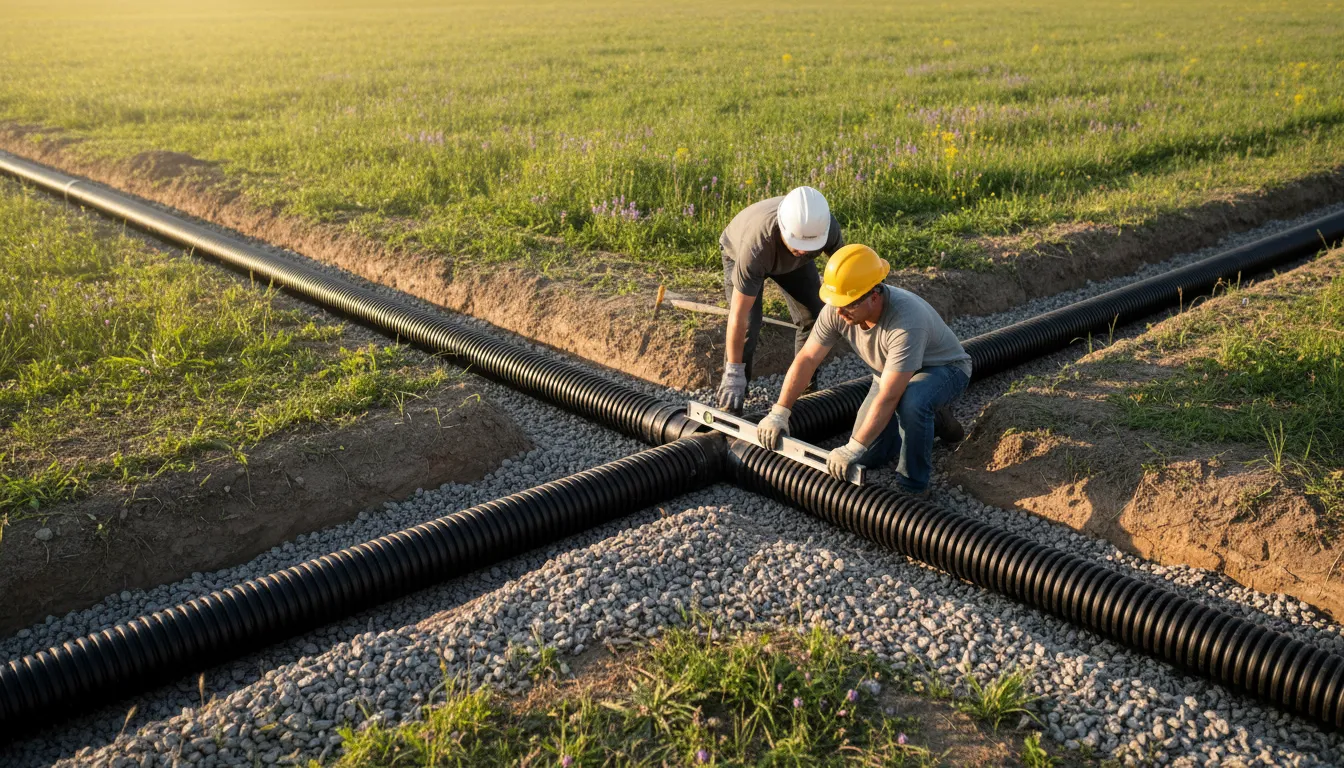
Your septic system is a self-contained wastewater treatment plant for your property. After solids settle in the tank, the liquid effluent flows into the drain field. This network of perforated pipes buried in gravel-filled trenches allows the effluent to slowly seep into the soil, where natural processes provide final treatment. A healthy leach field is vital for the entire system's operation. In Mount Laurel, these systems are governed by strict state and county codes designed to protect the local groundwater, including the Kirkwood-Cohansey aquifer system.
Signs of a Failing Absorption Area
Recognizing early warning signs can help you address problems before they become a full-blown emergency. Common indicators include:
- Sewage odors or surfacing wastewater in your yard, especially around the drain field area.
- Persistently soggy ground or standing water over the leach field, even in dry weather.
- Unusually lush, green grass growing over the drain field compared to the rest of the lawn.
- Slow-draining sinks, toilets, and tubs, or frequent backups inside your home.
- Gurgling sounds coming from your plumbing fixtures.
If you notice any of these signs, it's crucial to stop using water in the home and contact a licensed professional immediately for an inspection.
The Regulatory Landscape in Burlington County
All septic system work in Mount Laurel falls under the jurisdiction of the New Jersey Department of Environmental Protection (NJDEP) and is administered locally by the Burlington County Health Department. The rules are codified in N.J.A.C. 7:9A, and they are non-negotiable.
- Permits Are Mandatory: Any major repair, modification, or replacement of a septic tank or leach field requires a permit from the local health department before any work begins.
- Upgrades to Current Code: If your system has failed, repairs must bring the entire system into compliance with today's stricter standards. An older system that was legal when installed may need significant upgrades or a full redesign to meet current NJDEP regulations.
- Property Transfer Inspections: Many municipalities in Burlington County require a passing septic inspection report within 12 months of a home sale. A failing inspection often triggers the need for repairs as a condition of the sale.
- Critical Setbacks: Systems must maintain minimum distances from wells (50-100 feet), property lines (10 feet), buildings, and water bodies (100 feet). These setbacks can limit repair options on smaller lots.
The Step-by-Step Process for Repair or Replacement
Addressing a failed leach field is a multi-step process involving several professionals. The timeline from initial suspicion to a fully operational new system can range from 4 to 10+ weeks, depending on engineer availability and county permit review backlogs 1.
1. Professional Inspection and Diagnosis
A licensed inspector will locate all system components, pump the tank, and perform tests like a hydraulic load test to definitively diagnose drain field failure. This inspection typically costs between $300 and $800 2.
2. Soil Evaluation and Site Assessment
This is a critical step. A licensed professional engineer or certified soil scientist must conduct percolation (perc) tests to determine the soil's absorption rate. They will also evaluate the site's topography and seasonal high water table. In Mount Laurel's varied soils, this evaluation determines if a conventional trench system is possible or if an alternative system (like a mound or pressure distribution system) is required 3 4.
3. Engineering Design and Plan Submission
If replacement is needed, a licensed engineer creates detailed plans for a new system based on the soil evaluation, household size, and local codes. These engineered plans are then submitted to the Burlington County Health Department for review and approval. The design and permit application phase can cost between $3,700 and $8,300.
4. Permit Approval
The health department reviews the submitted plans for compliance. This review process itself can take 4 to 8 weeks. No excavation can occur until the permit is issued.
5. Installation by a Licensed Contractor
Once permitted, a licensed septic contractor executes the installation. This involves careful excavation, often with attention to protected areas like wetlands or stream banks, where work may be prohibited within 25 feet 5.
6. Final Inspection and Certification
After installation, the county health department performs a final inspection. Upon passing, they issue a License to Operate, which is your official documentation that the new system is compliant 6 7.
Find the perfect drain field repair companies for your needs
Get personalized recommendations and expert advice
Understanding the Costs Involved
The cost for drain field work in Mount Laurel is substantial and varies widely based on the solution required. It's important to budget for the entire process, not just the excavation.
- Drain Field Repair or Rejuvenation: For minor issues like a clogged pipe, limited repairs may be possible, ranging from $3,000 to $10,000+ 8.
- Partial Replacement (Drain Field Only): Replacing just the leach field while reusing a sound tank typically costs between $8,000 and $18,000 9 10.
- Full System Replacement (Tank + Drain Field): This is often necessary to meet current codes. Costs for a complete new system in New Jersey frequently range from $15,000 to over $35,000 11 12.
- Alternative Systems: If your site requires a sand mound or other advanced treatment system, costs can be at the higher end of the scale or even exceed it due to the need for pumps, sand, and more complex construction 13.
Planning for the Future: The Reserve Area
A key part of NJDEP regulation is the concept of a drain field reserve area. This is a designated portion of your property, tested and approved during the initial soil evaluation, that is suitable for a future leach field. It must be kept clear of structures, pavement, and heavy landscaping. Having a permitted reserve area can significantly streamline and reduce the cost of a future replacement, as the soil data and design are often pre-approved 14 15.
Maintaining Your New System
Protecting your investment is crucial. After a repair or replacement, proper maintenance is non-negotiable:
- Pump the septic tank regularly, typically every 2-5 years, depending on usage.
- Conserve water and spread out laundry loads to avoid overwhelming the drain field.
- Never park, drive, or build over any part of the septic system or reserve area.
- Avoid pouring grease, chemicals, or non-biodegradable items down the drain.
Frequently asked questions
Sources
Footnotes
-
Selling a Home With a Septic System in South Jersey - https://www.scottkompa.com/blog/selling-home-septic-system-south-jersey/ ↩
-
How Septic System Inspections Are Performed in New Jersey - https://thesewerkings.com/blog/septic-system-inspections/ ↩
-
NJ Septic Regulations for 2026: Inspections, Permits & Rules - https://www.atsenvironmental.com/blog/nj-septic-regulations-for-2026/ ↩
-
SEPTIC - NJ.gov - https://dep.nj.gov/wp-content/uploads/dwq/pdf/septicmn.pdf ↩
-
The Complete Guide to Septic System Installation and ... - https://excavatingnj.com/blog/the-complete-guide-to-septic-system-installation-and-permitting-in-new-jersey/ ↩
-
Individual Subsurface Sewage Disposal Systems | Mount Olive NJ - https://www.mountolivetwpnj.org/environmental-health/page/individual-subsurface-sewage-disposal-systems ↩
-
How Septic Inspections Are Performed in NJ | Sewer Kings - https://thesewerkings.com/blog/septic-system-inspections/ ↩
-
Septic Tank Repair Cost in 2026 - Modernize - https://modernize.com/plumbing/septic-tank-repair-cost ↩
-
The Real Cost of Septic Installation in New Jersey (2025) - https://www.atsenvironmental.com/blog/the-real-cost-of-septic-installation-in-new-jersey-2025/ ↩
-
Septic Drain Field Replacement Cost - https://dillonseptic.com/septic-drain-field-replacement-cost/ ↩
-
NJ Septic Regulations for 2026: Inspections, Permits & Rules - https://www.atsenvironmental.com/blog/nj-septic-regulations-for-2026/ ↩
-
The Real Cost of Septic Installation in New Jersey (2025) - https://www.atsenvironmental.com/blog/the-real-cost-of-septic-installation-in-new-jersey-2025/ ↩
-
Watershed & Land Management | Septic System - NJDEP - https://dep.nj.gov/wlm/lrp/common-projects/septic-system/ ↩
-
New Jersey Septic System Rules - 2026 Guide - https://thesewerkings.com/blog/new-jersey-septic-system-rules/ ↩
-
Frequently Asked Questions and Guidance ... - NJDEP - https://dep.nj.gov/wp-content/uploads/dwq/pdf/septicsystems/faq79a.pdf ↩