Find the Best Drain Field Repair Companies for Your Business
No obligation • Fast responses • Nationwide coverage

Why you can trust Septic Spot
Septic Spot is a leading United States resource for understanding and comparing septic services. Our editors review providers using consistent criteria and verify key business details. Listings and scores are independent, and companies cannot pay to influence our content.
Search providers near you
Top Drain Field Repair Companies in New Brunswick, New Jersey Ranked
A failing septic drain field is a serious issue that can lead to sewage backups, soggy lawns, and environmental contamination. Drain field repair or replacement is a critical process to restore your property's wastewater treatment system. This guide explains what you need to know about diagnosing, permitting, and completing this major project in New Brunswick, helping you connect with qualified local professionals who can assess your situation and navigate New Jersey's specific regulations.
Understanding Your Septic Drain Field
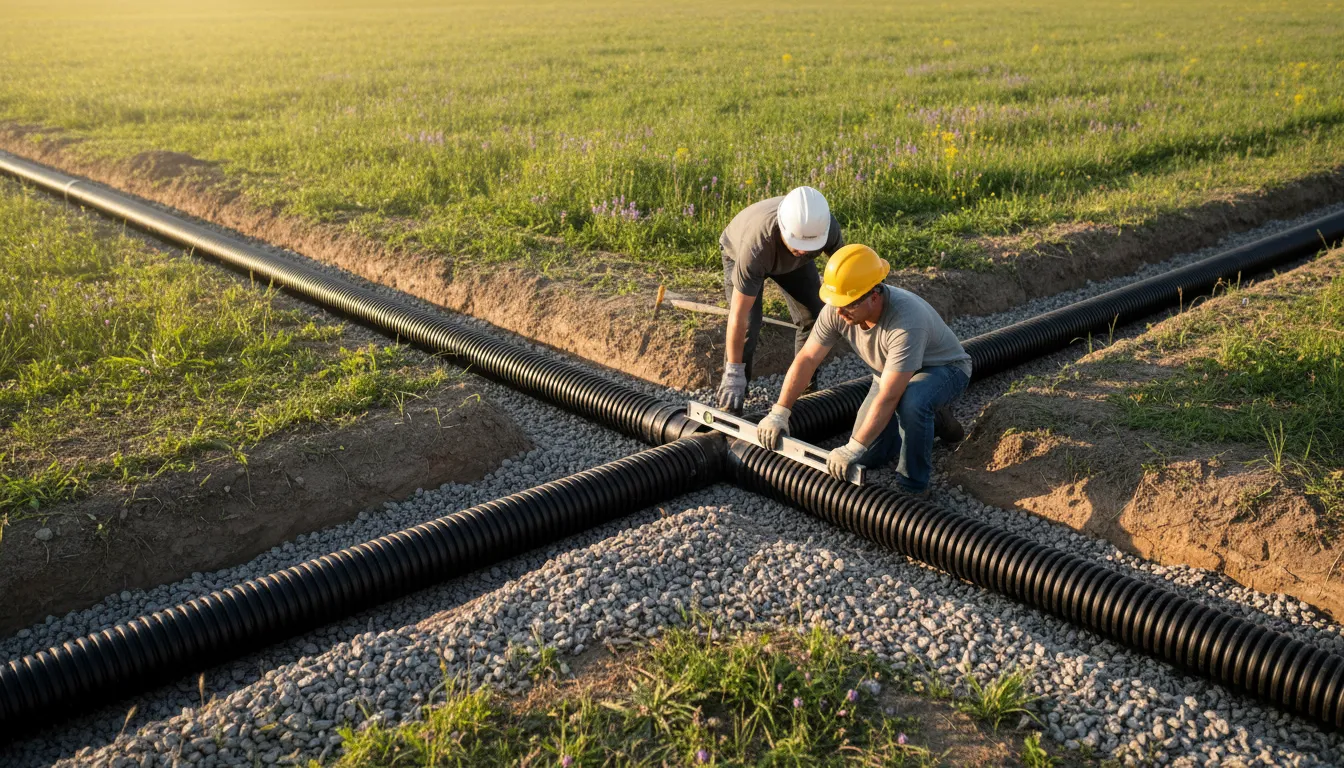
Often called a leach field or absorption field, the drain field is the final and most crucial stage of a septic system. After solids settle in the tank, liquid effluent flows into a network of perforated pipes buried in trenches filled with gravel. This effluent slowly percolates into the soil, where natural processes provide final treatment. When this area fails, wastewater cannot be properly disposed of, creating a health hazard.
Common signs of drain field failure include:
- Sewage odors in the yard or home.
- Soggy, spongy, or persistently wet soil over the field, even in dry weather.
- Slow-draining sinks, tubs, and toilets, or frequent backups.
- Unusually lush, green grass growing over the field.
The Regulatory Landscape in New Brunswick and Middlesex County
Any significant work on a septic system in New Jersey is strictly regulated. In New Brunswick, drain field projects fall under the jurisdiction of the Middlesex County Office of Health Services and must comply with state standards set by the New Jersey Department of Environmental Protection (NJDEP) under N.J.A.C. 7:9A.
Key regulations include:
- Permits: Any drain field repair involving excavation requires a permit from the local health department. You cannot legally begin work without one.
- Inspections: Mandatory inspections are required for new installations, and many municipalities require a system inspection upon property transfer 1.
- Setbacks: New systems must meet strict setback requirements from wells, property lines, streams, and buildings2.
Navigating these rules is a primary reason to work with a licensed septic professional who regularly handles permitting in Middlesex County.
The Professional Assessment and Design Process
A proper drain field project is not a simple excavation job. It's an engineered solution that begins with a thorough professional assessment.
- Initial Inspection: A specialist will inspect both the septic tank and the suspected drain field failure area. They use tools like cameras and probes to identify the root cause, whether it's clogged pipes, a saturated soil bed, or a more systemic failure.
- Soil Evaluation: This is a critical, non-negotiable step. A certified professional must conduct percolation (perc) tests to determine the soil's absorption rate 3. This test dictates the size and type of system your property can support.
- Engineering Design: Based on the soil evaluation and household size, a professional engineer must design the new or replacement system. This design plan is submitted to the health department for permit approval.
- Health Department Approval: The Middlesex County Office of Health Services reviews the design and issues the construction permit4 5.
- Final Inspection: Once installation is complete but before the field is covered, the health department must perform a final inspection to approve the work6.
Repair vs. Replacement: Making the Right Choice
The course of action depends entirely on the diagnosis from the initial assessment.
When is Drain Field Repair Possible? Minor issues like a clog in the distribution box or a single broken pipe may be repairable. Techniques like high-pressure jetting can sometimes clear biomat clogs in sections of the field. Repair is typically considered if the soil itself is still permeable and the tank is structurally sound.
When is Full Drain Field Replacement Necessary? Replacement is required when the soil absorption area is completely saturated, compacted, or clogged beyond recovery. This is often the case with older systems or those that have been neglected. If the septic tank is also damaged or undersized, a full system replacement-tank and field-will be necessary7.
Find the perfect drain field repair companies for your needs
Get personalized recommendations and expert advice
Costs for Drain Field Projects in New Brunswick
Costs can vary widely based on soil conditions, system size, and the complexity of the installation. The figures below are estimates for the New Brunswick area 8.
- Inspection & Certification: $500 - $2,000. This covers the initial diagnosis, soil testing, and any certification needed for permitting or real estate transactions.
- Drain Field Repair/Replacement: $8,000 - $18,000. This range is for replacing the leach field itself. The higher end includes more complex designs or difficult site access.
- Full Septic System Replacement: $35,000 - $60,000+. This cost encompasses a new tank and a completely new drain field, including all engineering, permitting, and excavation9.
- Permit Fees: $200 - $1,500. Paid to the local health department for plan review and inspections10.
- Excavation & Disposal: $500 - $1,200. For removing the old gravel and contaminated soil from the failed field11.
Alternative Systems for Challenging Sites
Not every property in New Brunswick has soil suitable for a conventional gravel trench system. If perc tests show slow absorption, an alternative or engineered system may be the only viable option12 13.
- Mound Systems: Effluent is pumped to a raised, sand-filled mound, providing treatment above the natural soil layer.
- Pressure Distribution Systems: Use a pump to evenly distribute effluent across the entire drain field, improving efficiency in marginal soils.
- Aerobic Treatment Units (ATUs): Introduce oxygen into the treatment process, providing a higher level of treatment before the drain field.
These systems are more expensive to install and maintain but are often the key to obtaining a permit on a difficult lot.
Choosing a Qualified Professional
Given the technical and regulatory complexity, your choice of contractor is paramount. Look for a company that:
- Is licensed by the state of New Jersey for septic system installation and repair.
- Has extensive experience with the Middlesex County health department permitting process.
- Employs or works directly with a licensed professional engineer for system design.
- Can provide references for similar drain field projects in the area.
- Offers a clear, detailed written estimate that breaks down design, permitting, installation, and inspection costs.
A reputable professional will guide you through every step, from the initial failure diagnosis to the final health department sign-off, ensuring your new leach field is built to last and complies with all New Jersey standards.
Frequently asked questions
Sources
Footnotes
-
Licensed Septic Service NJ - Requirements - The Sewer Kings - https://thesewerkings.com/blog/licensed-septic-service-professionals/ ↩
-
New Jersey Septic System Rules - 2026 Guide - https://thesewerkings.com/blog/new-jersey-septic-system-rules/ ↩
-
Navigating Septic System Regulations: Expert Guidance for ... - https://www.mapengineering.net/navigating-septic-system-regulations/ ↩
-
NJDEP| Division of Water Quality | Permitting Information - https://dep.nj.gov/dwq/wastewater/septic-systems/permitting-information/ ↩
-
Septic System Program | Middlesex County NJ - https://www.middlesexcountynj.gov/government/departments/department-of-public-safety-and-health/office-of-health-services/environmental-health/septic-system-program ↩
-
Septic System Repair in New Jersey - ATS Environmental - https://www.atsenvironmental.com/residential/septic-system-repair/ ↩
-
Septic Repair vs Replacement in NJ: Costs & Signs - https://www.atsenvironmental.com/blog/septic-repair-vs-replacement/ ↩
-
New Jersey Septic Tank Rules and Regulations - Arrow Sewer & Drain - https://www.arrowsewernj.com/blog/septic-tanks-in-new-jersey-what-you-need-to-know/ ↩
-
How Much Does It Cost To Replace A Septic System In Northern NJ? - https://dsepticservice.com/b/septic-system-replacement-cost-new-jersey/ ↩
-
NJ Septic Regulations for 2026: Inspections, Permits & Rules - https://www.atsenvironmental.com/blog/nj-septic-regulations-for-2026/ ↩
-
The Real Cost of Septic Installation in New Jersey (2025) - https://www.atsenvironmental.com/blog/the-real-cost-of-septic-installation-in-new-jersey-2025/ ↩
-
The Complete Guide to Septic System Installation and ... - https://excavatingnj.com/blog/the-complete-guide-to-septic-system-installation-and-permitting-in-new-jersey/ ↩
-
Navigating Septic System Regulations: Expert Guidance for New Jersey Property Owners - https://www.mapengineering.net/navigating-septic-system-regulations/ ↩