Find the Best Drain Field Repair Companies for Your Business
No obligation • Fast responses • Nationwide coverage

Why you can trust Septic Spot
Septic Spot is a leading United States resource for understanding and comparing septic services. Our editors review providers using consistent criteria and verify key business details. Listings and scores are independent, and companies cannot pay to influence our content.
Search providers near you
Top Drain Field Repair Companies in Newark, New Jersey Ranked
A failing septic system drain field is a serious issue for any Newark homeowner, leading to soggy yards, unpleasant odors, and potential environmental contamination. Drain field repair and replacement is a specialized process that requires navigating strict New Jersey regulations and complex soil conditions. This guide provides the essential information you need to understand the process, costs, and local requirements for addressing septic leach field issues in Newark, helping you connect with qualified, licensed professionals for your project.
Understanding Your Septic System's Drain Field
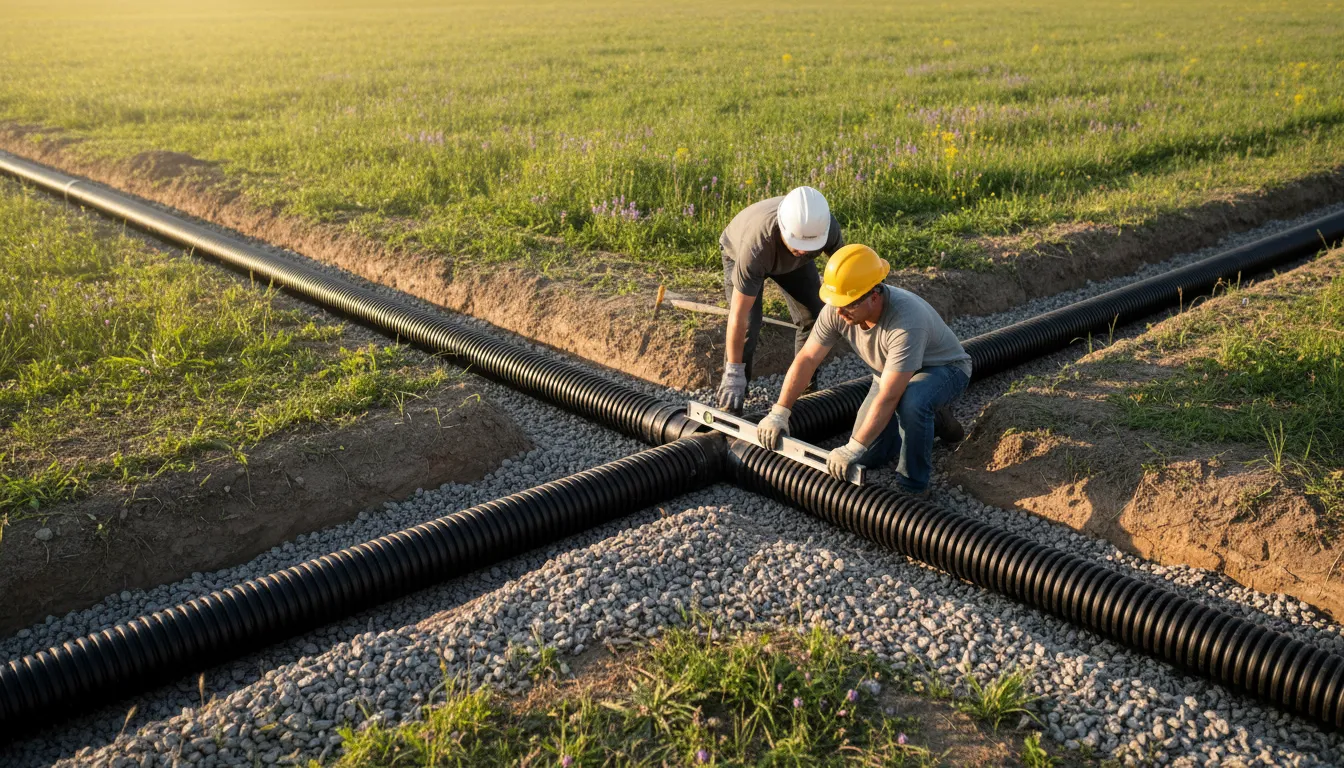
Often called a leach field or absorption field, the drain field is the final and most critical stage of a septic system. After solids settle in the tank, the treated liquid effluent flows into a network of perforated pipes buried in trenches filled with gravel. This effluent slowly percolates into the surrounding soil, where natural processes provide final treatment. When this area fails, wastewater can no longer be absorbed, leading to system backup and surfacing sewage. Recognizing the signs of a failing leach field is the first step toward a solution.
Common indicators include:
- Persistently soggy or spongy soil over the drain field area, even in dry weather.
- Sewage odors near the tank, distribution box, or drain field.
- Unusually bright green, lush grass growing over the field lines.
- Slow-draining household fixtures or sewage backing up into drains.
Newark and New Jersey Regulatory Landscape
All septic system work in Newark is governed by the New Jersey Department of Environmental Protection (NJDEP) under the Standards for Individual Subsurface Sewage Disposal Systems (N.J.A.C. 7:9A). You cannot begin any repair or replacement without proper approvals. The local health department is your primary point of contact for permits and will enforce state-mandated setbacks and construction standards.
Key regulatory requirements include:
- Professional Licensing: Only NJDEP-licensed septic contractors and certified professional engineers are authorized to design, install, repair, or replace systems.
- Permits: A permit from the Newark Department of Health and Community Wellness (or the relevant Essex County health office) is mandatory before any excavation or construction begins 1 2.
- Setbacks: New or replacement drain fields must be located a minimum distance from features like property lines (10-25 feet), wells (typically 100 feet), buildings, and surface water. These setbacks are strictly enforced to protect public health 3.
The Diagnostic Process: From Inspection to Solution
Before any repair strategy is decided, a thorough professional inspection is essential. This typically costs between $300 and $600 and aims to pinpoint the exact cause of failure. A comprehensive evaluation includes:
- Visual Site Assessment: Checking for surface symptoms like standing water or odors.
- Tank and Distribution Box Inspection: Pumping the tank to inspect baffles and tees, and evaluating the distribution box (D-box) for clogs or damage that might unevenly distribute effluent 4.
- Soil and System Evaluation: A professional may perform a dye test to confirm effluent is surfacing and assess the condition of the existing drain field soil.
The inspection will determine if the problem is a repairable component (like a clogged pipe or damaged D-box) or a complete failure of the soil's absorption capacity, which necessitates field replacement 5.
Critical Factors Influencing Repair or Replacement
The path forward depends heavily on local soil conditions and system history, which licensed professionals will evaluate through formal testing.
- Soil Percolation Test: This test measures how quickly water drains through your soil. Fast-draining soils may support a smaller field, while slow-draining, clay-heavy soils common in parts of New Jersey may require a larger field or an alternative (mound) system.
- Seasonal High Water Table (SHWT): New Jersey regulations require identifying the highest level the groundwater reaches. If the water table is too high, it can saturate the drain field, preventing proper treatment and necessitating an engineered solution 6.
- Available Space: Older properties may not have sufficient space meeting all setback requirements for a new conventional field, leading to the need for more compact, advanced treatment systems.
Find the perfect drain field repair companies for your needs
Get personalized recommendations and expert advice
Repair vs. Replacement: Scope and Costs
The solution depends entirely on the diagnostic findings. Costs in Newark can vary widely based on system size, soil conditions, and the extent of work required.
Component Repairs ($500 - $5,000) If the failure is isolated, repairs may suffice. This can include:
- Replacing clogged or crushed distribution lines.
- Repairing or replacing a damaged distribution box.
- Fixing tank baffles or effluent filters. These repairs can restore function, but they require a permit and must be performed by a licensed contractor 7.
Partial or Full Drain Field Replacement ($5,000 - $35,000+) When the soil is irreversibly clogged (a condition called "biomat" failure), replacement is the only option.
- Drain Field Component Cost: The excavation and installation of new trenches, pipes, and gravel typically ranges from $5,000 to $10,000 8.
- Engineering & Permits: Before installation, you often need a new system design by a certified engineer, including soil testing and permit applications. This preparatory work can add $3,700 to $8,300 to the project cost.
- Total System Replacement: If the tank is also failing or doesn't meet current codes, replacing the entire system-tank and field-is necessary. In New Jersey, this comprehensive project often ranges from $15,000 to $35,000 or more 9.
Maintaining Your New or Repaired System
Protecting your investment is crucial. A new drain field can last decades with proper care 10.
- Regular Pumping: Have the septic tank pumped every 3-5 years to prevent solids from washing out and clogging the new field.
- Water Conservation: Spread out laundry loads and fix leaks to avoid hydraulically overloading the system.
- Mind What You Flush: Only human waste and toilet paper. Never flush chemicals, wipes, or grease.
- Protect the Area: Never drive, park, or build structures over the drain field. Keep roof drains and sump pumps directed away from it.
Frequently asked questions
Sources
Footnotes
-
New Jersey Septic Tank Rules and Regulations - Arrow Sewer & Drain - https://www.arrowsewernj.com/blog/septic-tanks-in-new-jersey-what-you-need-to-know/ ↩
-
NJ Septic Regulations for 2026: Inspections, Permits & Rules - https://www.atsenvironmental.com/blog/nj-septic-regulations-for-2026/ ↩
-
New Jersey Septic System Rules - 2026 Guide - https://thesewerkings.com/blog/new-jersey-septic-system-rules/ ↩
-
Why Septic Inspections are Vital for New Jersey Home Buyers - https://speidelseptic.com/why-septic-inspections-vital-for-nj-home-buyers/ ↩
-
Copy of Inspections - New Jersey Septic Management Group - https://nj-septic.com/inspections-copy/ ↩
-
The Complete Guide to Septic System Installation and ... - https://excavatingnj.com/blog/the-complete-guide-to-septic-system-installation-and-permitting-in-new-jersey/ ↩
-
Licensed Septic Service NJ - Requirements - The Sewer Kings - https://thesewerkings.com/blog/licensed-septic-service-professionals/ ↩
-
Septic Repair vs Replacement in NJ: Costs & Signs - https://www.atsenvironmental.com/blog/septic-repair-vs-replacement/ ↩
-
The Real Cost of Septic Installation in New Jersey (2025) - https://www.atsenvironmental.com/blog/the-real-cost-of-septic-installation-in-new-jersey-2025/ ↩
-
SEPTIC - NJ.gov - https://dep.nj.gov/wp-content/uploads/dwq/pdf/septicmn.pdf ↩