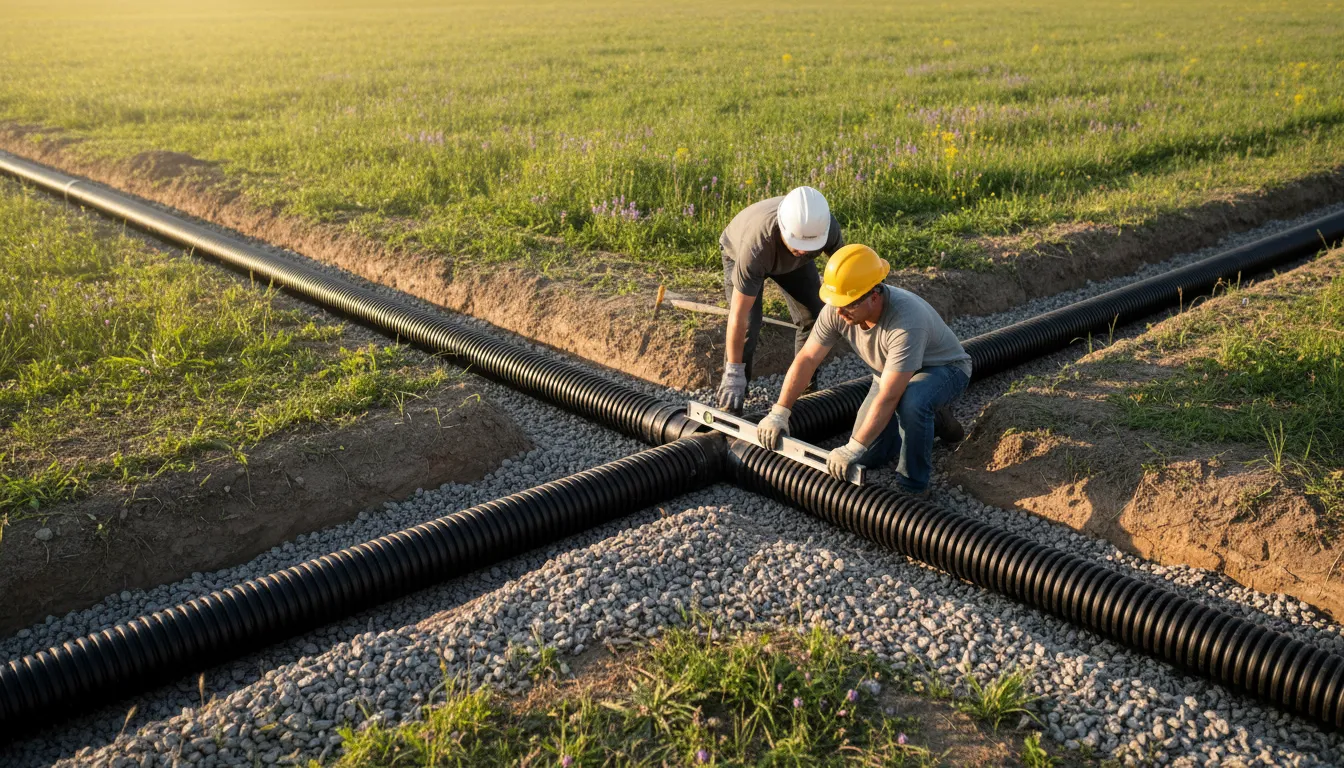
Find the Best Drain Field Repair Companies for Your Business
No obligation • Fast responses • Nationwide coverage

Why you can trust Septic Spot
Septic Spot is a leading United States resource for understanding and comparing septic services. Our editors review providers using consistent criteria and verify key business details. Listings and scores are independent, and companies cannot pay to influence our content.
Search providers near you
Top Drain Field Repair Companies in Perth Amboy, New Jersey Ranked
A failing septic drain field, also known as a leach field or absorption area, is a serious issue that can lead to sewage backups, foul odors, and environmental contamination. Proper drain field repair or replacement is critical for protecting your property, your health, and local groundwater. This guide provides essential information for Perth Amboy homeowners navigating this complex process, from recognizing failure signs to understanding New Jersey's strict permitting and installation requirements.
Recognizing Drain Field Failure
The drain field is the final, underground stage of your septic system where treated wastewater is dispersed into the soil. When it fails, the system cannot process household waste. Early detection can prevent a full system collapse and more costly repairs. Key warning signs include:
- Sewage Odors & Surfacing Effluent: Foul smells in your yard or, more critically, visible pools of grey, smelly water (effluent) on the ground surface are the most direct signs of failure.
- Slow Drains & Backups: Gurgling pipes, slow-draining sinks and toilets, or sewage backups in the home can indicate that the drain field is saturated and not accepting water from the tank.
- Unusually Lush Vegetation: Patches of grass over the drain field that are much greener and grow faster than the rest of the lawn can signal a nutrient-rich effluent leak.
- Soggy, Spongy Ground: The soil over the absorption area remains constantly wet, even during dry weather.
If you notice any of these signs, it's time to contact a licensed professional for a diagnostic inspection.
The Inspection & Diagnosis Process
A thorough inspection by a qualified septic professional is the first official step. This isn't just a visual check; it involves specialized techniques to pinpoint the problem's exact nature and location within the leach field system.
- Visual Site Walkover: The technician looks for the obvious signs mentioned above: wet spots, surfacing effluent, and overly lush vegetation.
- System Locating & Mapping: Using probes and records, they map the exact location of the septic tank, distribution box, and the boundaries of the drain field pipes.
- Tank Inspection: The tank is opened to check inlet/outlet baffles for blockages and to assess the tank's structural integrity. Sometimes, a simple tank issue can mimic drain field failure.
- Drain Field Probing: This is a critical diagnostic tool. A long metal rod is pushed into the soil along the absorption area. If it easily sinks into saturated, mucky soil, it confirms the drain field is clogged and failing 1 2.
The inspection report will determine if a repair (like cleaning a clogged distribution line) is possible or if a full or partial drain field replacement is necessary.
Understanding New Jersey's Regulatory Landscape
In Perth Amboy and throughout New Jersey, septic system work is heavily regulated by the New Jersey Department of Environmental Protection (NJDEP) and your local health department. You cannot simply hire an excavator to dig a new field. The process is designed to protect public health and water resources.
Core Permit Requirement: Any repair involving excavation, modification, or replacement of a drain field requires a permit from the Perth Amboy or Middlesex County health department. Working without a permit can result in significant fines and an illegal system that complicates property sales.
The Role of Professional Engineering: For a drain field replacement, New Jersey law (under NJAC 7:9A standards) requires the new system to be designed by a licensed Professional Engineer (PE) or a licensed Registered Environmental Health Specialist. The engineer creates a site-specific design based on rigorous soil testing.
The Critical Step: Soil Testing & Site Evaluation
You cannot replace a drain field in the same spot with the same design. A certified soil scientist must conduct new soil testing, primarily a percolation test ("perc test"), to determine the soil's absorption rate.
- Percolation Test: Measures how quickly water drains through the soil. This rate dictates the size and design of the new absorption area.
- Depth to Limiting Factors: The test must identify the seasonal high water table, bedrock, or impermeable layers. New Jersey requires a minimum of 2 feet of suitable soil between the bottom of the drain field and any limiting layer.
- Setback Requirements: The new drain field design must maintain mandatory distances from property lines, wells, streams, and buildings. These setbacks, often between 10 to 25 feet, are non-negotiable for permit approval 3.
Find the perfect drain field repair companies for your needs
Get personalized recommendations and expert advice
The Path to a New Drain Field: Steps & Timeline
Replacing a septic drain field is a multi-step project with several stakeholders. Understanding the sequence helps set realistic expectations.
- Hire a Licensed Septic Contractor: Your first call should be to a NJ-licensed septic installer. They can recommend a licensed engineer and guide you through the process 4.
- Site Evaluation & Soil Testing: Your contractor or a hired soil scientist performs the perc test and site evaluation.
- Engineering & Design: A licensed PE uses the soil data to design a NJDEP-compliant system. This plan includes the type of system, its exact location, and all construction specifications 5.
- Permit Application & Approval: The engineered design, along with the application, is submitted to the local health department for review. This plan review can take 4 to 8 weeks 6 7.
- Installation: Once the permit is issued, your licensed contractor can begin excavation and installation. The work must follow the approved plans exactly.
- Required Inspections: The health department conducts mandatory inspections at key stages: after excavation (pre-installation), during pipe placement, and a final inspection before backfilling. Passing these inspections is crucial.
- Final Approval & Documentation: After passing the final inspection, you receive a certificate of approval. Keep all permits, plans, and inspection records for your property files; they are essential for future real estate transactions 8.
Cost Considerations for Drain Field Work in Perth Amboy
Costs for drain field repair and replacement can vary widely based on soil conditions, system size, and site accessibility. The figures below are estimates based on New Jersey averages 9 10 11.
- Full Drain Field Replacement: This is typically the most significant expense, ranging from $8,000 to $18,000 or more. The final cost depends heavily on the size and complexity of the engineered design.
- Engineering & Design Fees: The services of the Professional Engineer and soil scientist typically add $3,000 to $7,000 to the project total.
- Permit Fees: Paid to the local health department, these can range from $250 to $1,500, depending on the project scope.
- Inspection Fees: Health department inspections may cost between $500 and $2,000, often included in the contractor's quote or permit fees.
While price is a factor, the most important consideration is hiring a properly licensed and insured contractor with a strong track record of obtaining approvals in Middlesex County. Cutting corners on engineering or permits will lead to far greater expenses and legal headaches down the road.
Maintaining Your New Septic System
Protecting your investment in a new leach field is all about proper maintenance. A well-cared-for system can last for decades.
- Pump the Tank Regularly: Have the septic tank pumped every 2-5 years by a licensed service to prevent solids from washing out and clogging the new drain field.
- Conserve Water: Use water-efficient fixtures and spread out laundry loads to avoid hydraulically overloading the absorption area.
- Mind What You Flush: Only human waste and toilet paper should go down the drain. Never flush wipes (even "flushable" ones), feminine hygiene products, grease, or chemicals.
- Protect the Area: Never drive or park vehicles over the drain field, and avoid planting trees or deep-rooted shrubs nearby.
Frequently asked questions
Sources
Footnotes
-
New Jersey Septic Inspections - https://www.looksmarthomeinspections.com/Septic.html ↩
-
How Septic System Inspections Are Performed in New Jersey - https://thesewerkings.com/blog/septic-system-inspections/ ↩
-
New Jersey Septic Tank Rules and Regulations - Arrow Sewer & Drain - https://www.arrowsewernj.com/blog/septic-tanks-in-new-jersey-what-you-need-to-know/ ↩
-
Licensed Septic Service NJ - Requirements - The Sewer Kings - https://thesewerkings.com/blog/licensed-septic-service-professionals/ ↩
-
The Complete Guide to Septic System Installation and ... - https://excavatingnj.com/blog/the-complete-guide-to-septic-system-installation-and-permitting-in-new-jersey/ ↩
-
New Jersey Septic System Rules - 2026 Guide - https://thesewerkings.com/blog/new-jersey-septic-system-rules/ ↩
-
NJDEP| Division of Water Quality | Permitting Information - https://dep.nj.gov/dwq/wastewater/septic-systems/permitting-information/ ↩
-
Importance of Permits and Inspections in Septic Installation NJ - https://earthmoversnj.com/the-importance-of-permits-and-inspections-in-septic-installation-in-new-jersey/ ↩
-
NJ Septic Regulations for 2026: Inspections, Permits & Rules - https://www.atsenvironmental.com/blog/nj-septic-regulations-for-2026/ ↩
-
The Real Cost of Septic Installation in New Jersey (2025) - https://www.atsenvironmental.com/blog/the-real-cost-of-septic-installation-in-new-jersey-2025/ ↩
-
Navigating Septic System Regulations: Expert Guidance for New Jersey Property Owners - https://www.mapengineering.net/navigating-septic-system-regulations/ ↩