Find the Best Drain Field Repair Companies for Your Business
No obligation • Fast responses • Nationwide coverage

Why you can trust Septic Spot
Septic Spot is a leading United States resource for understanding and comparing septic services. Our editors review providers using consistent criteria and verify key business details. Listings and scores are independent, and companies cannot pay to influence our content.
Search providers near you
Top Drain Field Repair Companies in Sayreville, New Jersey Ranked
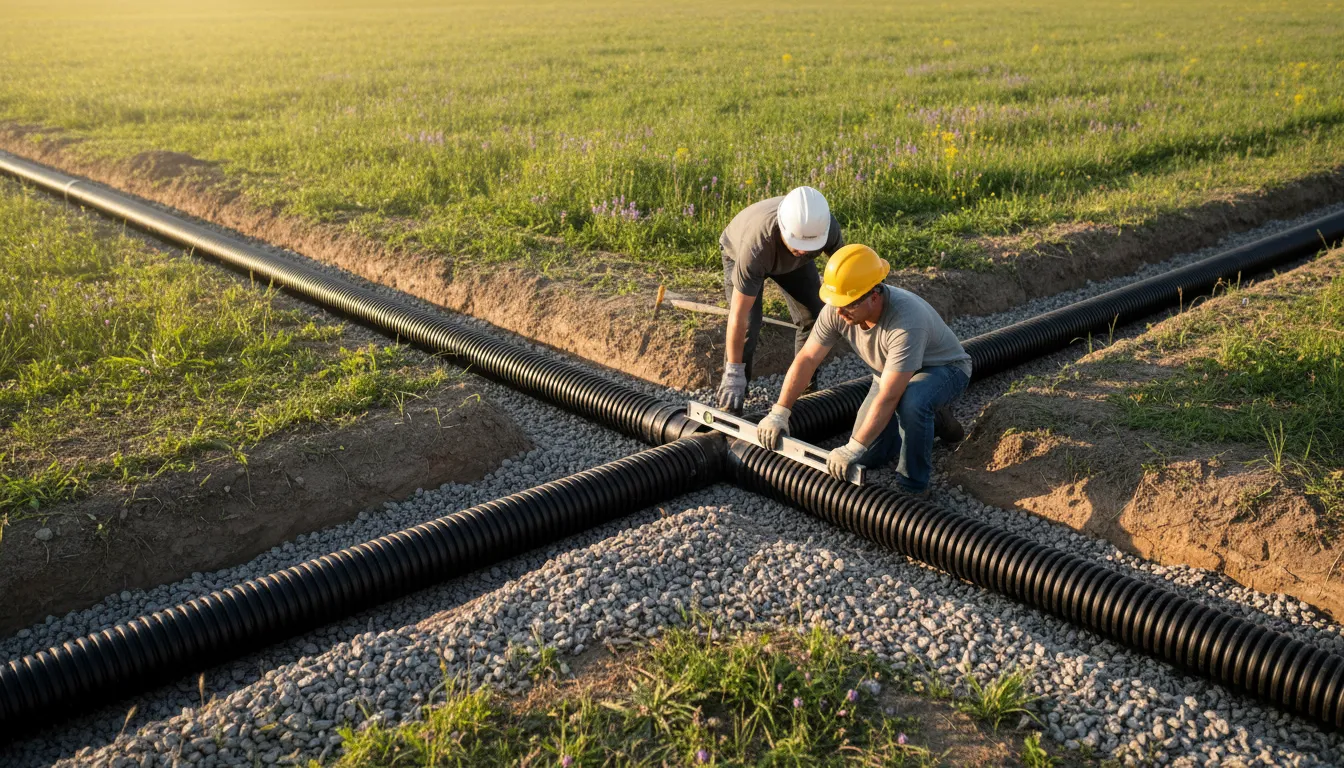
A failing drain field, also known as a leach field or absorption area, is a serious issue for any home with a septic system. This critical component is responsible for safely filtering and dispersing treated wastewater into the soil. When it malfunctions, you may notice soggy ground, sewage odors, or slow-draining fixtures. In Sayreville, addressing these problems requires navigating specific local regulations and environmental considerations. This guide explains the process, costs, and key steps for finding qualified professionals to restore your property's wastewater treatment system.
Understanding Drain Field Failure in Sayreville
A drain field doesn't last forever. Typical lifespans range from 15 to 25 years, but many factors can lead to premature failure. The most common causes include soil compaction from vehicles or construction, invasive tree roots clogging the distribution pipes, and a buildup of non-biodegradable materials and grease from the household. In Sayreville's climate, seasonal high groundwater can also saturate the soil, preventing proper drainage and causing the system to back up.
Recognizing the signs early can prevent more extensive damage and environmental contamination. Key indicators include:
- Wet, spongy areas or standing water over the drain field area, even during dry weather.
- Sewage odors emanating from the yard, especially near the septic tank or distribution box.
- Slow drains and gurgling sounds in household toilets, sinks, and showers.
- Unusually lush, green grass over the leach field, indicating a nutrient surge from escaping effluent.
Sayreville and Middlesex County Regulations You Must Know
All residential septic system work in Sayreville is governed by the Middlesex County Environmental Health Division (MCEHD) and must comply with New Jersey state standards under N.J.A.C. 7:9A1. Performing work without proper permits can result in severe penalties, including fines from $500 to $50,000 and mandatory system removal 2 3.
Permit Requirements: A county permit is mandatory for all new installations, complete system replacements, and major repairs, including any drain field modifications or expansions. Simple component repairs may not always require a new permit, but it's essential to check with the MCEHD first.
Engineering Oversight: Any alteration or new construction of a septic system, including a drain field, requires a licensed professional engineer (PE) to submit the application. The PE must provide four copies of the detailed design plan to the MCEHD for review.
System Sizing: Septic tanks must have a minimum capacity of 1,000 gallons. For single-family homes, the required capacity is calculated at 250 gallons per bedroom. It's important to note that expansion attics are legally counted as bedrooms for this calculation, which can significantly impact the required system size 4.
Key Property and Environmental Factors
The suitability of your Sayreville property for a drain field repair or replacement depends on several environmental factors assessed during the design phase.
Critical Setback Distances: New or repaired systems must maintain strict distances from various features 5 6:
- 50-100 feet from water wells.
- 25 feet from building foundations.
- 10-50 feet from property lines.
- 100 feet from streams, ponds, or other surface water.
Soil Composition: The soil's ability to absorb and treat effluent is paramount. Loamy soils-a balanced blend of sand, silt, and clay-are ideal as they provide both adequate drainage and effective wastewater filtration 7. A certified professional must conduct a percolation (perc) test to measure the soil's absorption rate, which directly determines the size and type of system required 8.
Slope and Drainage: The property must typically have a slope of at least 2-3% to ensure wastewater gravity-feeds from the tank to the drain field effectively. Poor site drainage can lead to premature failure 9.
Wetlands Consideration: If your property contains or is near freshwater wetlands, repairing or modifying a septic system will likely require a specific Freshwater Wetlands (FWW) permit from the New Jersey Department of Environmental Protection (NJDEP) in addition to the county permit 10.
Find the perfect drain field repair companies for your needs
Get personalized recommendations and expert advice
The Step-by-Step Process for Repair or Replacement
Navigating a drain field project involves a multi-stage process with county oversight.
- Initial Assessment and Pumping: A professional begins by pumping the existing septic tank. This allows for a visual inspection of the tank's baffles and the distribution box to help diagnose the full extent of the problem.
- Soil Evaluation and Testing: A certified soil evaluator or engineer performs the mandatory percolation test and deep hole observation to characterize the soil and determine the seasonal high-water table 11 12.
- Engineering Design and Plan Submission: A licensed professional engineer uses the soil data to create detailed construction drawings. These plans show the new drain field layout, dimensions, and all specifications proving code compliance. The engineer submits the application and four plan copies to the MCEHD 13 14.
- County Review and Permit Issuance: The MCEHD reviews the submitted plans. This administrative stage typically takes 4 to 8 weeks. Once approved, the permit is issued.
- Installation: With permit in hand, the licensed installer can begin construction. The installation of a new leach field or repair of an existing one usually takes 1 to 2 weeks, depending on weather and site conditions.
- Final Inspection and Certificate of Compliance: After installation, the MCEHD conducts a final inspection. Upon passing, they issue a Certificate of Compliance, which is a crucial document for your property records and any future real estate transactions 15.
Understanding the Costs Involved
Costs for drain field work in Sayreville vary widely based on the scope. A simple repair, like replacing a clogged distribution line, will cost significantly less than a full system replacement. The major cost drivers are:
- System Size & Type: Larger homes require larger drain fields. Alternative systems (like mound or aerobic systems) for difficult soils are more expensive than conventional gravity-fed fields.
- Site Conditions: Easy access, favorable soil, and clear land reduce costs. Rocky soil, steep slopes, or the need for extensive excavation or tree removal increase them.
- Engineering & Permits: Professional design and county permit fees are fixed costs that must be factored in.
- Labor and Materials: Costs for piping, gravel, sand, and other materials, plus the labor for installation.
Given these variables, it's essential to get detailed, written estimates from multiple licensed and insured contractors who are familiar with Middlesex County's specific requirements.
Maintaining Your New or Repaired Drain Field
Protecting your investment is key. Proper maintenance can extend the life of your new leach field for decades:
- Practice Water Conservation: Spread out laundry loads, fix leaks, and install water-efficient fixtures to avoid hydraulically overloading the system.
- Mind What You Flush: Only human waste and toilet paper should go down the drain. Never flush wipes, feminine products, grease, or chemicals.
- Protect the Area: Never drive or park vehicles over the drain field. Avoid planting trees or shrubs with deep root systems nearby.
- Schedule Regular Pumping: Have the septic tank pumped every 3-5 years by a licensed professional to prevent solids from escaping into and clogging the drain field.
Frequently asked questions
Sources
Footnotes
-
Septic System Program | Middlesex County NJ - https://www.middlesexcountynj.gov/government/departments/department-of-public-safety-and-health/office-of-health-services/environmental-health/septic-system-program ↩
-
NJ Septic Regulations for 2026: Inspections, Permits & Rules - https://www.atsenvironmental.com/blog/nj-septic-regulations-for-2026/ ↩
-
N.J. Admin. Code § 7:9A-8.2 - Septic tanks | State Regulations - https://www.law.cornell.edu/regulations/new-jersey/N-J-A-C-7-9A-8-2 ↩
-
New Jersey Septic Tank Rules And Regulations - https://www.arrowsewernj.com/blog/septic-tanks-in-new-jersey-what-you-need-to-know/ ↩
-
NJ Septic Regulations for 2026: Inspections, Permits & Rules - https://www.atsenvironmental.com/blog/nj-septic-regulations-for-2026/ ↩
-
New Jersey Septic Tank Rules And Regulations - https://www.arrowsewernj.com/blog/septic-tanks-in-new-jersey-what-you-need-to-know/ ↩
-
Comparing Fill Dirt Types for Safe Septic System Installation - https://www.soilconnect.com/blog/comparing-fill-dirt-types-for-safe-septic-system-installation ↩
-
NJ Septic Regulations for 2026: Inspections, Permits & Rules - https://www.atsenvironmental.com/blog/nj-septic-regulations-for-2026/ ↩
-
New Jersey Septic System Replacement & Installation | ATS - https://www.atsenvironmental.com/residential/septic-system-installation-replacement/ ↩
-
Watershed & Land Management | Septic System - NJDEP - https://dep.nj.gov/wlm/lrp/common-projects/septic-system/ ↩
-
Frequent Questions on Septic Systems | US EPA - https://www.epa.gov/septic/frequent-questions-septic-systems ↩
-
Septic Field Restoration NJ - Statewide Environmental Services LLC - https://septicandoiltanks.com/septic-field-restoration/ ↩
-
New Jersey Septic System Rules - 2026 Guide - https://thesewerkings.com/blog/new-jersey-septic-system-rules/ ↩
-
Navigating Septic System Regulations: Expert Guidance for ... - https://www.mapengineering.net/navigating-septic-system-regulations/ ↩
-
BULLETIN 79-7 - NJ.gov - https://www.nj.gov/dca/codes/publications/pdf_bulletins/b_79_7.pdf ↩