Find the Best Drain Field Repair Companies for Your Business
No obligation • Fast responses • Nationwide coverage

Why you can trust Septic Spot
Septic Spot is a leading United States resource for understanding and comparing septic services. Our editors review providers using consistent criteria and verify key business details. Listings and scores are independent, and companies cannot pay to influence our content.
Search providers near you
Top Drain Field Repair Companies in South Brunswick, New Jersey Ranked
A failing drain field, also known as a leach field or absorption area, is a serious issue for any home with a septic system. When this critical component stops absorbing wastewater, it can lead to sewage backups, soggy yards, and environmental contamination. In South Brunswick, navigating the repair or replacement of a septic drain field involves strict state and local health regulations. This guide explains the process, costs, and key considerations for homeowners, helping you connect with qualified local professionals who understand the specific requirements of Middlesex County.
Understanding Your Septic System's Drain Field
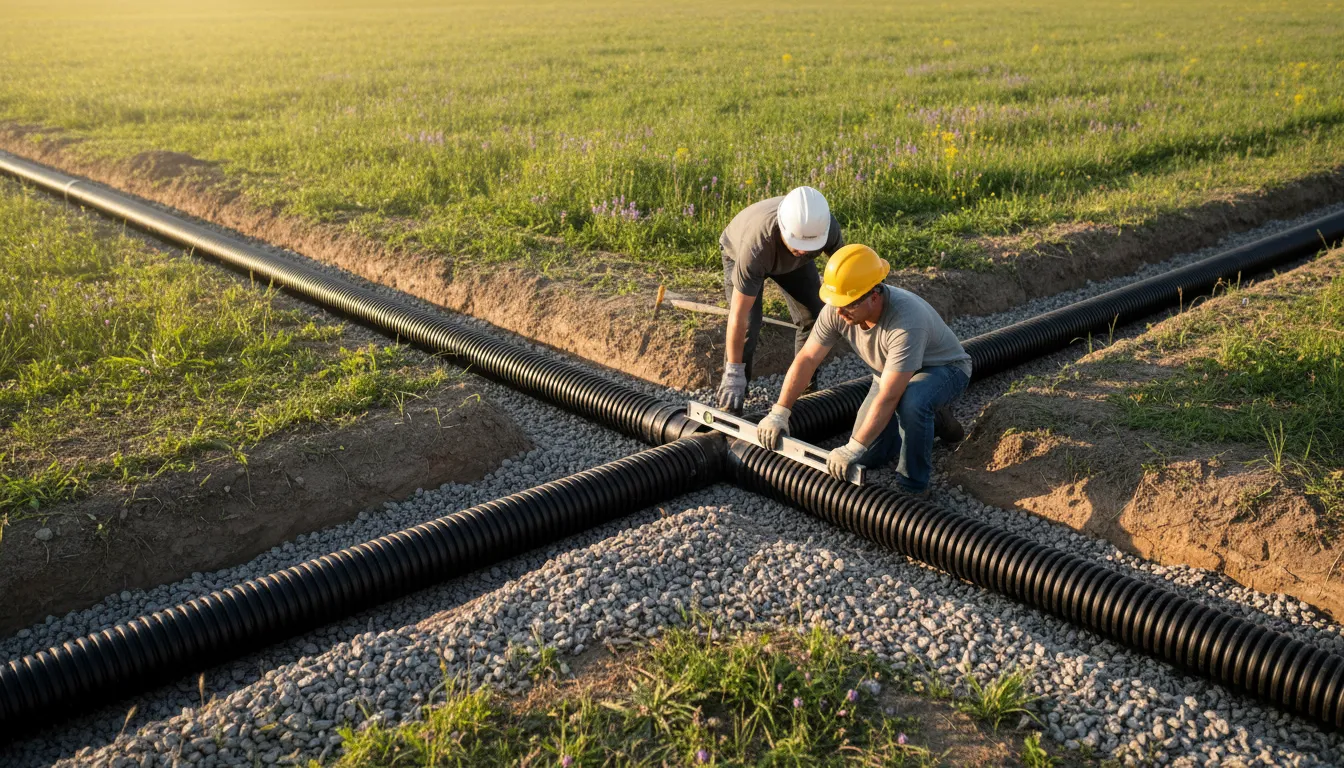
The drain field is the final stage of your onsite wastewater treatment system. After solids settle in the septic tank, liquid effluent flows into a network of perforated pipes buried in trenches filled with gravel. This effluent slowly percolates into the soil, where natural processes provide final treatment. A system fails when the soil can no longer absorb the liquid, often due to clogging from solids, hydraulic overload, or soil compaction. Recognizing early signs-like sewage odors, persistently soggy ground over the field, or slow-draining fixtures-is crucial for addressing problems before they become an emergency.
South Brunswick and New Jersey Regulatory Overview
All septic system work in South Brunswick is governed by the New Jersey Administrative Code (NJAC) 7:9A standards and requires direct approval from the South Brunswick Township Health Department. You cannot simply hire a contractor to dig up and replace a leach field; the process is designed to ensure public health and environmental safety. Any repair, alteration, or new installation requires a permit from the local health authority. Furthermore, system maintenance is mandatory; septic tanks should be pumped by a licensed hauler at least every three years to prevent premature drain field failure.
Key Property Setbacks and Constraints
A major factor in any drain field project is your property's layout, as strict setback distances must be maintained:
- 100 feet from any private or public well.
- 10 feet from property lines.
- 50 to 100 feet from streams, lakes, or other water bodies, depending on the system type 1.
These setbacks, along with the location of your home, driveway, and other structures, can severely limit where a new leach field can be placed. On smaller lots, finding a suitable, compliant area for a replacement absorption system can be a significant challenge.
The Step-by-Step Process for Repair or Replacement
Replacing a septic drain field is a multi-stage project that involves several professionals and can take several weeks to months from assessment to completion.
- Professional System Assessment: The first step is a comprehensive evaluation by a licensed septic professional. They will inspect the septic tank (checking baffles and scum/sludge levels) and perform a thorough assessment of the drain field to confirm that repair or replacement is necessary 2.
- Soil Testing and Percolation Test: If a new field is needed, a soil log and percolation ("perc") test are mandatory. A licensed engineer or soil scientist will excavate test pits to analyze soil composition and depth to groundwater or bedrock. The perc test measures how quickly water drains through the soil. This data, which can take 1-2 weeks to obtain, determines the design and size of the new system.
- Engineering Design: Based on the soil test results, a professional engineer prepares a detailed design plan for the new leaching system. This plan accounts for daily wastewater flow, soil conditions, and all regulatory setbacks. The design phase typically takes 2-4 weeks.
- Permit Application: The completed engineering plans are submitted to the South Brunswick Health Department for review and permit approval. The health department ensures the design complies with all NJAC 7:9A regulations 3.
- Licensed Installation: Once the permit is issued, a licensed septic system installer can begin construction. The old field may be abandoned in place, and the new trenches and piping are installed according to the approved plans. Installation itself usually takes 1-2 weeks.
- Final Inspection: Before the new drain field is covered with soil, a final inspection must be conducted by the health department. Only after passing this inspection can the project be completed and the area landscaped 4.
Find the perfect drain field repair companies for your needs
Get personalized recommendations and expert advice
Cost Breakdown for Drain Field Projects
The cost to address a failing leach field in South Brunswick is substantial and varies widely based on system complexity, soil conditions, and property constraints. It's important to budget for the entire project, not just the physical installation.
- Engineering, Testing, and Permits: The upfront costs for soil testing, perc tests, engineering design, and permit fees typically range from $3,700 to $8,300.
- Drain Field Installation: The cost for the new leach field itself-including materials, excavation, gravel, and piping-generally falls between $5,000 and $10,000.
- Total Project Cost: When you combine all elements-assessment, design, permits, and installation-the total for a drain field replacement project often ranges from $10,000 to over $35,000. The higher end includes scenarios requiring advanced treatment systems, challenging soil, or a complete septic system replacement (tank and field)5 6.
Alternatives and Advanced Systems
If a conventional trench-style leach field is not feasible due to poor soil, high groundwater, or limited space, alternative treatment systems may be required. These include:
- Mound Systems: Effluent is pumped to a raised, constructed sand mound.
- Aerobic Treatment Units (ATUs): These systems use oxygen to break down waste more thoroughly, producing a higher-quality effluent that can be discharged to a smaller absorption area or spray field.
- Peat or Sand Filters: These are pre-packaged media filters that treat effluent before it reaches the soil.
These alternative systems are more expensive to install and maintain but are often the only viable solution for difficult sites. Their design and installation are subject to even more stringent regulatory oversight7 8.
Maintaining Your New Drain Field
Protecting your investment in a new leaching system is critical. Proper maintenance extends its lifespan for decades. Key practices include:
- Adhering to a strict septic tank pumping schedule (every 3 years or as recommended).
- Conserving water to avoid hydraulically overloading the system.
- Never parking vehicles or placing heavy structures over the drain field.
- Avoiding planting trees or deep-rooted shrubs near the absorption area.
- Divecting roof drains and surface runoff away from the field.
A well-maintained system is the most cost-effective strategy for any South Brunswick homeowner9 10.
Frequently asked questions
Sources
Footnotes
-
SEPTIC - NJ.gov - https://dep.nj.gov/wp-content/uploads/dwq/pdf/septicmn.pdf ↩
-
Septic System Repair in New Jersey - ATS Environmental - https://www.atsenvironmental.com/residential/septic-system-repair/ ↩
-
NJDEP| Division of Water Quality | Permitting Information - https://dep.nj.gov/dwq/wastewater/septic-systems/permitting-information/ ↩
-
NJ Septic Regulations for 2026: Inspections, Permits & Rules - https://www.atsenvironmental.com/blog/nj-septic-regulations-for-2026/ ↩
-
The Real Cost of Septic Installation in New Jersey (2025) - https://www.atsenvironmental.com/blog/the-real-cost-of-septic-installation-in-new-jersey-2025/ ↩
-
How Much Does It Cost To Replace A Septic System In Northern NJ? - https://dsepticservice.com/b/septic-system-replacement-cost-new-jersey/ ↩
-
New Jersey Septic System Rules - 2026 Guide - https://thesewerkings.com/blog/new-jersey-septic-system-rules/ ↩
-
The Complete Guide to Septic System Installation and ... - https://excavatingnj.com/blog/the-complete-guide-to-septic-system-installation-and-permitting-in-new-jersey/ ↩
-
Septic Systems in South Brunswick - https://southbrunswicknj.gov/wp-content/uploads/2022/07/septic-does-donts.pdf ↩
-
Septic Systems and Their Maintenance | NC State Extension Publications - https://content.ces.ncsu.edu/septic-systems-and-their-maintenance ↩