Find the Best Drain Field Repair Companies for Your Business
No obligation • Fast responses • Nationwide coverage

Why you can trust Septic Spot
Septic Spot is a leading United States resource for understanding and comparing septic services. Our editors review providers using consistent criteria and verify key business details. Listings and scores are independent, and companies cannot pay to influence our content.
Search providers near you
Top Drain Field Repair Companies in Union, New Jersey Ranked
A failing drain field, also known as a leach field or absorption area, is a serious issue for any home with a septic system. This critical component is responsible for safely filtering and dispersing treated wastewater into the soil. When it malfunctions, it can lead to soggy yards, foul odors, and even environmental contamination. In Union, New Jersey, addressing drain field problems involves navigating strict state and local regulations. This guide explains the process, costs, and key considerations for drain field repair and replacement, helping you understand how to connect with qualified local professionals to restore your system's function.
Understanding Your Drain Field and Common Failure Signs
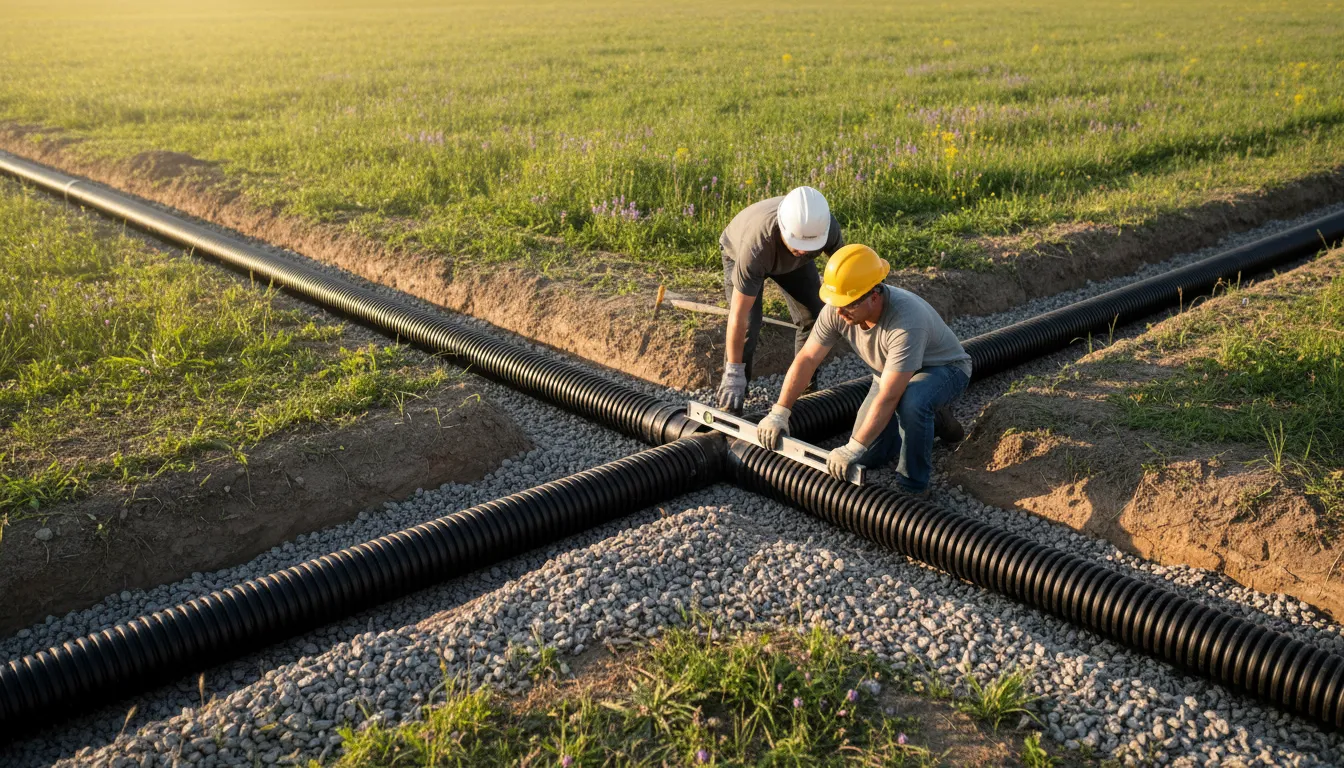
The drain field is the final stage of your onsite wastewater treatment system. After solids settle in the septic tank, the liquid effluent flows into a network of perforated pipes buried in trenches filled with gravel. This effluent slowly percolates into the soil, where natural processes provide final treatment. Over time, this area can become clogged with biomat (a layer of bacteria) or physically damaged.
Key signs your drain field in Union may need attention include:
- Soggy Ground or Surfacing Wastewater: Puddles or consistently wet, spongy soil over the drain field area, especially after recent rain.
- Slow Drains and Sewage Backups: Gurgling pipes, slow-draining sinks and toilets, or backups in the lowest drains of your home.
- Unpleasant Odors: Persistent sewage smells in your yard or near the drain field.
- Unusually Green Grass: Patches of grass over the drain field that are much lusher and greener than the rest of the lawn, indicating a nutrient overload.
- Failed Inspection: A mandated inspection during a real estate transaction often reveals drain field issues.
The Regulatory Landscape in Union, New Jersey
All septic system work, particularly for a leach field, is heavily regulated under the New Jersey Administrative Code (N.J.A.C. 7:9A) and enforced by local health authorities 1. For Union residents, this typically means working with the Union Township Health Department or the Union County Environmental Health Division. Understanding these rules is the first step, as non-compliant work can result in fines and an unusable system.
Key regulations impacting drain field projects include:
- Permitting: Any major repair or full replacement of the absorption area requires a permit from the local health department before work begins.
- Professional Engineering: A drain field replacement is classified as a major repair. State law requires the design to be completed and plans submitted by a licensed professional engineer (PE) 2.
- Setback Distances: New and replacement systems must adhere to strict minimum distances from features like wells (100 feet), property lines (50 feet), building foundations (25 feet), and water bodies.
- Site Disturbance Limits: Repair activities are generally limited to disturbing no more than one-quarter acre of land and cannot occur within 25 feet of a stream or other water body without additional review.
The Step-by-Step Process for Repair or Replacement
Addressing a failing leach field is a multi-stage process that involves diagnosis, design, permitting, and construction.
1. Professional System Assessment and Diagnosis
Before any repair strategy is chosen, a licensed septic professional must perform a thorough evaluation. This goes beyond a simple pump-out and includes:
- Tank Pumping & Inspection: The septic tank is pumped, and its interior is inspected for structural integrity, leaks, and baffle condition 3 4.
- Hydraulic Load Test: Sometimes performed to see if the drain field can handle the home's water output.
- Drain Field Probe: A soil probe is used to check for saturation and evaluate the condition of the soil in the absorption area.
- Video Inspection: A camera may be sent through the distribution lines to check for blockages, root intrusion, or collapsed pipes.
2. Soil Evaluation and System Design
If the assessment concludes the drain field has failed and cannot be repaired, replacement is necessary. This triggers the engineering phase.
- Soil Testing (Perc Test): A certified soil scientist performs a percolation test to determine the soil's absorption rate. This is a critical data point that legally dictates the size and type of the new drain field required 5.
- Design by a Licensed Engineer: The PE uses the soil data, property survey, and home size (number of bedrooms) to design a new system that complies with all NJ regulations. The design will specify whether a conventional trench system, an advanced treatment system, or a raised bed (mound) system is needed for properties with high water tables or poor soil 6.
3. Securing Permits and Approvals
Your septic contractor or engineer will submit the engineered plans, the soil test report, and the permit application to the local health department for review and approval. This step ensures the proposed work protects public health and the environment 7 8.
4. Installation and Final Inspection
Once permits are issued, licensed installation contractors can begin work.
- Installation: The old drain field may be abandoned in place. The new area is excavated, the distribution network and gravel are installed according to the engineered plans, and the area is covered.
- Critical "As-Built" Inspection: Before the new drain field is covered with topsoil, a final inspection is conducted by the local health department official. They verify that the installation matches the approved plans in every detail 9 10.
- Restoration: After passing inspection, the area is backfilled and landscaped.
Find the perfect drain field repair companies for your needs
Get personalized recommendations and expert advice
Cost Breakdown for Drain Field Projects in Union
The cost to address a failing absorption area in Union can vary widely based on the extent of the failure, soil conditions, and the size of the system needed. Below is a general cost framework based on local data 11 12.
- Professional System Inspection & Diagnosis: $400 - $800
- Soil Testing & Engineering Design: $3,000 - $6,000+ (This combines the soil scientist's perc test [$1,000-$2,000] and the professional engineer's design fees [$2,000-$4,000+]) 13.
- Local Permit Fees: $500 - $1,500
- Drain Field Replacement (Field Only): $5,000 - $10,000+
- Full System Replacement (New Tank + New Drain Field): $15,000 - $35,000+
Important Note: These are estimated ranges. The most significant cost factors are the need for advanced treatment technology (if soil fails perc tests) and whether the septic tank also needs to be replaced. Always get detailed, written estimates from licensed contractors.
Drain Field Repair vs. Complete Replacement
Not all drain field issues require a full, costly replacement. A licensed professional can determine which solution is appropriate.
- Minor Repairs: Issues like a clogged distribution box, a broken pipe segment, or minor soil compaction might be repairable without a full redesign and permit process. These repairs aim to restore function to the existing field.
- Major Repair/Replacement: When the soil is permanently saturated (hydraulically failed), the entire field is clogged with biomat, or the system is undersized, a complete replacement is the only permanent solution. In New Jersey, this is legally considered a major repair.
Maintaining Your New or Repaired Drain Field
Protecting your investment is crucial. Proper maintenance can extend the life of your new leach field for decades.
- Regular Pumping: Have your septic tank pumped every 3-5 years by a licensed service to prevent solids from washing out into the new field 14.
- Mind What You Flush: Only human waste and toilet paper should go down the drain. Avoid chemicals, grease, wipes, and excessive use of garbage disposals.
- Control Water Usage: Spread out laundry loads, fix leaky fixtures, and consider water-efficient appliances to avoid overloading the system.
- Protect the Area: Never drive or park vehicles over the drain field. Avoid planting trees or deep-rooted shrubs nearby, and keep roof drains and sump pumps directed away from the absorption area 15.
Frequently asked questions
Sources
Footnotes
-
Division of Water Quality | Professional Information - NJDEP - https://dep.nj.gov/dwq/wastewater/septic-systems/professional-information/ ↩
-
Navigating Septic System Regulations: Expert Guidance for ... - https://www.mapengineering.net/navigating-septic-system-regulations/ ↩
-
SEPTIC - NJ.gov - https://dep.nj.gov/wp-content/uploads/dwq/pdf/septicmn.pdf ↩
-
Inspections - New Jersey Septic Management Group - https://nj-septic.com/inspections/ ↩
-
Septic System Installation 101: A Beginner's Guide - https://www.townesseptic.com/blog/septic-system-installation-beginners-guide ↩
-
Watershed & Land Management | Septic System - NJDEP - https://dep.nj.gov/wlm/lrp/common-projects/septic-system/ ↩
-
NJ Septic Regulations for 2026: Inspections, Permits & Rules - https://www.atsenvironmental.com/blog/nj-septic-regulations-for-2026/ ↩
-
NJDEP| Division of Water Quality | Permitting Information - https://dep.nj.gov/dwq/wastewater/septic-systems/permitting-information/ ↩
-
Importance of Permits and Inspections in Septic Installation NJ - https://earthmoversnj.com/the-importance-of-permits-and-inspections-in-septic-installation-in-new-jersey/ ↩
-
SEPTIC REPAIR POLICY - Hunterdon County, NJ - https://www.co.hunterdon.nj.us/DocumentCenter/View/884 ↩
-
The Real Cost of Septic Installation in New Jersey (2025) - https://www.atsenvironmental.com/blog/the-real-cost-of-septic-installation-in-new-jersey-2025/ ↩
-
Septic Repair vs Replacement in NJ: Costs & Signs - https://www.atsenvironmental.com/blog/septic-repair-vs-replacement/ ↩
-
New Jersey Septic System Rules - 2026 Guide - https://thesewerkings.com/blog/new-jersey-septic-system-rules/ ↩
-
Licensed Septic Service NJ - Requirements - The Sewer Kings - https://thesewerkings.com/blog/licensed-septic-service-professionals/ ↩
-
New Jersey Septic Tank Rules And Regulations - https://www.arrowsewernj.com/blog/septic-tanks-in-new-jersey-what-you-need-to-know/ ↩