Find the Best Drain Field Repair Companies for Your Business
No obligation • Fast responses • Nationwide coverage

Why you can trust Septic Spot
Septic Spot is a leading United States resource for understanding and comparing septic services. Our editors review providers using consistent criteria and verify key business details. Listings and scores are independent, and companies cannot pay to influence our content.
Search providers near you
Best Drain Field Repair Companies in Rhode Island Ranked
A failing drain field is a serious issue for any Rhode Island homeowner, leading to sewage backups, soggy yards, and environmental contamination. Drain field repair or replacement is a major project governed by strict state regulations to protect Rhode Island's sensitive coastal waters and public health. This guide explains the critical regulations, processes, and costs involved, helping you understand your responsibilities and connect with the licensed professionals required to complete the work legally and effectively.
Understanding Your Drain Field and System Failure
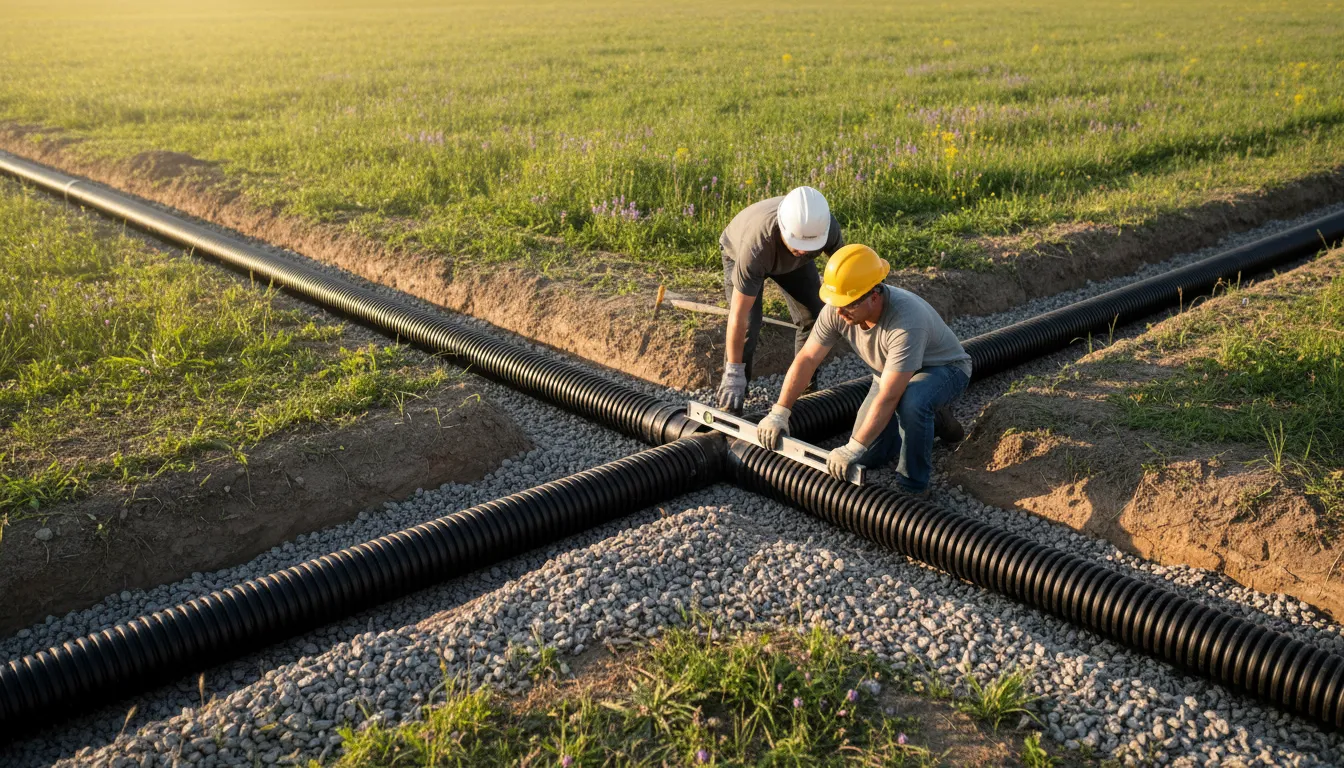
The drain field, also known as a leach field or absorption area, is the final and most critical component of a septic system. After solids settle in the tank, liquid effluent flows into a network of perforated pipes buried in trenches filled with gravel or other aggregate. This effluent slowly percolates into the soil, where natural processes provide final treatment.
A system fails when this process is interrupted. Common signs include:
- Sewage odors in the yard or home.
- Soggy, spongy, or standing water over the drain field area, especially when it hasn't rained.
- Slow-draining or gurgling plumbing fixtures.
- Bright green, lush grass growing over the drain field compared to the rest of the yard.
- Sewage backing up into the home.
In Rhode Island, failure is not just an inconvenience-it's a legal and environmental issue that must be addressed promptly under state law.
Rhode Island's Strict Regulatory Framework
All septic system work in Rhode Island is overseen by the Rhode Island Department of Environmental Management (RIDEM). The state has some of the most stringent rules in New England, particularly due to its dense population and extensive coastline.
Key Regulations Homeowners Must Know:
- The Cesspool Phase-Out: Rhode Island law prohibits the use of cesspools. Any cesspool must be replaced with a compliant septic system within one year of a property transfer (sale) or upon discovery of its existence if it is failing or located within 200 feet of tidal waters, a public well, or other sensitive areas 1 2.
- Mandatory Licensed Professionals: Homeowners cannot design or install their own system repairs or replacements. All work must be designed by a RIDEM-licensed designer (Class I, II, or III) and installed by a RIDEM-licensed installer.
- Permits Are Required: Any repair or replacement beyond a minor component swap (like a tank baffle) requires a permit from the RIDEM Office of Water Resources. Building a new home with a septic system also requires this permit before any construction begins 3.
- Coastal Assents: If your property is near the coast, you will likely also need an Assent from the Coastal Resources Management Council (CRMC) in addition to the RIDEM permit.
The Step-by-Step Process for Repair or Replacement
Facing a failed drain field can feel overwhelming, but following the proper sequence simplifies the process.
1. Inspection and Diagnosis: The first step is a thorough inspection by a licensed professional to confirm the failure and its cause. Inspections are also routinely required every 2-5 years for maintenance and are typically mandated during a property sale 4 5 6. They will assess tank levels, structural integrity, and most importantly, perform a percolation ("perc") test and soil evaluation on your property.
2. Hire a Licensed Designer: Based on the inspection and soil findings, you must hire a RIDEM-licensed designer. They will create a site-specific design for a repair or a completely new system that meets all current codes. The design must account for soil type, groundwater levels, lot size, and proximity to water bodies 7.
3. Obtain Permits: Your designer will typically submit the application and engineered plans to RIDEM (and CRMC if applicable) on your behalf. Permit fees generally range from $100 to $300. Do not start any excavation work until the permit is in hand.
4. Installation by a Licensed Contractor: Once permitted, you must hire a RIDEM-licensed installer to execute the construction exactly as approved in the plans. This stage involves heavy machinery for excavation, removal of the old leaching area, and installation of new tanks, distribution boxes, and the drain field itself.
5. Final Inspection and Approval: After installation, a final inspection by RIDEM or a local authorized agent is required to approve the work and close the permit. Only then is your system considered legal and operational.
Find the perfect drain field repair companies for your needs
Get personalized recommendations and expert advice
Cost Expectations for Drain Field Work in Rhode Island
Drain field repair or replacement is a significant investment. Costs are highly variable based on soil conditions, system size, technology, and site accessibility, but statewide averages provide a framework.
- Standard System Replacement: Replacing a conventional septic tank and drain field system typically ranges from $15,000 to over $30,000 8.
- Advanced Treatment Systems (ATS): In areas with poor soil or tight spaces, an ATS (also called a nitrogen-reducing system) may be required. These are more complex and expensive, often costing between $20,000 and $35,000 or more9 10.
- Factors Influencing Cost:
- Soil and Site Conditions: Poor percolation or high groundwater may require engineered fill or an ATS.
- System Size: Based on the home's bedroom count and water usage.
- Coastal Requirements: CRMC assents and stricter environmental standards can add cost and time.
- Removal and Disposal: Demolishing and hauling away an old concrete tank and contaminated soil adds expense.
- Landscaping Restoration: Regrading and reseeding the disturbed area.
Financial Assistance: The Community Septic System Loan Program
Recognizing the high cost, Rhode Island offers a valuable resource for qualified homeowners: the Community Septic System Loan Program (CSSLP), administered by RIHousing 11. This program provides low-interest loans specifically for the repair or replacement of failing septic systems and cesspools. It is designed to help homeowners comply with state law while managing the financial burden.
Homeowner Responsibilities and Proactive Maintenance
The best "repair" is prevention. As a system owner, you are legally responsible for its proper operation and maintenance 12 13.
- Regular Pumping: Pump your septic tank every 2-5 years, depending on usage and household size.
- Inspect Regularly: Schedule professional inspections on the same 2-5 year schedule to catch issues early.
- Protect the Drain Field:
- Never drive or park vehicles, heavy equipment, or place sheds/pools over the leaching area.
- Do not plant trees or deep-rooted shrubs near the drain field; roots can clog and destroy pipes.
- Divect roof drains, sump pumps, and other surface water away from the area.
- Mind What Goes Down the Drain: Avoid flushing chemicals, wipes, grease, and excessive food waste, which can clog the drain field.
Frequently asked questions
Sources
Footnotes
-
Procedure to Repair or Replace - Town of South Kingstown, RI. https://www.southkingstownri.gov/388/Procedure-to-Repair-or-Replace ↩
-
Do You Need To Replace A Cesspool or Repair A Septic System?? - Town of Charlestown, RI. https://charlestownri.gov/index.asp?SEC=57BE787A-1F23-406A-906B-4FBC5BCACF34&DE=2DA1EE12-56D5-41C2-A0FE-867381A2C166 ↩
-
Obtaining a Permit for a New Home's Septic System - RIDEM Fact Sheet. https://dem.ri.gov/sites/g/files/xkgbur861/files/programs/benviron/water/permits/isds/pdfs/newhomfs.pdf ↩
-
Wastewater Management | Portsmouth, RI - Official Website. https://www.portsmouthri.gov/419/Wastewater-Management ↩
-
Rhode Island Septic Inspection Requirements: What to Know - Rockhouse Construction. https://www.rockhouseconstruction.com/rhode-island-septic-inspection-requirements-what-to-know ↩
-
Septic System Inspections in Rhode Island | SewerMan. https://sewerman.com/ri/services/oil-to-gas-conversions/ ↩
-
Septic & Onsite Wastewater Treatment Systems - Rhode Island Department of Environmental Management. https://dem.ri.gov/environmental-protection-bureau/water-resources/permitting/septic-onsite-wastewater-treatment-owts ↩
-
What is the cost to install a septic system and ... - Facebook Group Discussion. https://www.facebook.com/groups/rirealestateinvestors/posts/6468330153290831/ ↩
-
Cost of Replacing a Septic System in Rhode Island - Rockhouse Construction. https://www.rockhouseconstruction.com/cost-of-replacing-a-septic-system-in-rhode-island ↩
-
Rhode Island Septic System Regulations for Homeowners - Rockhouse Construction. https://www.rockhouseconstruction.com/rhode-island-septic-system-regulations-for-homeowners ↩
-
Septic/Sewer | RIHousing. https://www.rihousing.com/septic-sewer/ ↩
-
RI Septic System Maintenance Recommendations - Foster Survey & Engineering. https://fostersurvey.com/ri-septic-system-maintenance-recommendations/ ↩
-
SepticSmart Homeowners | Rhode Island Department of Environmental Management. https://dem.ri.gov/environmental-protection-bureau/water-resources/permitting/septic-smart-home ↩