Find the Best Drain Field Repair Companies for Your Business
No obligation • Fast responses • Nationwide coverage

Why you can trust Septic Spot
Septic Spot is a leading United States resource for understanding and comparing septic services. Our editors review providers using consistent criteria and verify key business details. Listings and scores are independent, and companies cannot pay to influence our content.
Search providers near you
Best Drain Field Repair Companies in South Dakota Ranked
A failing drain field, also known as a leach field or soil absorption field, is a serious issue for any South Dakota homeowner with a septic system. This critical component is responsible for safely filtering and dispersing treated wastewater into the soil. When it malfunctions, it can lead to soggy yards, foul odors, and environmental contamination. Finding a qualified, state-licensed professional for drain field repair or replacement is essential to protect your property, health, and comply with South Dakota's strict regulations. This guide provides the practical information you need to understand the process, costs, and legal requirements for addressing drain field problems in the Mount Rushmore State.
Understanding Your Drain Field in South Dakota
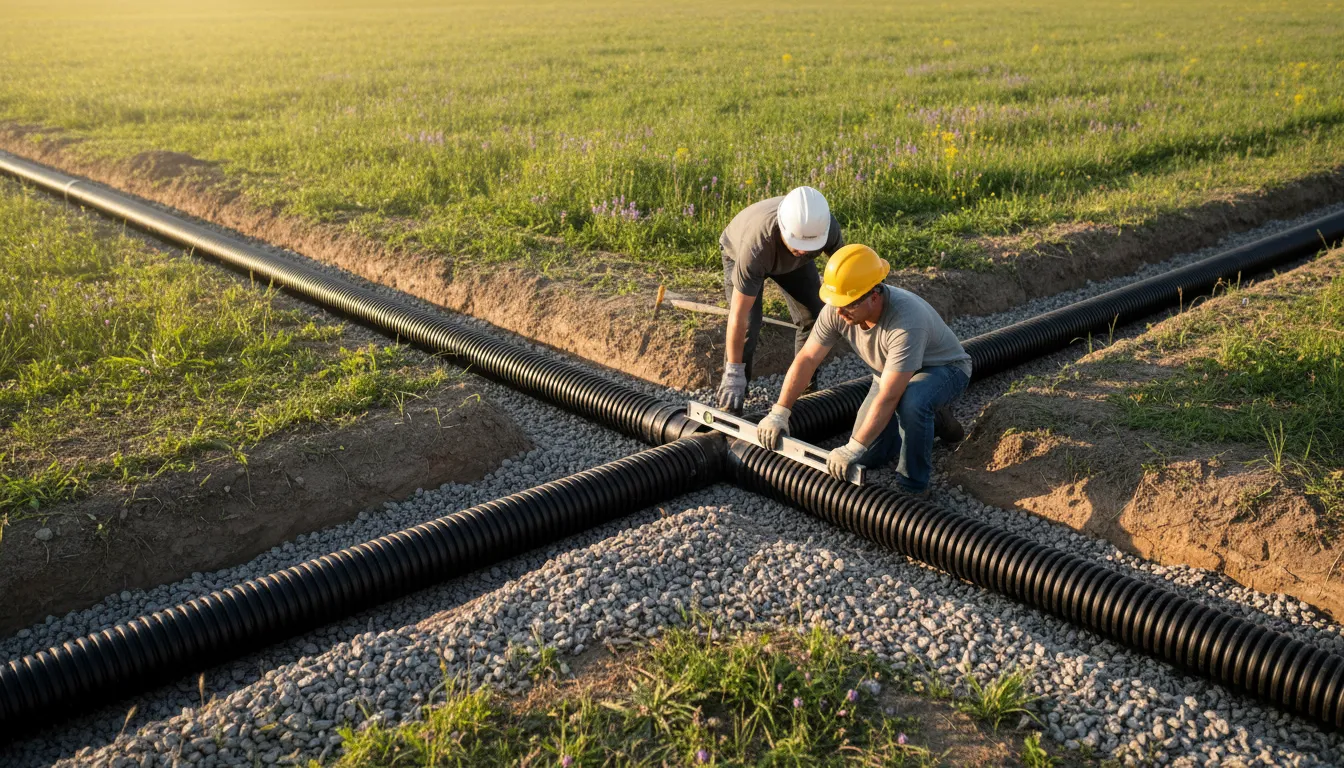
The drain field is the final stage of your onsite wastewater treatment system. After solids settle in the septic tank, the liquid effluent flows into a network of perforated pipes buried in trenches filled with gravel. This effluent slowly seeps into the soil, where natural processes provide final treatment. In South Dakota, the functionality of your leach field is heavily dependent on local soil conditions, which can vary from the clay-rich soils in the east to the more porous soils in the Black Hills region.
Common signs of drain field failure include:
- Sewage odors in the yard or home.
- Spongy, soggy, or standing water over the drain field area, even in dry weather.
- Slow-draining toilets and sinks.
- Unusually lush, green grass over the drain field.
If you notice any of these signs, it's time to consult a professional. Ignoring the problem can lead to groundwater pollution, which is a significant concern for rural water supplies 1.
South Dakota Regulations and Permit Requirements
All work on septic systems, including major drain field repairs and full replacements, is governed by state rules and often additional county-level regulations. The primary framework is found in the South Dakota Administrative Rules (74:53:01) and enforced by the Department of Agriculture and Natural Resources (DANR).
Key Regulatory Steps:
- Permit Application: A construction permit is required for installing a new system or performing a major repair. You must apply through your local county planning or health department (e.g., Pennington County, Lawrence County, Minnehaha County). The permit process ensures your system design meets all state and local standards.
- System Design: Any new or replacement drain field must be designed by a licensed professional engineer in South Dakota. The design will account for soil percolation tests, lot size, and system capacity.
- Certified Installation: The installation must be performed by a state-certified septic system installer. While South Dakota allows homeowners to install systems on their owner-occupied, single-family residences after obtaining a homeowner permit, this is a complex task for a drain field and professional installation is strongly recommended and often required by counties 2.
- Pre-Cover Inspections: Before the newly installed or repaired drain field is covered with soil, a final inspection is mandatory. This inspection is typically conducted by your local authority and sometimes also requires an inspection and report from the designing engineer 3 4. You must provide 72 hours to 5 business days' notice to schedule a state inspection 4.
Critical Site and Setback Requirements
South Dakota law establishes minimum standards to protect water sources and ensure system functionality. Your engineer's design must adhere to these:
- Lot Size: A minimum of one acre is often required for a standard septic system, though local rules may vary.
- Soil Depth: There must be at least 4 feet of suitable soil between the bottom of the drain field trenches and any restrictive layer (like bedrock or clay pan) or high water table 5.
- Setbacks: Systems must be placed a safe distance from other features:
- Septic Tank: At least 50 feet from any well, stream, or other water body 6.
Find the perfect drain field repair companies for your needs
Get personalized recommendations and expert advice
The Repair and Replacement Process
A professional will first diagnose the issue to determine if a repair or full replacement is needed. Sometimes, problems can be resolved with less invasive measures like jetting clogged pipes or installing a new distribution box. However, a saturated or failed field often requires a complete replacement.
Typical steps for a drain field replacement include:
- Site Evaluation & Design: A soil scientist or engineer performs percolation tests and designs a new system compliant with current codes.
- Permitting: Your contractor or you submit the engineered design to the county for a construction permit.
- Excavation: The old drain field area is excavated. In some cases, the old field may be abandoned in place.
- Installation: New trenches are dug, gravel is laid, perforated pipes are placed, and the system is connected to the septic tank.
- Inspection: The open trenches and components are inspected by the county and/or engineer.
- Backfilling: Once approved, the system is covered with soil and the landscape is restored.
Costs of Drain Field Work in South Dakota
Costs can vary widely based on system size, soil conditions, accessibility, and local labor rates. As a significant excavation and construction project, drain field work is a major investment.
- Permit Fees: These vary by county but are typically part of the overall zoning or construction permit application fee 9.
- Design & Engineering: Hiring a licensed engineer to design the system is a necessary upfront cost.
- Replacement Cost: The cost for a new leach field (excluding the septic tank) can range from several thousand to over fifteen thousand dollars 10 11. The final price depends on the linear feet of trench required, the type of system (e.g., conventional, mound, drip irrigation), and site challenges.
Maintenance and Prevention
Proper care can extend the life of your new or repaired drain field for decades 12.
- Regular Pumping: Have your septic tank pumped every 3 to 5 years to prevent solids from clogging the drain field.
- Water Conservation: Spread out water use and fix leaks to avoid hydraulically overloading the field.
- Protect the Area: Never drive or park vehicles on the drain field. Divect roof drains, sump pumps, and other surface runoff away from the area. Avoid planting trees or deep-rooted shrubs nearby.
- Mind What You Flush: Only human waste and toilet paper should go down the drain. Avoid chemicals, grease, and non-biodegradable items.
Property Transfer Note: Some South Dakota counties, such as Meade County, require a septic system inspection and pumping as a condition of property sale 13. It's wise to check local requirements.
Frequently asked questions
Sources
Footnotes
-
Frequent Questions on Septic Systems | US EPA - https://www.epa.gov/septic/frequent-questions-septic-systems ↩
-
South Dakota Plumbing Commission - Homeowner Plumbing - https://dlr.sd.gov/plumbing/homeowner_plumbing.aspx ↩
-
Septic System Information | Lawrence County, SD - https://www.lawrence.sd.us/214/Septic-System-Information ↩
-
South Dakota Plumbing Commission - Inspections - https://dlr.sd.gov/plumbing/inspections.aspx ↩ ↩2
-
Planning ... - Minnehaha County, South Dakota Official Website - https://www.minnehahacounty.gov/dept/pl/septicSystem/05faqs.php ↩
-
South Dakota Feedlot Permit Program - Septic Tank Systems - https://danr.sd.gov/Agriculture/Livestock/FeedlotPermit/Septic/default.aspx ↩
-
INSTALLATION AND PERMIT REQUIREMENTS - https://www.sdcounties.org/wp-content/uploads/Custer/installation%20&%20permit%20requirement%20for%20individual%20on-site%20wastewater%20disposal%20systems.pdf ↩
-
Section 331 - onsite wastewater treatment (septic) systems - http://docs.pennco.org/docs/PZ/OrdAmend/Section%20331.pdf ↩
-
South Dakota Septic License & Certification - ServiceTitan - https://www.servicetitan.com/licensing/septic/south-dakota ↩
-
How Much Does Septic System Replacement Cost? - https://proguardplans.com/how-much-does-septic-system-replacement-cost/ ↩
-
How Much Does a Leach or Drain Field Replacement Cost? (2026) - https://homeguide.com/costs/drain-leach-field-replacement-cost ↩
-
Septic System Maintenance - South Dakota State University - https://www.sdstate.edu/sites/default/files/2017-01/ExEx1018.pdf ↩
-
Septic Permits | Hills Septic and Portable Toilets | Rapid City, SD - https://hillsseptic.com/pennington-meade-county-septic-permits/ ↩