Find the Best Drain Field Repair Companies for Your Business
No obligation • Fast responses • Nationwide coverage

Why you can trust Septic Spot
Septic Spot is a leading United States resource for understanding and comparing septic services. Our editors review providers using consistent criteria and verify key business details. Listings and scores are independent, and companies cannot pay to influence our content.
Search providers near you
Best Drain Field Repair Companies in Utah Ranked
A failing drain field, also known as a leach field or absorption area, is a serious issue for any Utah homeowner with a septic system. This critical component is responsible for safely filtering and dispersing treated wastewater into the soil. When repair or replacement becomes necessary, navigating Utah's specific regulations and finding qualified professionals is essential. This guide provides clear, practical information on the process, costs, and regulations for drain field work in Utah, helping you make informed decisions to restore your system's function and protect your property and local environment.
Understanding Your Drain Field and Signs of Failure
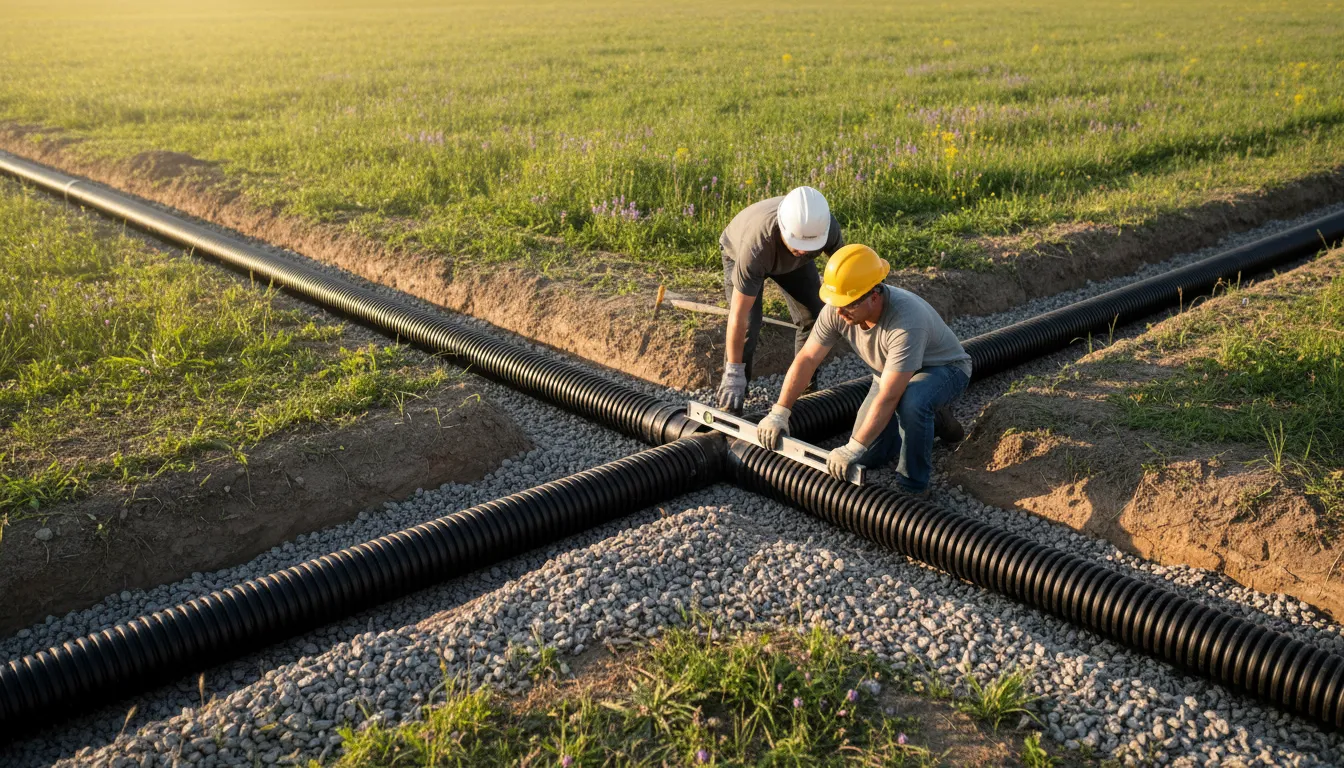
The drain field is the final stage of your onsite wastewater system. After solids settle in the septic tank, liquid effluent flows into a network of perforated pipes buried in trenches filled with gravel. This effluent slowly seeps into the surrounding soil, where natural processes provide final treatment. A healthy drain field is crucial for preventing groundwater contamination and system backups.
Common signs that your drain field in Utah may need attention include:
- Sewage odors around the yard or drain field area.
- Slow draining sinks, toilets, and showers.
- Soggy, spongy, or standing water over the drain field, especially when it hasn't rained.
- Unusually lush, green grass growing over the drain field compared to the rest of the lawn.
- Backups of sewage into household drains.
If you notice any of these signs, it's important to act quickly. Ignoring a failing drain field can lead to more extensive environmental damage, costly property repairs, and potential health department enforcement actions.
Utah's Regulatory Framework: Permits and Professionals
All work involving septic system repair or replacement in Utah is governed by state rules (primarily Rule R317-4) and enforced by local health departments 1. Understanding this process is the first step.
The Permit is Mandatory Before any shovel hits the ground, you must obtain a repair or replacement permit from your local health department. Starting work without a permit can result in fines and orders to remove unauthorized work. The permit application typically requires details about the property, the proposed repair, and must be submitted by a state-certified professional.
Working with Certified Contractors Utah law requires that the design, installation, alteration, and repair of onsite wastewater systems be performed by individuals certified by the Utah Department of Environmental Quality (DEQ). This ensures the work meets state standards for public health and environmental protection. Always verify a contractor's DEQ certification before hiring them. A final inspection by the health department is required before the repaired or new drain field can be covered.
The Repair and Replacement Process in Utah
When a drain field issue is suspected, a certified professional will first conduct a thorough evaluation to diagnose the problem and determine the best solution.
Assessment and Diagnosis The professional will inspect the tank, check for sludge/scum levels, and assess the drain field. They may use probes to check for soil saturation. Sometimes, the issue can be a clogged pipe or a malfunctioning distribution box, which may be repairable without full replacement.
Soil Evaluation and Siting If a new drain field area is needed, state rules often require new soil and percolation (perc) tests 2. These tests determine the soil's absorption rate and are used to properly size the new system. Regulations also mandate a minimum vertical separation-typically 12 to 24 inches-between the bottom of the drain field trenches and the seasonal high water table or bedrock 3. This prevents groundwater contamination.
Common Repair & Replacement Options
- Minor Repairs: Fixing broken pipes, leveling a distribution box, or cleaning a clogged line.
- Drain Field Expansion: Adding new trenches to supplement a struggling but not completely failed field.
- Full Replacement: Installing a completely new drain field in a new location on your property. This is often necessary when the original field has permanently failed due to soil clogging (biomat formation), compaction, or hydraulic overloading.
- Advanced System Installation: In areas with poor soil or small lots, an alternative treatment system (like an aerobic treatment unit or sand filter) may be required, which also affects the drain field design.
Find the perfect drain field repair companies for your needs
Get personalized recommendations and expert advice
Costs Associated with Drain Field Work in Utah
Costs for drain field repair and replacement in Utah vary widely based on system size, soil conditions, property accessibility, and the type of repair needed. It's important to get multiple estimates from certified professionals.
- Permit Fees: The permit for repair or replacement typically costs between $125 and $475, depending on your local health district 4.
- Routine Inspection and Pumping: To avoid major problems, inspecting and pumping your septic tank every 3 to 5 years is recommended and costs approximately $250 to $500 5 6.
- Drain Field Repairs: Minor repairs can cost a few thousand dollars. More significant repairs or a partial field expansion can range from $5,000 to $15,000 or more.
- Complete Drain Field Replacement: This is a major excavation project. In Utah, full replacement often costs $10,000 to $25,000+, with complex sites or advanced treatment systems driving prices higher 7.
Proactive Maintenance to Avoid Failure
The best "repair" is prevention. Proper maintenance can extend the life of your drain field for decades.
- Pump Regularly: Have your septic tank pumped by a professional every 3 to 5 years to prevent solids from washing out into the drain field and clogging the soil.
- Conserve Water: Spread out laundry loads, fix leaks, and use water-efficient fixtures to avoid flooding the drain field.
- Mind What You Flush: Only human waste and toilet paper should go down the drain. Never flush grease, chemicals, pharmaceuticals, wipes (even "flushable" ones), or feminine hygiene products 8.
- Protect the Area: Never drive, park, or build heavy structures over your drain field. Plant only grass over it; tree and shrub roots can invade and damage pipes 9.
- Divert Water: Ensure roof gutters, sump pumps, and yard drainage are directed away from the drain field area to keep it from becoming saturated.
When Repair Isn't an Option: The Sewer Connection Mandate
Utah homeowners should be aware of a specific regulation: if your property is within 300 feet of an available public sewer line, local authorities may legally require you to connect to the municipal sewer system instead of repairing or replacing your septic system 10. If you suspect a sewer line is nearby, contact your local public works department to clarify options before investing in major septic work.
Frequently asked questions
Sources
Footnotes
-
Utah Office of Administrative Rules - https://rules.utah.gov/publicat/code/r317/r317-001.htm ↩
-
Septic System Owner's Guide | NC State Extension Publications - https://content.ces.ncsu.edu/septic-system-owners-guide ↩
-
Wastewater Certification Permit Guide - https://deq.utah.gov/permits/permit-guide/wastewater-certification-permit-guide ↩
-
Waste Water System Permit Application | Central Utah Public Health - https://centralutahhealth.gov/wp-content/uploads/2022/01/WW-Permit-Application-Jan-2022.pdf ↩
-
Homeowners Guide to Septic Systems Brochure - Alpine, UT - https://www.alpineut.gov/DocumentCenter/View/136/Private-Septic-System-Care-PDF ↩
-
"REFORMATTED" TriCounty Health Department 12-1- ... - Utah.gov - https://www.utah.gov/pmn/files/1367745.pdf ↩
-
Septic System Cost Estimate: A Complete Breakdown - https://landperc.com/septic-system-cost-estimate/ ↩
-
Homeowner's - https://geodata.geology.utah.gov/pages/download_progress.php?ref=83289&size=&ext=pdf&k= ↩
-
Septic Tank/Drainfield Fact Sheet - Morgan UT - https://www.morganutah.gov/media/6181 ↩
-
Onsite Wastewater Systems - Davis County - https://www.daviscountyutah.gov/health/environmental-health-division/permits/onsite-wastewater-systems-new ↩