Find the Best Drain Field Repair Companies for Your Business
No obligation • Fast responses • Nationwide coverage

Why you can trust Septic Spot
Septic Spot is a leading United States resource for understanding and comparing septic services. Our editors review providers using consistent criteria and verify key business details. Listings and scores are independent, and companies cannot pay to influence our content.
Search providers near you
Best Drain Field Repair Companies in Virginia Ranked
A failing drain field is a serious issue for any Virginia homeowner with a septic system. This critical component, also known as a leach field or absorption area, is responsible for safely filtering and dispersing treated wastewater into the soil. When it malfunctions, it can lead to soggy yards, foul odors, sewage backups, and environmental contamination. Navigating drain field repairs or a full replacement involves strict state regulations, permits, and working with licensed professionals. This guide explains the process, costs, and new legal requirements in Virginia to help you make informed decisions and protect your property.
Understanding Your Drain Field and Signs of Failure
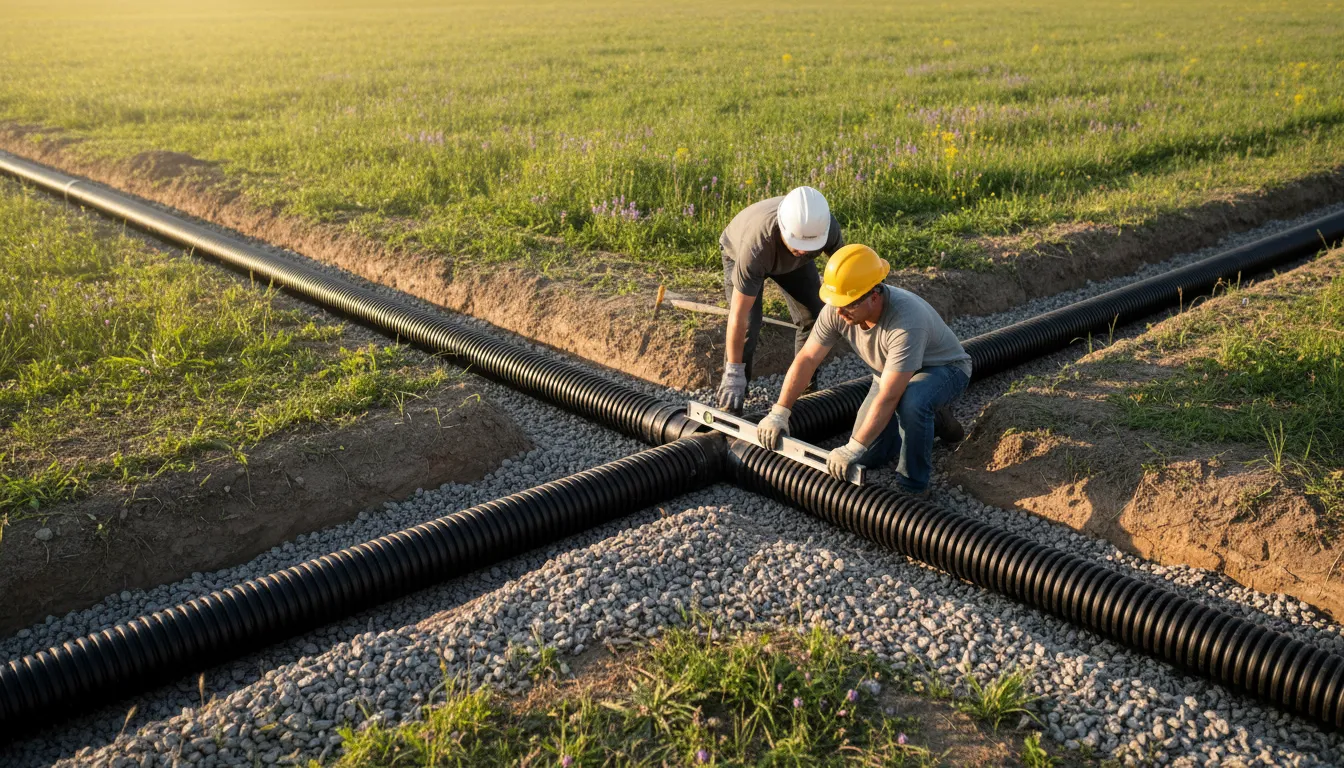
The drain field is the final stage of a conventional septic system. After solids settle in the tank, liquid effluent flows into a network of perforated pipes buried in trenches filled with gravel. This effluent slowly percolates into the soil, where natural processes provide final treatment. A system fails when the soil can no longer absorb the water.
Common warning signs include:
- Soggy ground or standing water over the drain field area, especially when it hasn't rained.
- Sewage odors in the yard or home.
- Slowly draining or backing up toilets, sinks, and showers.
- Unusually green, lush grass over the drain field compared to the rest of the lawn.
- Algae blooms in nearby ponds or ditches.
If you notice any of these signs, it's crucial to act quickly. Ignoring a failing drain field will not solve the problem and can lead to more extensive environmental damage and costly repairs.
Virginia Regulations and Permit Requirements
All work on a septic system in Virginia is regulated by the Virginia Department of Health (VDH). You cannot begin any repair or replacement without the proper permits. Property owners are legally responsible for the maintenance and proper operation of their onsite sewage system.
Key Regulatory Steps:
- Contact Your Local Health Department: Your first call should be to the environmental health staff at your local VDH office. They manage the permitting process and can provide site-specific guidance.
- Obtain a Construction Permit: A permit from the VDH is required before repairing or replacing any part of a septic system. The type of permit depends on the scope of work.
- Work with Licensed Professionals: Virginia law requires that septic system repairs and installations be performed by licensed contractors. For drain field work, this typically involves a licensed Soil Evaluator to assess the site and a licensed Installer to perform the construction.
- Adhere to Setback Regulations: Your system must meet minimum distance requirements from property features. Common setbacks include 100 feet from wells, 50 feet from streams or water bodies, and 20 feet from building foundations 1 2. These rules are strictly enforced during the permit review.
The New Septic Inspection Law (Effective July 1, 2025)
A significant change in Virginia law directly impacts drain field assessments, especially during real estate transactions. As of July 1, 2025, standardized inspections are required for systems involved in property sales.
What the New Law Means for You:
- Standardized Inspections: Inspections must follow minimum standards set by the state, including an evaluation of the tank, distribution devices, and the drain field.
- Qualified Inspectors Only: The inspection must be performed by a licensed professional-either a licensed Operator, Installer, or Soil Evaluator 3 4.
- Mandatory Tank Pumping: As part of the inspection, the septic tank must be pumped to allow for a proper internal assessment.
- Detailed Report: The inspector must provide a written report to the client within 10 business days. This report will detail the condition of all components but cannot provide a simple "pass/fail" grade 5 6.
This law aims to provide buyers and sellers with a clearer, more consistent understanding of a septic system's condition, which often includes the state of the drain field.
The Repair vs. Replacement Decision
Not all drain field problems require a complete replacement. A licensed professional must diagnose the issue to determine the best course of action.
Minor Repairs: Some issues can be resolved with a repair permit. Examples include:
- Replacing a clogged or broken distribution pipe.
- Fixing a damaged inspection port or baffle.
- Addressing minor surface water diversion issues. Costs for minor repairs can range from $500 to $2,000 or more.
Major Failure & Replacement: If the soil is permanently saturated (a condition called "biomat" failure) or the entire field is compromised, a new drain field is usually necessary. This is a major project requiring:
- A new site and soil evaluation by a licensed Soil Evaluator.
- A new system design approved by the VDH.
- A repair permit (often for the entire system).
- Construction of a new drain field in a suitable location on your property.
Find the perfect drain field repair companies for your needs
Get personalized recommendations and expert advice
Cost Factors for Drain Field Replacement in Virginia
The cost to replace a drain field in Virginia varies dramatically based on several factors. It is one of the most expensive septic system repairs a homeowner can face.
- System Type & Size: A conventional gravity-fed system for a standard home is typically the least expensive option. Alternative systems (like pressure-dosed, sand filter, or aerobic treatment units), which are often required in areas with poor soil or high water tables, can be significantly more costly to install.
- Soil Conditions: Difficult soil, such as heavy clay or shallow bedrock, may require more extensive excavation or an alternative system design, increasing costs.
- Extent of Work: Does the job require clearing trees, extensive excavation, or installing a completely new tank along with the field?
- Permit Fees: Local health department fees for a repair permit typically range from $225 to $4257 8.
Given these variables, a full conventional drain field replacement often starts around $10,000. For larger homes or properties requiring alternative systems, costs can easily reach $20,000 to $30,000 or more9 10 11. Always get multiple detailed estimates from licensed installers.
Maintenance: The Best Defense Against Failure
Regular maintenance is the most effective way to extend the life of your drain field and avoid a costly replacement.
- Pump Your Tank Regularly: Have the septic tank pumped every 3-5 years (or as recommended based on usage) to prevent solids from washing out into the drain field and clogging it.
- Inspect Periodically: The VDH recommends a system inspection every 3 years for conventional systems, and annually for alternative systems 12.
- Practice Water Conservation: Spread out laundry loads, fix leaks, and use water-efficient fixtures to avoid hydraulically overloading the field.
- Protect the Area: Never drive or park vehicles over the drain field. Keep roof drains, sump pumps, and other surface water away from the area. Avoid planting trees or deep-rooted shrubs near the field.
Financial Assistance: Virginia's Betterment Loan Program
Facing a major repair can be financially daunting. Virginia offers a Betterment Loan Program for homeowners whose septic systems have failed and who need to make repairs to comply with state law. If you have an approved repair estimate from a licensed installer, you may be eligible for this loan program through your local health department 13. Contact your VDH district office to inquire about eligibility and application procedures.
Frequently asked questions
Sources
Footnotes
-
Onsite Program (Well and Septic) - Virginia Department of Health - https://www.vdh.virginia.gov/southside/environmental-health-services/onsite-program-well-and-septic/ ↩
-
Understanding Septic Systems and Wells for the Real Estate ... - https://dullesarea.com/wp-content/uploads/2017/11/DAAR_NVAR-Student-Handouts.pdf ↩
-
What You Need to Know About Virginia's New Septic Inspection Regulations for Real Estate - Effective July 1, 2025 - https://farmersseptic.com/what-you-need-to-know-about-virginias-new-septic-inspection-regulations-for-real-estate/ ↩
-
NEW Septic System Inspection Legislation Coming July 1st - Virginia REALTORS® - https://virginiarealtors.org/2025/05/20/new-septic-inspection-legislation-coming-july-1st/ ↩
-
New Virginia Septic Inspection Requirements - VOWRA ... - https://dullesarea.com/wp-content/uploads/2025/07/VOWRA-FAQs-V3.1-7-7-25.pdf ↩
-
Code of Virginia Code - Chapter 24.2. Septic System Inspectors - https://law.lis.virginia.gov/vacodefull/title59.1/chapter24.2/ ↩
-
Sewage and Water - Rappahannock - Virginia Department of Health - https://www.vdh.virginia.gov/rappahannock/services/sewage-and-water/ ↩
-
Northern Virginia Septic Permits & Regulations - https://www.greatfallssepticva.com/2025/08/25/permits-and-regulations-for-septic-systems-in-northern-virginia-great-falls-septic-service-helps-you-navigate-the-essentials/ ↩
-
Stafford Pre-List Septic Well Checklist - Prepare Your Home Today - https://barnesrealestatecompany.com/blog/prelist-checklist-septic-and-well-prep-for-stafford-sellers ↩
-
Septic System Maintenance Costs: What to Expect Over Time - https://www.norwayseptic.com/septic-system-maintenance-costs-what-to-expect-over-time/ ↩
-
Septic System Compliance for Home Buyers & Sellers - https://teamcermak.com/blog/septic-system-compliance-what-every-buyer-and-seller-needs-to-know ↩
-
Onsite Sewage System Owner Responsibilities - Environmental Health - https://www.vdh.virginia.gov/environmental-health/onsite-sewage-system-owner-responsibilities/ ↩
-
Code of Virginia Code - Article 1. Sewage Disposal - Virginia Law - https://law.lis.virginia.gov/vacodefull/title32.1/chapter6/article1/ ↩