Find the Best Drain Field Repair Companies for Your Business
No obligation • Fast responses • Nationwide coverage

Why you can trust Septic Spot
Septic Spot is a leading United States resource for understanding and comparing septic services. Our editors review providers using consistent criteria and verify key business details. Listings and scores are independent, and companies cannot pay to influence our content.
Search providers near you
Best Drain Field Repair Companies in Wyoming Ranked
A failing drain field is a serious issue that can lead to sewage backups, foul odors, and environmental contamination. In Wyoming, where many homes rely on onsite wastewater systems, understanding the repair and replacement process is crucial for protecting your property and complying with state and local regulations. This guide explains the key steps, regulatory requirements, and costs involved in drain field work in Wyoming, helping you navigate the process of finding qualified local professionals to assess and fix your system.
Understanding Your Drain Field's Role
The drain field, also known as a leach field or soil absorption system, is the final and most critical stage of a septic system. After solids settle in the tank, liquid effluent flows into a network of perforated pipes buried in trenches. This effluent is then filtered and treated by the soil before rejoining the groundwater. When a drain field fails, it means the soil can no longer absorb or treat the wastewater effectively. Common signs of failure include soggy ground or standing water over the field, sewage odors, slow-draining household fixtures, and unusually lush grass growth directly over the lines.
Wyoming's Regulatory Framework
All septic system work in Wyoming is governed by state regulations administered by the Wyoming Department of Environmental Quality (DEQ) under Chapter 25 1. However, permitting and enforcement are typically handled at the county level by local planning or public health departments. This means specific application forms, fees, and procedures can vary between counties like Fremont, Big Horn, Sublette, and Park.
A core principle of the regulations is the requirement for a 100% replacement area. When a system is installed or a major repair is planned, the property must have sufficient suitable space not only for the initial system but also for an entirely new drain field to be built in the future 2 3. This ensures a long-term solution for wastewater management on the property.
The Permit Process for Repair or Replacement
Before any shovel hits the ground, you must obtain the proper permits. This is not a mere formality; it is a legal requirement designed to protect public health and water resources.
1. The Small Wastewater Permit: Any construction, repair, or modification to a septic tank or drain field requires a "Permit to Construct" from your local county authority. You cannot legally proceed without it.
2. The Application Package: Applying for a permit usually involves submitting a detailed package to your county office. This typically includes:
- A completed application form (found on your county's website).
- A site plan drawn to scale, showing the location of the home, existing system, proposed repair/replacement area, well locations, and property lines.
- The results of a percolation (perc) test and soil analysis conducted by a licensed professional. This test determines the soil's absorption rate, which is critical for sizing the new drain field.
- A system design prepared by a qualified professional, such as a licensed engineer or septic system designer. In some counties, homeowners may design their own systems for single-family homes, but professional designs are often recommended for reliability and compliance 4.
3. Review and Approval: The county sanitarian or planner will review your application for compliance with setback distances (e.g., from wells, property lines, and waterways) and the all-important 4-foot vertical separation requirement. This rule mandates a minimum of four feet of unsaturated soil between the bottom of the drain field trenches and the highest seasonal groundwater level or a restrictive layer like bedrock 5 6. Once approved, you will receive your Permit to Construct.
Find the perfect drain field repair companies for your needs
Get personalized recommendations and expert advice
Key Steps in the Repair or Replacement Project
With permit in hand, the physical work can begin. It's highly advisable to hire a licensed and insured septic contractor experienced with Wyoming's specific soil conditions and regulations.
1. System Assessment & Diagnosis: A professional will first determine if a repair (like cleaning clogged pipes or replacing a section) is possible or if a full replacement is necessary. Causes of failure can include soil compaction, hydraulic overloading, biomat clogging, or root intrusion.
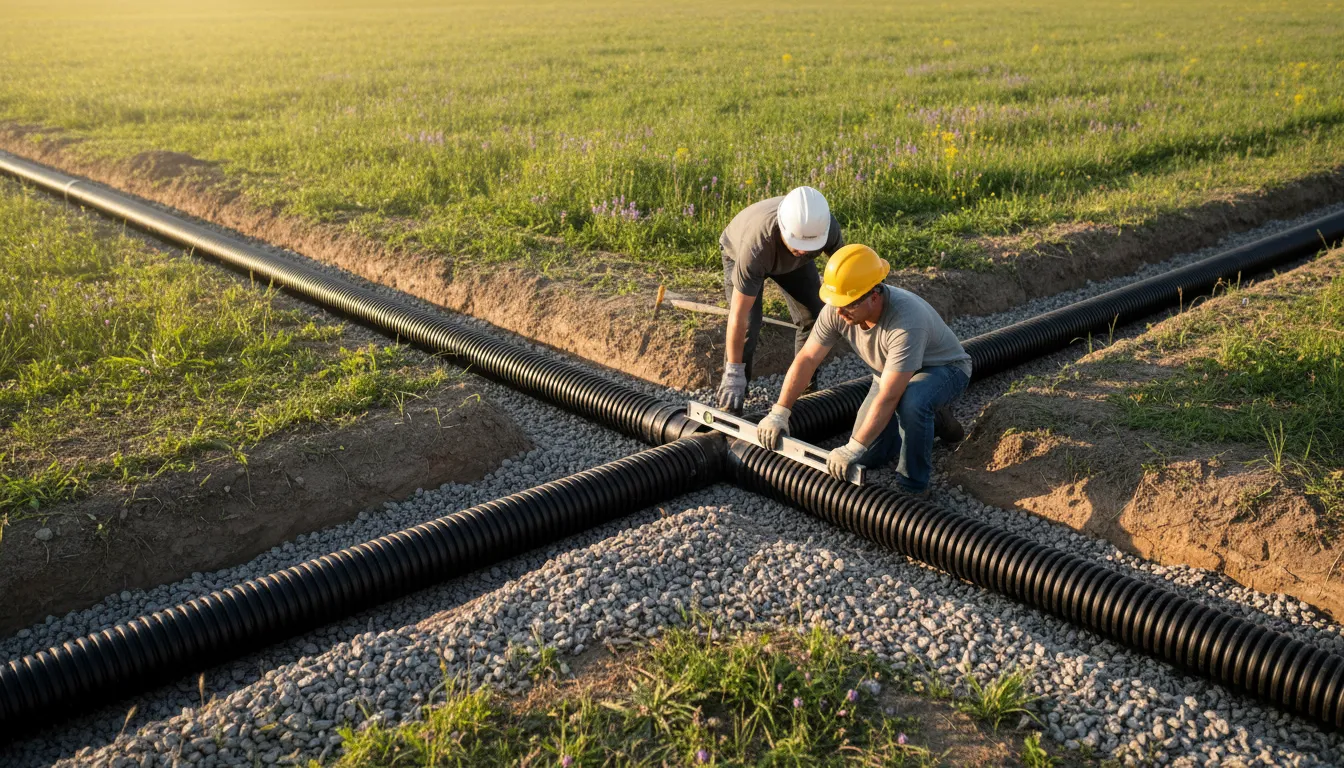
2. Excavation and Installation: For a full replacement, the old drain field is typically abandoned. The new field is constructed in the approved replacement area. This involves excavating trenches to precise depths and grades, laying distribution pipes on a bed of gravel, and covering them with more gravel and soil.
3. The Mandatory Inspection: This is a critical, non-negotiable step. Before the new trenches are backfilled with soil, you must contact your county inspector for a construction inspection 7 8. The inspector will verify that the installation matches the approved design, checks pipe placement, and ensures materials meet code. Failure to have this inspection can result in orders to uncover the system or, in the worst case, remove it entirely.
4. Final Backfill and Restoration: After passing inspection, the contractor can finish backfilling the trenches and restore the landscape. The final grade is often slightly mounded to account for settling and to direct surface water away from the area.
Cost Considerations for Wyoming Homeowners
The cost for drain field repair or replacement in Wyoming is highly variable, with a typical range from $3,000 to over $55,000 9. Several factors influence the final price:
- System Size and Type: A larger home requiring a bigger system will cost more. Alternative systems (like mound or aerobic treatment systems) for difficult sites are more expensive than conventional trench systems.
- Site Complexity: Difficult access for machinery, rocky soil requiring extensive excavation, or a high water table that necessitates a raised system will increase costs.
- Local Labor and Material Rates: These can vary across the state.
- Permit and Design Fees: Don't forget to budget for county permit fees and the cost of the required soil testing and system design.
Maintaining Your New or Repaired System
Your responsibility doesn't end once the new drain field is installed. Proper maintenance is key to ensuring it lasts for decades.
- Regular Tank Pumping: Pumping the septic tank every 3-5 years (depending on usage) prevents solids from washing out into the new drain field and clogging it.
- Water Conservation: Spreading out laundry loads and fixing leaks reduces the hydraulic load on the system, allowing the soil to properly absorb and treat effluent.
- Mind What You Flush: Only human waste and toilet paper should go down the drain. Avoid chemicals, grease, diapers, and wipes (even "flushable" ones).
- Protect the Area: Never drive or park vehicles over the drain field, and avoid planting trees or deep-rooted shrubs nearby.
Property owners in Wyoming are legally responsible for maintaining their systems in working order and preventing the discharge of effluent to the ground surface 10 11 12. Addressing problems like odors or surfacing sewage promptly through proper repairs and permitting is required.
Frequently asked questions
Sources
Footnotes
-
Chapter 25 Septic Tanks, Soil Absorption Systems, And Other Small ... - https://parkcounty-wy.gov/wp-content/uploads/Documents/Planning%20and%20Zoning/Documents/Regs_Policies/WYDEQ_CH25_20160727.pdf ↩
-
Septic Systems - Land Planning - https://www.bighorncountywy.gov/departments/land-planning/septic-feasibility ↩
-
Septic Systems | Sublette County - Official Website - https://www.sublettecountywy.gov/571/Septic-Systems ↩
-
Wastewater / Septic System | Uinta County, WY - Official Website - https://www.uintacountywy.gov/974/Wastewater-Septic-System ↩
-
Small Wastewater Systems - Wyoming Department of Environmental Quality - https://deq.wyoming.gov/water-quality/water-wastewater/permitting/small-wastewater-systems/ ↩
-
Rules and Regulations Governing Wastewater Systems - https://cms2.revize.com/revize/sheridan/Document%20Center/Departments/Public%20Works'/Building%20In%20the%20County/septic_regs.pdf ↩
-
Septic System Information - Sheridan County - https://www.sheridancountywy.gov/departments/planning/septic_system_information.php ↩
-
Water & Wastewater - Albany County, WY - https://www.albanycountywy.gov/268/Water-Wastewater ↩
-
Septic Tank and Drain field Systems - https://www.cookbroswyo.com/septic-tank-and-drain-field-systems/ ↩
-
Wastewater Management - Welcome to Fremont County, WY - https://fremontcountywy.org/government/departments/planning_department/wastewater_management.php ↩
-
Park County, Wyoming Small Wastewater System Regulations - https://parkcounty-wy.gov/wp-content/uploads/Documents/Planning%20and%20Zoning/Documents/Regs_Policies/20210101_Park%20County%20Small%20Wastewater%20System%20Regulations.pdf ↩
-
Septic Systems - Wyoming, MN - https://www.wyomingmn.org/septicsystems ↩