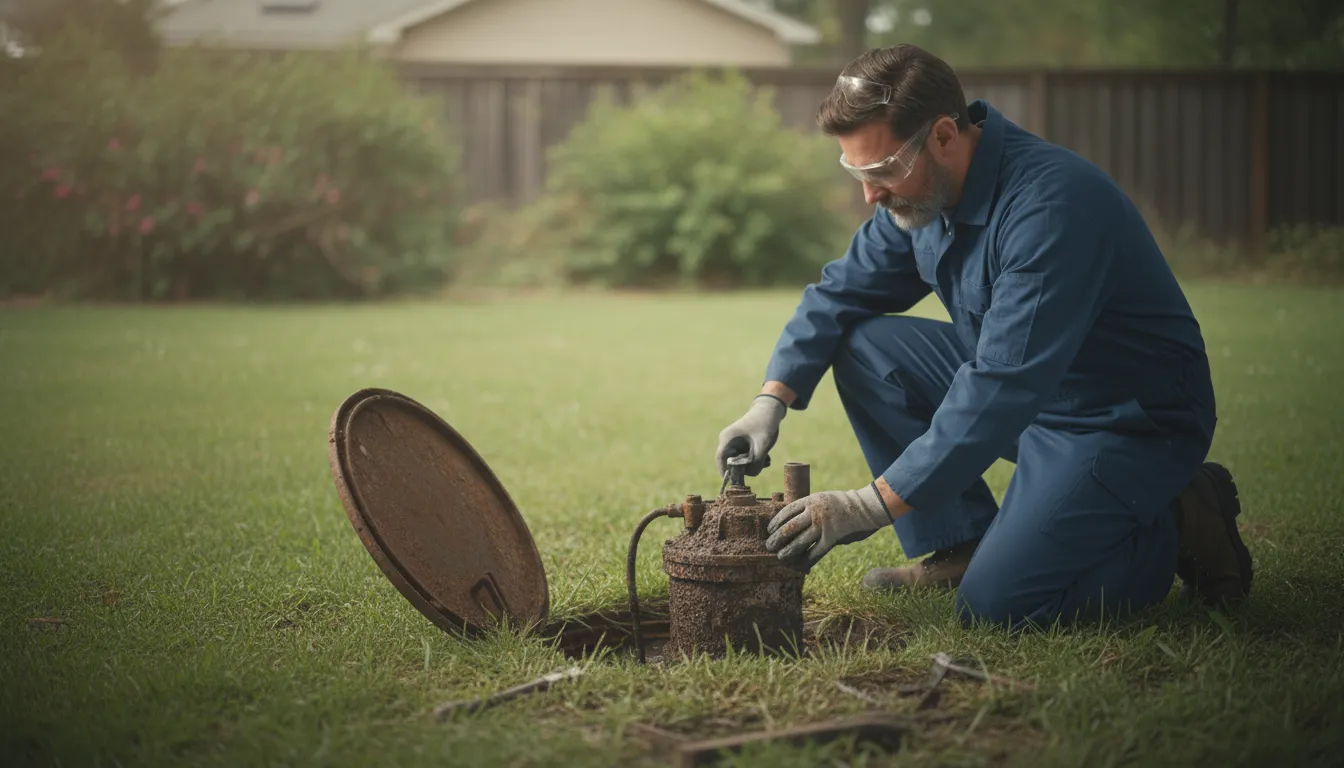
Find the Best Septic Pump Repair Companies for Your Business
No obligation • Fast responses • Nationwide coverage

Why you can trust Septic Spot
Septic Spot is a leading United States resource for understanding and comparing septic services. Our editors review providers using consistent criteria and verify key business details. Listings and scores are independent, and companies cannot pay to influence our content.
Search providers near you
Top Septic Pump Repair Companies in El Monte, California Ranked
A failing septic pump can quickly turn into a major household emergency, leading to backups, odors, and potential environmental issues. Septic pump repair and replacement services are critical for maintaining a functional and safe wastewater system for homes not connected to municipal sewer lines. This guide explains the local factors, processes, and costs involved in fixing or replacing a septic pump in El Monte, helping you understand your options and connect with qualified local specialists.

Zoom Drain Los Angeles
1815 W 205th St #209, Torrance, CA 90501
Zoom Drain Los Angeles provides septic pump repair and replacement services along with comprehensive drain and sewer solutions in Los Angeles, CA. They serve residential and commercial clients, offering drain cleaning, pump repairs, sewer inspections, and specialized maintenance plans tailored to local needs. The company is equipped with advanced tools and skilled technicians to handle a variety of plumbing challenges efficiently. Zoom Drain is known for its flat-rate pricing and certified professionals. They also offer 24/7 emergency service, ensuring assistance is available whenever needed.

Gopher Construction Company/Septic & Sewer Repair
10164 Tujunga Canyon Blvd, Tujunga, CA 91042
Gopher Construction Company/Septic & Sewer Repair is a family-owned business serving Los Angeles, CA, with over 70 years of experience since 1948. They specialize in septic system repair, septic pump repair or replacement, and various sewer and drainage installations and repairs for both public and private properties. The company is recognized as an approved bonded sewer contractor by the city of Los Angeles and offers knowledgeable solutions for septic and sewer system needs.
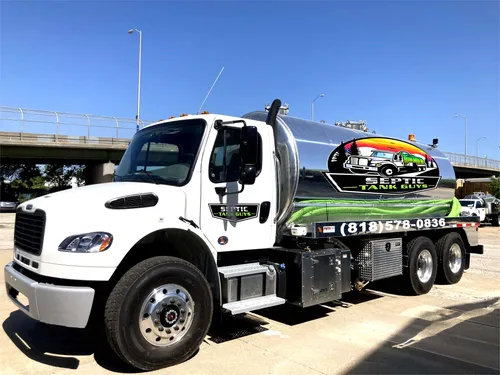
Septic Tank Pumping Guys
6360 Van Nuys Blvd ste 113, Van Nuys, CA 91401
Septic Tank Pumping Guys provides a full range of septic services in Los Angeles, CA, including pumping, inspections, repairs, and installations for residential and commercial properties. They offer 24/7 emergency septic services and specialize in maintaining system health through regular pump-outs, cleaning, and drain field repairs. Their capabilities include septic tank installation, effluent filter replacement, and grease trap pumping. The company is family owned and operated, serving multiple communities within Los Angeles County.
Understanding Your Septic System's Pump
The pump is the heart of many modern septic systems, especially those in areas with challenging soil or elevation issues. Unlike simple gravity-fed systems, a pump system (often called a pump-up or pressure-dosed system) actively moves effluent from the septic tank to the drain field. When this pump or its components fail, wastewater has no way to leave the tank, leading to immediate problems. In El Monte, where soil conditions often necessitate more complex system designs, a functioning pump is non-negotiable for system health.
Key Components That May Need Service
- Submersible Pump: The main pump unit, installed inside a pump chamber or directly in the tank, that pushes effluent out.
- Float Switches: These devices act as the pump's "brain," turning it on and off based on the wastewater level. They are a common point of failure.
- Control Panel: The electrical box that houses the circuitry and alarms for the pump system.
- Check Valve: Prevents pumped effluent from flowing back into the pump chamber.
- Alarm System: Alerts homeowners to high water levels in the pump tank, signaling a pump failure or other issue.
Why El Monte Presents Unique Challenges
Septic system performance is deeply tied to local geology. El Monte's environmental conditions significantly influence both system design and repair complexity.
Clay-Heavy Soils: The area is known for soils with high clay content 1. Clay is dense and has very slow permeability, meaning it absorbs wastewater poorly. This often requires the installation of larger drain fields or advanced systems like pressurized drip distribution to adequately treat and disperse effluent. When repairs are needed, these complex systems involve more components that can fail, potentially increasing service costs.
High Water Table Concerns: Properties with a naturally high water table face a heightened risk of system failure 2. If the water table rises into the drain field, it becomes saturated and cannot accept more wastewater, causing backups. This environment can also lead to premature corrosion or failure of submersible pump components. In severe cases, a complete system redesign-such as building a raised mound system-may be the only long-term solution, which is a major investment 3.
System Types: You're more likely to encounter alternative systems in El Monte due to these soil conditions. While traditional gravity systems are cheaper to repair, mound systems, aerobic treatment units (ATUs), or systems with sand filters involve more mechanical and electrical parts, raising the stakes for pump and component repairs.
Common Septic Pump Repairs and Their Costs
Most pump system issues start with a diagnostic inspection, which typically costs between $275 and $1,800 depending on the depth of the investigation. Once the problem is identified, here are the most frequent fixes:
- Pump or Float Switch Replacement: This is the most common repair. A technician will replace a burned-out pump or a stuck float switch. Cost: $300 - $800+.
- Control Panel Repair: Fixing or replacing the electrical control box that operates the pump. Cost: Varies widely based on complexity.
- Baffle or Filter Repair: The baffles in your tank or an effluent filter (if installed) prevent solids from entering the pump chamber or drain field. Repairing or cleaning these is crucial. Cost: $300 - $900 4.
- Adding Access Risers: Many older tanks are buried deep. Installing concrete or plastic risers brings the tank lid to ground level, making future pump service, inspection, and pumping far easier and cheaper. This is often recommended during a repair visit.
Find the perfect septic pump repair companies for your needs
Get personalized recommendations and expert advice
When Repair Shifts to Replacement
There comes a point when repeated repairs are no longer cost-effective, and a full septic pump replacement or even a system overhaul is necessary.
Full Pump Station Replacement: If the pump chamber itself is damaged or the existing pump is severely undersized for your household's current needs, the entire pump station may need to be replaced. This is a more involved project.
Complete System Replacement: Sometimes, a pump failure is a symptom of a larger, failing system. If diagnostic inspections reveal a compromised drain field (often due to the high water table or clogging from solids that escaped a failed pump), pump repair alone is a temporary fix. A full system replacement in California is a major undertaking, with costs often ranging from $8,000 to $22,000 or more, and can exceed $40,000 for complex alternative systems 5 6.
The Repair vs. Replacement Decision
Consider replacement if:
- Your system is over 20 years old and requires frequent repairs.
- A professional inspection finds serious drain field failure.
- You are planning a major home expansion that will increase wastewater load.
- Local regulations have changed, and your existing system no longer meets code.
The Professional Service Process in California
Tackling septic pump issues is not a DIY project due to health risks, electrical hazards, and strict regulations. Here's what to expect when you hire a licensed professional in El Monte:
- Complaint & Initial Assessment: You describe the symptoms (e.g., alarm sounding, slow drains, soggy yard). The technician may ask about the system's age and last service date.
- Inspection & Diagnostics: The provider will locate the tank and pump chamber, pump out the tank if needed for visibility, and inspect all components. They will test the pump, floats, electrical connections, and check for clogs or blockages in the lines 7.
- Permitting: For any significant repair or replacement, California law requires a permit from the local county environmental health department 8. A reputable contractor will handle this paperwork, ensuring the work is done to code.
- Execution of Work: The repair or replacement is performed. This may involve excavating to access the pump chamber, installing new components, and wiring everything safely.
- Testing & Final Approval: Once the work is complete, the system is tested to ensure the pump activates correctly and effluent is moving to the drain field properly. The work may need a final inspection from the county to close the permit.
Maintaining Your System to Avoid Costly Repairs
The best way to manage septic pump repair costs is to prevent emergencies.
- Regular Pumping: Have your septic tank pumped every 3-5 years by a licensed service like Mathis & Sons Septic 9. This prevents solids from overflowing into the pump chamber and damaging the pump. Pumping typically costs $200 - $600 in the region 10 11.
- Conserve Water: Reduce sudden, heavy flows to the system (like long showers or laundry marathons) which can overwhelm the pump.
- Mind What You Flush: Never flush chemicals, grease, wipes, or feminine hygiene products. These can clog pumps and destroy the biological balance in the tank.
- Listen for the Alarm: If your system's high-water alarm sounds, call a professional immediately. Ignoring it will lead to a backup.
Frequently asked questions
Sources
Footnotes
-
The SoCal Guide to Septic Tank Installation - https://www.lanikseptic.com/socal-guide-septic-tank-installation/ ↩
-
New Jersey Septic System Replacement & Installation | ATS - https://www.atsenvironmental.com/residential/septic-system-installation-replacement/ ↩
-
Septic System Designs - https://www.nexgenseptics.com/septic-system-designs/ ↩
-
Common Septic Tank Repairs In California (& What They Cost) - https://cacciaplumbing.com/blog/common-septic-tank-repairs-in-california/ ↩
-
Septic Tank Replacement and Drain Field Cost in California - https://www.lanikseptic.com/how-much-does-it-cost-to-replace-a-septic-tank-and-drain-field-in-california/ ↩
-
Septic Repair vs. Replacement: A Guide to Costs & Red Flags - https://prosepticri.com/septic-repair-vs-replacement-guide/ ↩
-
Septic Tank Pump Out Cost in 2025: Average Prices & What Affects Them | Blog - https://www.blueribbonseptic.com/blog/septic-tank-pump-out-cost-guide-2025 ↩
-
California Septic Tank Requirements | Onsite Wastewater ... - https://www.ntotank.com/blog/california-septic-tank-requirements ↩
-
Understanding the Costs of Septic Tank Installation and Repair - https://mathisandsonsseptic.com/mathis-sons-septic-blog-orlando-fl/understanding-the-costs-of-septic-tank-installation-and-repair/ ↩
-
How Much Does Septic System Repair Really Cost in California - https://www.lanikseptic.com/septic-repair-cost/ ↩
-
Septic Repair vs. Replacement: How to Decide What's Best for Your System - https://www.townesseptic.com/blog/septic-repair-vs-replacement ↩