Find the Best Septic Pump Repair Companies for Your Business
No obligation • Fast responses • Nationwide coverage

Why you can trust Septic Spot
Septic Spot is a leading United States resource for understanding and comparing septic services. Our editors review providers using consistent criteria and verify key business details. Listings and scores are independent, and companies cannot pay to influence our content.
Search providers near you
Top Septic Pump Repair Companies in Newton, Massachusetts Ranked
Maintaining a functional septic system is a critical responsibility for homeowners not connected to municipal sewer lines. When a septic pump fails or the system itself is beyond repair, timely and professional intervention is essential to protect your property, health, and the local environment. This guide explains the key considerations for septic pump repair and full system replacement in Newton, Massachusetts, helping you understand the process, local challenges, and how to connect with qualified specialists for your project.
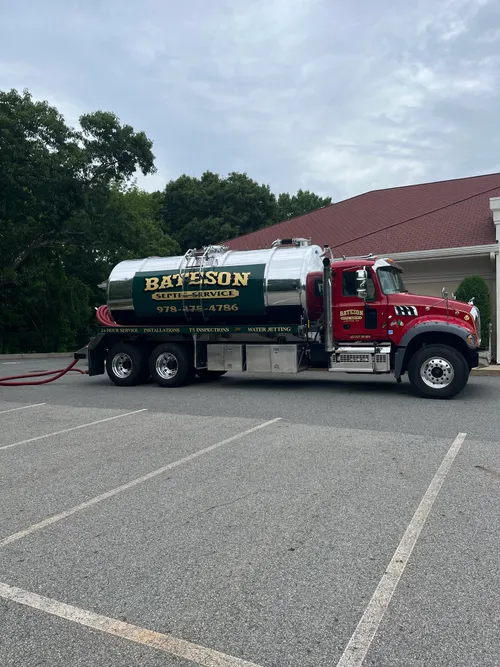
Bateson Enterprises Inc
111 Argilla Rd, Andover, MA 01810
Bateson Enterprises Inc is a septic system company serving Lowell, MA, and the surrounding areas. They provide a range of septic services including tank installation, system repair, pumping, and inspections. The company also offers specialized services such as water jetting, mainline snaking, video inspection, and Title V inspections. With over 30 years of experience, Bateson Enterprises Inc handles all types of septic systems and related repairs. They are equipped to manage both maintenance and emergency needs for residential and commercial septic systems.

Wayne's Drains
36 Grant Ave, Burlington, MA 01803
Wayne's Drains is a family-owned business serving Boston, MA, and the Greater Boston area since 2000. They provide commercial, industrial, and residential sewer and drain cleaning services, including septic tank pumping, maintenance, and repair. Their capabilities include high-pressure water jetting, video camera inspections, and electronic pipe locating. The company offers emergency sewer and drain cleaning services 24/7 throughout metropolitan Boston and eastern Massachusetts.
Understanding Your Newton Septic System
Most homes in Newton rely on on-site wastewater treatment systems, commonly known as septic systems. These systems are composed of two main parts: a watertight tank that separates solids from liquids, and a drain field (or leach field) where the treated liquid effluent is dispersed into the soil. A crucial component in many systems, especially in areas with challenging topography or soil, is the septic pump. This pump moves effluent from the tank to the drain field. When this pump or other critical components fail, you're faced with a decision between targeted septic system repair or a complete septic system replacement.
Why Newton Presents Unique Challenges
The cost and complexity of septic work in Newton are significantly influenced by local geology and strict state regulations.
- Soil Conditions: Newton's soil is varied and can include rocky, clay-heavy, or dense compositions. These soils often have a slow "percolation" rate, meaning they don't absorb water quickly. This can lead to drain field failure and puts extra strain on pump systems, necessitating more robust-and expensive-solutions.
- High Water Tables: Areas with a high groundwater table can flood a conventional drain field, causing system failure. In these cases, alternative systems with specialized pumps or raised mounds are often required.
- Title 5 Compliance: Massachusetts enforces strict environmental health codes under Title 5. Any significant repair or replacement must be designed and permitted to meet these standards. A failed inspection often mandates a full system upgrade to current codes, not just a simple fix.
Common Septic Repairs in Newton
Not every system issue requires a full replacement. Many problems can be resolved with targeted repairs.
- Septic Pump Repair/Replacement: The pump is the heart of a pressure distribution system. Signs of failure include alarms sounding, soggy ground around the tank or drain field, and slow drains. Replacing a septic pump typically costs between $800 and $5,000, depending on the pump type and excavation difficulty.
- Baffle and Riser Repair: The baffles inside the tank guide the flow of wastewater, and risers provide access from the surface. Damaged baffles can allow solids to clog the drain field. Repairing or replacing these components generally ranges from $300 to $1,200.
- Drain Field Rehabilitation: Sometimes, a drain field can be restored without full excavation through methods like jetting or adding additional lines. Costs vary widely but can range from $3,000 to $15,000+1.
Find the perfect septic pump repair companies for your needs
Get personalized recommendations and expert advice
When Replacement is Necessary
A full septic system installation is a major undertaking but is unavoidable when the existing system is irreparably failed or doesn't meet current health codes.
- Signs You Need a New System: Persistent backups, sewage odors, overly lush or soggy grass over the drain field, and a failed Title 5 inspection are clear indicators.
- The Replacement Process:
- Inspection & Soil Testing: A licensed inspector or civil engineer evaluates the existing system and performs a percolation (perc) test on the soil. This test, costing $300 to $3,000, determines the absorption rate and dictates the type of system required. 2. Engineering & Design: Based on the soil test, a professional designs a system that complies with Title 5. This often includes engineered plans for alternative systems like mounds or sand filters 2 3.
- Permitting: Plans are submitted to the Newton Board of Health for approval before any work begins. 4. Excavation & Installation: The old system is properly decommissioned, and the new tank, pumps, and drain field are installed.
- Final Inspection: The local health inspector verifies the installation meets all codes.
Cost Breakdown for Newton Septic Projects
Understanding the potential investment helps in planning. It's important to get multiple detailed quotes from licensed contractors.
- Septic Pump Replacement: $800 - $5,000
- Component Repairs (baffles, risers): $300 - $1,200
- Full Conventional System Replacement: $10,000 - $40,000+4. The wide range accounts for system size, soil conditions, and whether an alternative system is needed.
- Soil Percolation Test: $300 - $3,0005
- Engineering & Design Fees: Often a lump sum, required for most new installations or major alterations.
Financial Note: Massachusetts offers a tax credit for the repair or replacement of a failed septic system. Homeowners may be eligible for a credit of up to 60% of the cost, with a maximum of $18,0006. This can significantly offset the financial burden of a mandatory replacement.
Choosing a Service Provider in Newton
Given the technical and regulatory complexity, selecting the right contractor is paramount.
- Verify Licenses: Ensure the company is licensed by the state of Massachusetts for septic system installation and repair.
- Check Local Experience: Choose a provider familiar with Newton's specific Board of Health requirements and common soil challenges.
- Review Detailed Quotes: A professional quote should itemize costs for excavation, materials (tank, pipe, pump), engineering, permits, and labor.
- Ask About the Process: A reputable contractor will clearly explain the steps from soil evaluation to final inspection and provide a realistic timeline.
Maintaining Your New or Repaired System
Protect your investment with proper care.
- Pump Regularly: Have the tank pumped every 2-5 years by a licensed pumper.
- Conserve Water: Reduce strain on the system by fixing leaks and using water-efficient fixtures.
- Mind What You Flush: Only human waste and toilet paper should go down the drain. Avoid grease, chemicals, wipes, and other non-biodegradables.
- Protect the Drain Field: Never drive or park over it, and keep rainwater drainage away from the area.
Frequently asked questions
Sources
Footnotes
-
When You Need Septic Drain Field Repair | Western MA - https://excavationplus.net/septic/septic-drain-field-health-and-when-repair-or-replacement-is-necessary/ ↩
-
Septic Systems & Title 5 New Construction - Mass.gov - https://www.mass.gov/info-details/septic-systems-title-5-new-construction ↩
-
Septic System Installation & Replacement in MA - CSI - https://csi-gc.com/septic-system-install/ ↩
-
Septic System: Repairing / Replacing - Southborough, MA - https://www.southboroughma.gov/348/Septic-System-Repairing-Replacing ↩
-
How Much Does a Septic Soil Test Cost in 2026? - Land Perc - https://landperc.com/septic-soil-test-cost/ ↩
-
Start to Finish Septic Installation - https://jpcseptic.com/septic/ ↩