Find the Best Septic Pump Repair Companies for Your Business
No obligation • Fast responses • Nationwide coverage

Why you can trust Septic Spot
Septic Spot is a leading United States resource for understanding and comparing septic services. Our editors review providers using consistent criteria and verify key business details. Listings and scores are independent, and companies cannot pay to influence our content.
Search providers near you
Top Septic Pump Repair Companies in Plymouth, Massachusetts Ranked
When your home's septic pump fails, it's more than an inconvenience-it's a potential health hazard and a regulatory issue. In Massachusetts, septic systems are governed by strict state and local health codes, primarily Title 5, which mandates that repairs and replacements be performed by licensed professionals. This page provides a clear overview of septic pump repair and replacement in the state, explaining the process, regulations, and costs to help you understand your options and connect with qualified local specialists.
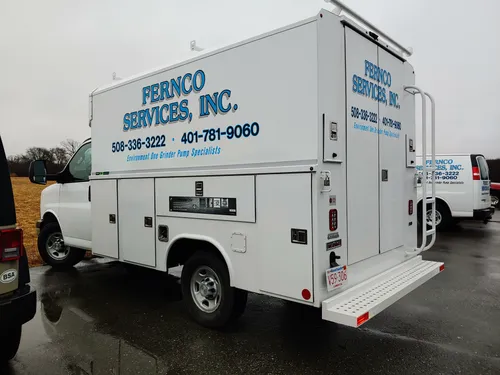
Fernco Services Inc
19 Almeida Rd, Rehoboth, MA 02769
Fernco Services Inc is a locally owned company providing septic pump repair and replacement services in Providence, RI. With over 40 years of experience, they serve both residential and commercial clients across Southern Massachusetts and Rhode Island. Their expertise includes sewage pump and grinder pump repairs, with a specialization in Environment 1 and Liberty sewage grinder pumps. Fernco Services offers routine maintenance, emergency repairs, and system upgrades to ensure wastewater systems operate efficiently and reliably.

Croome Sanitation Inc
26 Hillside Ave, Rehoboth, MA 02769
Croome Sanitation Inc is a family-owned septic service company serving Providence, RI, and the surrounding areas of Southeast Massachusetts and Rhode Island. Established in 1962, the company offers a wide range of septic system services including pumping, Title 5 inspections, sewer camera diagnostics, pump station maintenance, and excavation work. Their expertise extends to wastewater treatment systems, providing comprehensive care to maintain system health and compliance with local regulations. Croome Sanitation also offers same-day and emergency services to address urgent septic needs.
Understanding Septic System Pumps in Massachusetts
Not all septic systems have pumps, but for homes where the drainfield is at a lower elevation than the septic tank or where advanced treatment is required, a pump is a critical component. Its job is to move effluent (liquid waste) from the tank to the dispersal area. In Massachusetts, due to variable terrain and high groundwater in many areas, pump systems are common.
There are two primary types of pumps used:
- Effluent Pumps: These transfer clarified liquid from the septic tank to a distribution box or leaching field. They are designed to handle small solids but not large debris.
- Grinder Pumps: Used when waste must be pumped uphill over a significant distance, these pumps macerate solids into a slurry before transport, preventing clogs in the piping.
Most residential systems in MA use submersible pumps installed in a separate pump chamber or dosing tank. Title 5 regulations often require these pumps to handle specific solid sizes (like 1 1/4-inch solids) and, for critical systems, mandate duplex (dual) pump setups for redundancy, ensuring one pump can take over if the other fails 1.
The Role of Title 5 Inspections
A discussion about septic pump repair in Massachusetts is incomplete without understanding Title 5. This state regulation requires a mandatory inspection of your onsite sewage disposal system in several key situations:
- Before the transfer of property (sale).
- Before increasing the bedroom count in a home.
- Before a substantial addition to the house is built.
The inspection determines the system's compliance. The outcome is critical for planning any repair work:
- Failed System: If the system fails the inspection (e.g., due to a hydraulic failure, contamination, or a broken pump chamber), it must be repaired or replaced. The local Board of Health will issue a order, typically requiring correction within two years if it's not an immediate health threat 2.
- Conditional Pass: This may be granted for minor component failures, such as a malfunctioning pump, broken distribution box, or a failing alarm system. A conditional pass allows the property transfer to proceed but requires the specified repairs to be completed on a strict timeline.
Only a licensed System Inspector can perform the official Title 5 inspection. This separation ensures an objective assessment before any repair company is involved.
The Repair and Replacement Process
When a pump issue is suspected or identified through an inspection, a structured process follows to ensure safety and compliance.
- Inspection & Diagnosis: A licensed septic technician (who may also be a certified installer) will inspect the pump chamber. They check for mechanical pump failure, stuck or broken float switches (which control the pump's on/off cycle), failed electrical controls, or alarm system malfunctions 3.
- Board of Health Notification: For any significant repair, especially involving the pump or its chamber, the local Board of Health must be notified, and the work often requires their approval before it begins. They ensure the proposed solution meets local and state codes 4.
- Component Replacement: The most common repair is replacing the submersible pump itself. This may also involve replacing the control panel, floats, wiring, or alarm. For older systems, upgrading to a duplex pump system might be recommended or required for reliability.
- System Testing: After repair, the technician will test the alarm system, the pump's cycling, and the hydraulic loading rate to ensure it moves effluent at the correct speed and volume 5.
- Final Inspection and Compliance: Once repairs are finalized, a final inspection is often required. Upon passing, a Certificate of Compliance is issued, which is necessary for closing real estate transactions or satisfying Board of Health orders 6.
Find the perfect septic pump repair companies for your needs
Get personalized recommendations and expert advice
When Replacement Becomes Necessary
Sometimes, a simple pump repair isn't enough. A full septic system replacement may be triggered by the Title 5 inspection if the entire system has failed. Common reasons in Massachusetts include:
- Failure of the Leaching Field: If the soil absorption area has failed, simply fixing the pump won't solve the problem. The entire system, including the pump chamber, may need to be redesigned and replaced.
- Insufficient Vertical Separation: Title 5 requires specific distances between the bottom of the drainfield and the high groundwater table or bedrock. If this separation is not met (often discovered during an inspection), the system is non-compliant and must be replaced or significantly upgraded 7 8.
- Upgrading for Safety: Older systems may need to be replaced with modern, compliant technology, which often includes a more sophisticated pumping system.
A full system replacement is a major project involving engineering, permitting, excavation, and installation of new tanks and drainfields.
Cost Considerations for Massachusetts Homeowners
Costs for septic work in Massachusetts can vary widely based on system complexity, soil conditions, local permitting fees, and the scope of work. The figures below are estimates based on industry data for the region 9 10 11.
- Routine Title 5 Inspection: Typically between $200 and $400.
- Pump or Component Repair/Replacement: Replacing a submersible pump, control panel, and related components generally ranges from $3,000 to $7,000. The cost depends on pump type, depth of the chamber, and whether electrical upgrades are needed.
- Full Septic System Replacement: This is a significant investment, often ranging from $10,000 to over $40,000. The high end accounts for complex systems requiring advanced treatment, difficult soil, or extensive engineering.
- Emergency Service Calls: For after-hours or urgent pump failures, service call rates are higher and depend on the contractor's emergency pricing.
Disclaimer: These are estimated price ranges. Actual costs depend on your specific site conditions, system design, and local labor and material rates.
Maintaining Your Septic Pump System
Preventive maintenance can extend the life of your pump and avoid costly emergency repairs.
- Listen for the Alarm: Your system has an alarm that sounds when the pump fails or the water level in the pump chamber is too high. Never ignore this alarm.
- Conserve Water: Excessive water flow can overload the pump and the drainfield. Spread out laundry loads and fix leaking fixtures promptly.
- Avoid Flushing Harmful Items: Never flush wipes, feminine hygiene products, grease, or chemicals. These can clog or destroy the pump.
- Schedule Regular Servicing: Have a licensed professional inspect and service your pump and alarm system every 1-3 years, as recommended.
Frequently asked questions
Sources
Footnotes
-
Submersible Pump Replacement Snohomish County | Up to $500 Rebate | A1 Septic Today - https://www.a1septictoday.com/submersible-pump-replacement/ ↩
-
The Complete Guide to Massachusetts Title 5 Inspection - https://allclearseptic.com/the-complete-guide-to-massachusetts-title-5-inspection/ ↩
-
Guidance for the Inspection of On-site Sewage Disposal Systems - https://www.mass.gov/guides/guidance-for-the-inspection-of-on-site-sewage-disposal-systems ↩
-
Caring for Your Septic System - Mass.gov - https://www.mass.gov/guides/caring-for-your-septic-system ↩
-
Title 5 System Inspector Manual - https://baystatehub.com/wp-content/uploads/2024/05/System-Inspector-Manual.pdf ↩
-
Massachusetts Title 5 Septic Rules - Martha's Vineyard Buyer Agents - https://www.mvbuyeragents.com/title-5-septic-systems-faq ↩
-
Massachusetts Title 5 Septic Regulations Explained - https://primeengineering.org/massachusetts-title-5-septic-regulations-explained/ ↩
-
Onsite Wastewater - https://megamanual.geosyntec.com/npsmanual/sectionintroonsitewastewater.aspx ↩
-
Sharon's guide to septic systems - https://www.townofsharon.net/septic-system-information/files/sharon%E2%80%99s-guide-to-septic-systems ↩
-
Title 5/Septic Systems - Acton, MA - https://www.acton-ma.gov/DocumentCenter/View/882/Massachusetts-DEP-Title-5-FAQs ↩
-
How Does a Septic System Work? - https://curtisseptic.com/how-does-a-septic-system-work/ ↩